
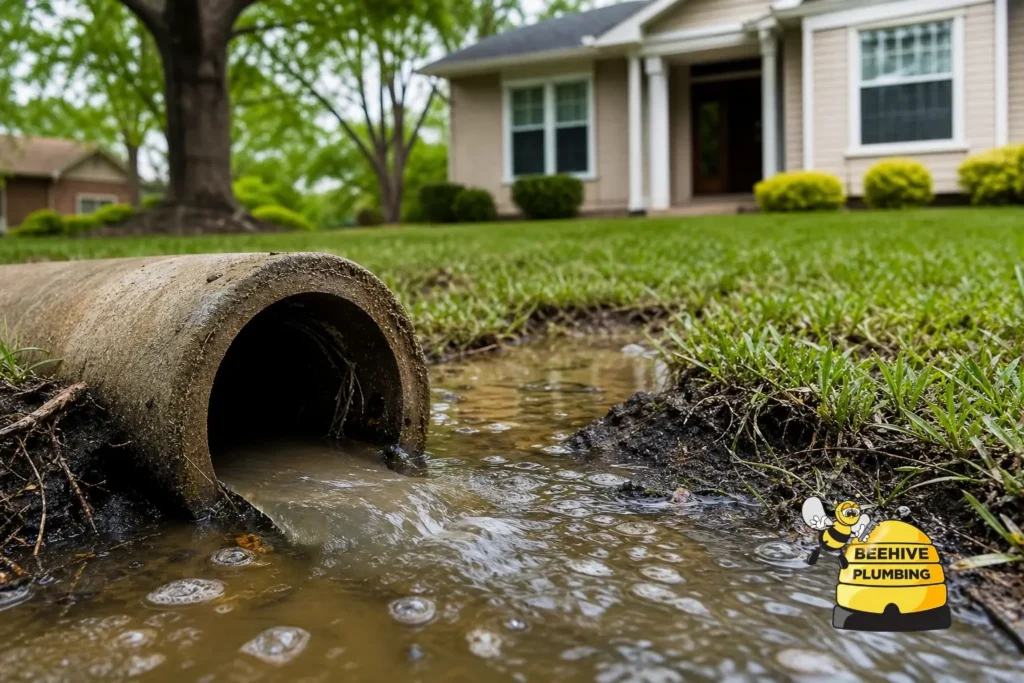
Most sewer line problems don’t start with a major backup. They begin with small warning signs that are easy to overlook.
A slow drain, an occasional sewer odor, or an unusually green patch of grass might not seem like a big concern at first, but they can all point to a damaged sewer line beneath your property. Because sewer lines are buried underground, problems often go unnoticed until they lead to costly repairs, property damage, or a messy plumbing emergency.
Recognizing these warning signs early can help you avoid bigger issues down the road.
In this article, we’ll cover the most common signs you need sewer line repair, explain what they could mean, and discuss why acting sooner can help protect your home and your budget.
Key Takeaways
- Several slow drains or recurring backups can point to a problem in the main sewer line, not an isolated fixture clog.
- Persistent sewer odors, unusually wet grass, or sinking ground may indicate a leak beneath the property.
- Toilet gurgling and unexplained pests near drains can support the need for a professional inspection, especially when other warning signs are present.
- Early diagnosis can clarify whether the line needs cleaning, repair, or replacement before the damage becomes more extensive.
The Problem With Sewer Lines Is That You Can’t See Them
Unlike many plumbing problems, sewer line damage often develops out of sight. Because the pipe is buried underground, issues can progress for months before visible symptoms appear inside your home or around your property. By the time many homeowners realize something is wrong, the damage has already become more extensive and expensive to repair.
Your home’s sewer line is your responsibility from the house to the municipal sewer connection. Over time, tree root intrusion, shifting soil, aging pipes, corrosion, poor installation that leads to cracks and eventual collapse, and everyday wear can all damage the line.
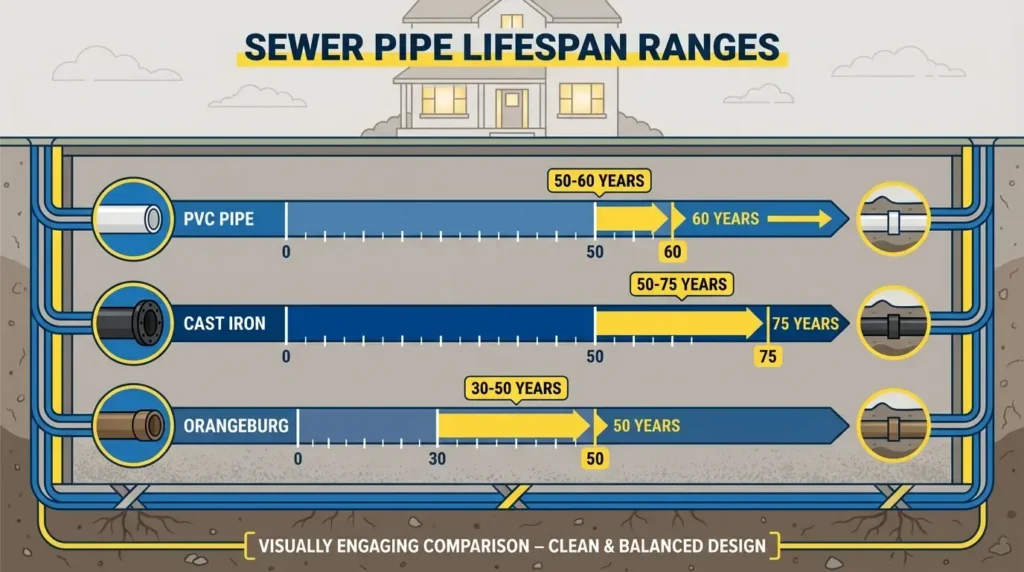
Older homes with original sewer lines should be inspected because sewer pipes do not last forever; many fail around 50-60 years, cast iron often lasts 50-75 years before corrosion becomes a concern, and Orangeburg typically deteriorates within 30-50 years.
Learning to recognize the early warning signs can help you address problems before they turn into a major plumbing emergency.
7 Warning Signs Your Sewer Line Is Failing
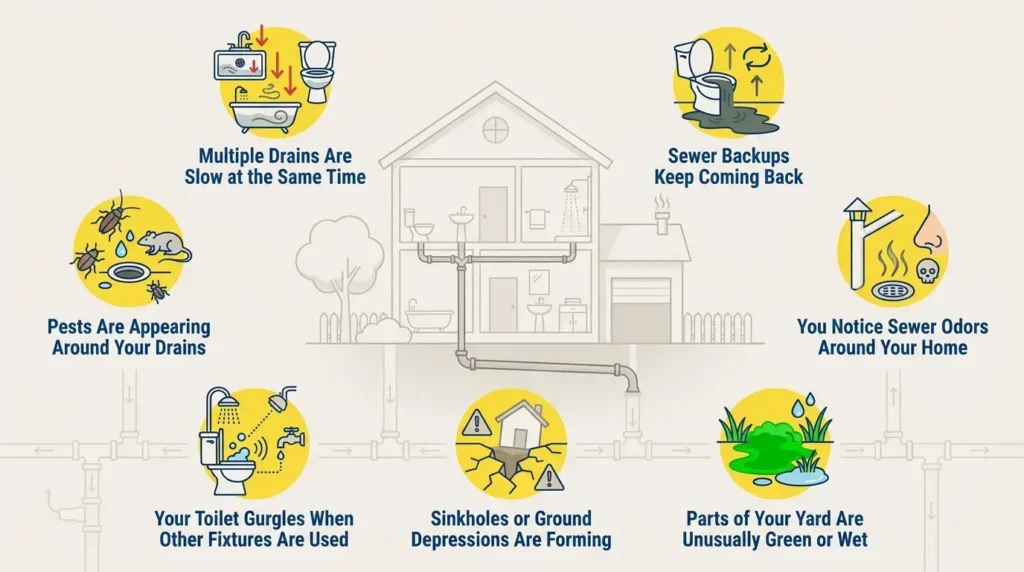
Sewer line problems rarely appear without warning. If you notice one or more of the signs below, it’s worth having your sewer line inspected before a minor issue turns into a much larger and more expensive repair.
1. Multiple Drains Are Slow at the Same Time
One slow drain is often caused by a clogged drain-type issue close to that fixture. If more than one drain throughout your home, including the bathroom sink, showers, tubs, and floor drains, all begin draining slowly around the same time, the problem may be in the home sewer line rather than a single fixture.
Slow draining sinks throughout the house can also point to a broader sewer issue.
A blockage, damaged pipe, or other restriction can affect every fixture connected to the system. Instead of relying on chemical drain cleaners, it’s best to identify what’s causing the problem before it gets worse, since grease buildup may explain an isolated kitchen slowdown but whole-house symptoms usually suggest something deeper.
2. Sewer Backups Keep Coming Back
A sewer backup that happens once may be caused by a temporary blockage. If the problem keeps returning after it’s been cleared, there’s likely a larger issue within the sewer line, such as a broken sewer line or even a collapsed sewer line rather than a simple clog.
Tree roots, cracked pipes, sections that have shifted, a collapsed pipe, or partial pipe collapses can all cause recurring backups. Clearing the blockage without addressing the underlying problem usually means the backups will continue, so early action can help prevent a full backup and more serious damage.
3. You Notice Sewer Odors Around Your Home
You shouldn’t smell sewage inside your home or around your property. A properly functioning sewer line is sealed, so unpleasant odors often indicate that wastewater or Sewer Gas is escaping through a damaged section of pipe, and a persistent sewage odor can point to sewer line issues such as leaks in the sewer system that may lead to health issues if ignored.
If the smell persists, have the sewer line inspected to locate its source.
4. Parts of Your Yard Are Unusually Green or Wet
An area of your lawn that’s always greener, softer, wetter, or marked by wet spots than the surrounding grass may be more than a landscaping issue.
If wastewater is leaking from a damaged sewer line, it can add moisture and nutrients to the soil, causing grass to grow faster in that area.
Wet ground that appears without heavy rain or irrigation can also point to an underground sewer leak. A broken sewer pipe or broken line can also create stagnant water or soggy patches in the yard. Damaged sewer lines typically worsen over time rather than improving on their own.
5. Sinkholes or Ground Depressions Are Forming
As a damaged sewer line leaks over time, it can wash away the surrounding soil, and ground settling may cause the surface above the pipe to sink or form noticeable depressions. If you see unexplained low spots developing near your home or yard, don’t ignore them.
They could indicate a significant sewer line failure that requires prompt attention to prevent significant damage, and if the leak is close to the house, it can also affect the home’s foundation and contribute to foundation cracks.
6. Your Toilet Gurgles When Other Fixtures Are Used
If your toilet makes bubbling or gurgling noises when you run a sink, shower, or washing machine, or you hear gurgling sounds when using another fixture, trapped air may be caused by disrupted water flow in the line. This often happens when there’s a blockage or restriction in the main sewer line, and those gurgling sounds can be an early warning before worse backups develop.
Plumbing vent issues can produce similar symptoms, but persistent gurgling still warrants an inspection.
7. Pests Are Appearing Around Your Drains
A damaged sewer line can create an entry point for pests that travel through underground sewer systems, and insects and other pests can multiply rapidly in the damp conditions a leak creates.
If you’ve noticed rodents or insects appearing around drains without an obvious cause, a cracked sewer pipe could be providing access into your plumbing system, and that activity can become a health hazard inside the living space.
While pests can enter homes in many ways, unexplained activity near drains is worth investigating, especially if it’s accompanied by other sewer line warning signs, since sewage exposure may involve harmful bacteria.
READ MORE: How Regular Plumbing Maintenance Prevents Costly Repairs
Why These Warning Signs Shouldn’t Be Ignored
Have you ever hoped a plumbing problem would simply go away on its own? It’s a common reaction, especially when the issue seems minor. A slow drain might improve for a while, or an occasional sewer odor may disappear after a day or two.
Unfortunately, sewer line problems rarely fix themselves. In most cases, the damage continues to worsen below ground even when the symptoms seem to come and go.
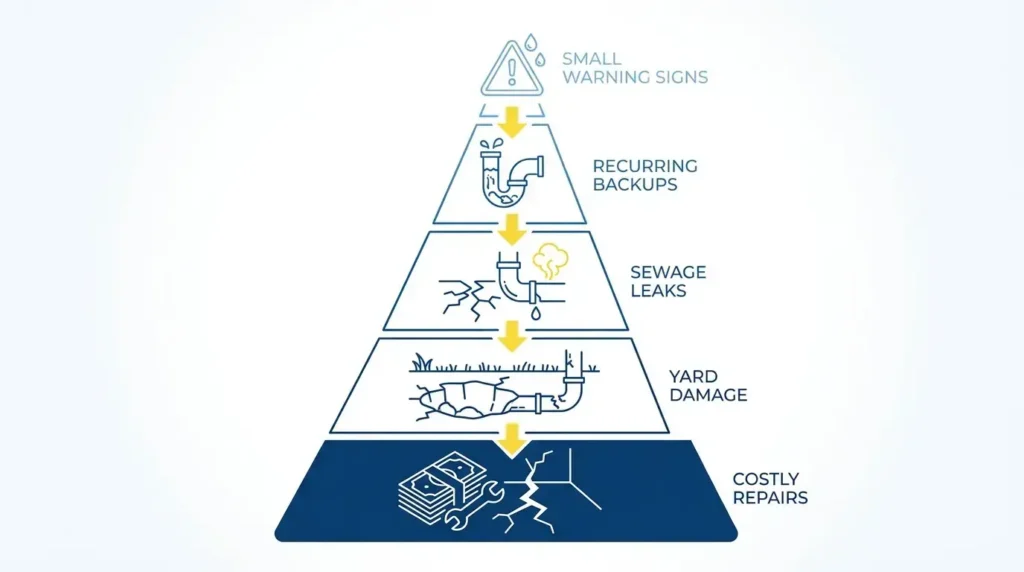
As the condition of the sewer line deteriorates, small warning signs can develop into recurring backups, sewage leaks, yard damage, and costly repairs. The longer unresolved sewer line needs are left alone, the more likely they are to cause broader plumbing issues, property damage, and greater risk of damage to your plumbing system.
Raw sewage can also pose health risks and become a serious health hazard, making prompt repairs even more important. If any of the telltale signs discussed above are present, scheduling a professional sewer line inspection early can help identify the cause before it becomes a much larger and more expensive problem.
What Beehive Plumbing Does Differently
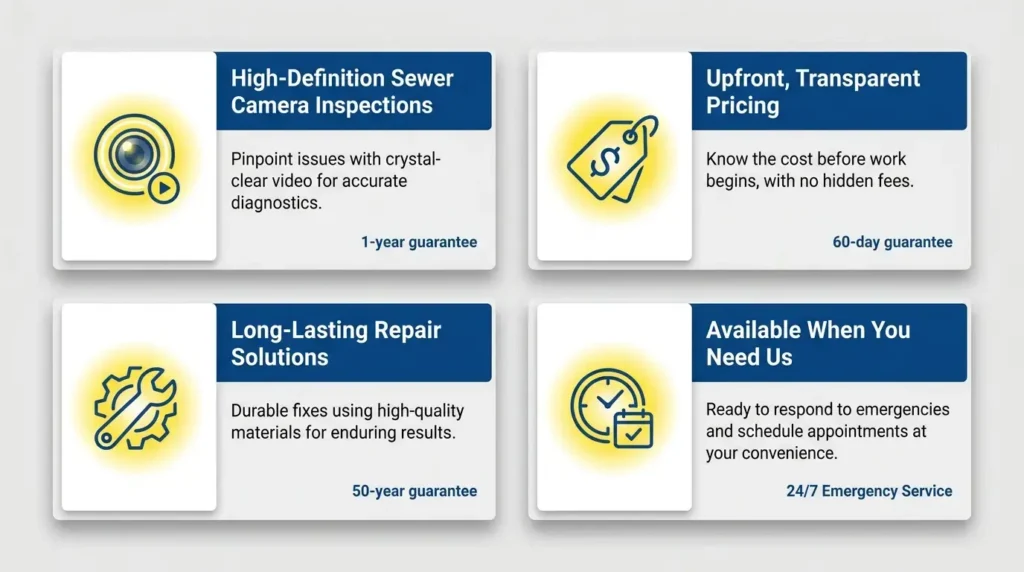
When you suspect a sewer line problem, you need more than a temporary fix. You need an experienced team that can accurately diagnose the issue, explain your options, and deliver lasting repairs.
High-Definition Sewer Camera Inspections
Because sewer lines are buried underground. We use high-definition sewer cameras to inspect the inside of your sewer line, and a professional plumber can identify the exact cause of the problem. Whether it’s tree root intrusion, a cracked pipe, a sagging section, or a blockage, you’ll know exactly what’s happening before any repair recommendations are made, while the inspection also helps reveal underlying pipe damage, not just the immediate blockage.
Upfront, Transparent Pricing
No one likes unexpected costs, especially during a plumbing emergency. That’s why we provide a firm quote before any repair work begins. You’ll know exactly what the project involves and what it will cost, with no hidden fees or surprise charges.
Long-Lasting Repair Solutions
Our goal isn’t to provide a quick temporary fix. We recommend repair solutions based on the condition of your sewer line and the best long-term outcome for your home.
Depending on the issue, that may include spot repairs, pipe lining, hydro jetting to clear blockages when appropriate, or sewer line replacement. Some cleaning methods can temporarily restore flow, but recurring root intrusion or structural damage may still require repair or replacement.
Our work is backed by industry-leading guarantees, including a 50-year guarantee on qualifying pipe lining services, a 60-day guarantee on main line drain cleaning, and a 1-year guarantee on plumbing parts and labor, with minor repairs often completed faster and with less disruption than full replacement.
Available When You Need Us
Sewer line problems rarely happen at a convenient time. That’s why we’re available 24 hours a day, 7 days a week with immediate dispatch for emergency plumbing calls. Whether it’s early morning, late at night, or over a holiday weekend, our team is ready to respond when you need us most.
Comprehensive Sewer Line Repair Process at Beehive Plumbing
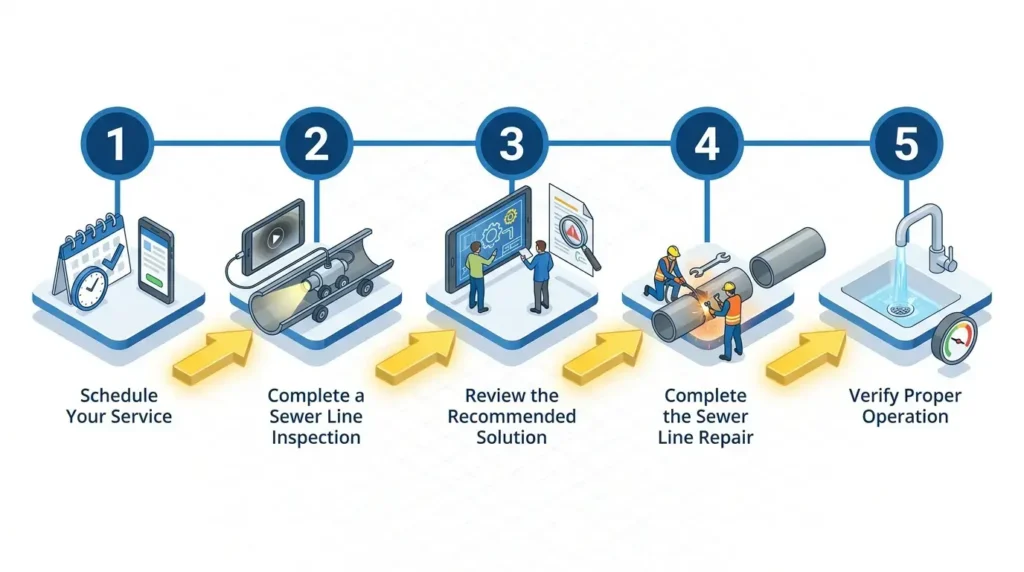
If you suspect a sewer line problem, call us immediately. Our goal is to make the diagnosis and repair process as straightforward and stress-free as possible.
Step 1: Schedule Your Service
Contact our team to discuss the symptoms you’re experiencing and schedule a convenient appointment. We offer 24/7 emergency service along with same-day appointments whenever available.
Step 2: Complete a Sewer Line Inspection
A licensed master plumber performs a thorough assessment of your plumbing system, including evaluating the home’s plumbing system as a whole, and, when needed, conducts a high-definition sewer camera inspection to identify the source and location of the problem.
Step 3: Review the Recommended Solution
Once we’ve identified the issue, we explain our findings, discuss the available repair options, and provide a clear, upfront project quote before any work begins.
Step 4: Complete the Sewer Line Repair
After receiving your approval, we complete the necessary repair using quality materials and proven plumbing techniques. Depending on the condition of the sewer line, this may involve spot repairs, pipe lining, or sewer line replacement.
Step 5: Verify Proper Operation
Before leaving your property, we test the repaired sewer line to confirm everything is functioning correctly and ensure your plumbing system is operating reliably.
Don’t Ignore the Signs of a Failing Sewer Line
Sewer line problems rarely get better on their own. What starts as a slow drain, an occasional sewer odor, or a recurring backup can gradually develop into much larger and more expensive plumbing issues if left unresolved. Recognizing the warning signs early and acting quickly can reduce repair costs and prevent unnecessary property damage.
If you’ve noticed any of the signs mentioned in this article, Beehive Plumbing is here to help. Our licensed, insured, and bonded master plumbers use advanced sewer camera inspections to accurately diagnose the problem and recommend reliable repair solutions based on the condition of your sewer line.
Contact Beehive Plumbing today to schedule a sewer line inspection and get the peace of mind that comes with knowing your plumbing system is in experienced hands.
Frequently Asked Questions About Sewer Line Repair
It’s normal to have questions about sewer line repairs before you call for professional service. Below you’ll find answers to some of the most common questions so you can move forward with confidence.
How can I tell if I need sewer line repair or just drain cleaning?
A single slow drain is often caused by a localized clog. However, if multiple drains slow down together, sewer odors appear, or backups keep returning, the issue may involve your main sewer line and should be professionally inspected.
Can a damaged sewer line repair itself over time?
No. Sewer lines do not repair themselves. Small cracks, root intrusion, or pipe deterioration typically worsen over time and can eventually cause a sewage backup, increasing the risk of property damage and more expensive repairs if the problem isn’t addressed promptly.
What is the most common sign of a damaged sewer line?
One of the most common warning signs is several plumbing fixtures draining slowly at the same time. Age can also be a factor, especially in older homes with clay pipes, which typically last about 50-60 years before failure. Other signs include recurring backups, sewer odors, gurgling toilets, wet patches in the yard, and unexplained lush grass.
How do plumbers confirm a sewer line problem?
The most reliable method is a sewer camera inspection. A high-definition camera is inserted into the sewer line to identify cracks, root intrusion, blockages, pipe misalignment, or other issues without unnecessary digging.
Can tree roots really damage a sewer line?
Yes. Tree roots naturally seek moisture, and large trees are a particular risk because their roots are more likely to reach and damage aging pipes through small cracks or pipe joints. As they continue growing, they restrict wastewater flow, create recurring blockages, and may eventually cause damaged sewer lines to crack or collapse.