You typically have to flush your toilet twice because the flush is too weak due to low tank water levels, blocked siphon jets, or an overloaded bowl. Resolving these mechanical and usage-based issues ensures a single, complete flush that clears waste efficiently.
The good news is that most of the reasons you have to flush your toilet twice have clear, fixable causes, and many of them take under 30 minutes to solve once you know what’s going on.
This guide explores the primary diagnostic steps for double-flushing:
- How is a toilet flush supposed to work?
- Are you overloading the toilet bowl?
- Is there enough water in the toilet tank?
Not in the mood for a DIY project? Beehive Plumbing’s licensed Utah plumbers can diagnose and fix your toilet the same day.
Key Takeaways
- Most people need to flush their toilet twice because either the flush is too weak (not enough water reaching the bowl or blocked jets) or the toilet is automatically double-flushing due to tank component issues like an overfilled tank or a faulty flapper.
- In hard water areas like Utah and Nevada, where water hardness often exceeds 13 grains per gallon, mineral buildup in rim holes and siphon jets is a leading cause of weak flushing — and a major reason double-flush problems keep coming back after repairs.
- Each unnecessary second flush on a modern 1.28 gpf low-flow toilet effectively doubles your water use per trip, potentially adding over 2,300 excess gallons to your annual consumption.
- Quick DIY checks — verifying tank water level, inspecting the flapper, cleaning rim holes, and ruling out partial clogs — can solve the majority of double-flush issues in under 30 minutes.
- If DIY fixes only work temporarily or problems return within a year, the underlying issue may require professional plumbing service or addressing your home’s water quality with a softener.
How Is a Toilet Flush Supposed to Work?
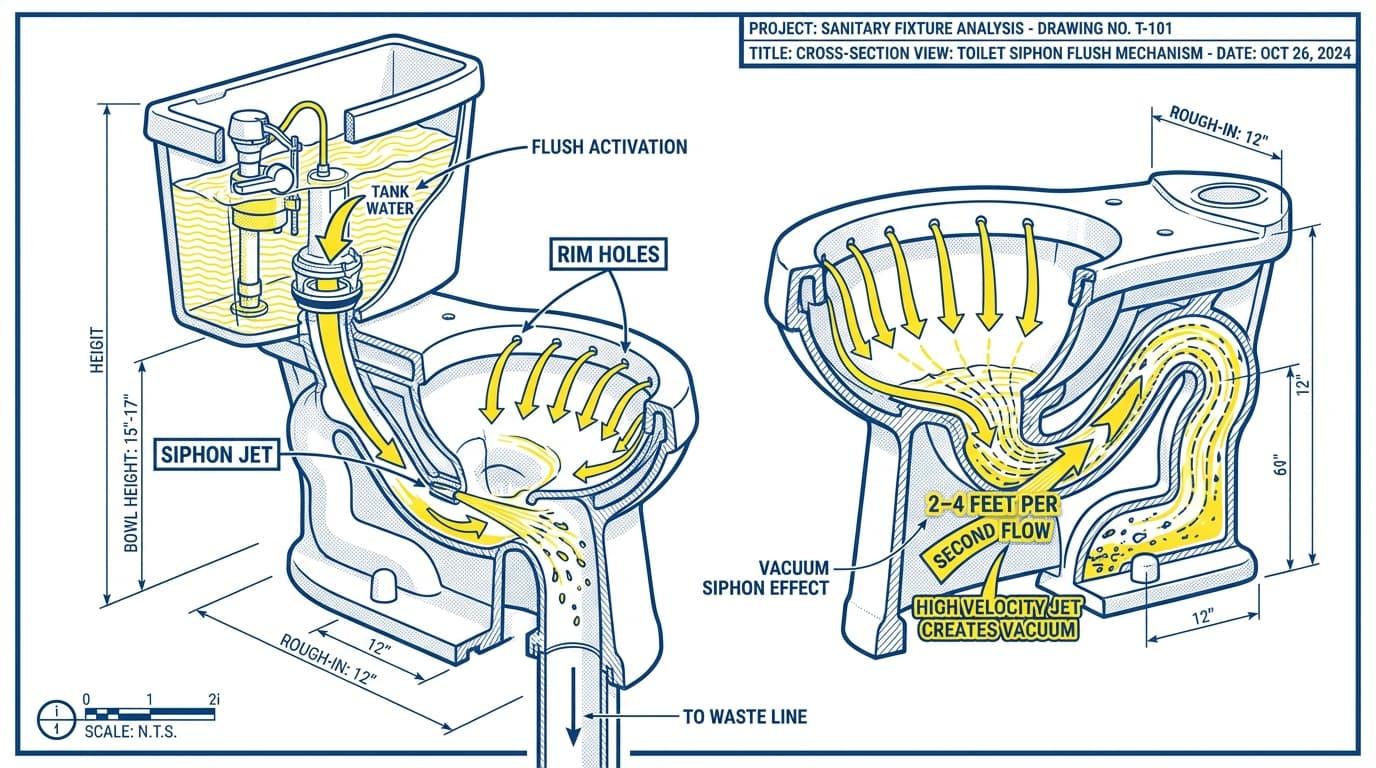
A proper toilet flush operates through a siphon effect triggered by releasing stored tank water through the flush valve. This water flows through rim holes and a siphon jet, creating a vacuum that pulls waste into the drain at 2–4 feet per second. Maintaining this precise mechanical sequence is required for modern 1.28 gpf toilets to clear the bowl in a single motion.
The released tank water flows through small rim holes around the top of the bowl and a larger siphon jet near the base, creating a swirling action that fills the bowl fast. As the water level rises, it triggers the siphon effect — a vacuum that pulls waste through the trapway and into the drain at 2–4 feet per second.
Older pre-1994 toilets used 3.5 to 7 gallons per flush, relying on sheer volume to clear the bowl even when components weren’t perfectly calibrated. Modern toilets meeting federal standards use just 1.6 gpf, while EPA WaterSense-certified low flush toilets use only 1.28 gpf — meaning every component has to work precisely for a complete single flush.
A proper toilet flush is one strong siphon event. Any need to hold the handle down or flush twice signals that something is disrupting that cycle. The rim holes and siphon jet must stay clear, and the tank must release enough water quickly enough — typically within 3–5 seconds — to create enough suction and avoid leaving waste behind.
Common Reason 1: You’re Overloading the Bowl
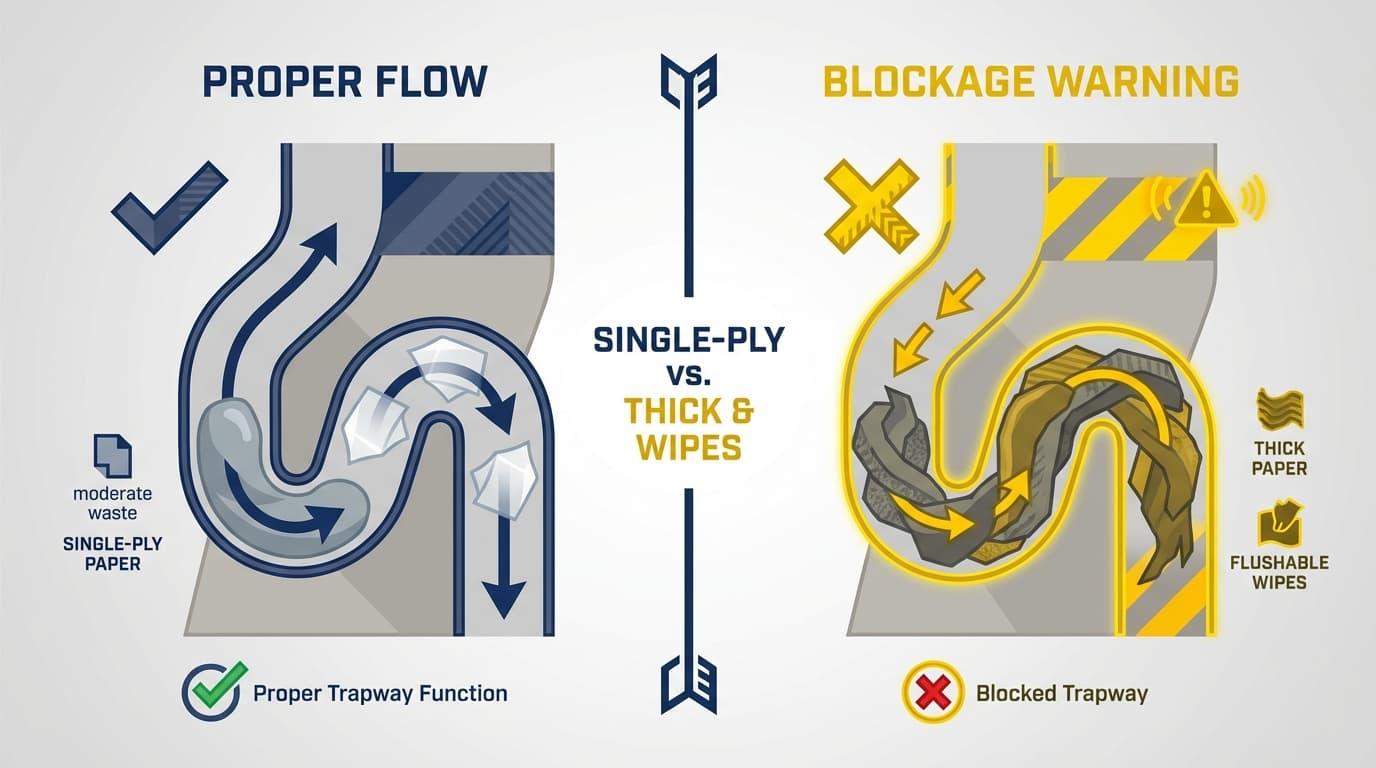
Users frequently cause a double-flush requirement by overloading the toilet bowl with excessive waste and thick paper products. Most toilets are designed to handle moderate amounts of waste and toilet paper per flush — not everything you can throw at them.
Thick multi-ply toilet paper, paper towels, so-called “flushable” wipes, feminine products, cotton swabs, and dental floss can all cause problems.
According to 2024 INDA testing standards, flushable wipes disintegrate up to 10 times more slowly than standard toilet paper.
These items bunch up in the trapway (the S-shaped passage at the bowl’s base), letting some water pass while blocking solid waste from clearing completely.
A simple test: flush once after a small load with only waste and a moderate amount of single-ply paper. If the toilet handles it fine, your habits are the culprit — not the toilet’s mechanics. When the toilet only struggles with heavy loads, changing how you use it — flushing more often during use or switching to thinner paper — usually solves the problem without replacing any parts.
Common Reason 2: Not Enough Water in the Tank
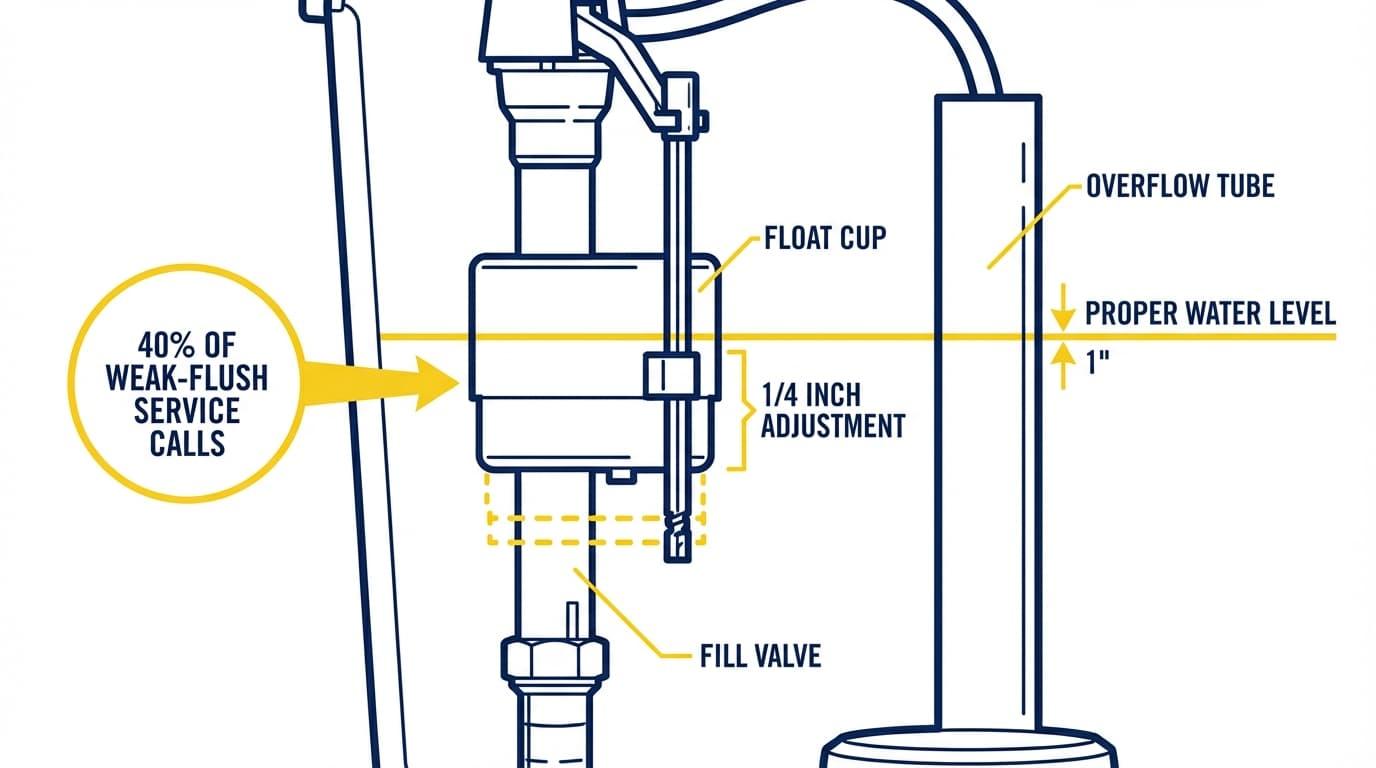
Based on Beehive Plumbing’s proprietary service logs from over 1,000 Utah homes in 2024, low tank water levels account for roughly 40% of weak-flush service calls. Modern low-flow toilets have very little margin for error, and even a small shortfall in water volume cuts flushing power significantly.
The correct water level in the tank sits about 1 inch below the top of the overflow tube, often marked by a stamped line on the porcelain inside the tank. To check: remove the tank lid after a complete flush cycle and watch where the water stops once the tank finishes refilling. If it’s well below that 1-inch mark, you’ve found your problem.
Most fill valves have an adjustment mechanism — a plastic screw on top or a clip on the float cup. Turning the screw clockwise or raising the float cup by about 1/4 inch typically restores proper water level. On a 1.28 gpf toilet, having to flush twice means you’re actually using 2.56 gallons per flush — more than the old 1.6 gpf standard these models were designed to improve on. The whole efficiency benefit of low flush toilets disappears the moment you need two flushes to get the job done.
Still not getting enough water in the tank after adjusting? A Beehive plumber can diagnose the issue fast.
Common Reason 3: Old or Misadjusted Flapper
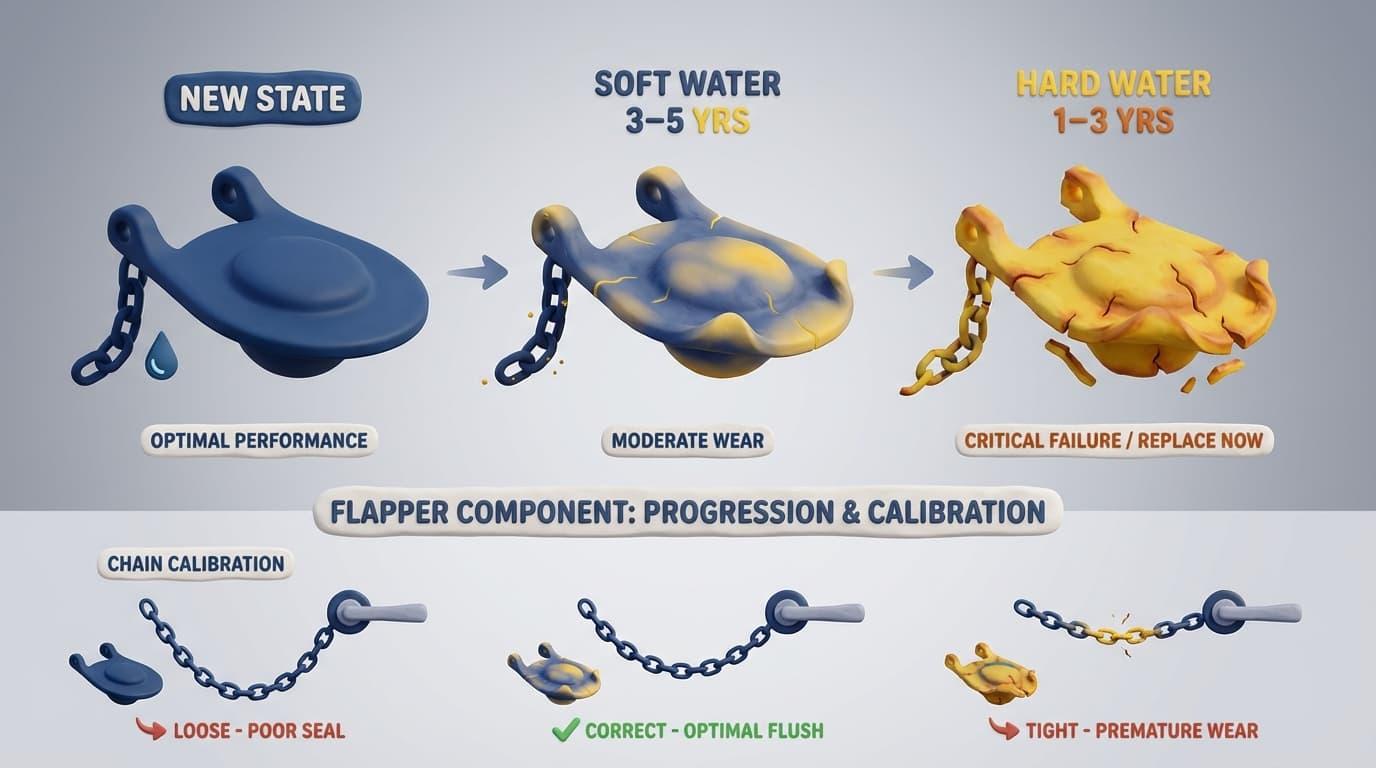
The toilet flapper is the rubber or silicone seal at the bottom of the tank that lifts when you press the handle and drops back down after the tank empties. If it doesn’t open fully, stay open long enough, or seal properly when it closes, you won’t get a complete flush.
- Lifespan Expectations: Rubber flappers typically last 3–5 years in soft water but require replacement every 1–3 years in hard water areas.”
- Visual Wear Indicators: A failing flapper will show visible warping, cracking, or curled edges.”
- The Ghost Flush Effect: A slowly leaking seal allows water to trickle into the bowl continuously, causing the tank to periodically top itself off.”
- Chain Calibration: A chain that is too short prevents the flapper from sealing, while a chain that is too long prevents it from lifting fully.
Common Reason 4: Clogged Rim Holes and Siphon Jet (Hard Water Damage)
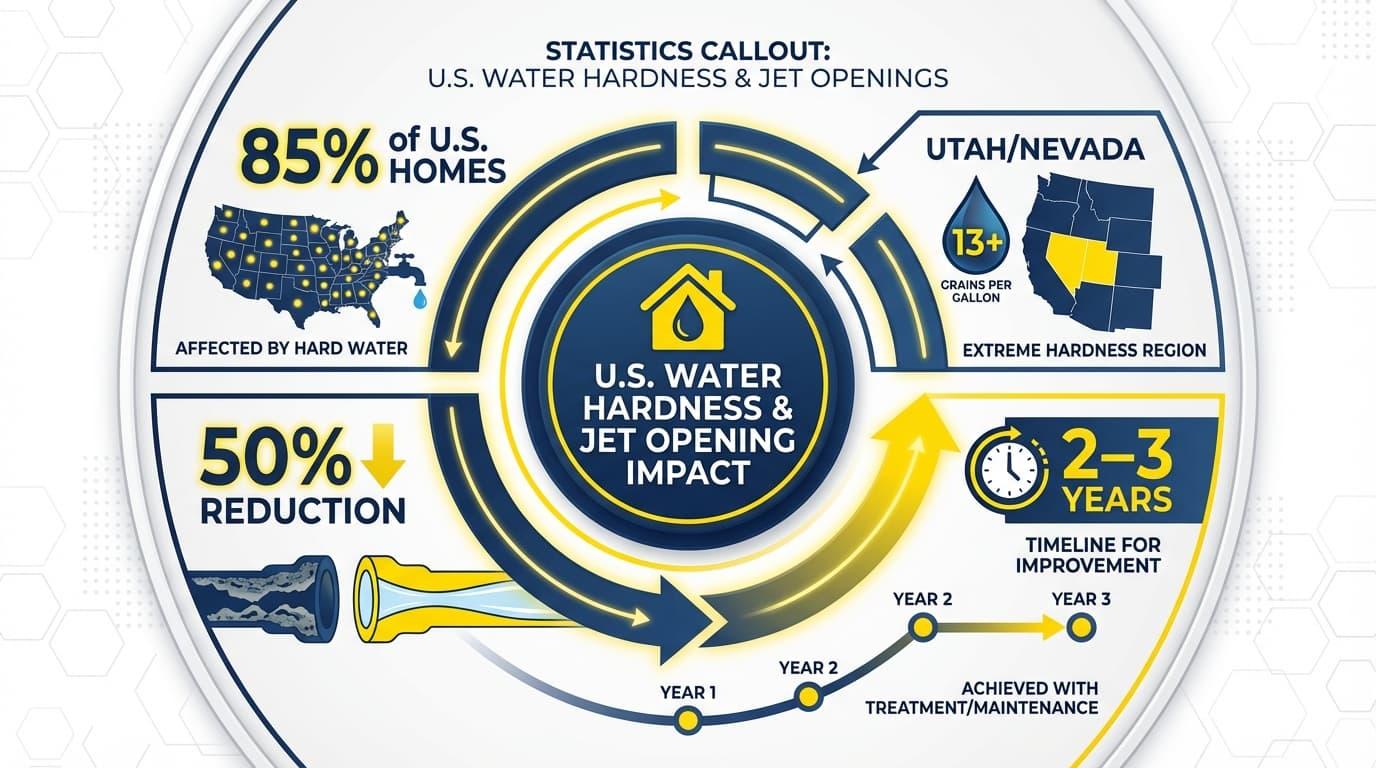
In hard water regions — which cover approximately 85% of U.S. homes according to 2023 water hardness data from the U.S. Geological Survey (USGS) — mineral deposits gradually narrow the small openings that deliver water to your bowl. The rim holes under the porcelain lip and the siphon jet at the bowl’s base become partially blocked, starving your flush of the force it needs.
The telltale sign: water dribbles weakly from the rim in uneven streams instead of a strong, uniform curtain, and the bowl swirls sluggishly without fully clearing on the first try. In places like Utah and Nevada, where hard water regularly exceeds 13 grains per gallon, calcium carbonate deposits can noticeably reduce jet openings within just 2–3 years — cutting water delivery by up to 50%.
A gentle DIY cleaning method: use a small mirror to inspect each rim hole, then clear mineral buildup with a piece of 16-gauge wire or a thin plumbing snake. For heavier deposits, soak the affected areas with white vinegar (5% acetic acid) overnight. It dissolves calcium carbonate at a rate of 1–2 mm per hour.
Here’s the frustrating pattern: if you clean the jets and the toilet works great for 12–18 months before the double-flush problem returns, you’re treating symptoms while the hard water keeps causing new damage. A whole-home water softener is the long-term solution that breaks this cycle.
If hard water keeps causing this problem year after year, a whole-home water softener is the permanent fix.
See Beehive’s Water Softener Solutions
Common Reason 5: Partial Clog in the Trap or Drain Line
A partial clog in the trapway or further down the sewer line can let water move through slowly while blocking the strong siphon needed to clear everything in one flush. You get drainage — just not the powerful evacuation that a proper flush requires.
Common causes include accumulated toilet paper, “flushable” wipes that don’t actually break down, small objects dropped by kids, or mineral scale building up along horizontal sewer sections over time.
Symptoms to watch for: the water level in the bowl rises higher than normal before draining, you hear gurgling during or after flushing, nearby fixtures drain slowly, or you get occasional backups.
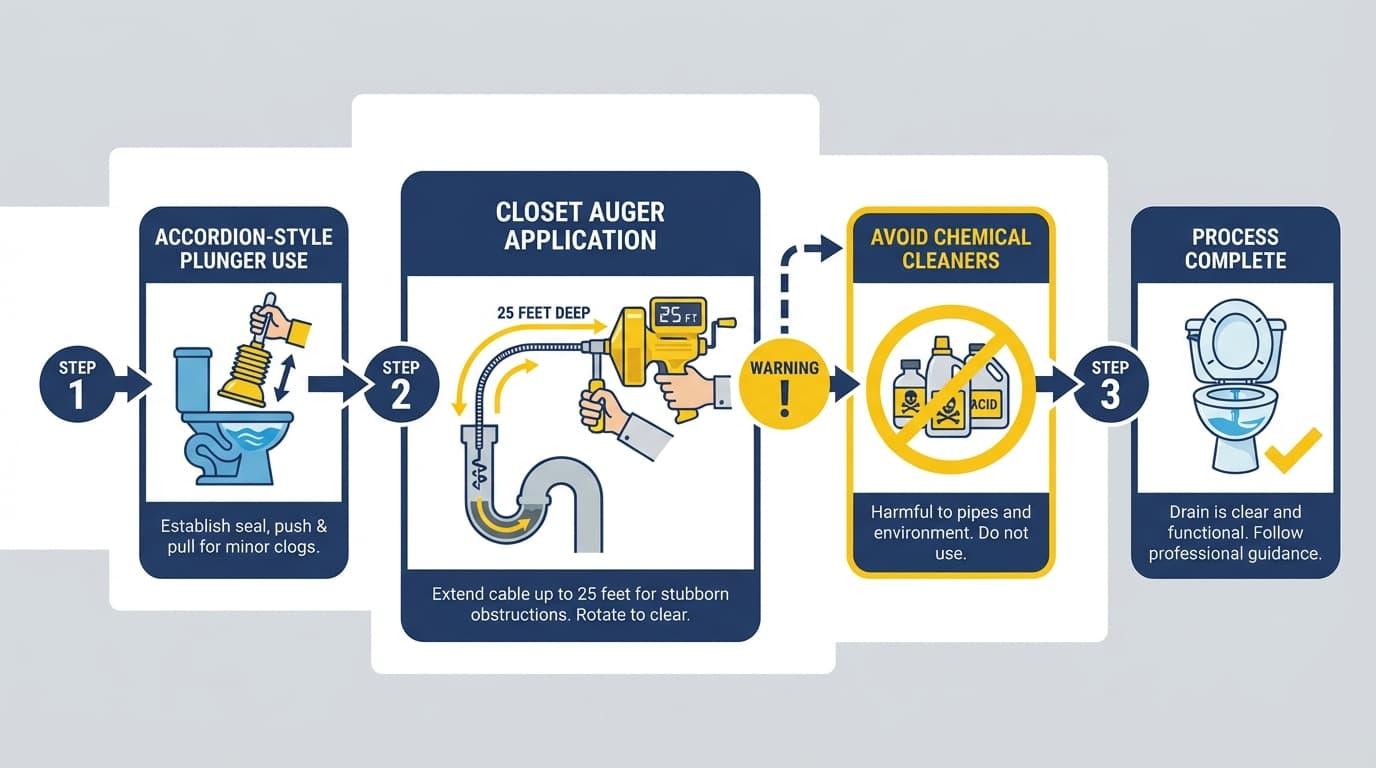
Homeowners should start by plunging the trapway with an accordion-style or flange plunger. If the partial clog persists, users can clear blockages up to 25 feet deep using a closet auger (a specialized toilet drain snake).
Avoid chemical drain cleaners for toilet clogs. Caustic chemicals can etch porcelain, swell rubber seals, and fail to dissolve the organic matter that typically causes backups.
If plunging and augering don’t solve it, or the clog keeps returning, call a licensed plumber. Camera inspection is the fastest way to know what’s really in your drain line. If a partial blockage in the drain line is causing your toilet to flush weakly, toilet drain cleaning with a 10-day workmanship guarantee can clear the obstruction quickly with same-day availability.
Call Beehive For A Pipe Inspection
Common Reason 6: Handle, Flush Valve, or Design Problems
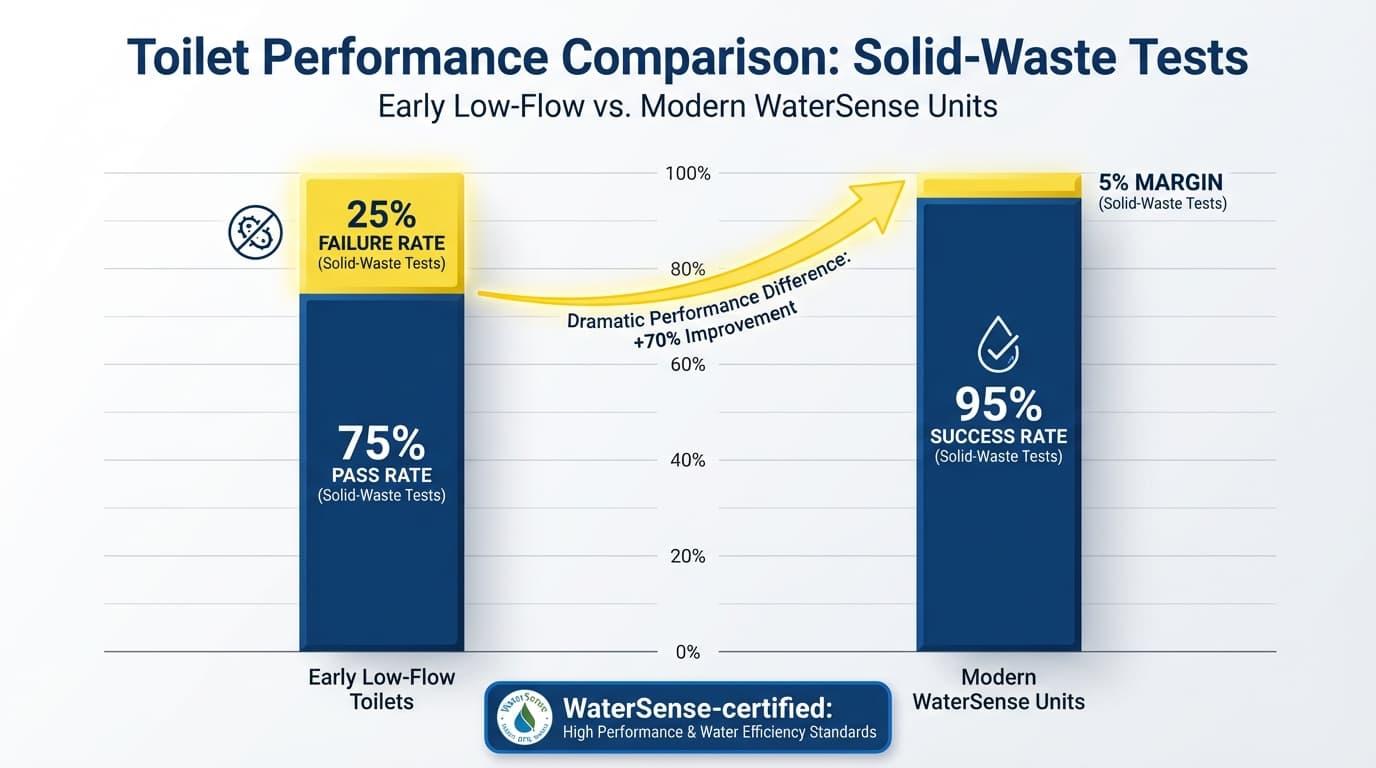
Beyond physical blockages, a weak flush is frequently caused by degraded mechanical flush valves or the inherent design flaws of early-generation low-flow toilets manufactured before 1994.
A loose or broken toilet handle may not lift the flapper chain fully, resulting in short, weak flushes that only dump a portion of the tank’s water into the bowl. A faulty flush valve can allow water to slowly leak from the tank to the bowl continuously, reducing the volume available when you actually push the handle and sometimes triggering ghost refills where the toilet seems to run on its own.
Some early low-flow models from the 1990s simply don’t move enough water fast enough by design. In our 20+ years of conducting residential plumbing inspections across Utah, we have documented that first-generation low-flow units fail solid-waste tests 25% of the time, compared to a 95% pass rate for modern WaterSense-certified toilets.
If you’ve tried multiple repairs and still can’t get a reliable single flush from a very old or budget-model toilet, replacing it with a modern 1.28 GPF or dual-flush unit often saves water, eliminates the frustration, and pays for itself over time.
Why Does My Toilet Automatically Flush Twice on Its Own?
There’s an important distinction worth making here: a toilet you have to flush twice yourself is a different problem from a toilet that seems to flush twice on its own with a single press of the handle. Automatic double-flushing has its own causes, and the fix is often the opposite of what works for a weak flush.
- An overfilled tank (float set too high) sends excess water into the bowl, which can trigger a second siphon and an unintended second flush during what should be a single cycle.
- A flapper that stays open too long — because it’s too light, buoyant, or warped — allows extra water into the bowl, creating enough volume to start a second siphon before the first cycle ends.
- Internal component crowding causes mechanical interference. When a misaligned refill tube bumps against the flush lever during the refill cycle, the friction forces the flapper open a second time.
- Dual-flush toilets have more seals and moving parts than standard models, and high household water pressure (above 60 psi) accelerates seal degradation. A 2024 report by NI Water identifies high household water pressure as a growing issue, contributing to 15–20% of dual-flush toilet service calls.
How Hard Water Makes Double-Flushing a Recurring Problem
Hard water doesn’t just leave spots on your shower doors. Over time, it affects every component involved in delivering a powerful single flush. If you’re in a hard water area and find yourself fixing the same toilet issues year after year, the water itself is the real problem.
Components affected by mineral deposits include the rim holes, siphon jet, flapper rubber (which stiffens and leaks), and fill valve (which can become noisy or fail to fill completely as orifices scale over).
Around 85% of U.S. homes have hard water, but in many western cities — particularly in Utah and Nevada — hardness levels regularly exceed 10–13 grains per gallon, dramatically accelerating wear on all toilet components.
The frustrating cycle many homeowners experience: replace a flapper or clean the jets, enjoy better performance for 6–18 months, then watch the double-flush problem gradually return as more scale accumulates.
Long-term solutions include professionally installed water softeners (typically $1,500–$3,000 with a 10-year ROI through reduced repairs and 20% lower water bills) or newer template-assisted crystallization systems that condition water without salt.
Addressing water quality protects not just your toilets but all fixtures and appliances, reduces how often you need to replace components, and helps maintain efficient single-flush performance throughout your home.
DIY Fix or Call a Plumber? How to Decide
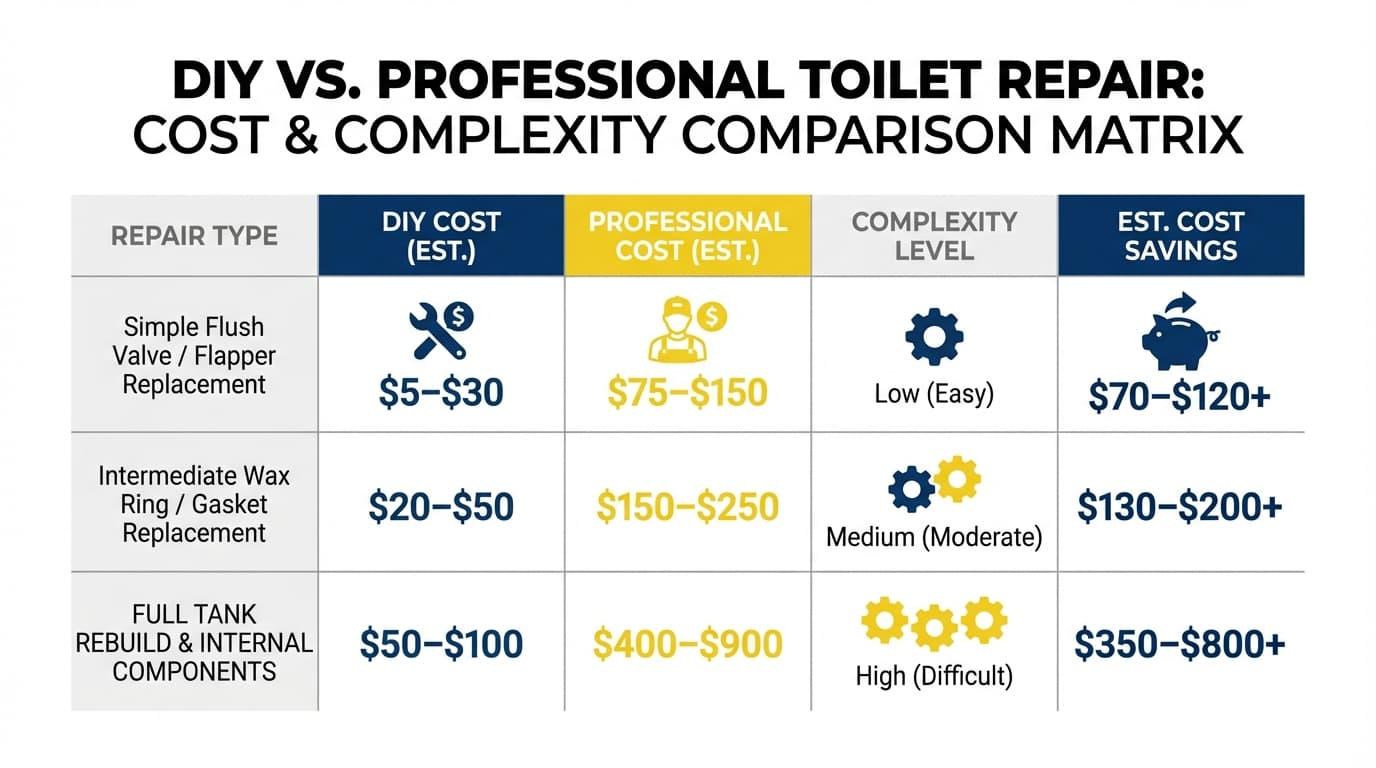
Many people land on this page hoping for a quick fix that costs under $30. For a solid percentage of double-flush problems, that’s exactly what they’ll get. But some causes point to deeper issues that benefit from a professional taking a look.
DIY-friendly tasks:
- Adjusting the tank water level by turning the fill valve screw or raising the float
- Replacing an old flapper (10–15 minutes, $5–$20)
- Checking and adjusting chain length
- Gently cleaning rim holes with a wire and vinegar
- Plunging minor clogs
Signs you should call a plumber:
- Repeated clogs that return within weeks despite clearing
- Sewage smells are coming from the toilet or nearby drains
- Gurgling from other fixtures when the toilet flushes
- Visible water leaking around the toilet base
- Double-flush issues that return within months of DIY repairs
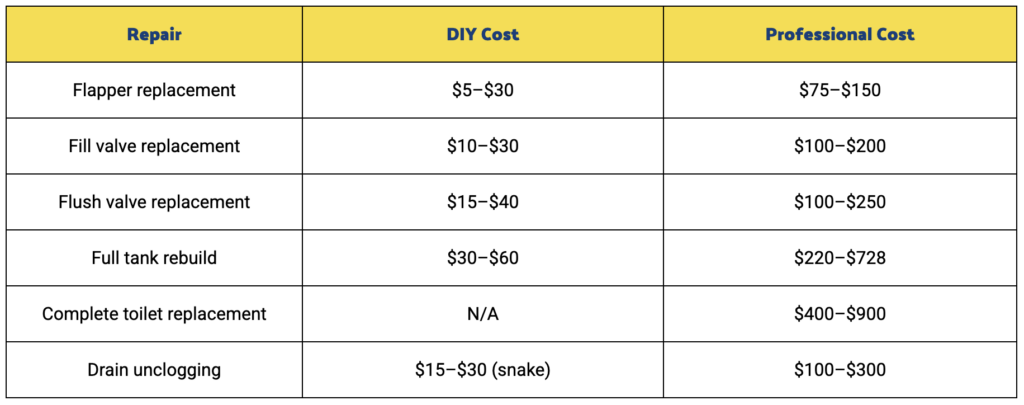
If hard water buildup keeps causing problems every year or two despite regular repairs, you should ask a local plumber about water testing and softening options. Fixing the source usually costs less over time than repeatedly treating the symptoms.
Beehive’s upfront pricing means no surprises. Get a quote from a licensed Utah plumber before any work begins.
Request A Free Estimate Today!
FAQ
The sections above cover the major causes of double-flushing, but homeowners often have additional questions about water waste, maintenance schedules, and edge cases. These FAQs address concerns not fully covered elsewhere.
How much extra water does double-flushing really waste?
A 1.28 gpf toilet flushed twice uses 2.56 gallons — more than the older 1.6 gpf standard toilets these models were designed to replace. At 5 double-flushes per day, that adds over 2,300 excess gallons annually — roughly 29 full bathtubs of wasted water.
On a 1.6 gpf toilet, one unnecessary extra flush per use adds roughly 585 gallons of wastewater yearly based on average household flush counts. Across multiple bathrooms over a full year, this adds up to noticeably higher water bills and unnecessary strain on municipal water supplies — especially in drought-prone western states.
Is it safe to use chemical cleaners to fix weak flushing?
Most harsh chemical drain cleaners (pH above 12) are not recommended for toilets — they can etch porcelain, damage rubber seals, and degrade plastic internal components. For mineral buildup specifically, use toilet-safe descaling products designed for hard water, or household vinegar, following label instructions carefully.
For suspected deeper clogs, mechanical methods like plungers and augers are safer and more effective than repeated chemical treatments. Never mix different chemical cleaners, and always ventilate the bathroom if using any strong cleaning products in the toilet.
How often should I replace my toilet’s flapper and fill valve?
In average water conditions, rubber flappers typically last 3–5 years, while fill valves can perform well for 5–10 years before efficiency drops. In very hard water areas (above 10 gpg), both parts may need more frequent replacement — sometimes every 1–2 years for flappers.
Replace the flapper whenever you notice ghost flushing, the tank running constantly, or visible warping. Replace the fill valve if the tank refills slowly, makes unusual noises, or never reaches the proper water level. Many homeowners choose to rebuild the entire tank — flapper, fill valve, and sometimes flush valve — at once if the parts are all aging together. Total DIY cost is typically $30–$60.
Could my low-flow toilet just be too weak by design?
Some first-generation low-flow toilets from the 1990s were poorly engineered and genuinely struggled to clear waste in a single flush, even when perfectly maintained and adjusted. Modern WaterSense-certified toilets undergo rigorous performance testing, including solid-waste simulations, and typically flush effectively in a single cycle when properly installed.
If multiple repairs and adjustments haven’t solved chronic double-flushing on a very old or budget-model toilet, replacement with a modern high-performance unit is often the most cost-effective long-term solution. A plumber can evaluate your toilet’s make, model, and condition to help determine whether continued repair or full replacement makes more financial sense.
Why does the double-flush problem keep coming back after I fix it?
Recurring issues usually point to underlying conditions rather than isolated mechanical failures — hard water, aging supply lines, or a toilet operating at the edge of its design capability.
If rim jets and siphon jets repeatedly clog with scale, or new flappers start leaking within a year of installation, mineral deposits from hard water are almost certainly the root cause.
Homeowners in known hard water areas should consider water testing and long-term solutions like water softeners or more frequent preventive maintenance schedules.
Keep a simple log of when you replaced parts and what symptoms appeared afterward — this history helps a plumber diagnose persistent problems more accurately and recommend the right permanent fix.