
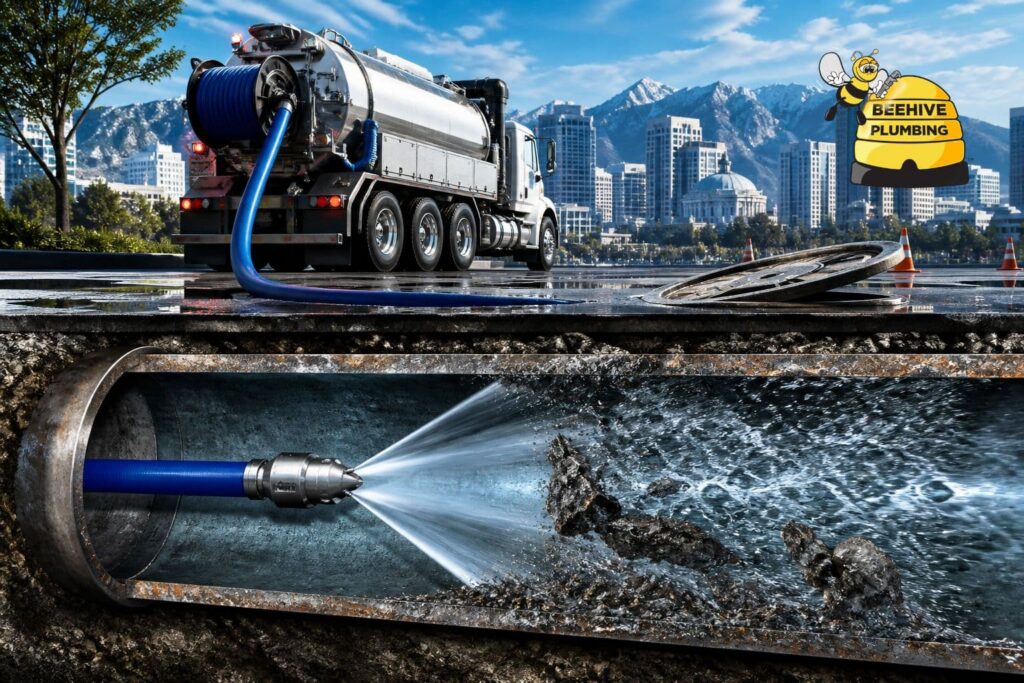
A clog that keeps coming back usually means the real problem is deeper in the line. Grease, sludge, and mineral deposits can gradually narrow the pipe until several drains slow down or sewage starts backing up.
This is especially relevant along the Wasatch Front, where water is considered hard to very hard. Salt Lake City’s 2026 Water Quality Report recorded hardness levels from 136 to 212 milligrams per liter at treatment plants and up to 571 milligrams per liter in some wells and springs.
Hydro jetting in Salt Lake City doesn’t simply punch a hole through the blockage. It uses high-pressure water to wash accumulated debris from the inside of drain and sewer lines for a more complete cleaning.
Beehive Plumbing evaluates the pipe first to determine whether hydro jetting is the safest approach. Below, you’ll learn how the process works, who it’s suited for, what affects the cost, and when another repair method makes more sense.
Schedule Your Drain Evaluation
Why Salt Lake City Pipes Develop Heavy Buildup
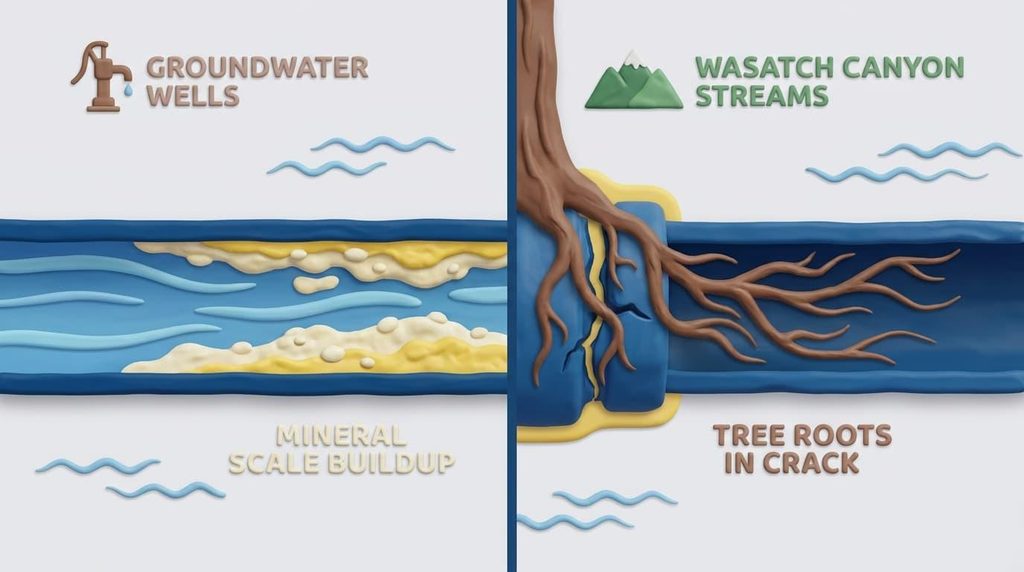
Salt Lake City’s water supply changes by source. The city receives most of its water from Wasatch Canyon streams and supplements it with groundwater wells, especially during summer. Salt Lake City Public Utilities notes that the well water is harder because it contains more minerals. Over time, mineral scale can leave a rough surface inside a pipe that catches grease, soap residue, hair, and other waste.
Mature landscaping can create another problem. Tree roots seek moisture and may enter sewer lines through existing cracks or loose joints. Hydro jetting removes many soft root intrusions and the debris caught around them, but it cannot seal the opening that allowed the roots inside. Moderate tree roots may require cutting before high-pressure cleaning, while major tree root invasions or damaged pipe sections may require repair.
How the Hydro Jetting Process Works
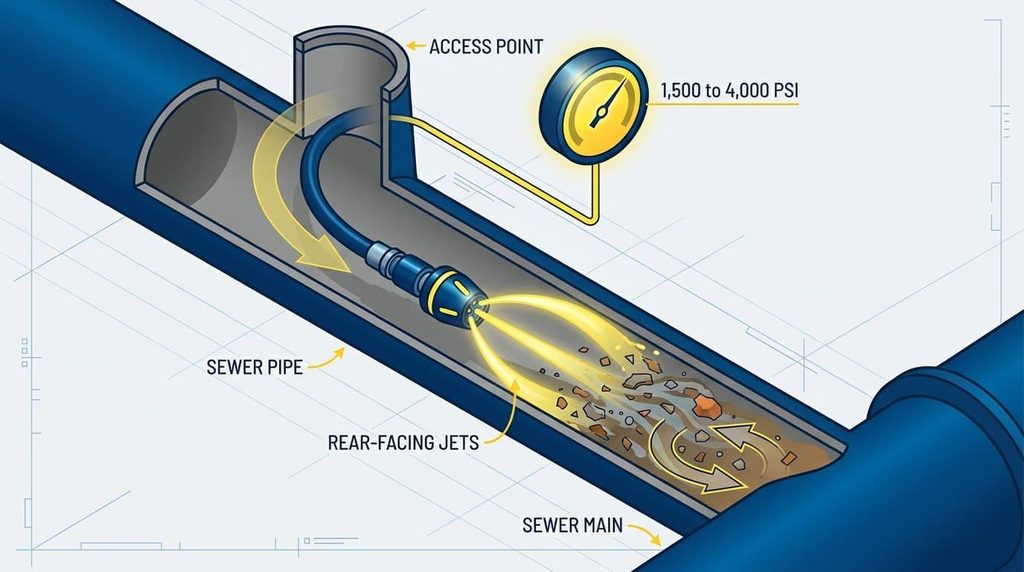
Hydro jetting is a thorough cleaning method rather than just a surface fix. A technician feeds a flexible hose and specialized nozzle into an approved access point. Rear-facing jets help move the nozzle through the line while high-pressure water loosens buildup from the pipe wall and carries it toward the sewer main.
Professional equipment may operate across a broad pressure range, often from about 1,500 to 4,000 PSI, but the highest setting is not automatically the best. Water pressure, nozzle type, pipe diameter, pipe material, and pipe condition must work together. The goal is to clean the whole pipe safely, not force maximum pressure through older or fragile pipes.
What Hydro Jetting Removes
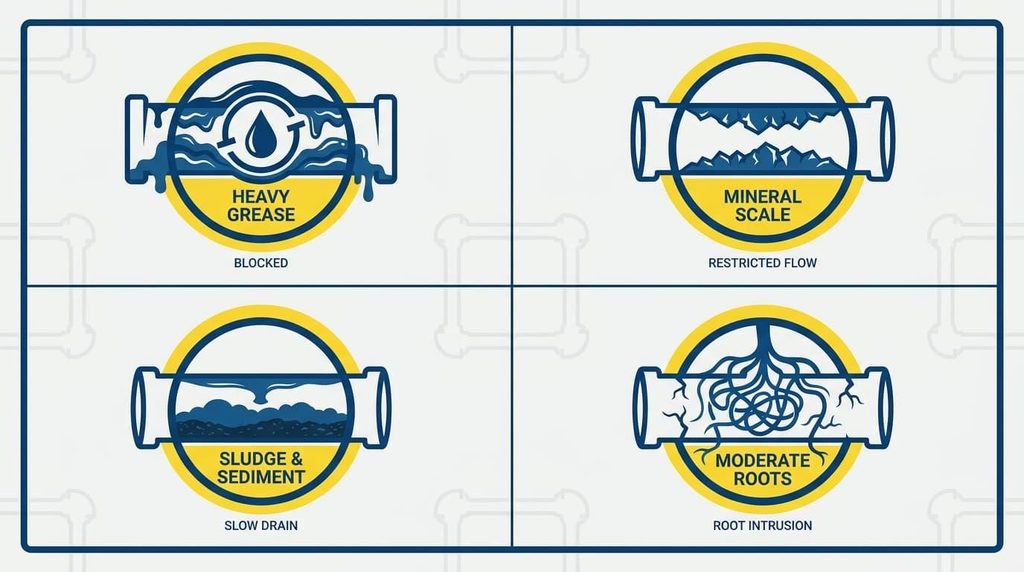
Hydro jetting cleans more than an immediate blockage. When the pipe is structurally sound and the method is suitable for the material, moving water can remove buildup along a larger section of the line, helping restore it to a diameter closer to its original by clearing the interior walls.
- Heavy grease: Effective for removing grease that coats a kitchen drain or commercial food-service line
- Mineral scale: Loosens deposits that narrow drain lines and create surfaces where waste collects
- Sludge and sediment: Flushes accumulated debris from the bottom and sides of a sewer line
- Moderate roots: Cuts and carries away smaller root intrusion when the correct nozzle is appropriate
Because hydro jetting removes buildup instead of opening only a narrow path through it, it may provide longer-lasting results than snaking for recurring blockages. It is also eco-friendly because it relies on water pressure rather than chemical cleaners. It still cannot correct bellied, separated, collapsed, or badly deteriorated pipes.
Is Hydro Jetting Safe for Drain and Sewer Lines?
Hydro jetting is safe when a qualified plumbing professional confirms that the pipe can withstand the selected pressure. A camera inspection can reveal cracks, corrosion, offset joints, root intrusion, or a collapsed section before cleaning begins. That inspection is especially important for fragile pipes and older plumbing systems with an uncertain material or repair history.
Beehive Plumbing can inspect the plumbing system and determine whether hydro jetting, mechanical drain cleaning, or an additional repair is the responsible next step.
Hydro Jetting vs. Snaking
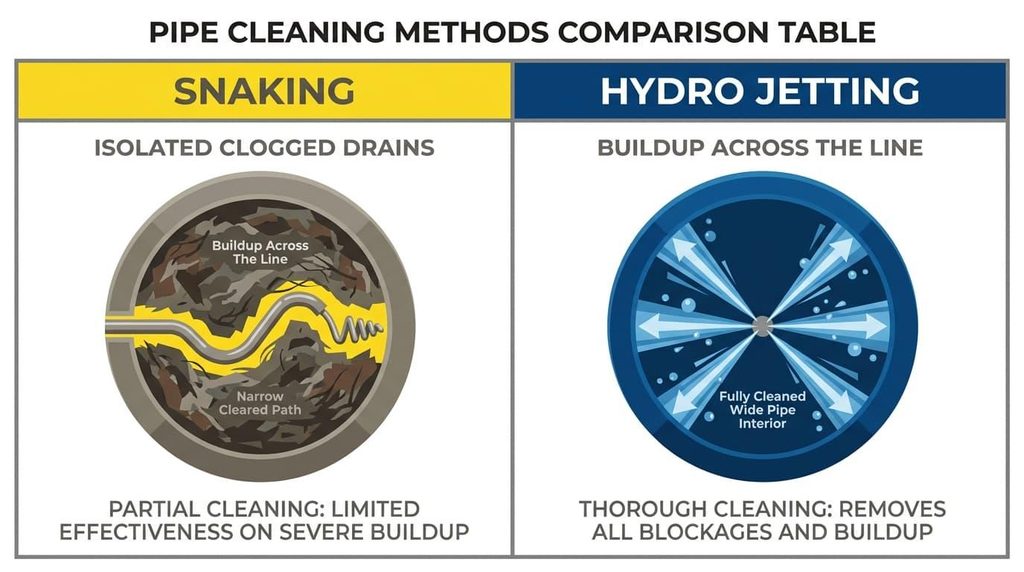
A drain snake and hydro jetting solve different problems. Snaking can break through a stubborn clog and restore flow quickly, making it useful for isolated clogs, but it may not fully clear grease, mineral deposits, and sludge from the pipe walls.
Hydro jetting is a deeper cleaning method used when recurring clogs result from buildup along the line. It uses water rather than harsh chemicals and can clean a wider portion of the pipe interior. The better choice depends on what the camera shows, where the blockage sits, and whether the line is sound enough for high-pressure cleaning.
Signs You May Need Hydro Jetting
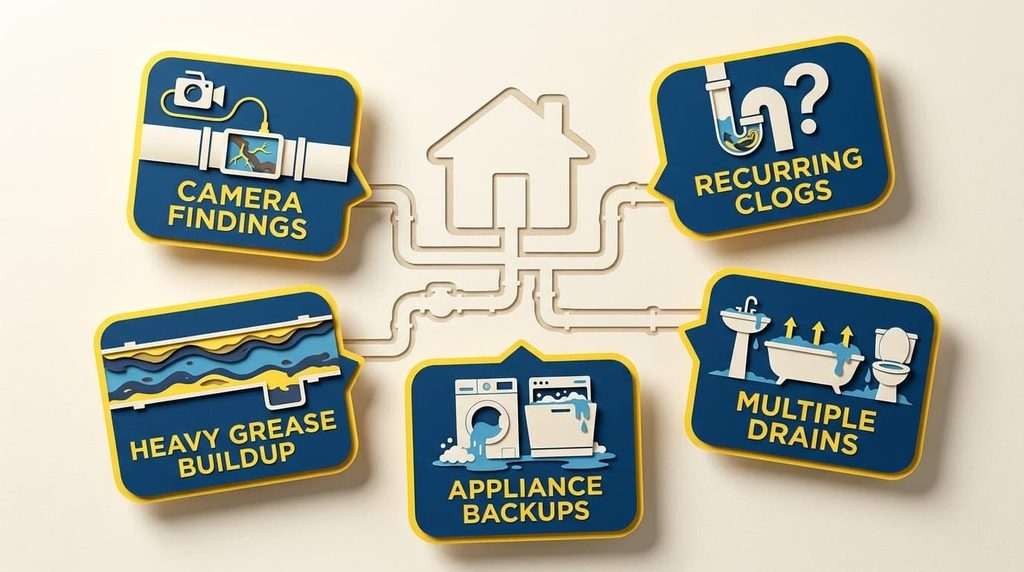
One slow sink does not always justify jetting. The following patterns are stronger signs that the problem extends beyond one drain and involves multiple fixtures sharing the same drainage issue:
- Recurring clogs: The same drain blocks again shortly after basic clearing
- Multiple drains: Several fixtures drain slowly or gurgle at the same time
- Appliance backups: Water rises in another fixture when a dishwasher or washing machine drains
- Heavy grease buildup: A restaurant, office kitchen, or busy household repeatedly develops restricted flow
- Camera findings: The inspection shows sludge, mineral scale, or root growth coating the pipe
Hydro Jetting Cost in Salt Lake City
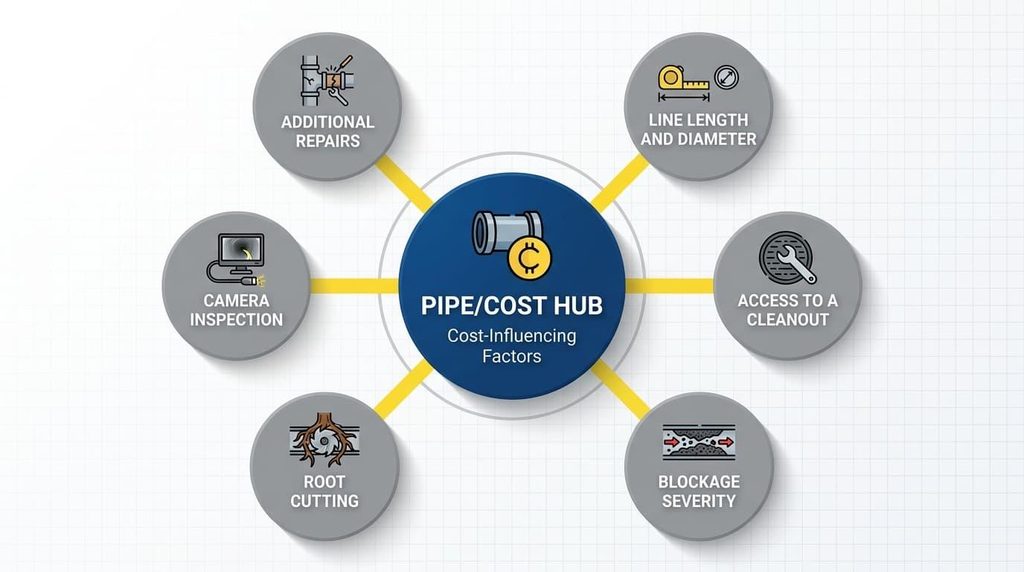
Hydro jetting cost depends on the line rather than one flat citywide rate. Line length and diameter, access to a cleanout, blockage severity, root cutting, camera inspection, and any additional repairs can all change the final price. Commercial systems and larger drain lines may require more time and specialized equipment than residential homes.
Beehive Plumbing provides upfront pricing after evaluating the affected line, so the recommended work and cost are clear before cleaning begins.
Request Upfront Service Pricing
Preventing Future Clogs
Preventative maintenance should match the property’s actual history. A building with recurring grease buildup or documented tree root intrusion may benefit from scheduled service, while a healthy pipe without repeat problems may not need yearly services. Camera findings and prior blockage patterns provide a better schedule than an automatic annual recommendation.
Between visits, keep cooking grease, food scraps, wipes, hygiene products, and other non-flushable material out of drain lines, since removing grease buildup is one reason hydro jetting can help prevent future blockages. Regular drain maintenance and early attention to slow drains help keep things flowing smoothly and reduce the chance of a drain emergency.
Schedule Hydro Jetting in Salt Lake City
Recurring clogs deserve more than another temporary surface fix. Beehive Plumbing serves Salt Lake City, UT, with hydro jetting, drain cleaning, camera inspections, and 24/7 emergency plumbing support. Its licensed master plumbers can evaluate the whole pipe, explain the options, and recommend a reliable service based on the line’s condition.
Book Hydro Jetting Service Today
Hydro Jetting Salt Lake City FAQs
How Long Does Hydro Jetting Take?
Many straightforward jobs can be completed in a few hours, but timing depends on line length, access, pipe condition, and the amount of buildup. A camera inspection or root cutting can take time but helps the technician clean the line safely and thoroughly.
Can Hydro Jetting Damage Older Pipes?
It can damage a compromised line if the pressure or nozzle is inappropriate. Older does not automatically mean unsafe, but cracks, corrosion, weak joints, and fragile materials must be identified before cleaning. A camera inspection helps determine whether jetting or another drain-clearing method is safer.
Does Hydro Jetting Prevent Every Future Clog?
No cleaning method can prevent every future clog. Hydro jetting removes existing buildup more thoroughly than a method that opens only a narrow channel, but grease, mineral deposits, roots, and improper drain use can create new restrictions over time.