
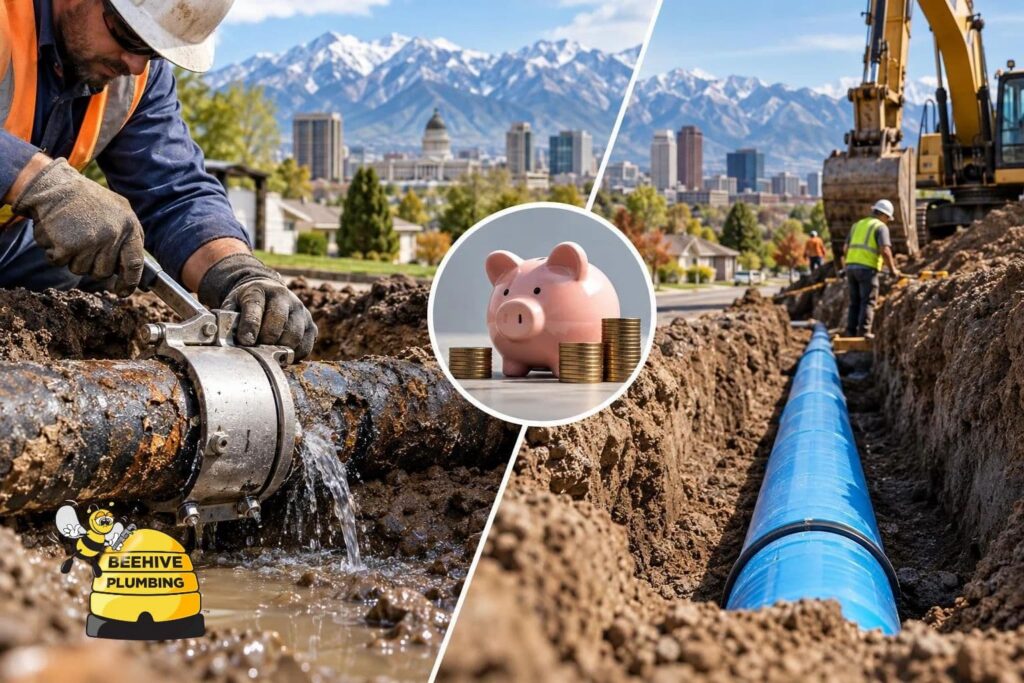
A sudden drop in water pressure, a soggy patch in the yard, or a water bill that climbs for no obvious reason can make you wonder what is leaking underground and how much fixing it will cost. For Salt Lake City homeowners, the first question is often whether a plumber can repair one damaged section or needs to replace the entire service line.
Main water line repair cost typically ranges from $400 to $1,500 for a localized fix, while replacing the full water service line commonly costs $2,000 to $5,000 nationally. At Beehive Plumbing, we know the bigger concern is whether one repair will solve the problem or an aging line will keep leaking. The answer starts with finding the damage and understanding what the job will involve.
Key Takeaways
- A localized main water line repair often costs $400-$1,500 nationally; full replacement commonly ranges from $2,000-$5,000.
- Check service-line ownership, insurance coverage, and the complete written scope before approving work.
- An isolated leak may be repairable, while repeated leaks or widespread corrosion may justify replacement.
- Driveway, sidewalk, and landscaping restoration may add costs beyond the pipe work.
- Line length, burial depth, pipe material, and access can change the final quote.
Main Water Line Repair and Replacement Costs at a Glance
The figures in HomeGuide’s water line cost guide provide a useful national reference for comparing the repair options below, with an average cost of $990 for repair and a broader main water line cost planning range based on scope.
| Type of work | National planning range | When it may fit |
|---|---|---|
| Localized water line repair | $400–$1,500 | One accessible defect in otherwise serviceable pipe |
| Full main water service line replacement | $2,000–$5,000 | Repeated failures, extensive corrosion, systemic failures affecting the entire line, or an unsuitable existing line |
| Trenchless replacement | Site-specific quote | Eligible route where limiting surface excavation may offset specialized installation costs |
The most suitable option depends on whether the damage is isolated or extends through the line, so the table is a starting point for discussing the repair scope with your plumber and the average cost with your plumber.
What Drives the Total Cost of Underground Water Line Repair?
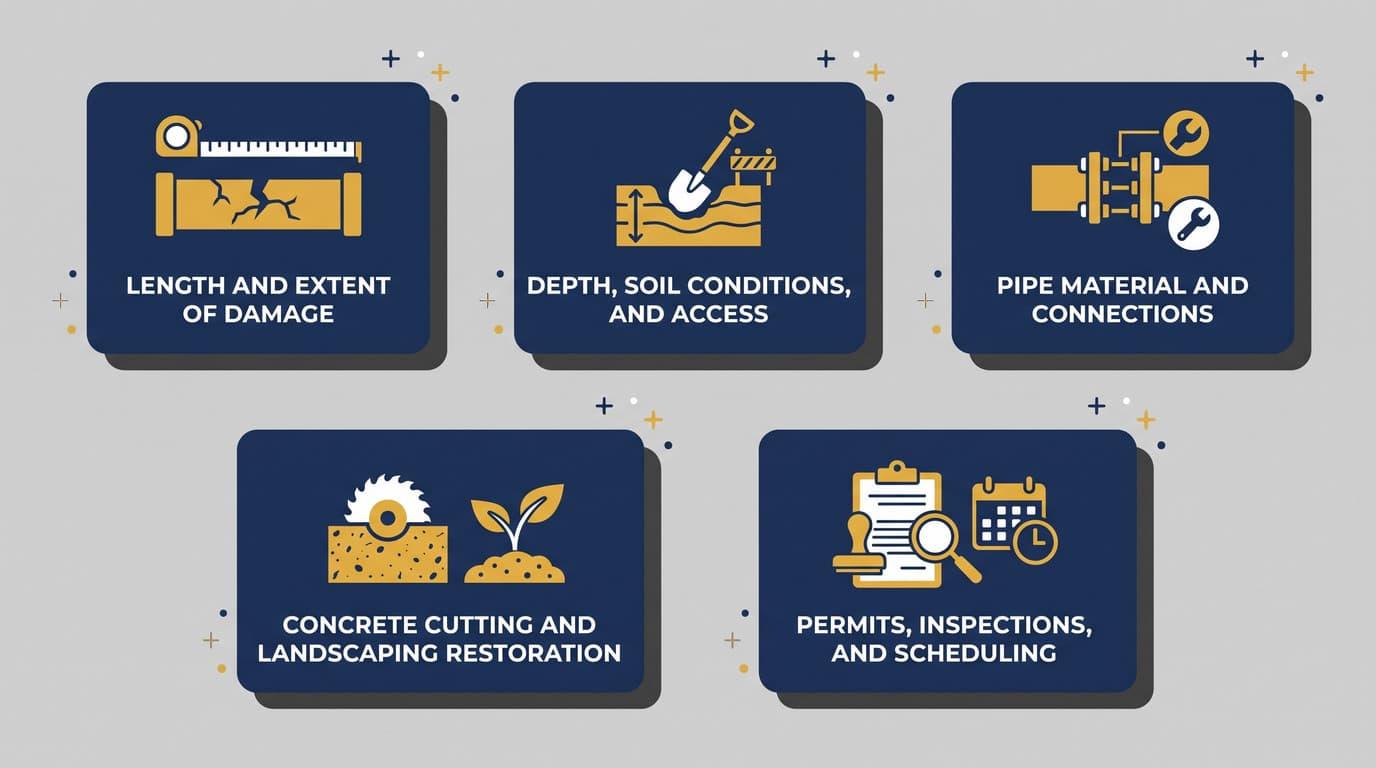
The length of damaged pipe matters, but the largest differences in repair costs often come from the pipe’s location, depth, and accessibility, along with what must be rebuilt after the repair. These factors determine how much repair work, labor, and site work the job requires.
- Length and extent of damage. A short spot repair uses less pipe and excavation than replacing the full line from the meter or connection point to the house. Ask how many feet the quote covers.
- Depth, soil conditions, and access. A deeper broken pipe usually takes more time to reach, so deeper lines require more labor and raise labor costs. Rocky ground, tight side yards, utility crossings, and an inaccessible valve box complicate the repair process.
- Pipe material and connections. Pipe materials also affect the total: copper typically runs about $2–$10 per linear foot, CPVC about $0.50–$1, and PEX about $0.40–$2. The plumber should identify the existing pipe and explain why the new material is appropriate.
- Concrete cutting and landscaping restoration. Reaching a line beneath a driveway, sidewalk, or planted yard can add substantial removal and restoration work beyond the plumbing itself, and these additional costs can significantly increase the total.
- Permits, inspections, and scheduling. Repair permits can run from $25 to $500 depending on location, with some municipal plumbing permits falling in the $150 to $500 range. Local requirements, inspections, and urgent scheduling can also affect the final price.
The same cost guide estimates labor costs at $75-$150 per hour, with excavation at roughly $120-$150 per hour and underground pipe repair at about $100-$200 per linear foot. Emergency or off-hours service may raise charges further. These are national benchmarks, not an itemized quote for your property. A written estimate should show the labor, access work, and restoration involved.
Repair or Replace the Main Water Line: Which Costs Less Over Time?
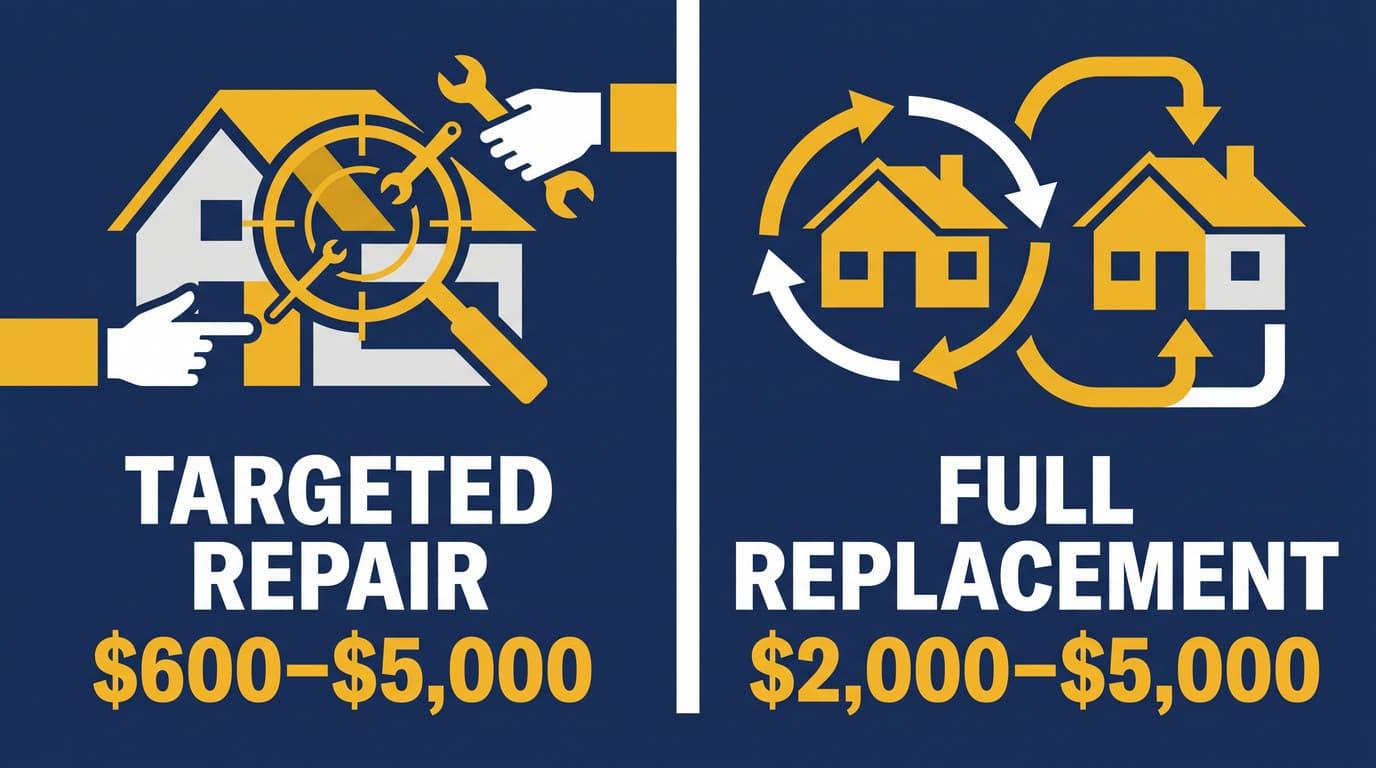
When damage is confined to one accessible section and the surrounding pipe is sound, a targeted repair can be the more cost-effective choice, especially for isolated damage like a single crack or a small leak. It resolves the immediate problem without paying to replace an existing water line that still has useful life.
Recurring leaks tell a different story. Repairing corroded pipes can cost $600 to $5,000, and widespread corrosion, severe damage, or an outdated pipe material may make full replacement more economical than repeatedly opening the ground for repairs, especially since replacing a main water line costs $2,000 to $5,000 on average and a new line often makes more sense when deterioration affects multiple sections.
For older galvanized steel service lines, internal corrosion can reduce flow and weaken multiple sections. If lead pipes are suspected, material identification and your water provider’s guidance are especially important; the EPA’s lead service line guidance explains why lead service lines warrant attention.
At Beehive Plumbing, we assess the condition of the existing water service line and explain when a targeted repair may be enough or when replacing the line could prevent repeated problems. Our water main replacement service in Utah covers the options available for aging or extensively damaged pipes, so you can weigh the long-term cost before committing.
Explore Water Main Replacement Options
Traditional Excavation vs. Trenchless Water Line Work
The repair method changes both the plumbing scope and the amount of property restoration. Trenchless options are less invasive, while traditional excavation can look cheaper at first but often leads to higher restoration costs after the plumbing work is done.
| Approach | What it involves | Main cost consideration |
|---|---|---|
| Localized excavation | Open the ground at the damaged section and repair the pipe | Smaller opening when damage is isolated and accessible |
| Open-trench replacement | Expose and replace the necessary line run | Lower initial trenching cost, but more excavation and surface restoration similar to sewer repair |
| Trenchless replacement | Use limited access points to install a suitable replacement line | Higher upfront price, but less disruption to landscaping and hardscaping |
Pipe bursting can limit digging when the route and nearby utilities allow it, and trenchless pipe bursting often runs about $100–$250 per linear foot. Pipe lining is different and must be specifically approved for pressurized drinking-water lines, with trenchless pipe lining often costing about $80–$200 per linear foot. If your line runs beneath paving or landscaping, compare the full installed and restored cost of each viable method, since traditional trenching often runs about $50–$150 per linear foot.
Who Pays for a Water Service Line Leak in Salt Lake City?
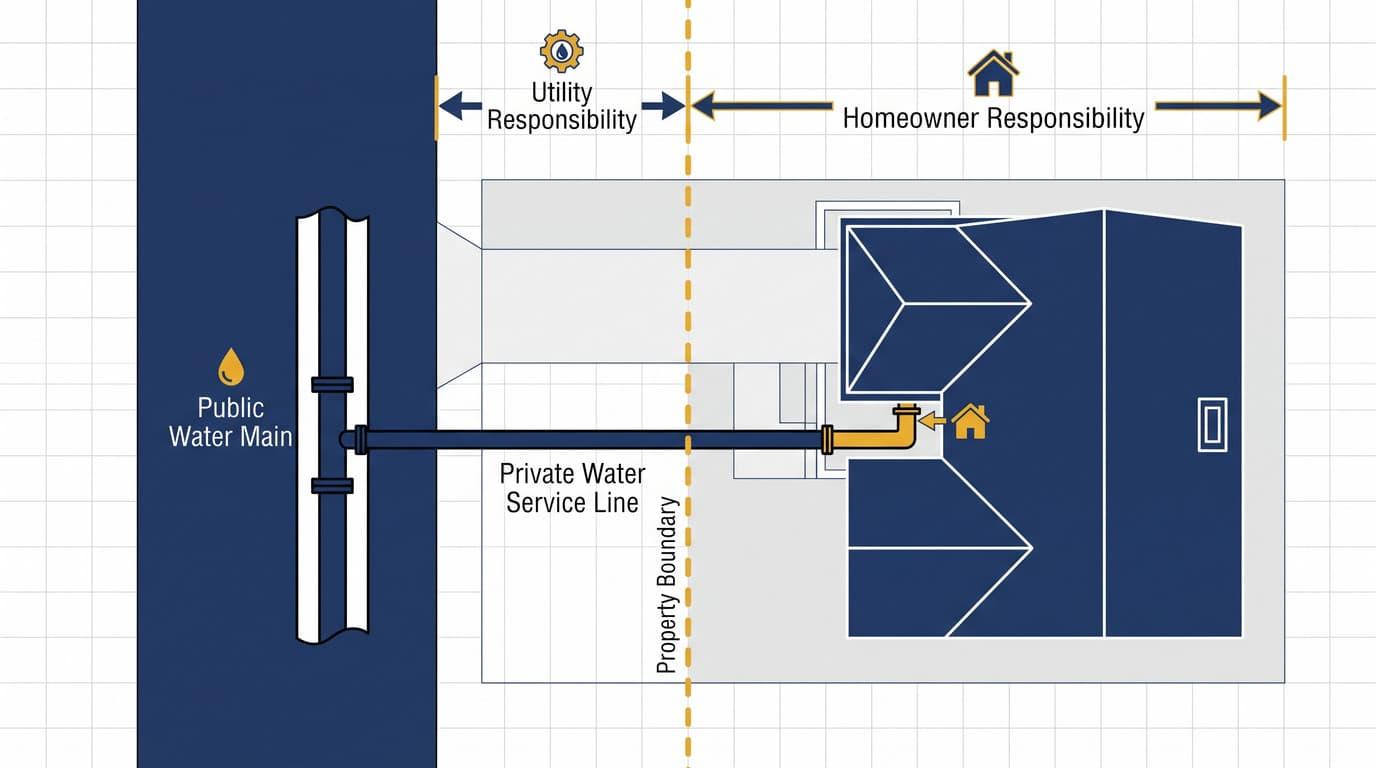
A public water main and the private water service line feeding your home are not the same pipe. Most homeowners are responsible for at least part of the service line between the utility connection and the house, and the homeowner is typically responsible for the section running from the property boundary to the house, subject to local utility rules. Before authorizing water service line repair near the meter or street, confirm responsibility with your utility.
Homeowners insurance also depends on the cause of the failure and the policy wording. Normal wear, corrosion, and gradual deterioration are often excluded; sudden accidental damage may be treated differently, and optional service-line coverage may apply. Contact your insurance provider before assuming a main water line leak is covered. Save photographs, the plumber’s findings, and the written scope for any claim.
Warning Signs and What to Do Before the Repair
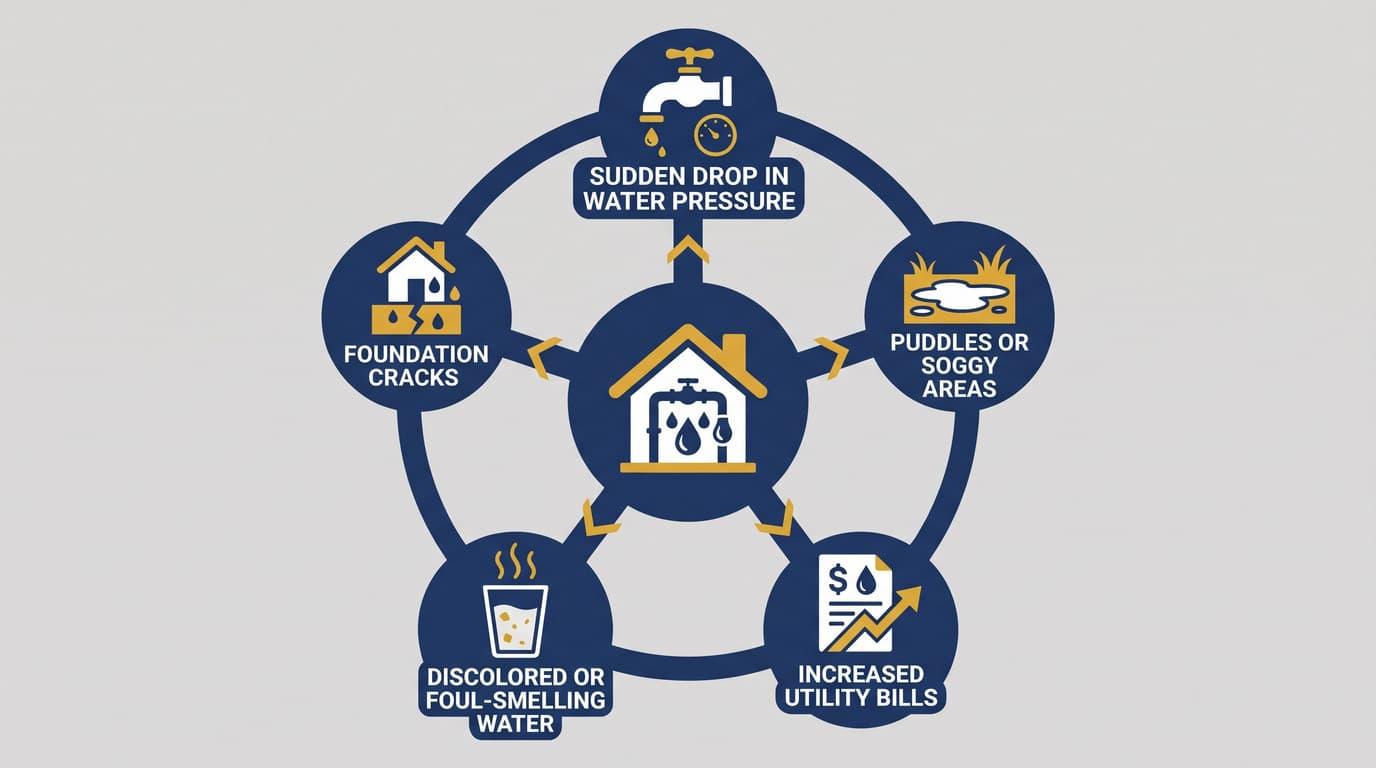
Not every pressure problem means the underground water line has failed, but these warning signs in your plumbing system justify a closer look, and a sudden water pressure decrease can indicate a potential leak:
- A sudden drop in water pressure at several fixtures, not just one faucet, can point to a leak.
- Puddles or soggy areas in the yard, or a persistent wet or sunken area when there has been no rain or irrigation.
- Increased utility bills that do not match your household’s use or any recent changes in water demand.
- Discolored or foul-smelling water, or visible water emerging near the service-line route, can indicate possible line damage.
- Foundation cracks can also point to a main water line problem.
In winter, frozen pipes can also damage the service line and should be checked promptly to prevent further damage.
If water is escaping rapidly, use the accessible shutoff valve if safe and arrange a prompt inspection, especially near the foundation. Our local plumbers help homeowners in Sugar House, and Murray trace suspected underground leaks and determine whether a targeted repair or replacement is needed.
How to Compare Water Line Repair Quotes Without Surprises
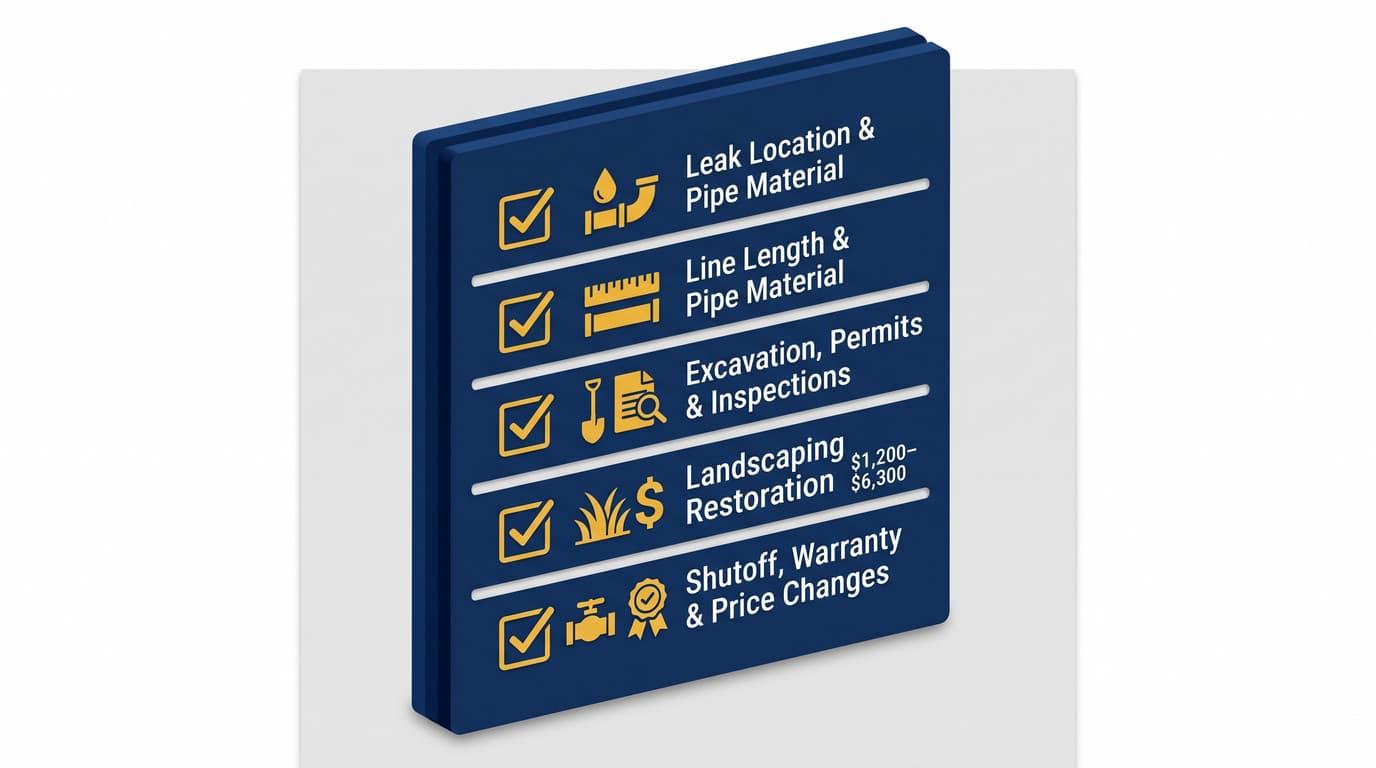
Once the leak has been located and the repair method is clear, compare what each contractor is actually proposing. One estimate may include permits, concrete work, and restoration while another covers only the pipe repair, making the lower price less straightforward than it first appears. Common added items beyond the cost to repair often include excavation, landscaping restoration, and inspection fees.
Before signing, ask your plumber to spell out these details:
- The leak location, existing pipe material, and reason for recommending repair or full replacement.
- The measured line length, proposed pipe material, and whether the price includes connections and valves.
- Excavation, concrete cutting, utility locating, permit fees, testing, and inspections.
- Who handles landscaping restoration, paving, cleanup, and any unexpected damage discovered during the job, since landscaping restoration alone can add about $1,200 to $6,300.
- The expected water shutoff, written warranty, and how changes to the approved price will be handled.
With the scope clearly documented, you can compare full project costs and know how unexpected findings will be handled before work begins.
Choose the Right Water Line Repair for Your Home
For Salt Lake City homeowners, the most cost-effective option is the one that fixes the underlying problem without paying for unnecessary work. An isolated leak may call for a targeted repair, while recurring failures or widespread corrosion can make replacement a better long-term investment. Compare the complete written scope, not just the pipe price.
When pressure drops across your home, or a wet patch keeps returning, finding the source matters more than guessing at the repair. Before deciding on repair or replacement, consult a local plumber for a site-specific inspection and estimate. Beehive Plumbing serves Salt Lake area homeowners with main water line assessments from a licensed plumber that help identify the affected section, evaluate the pipe’s condition, and determine whether repair or replacement makes sense. Our team can explain the recommended work and its expected cost, giving you a practical next step without committing to unnecessary excavation.
Frequently Asked Questions About Main Water Line Costs
These are a few practical questions homeowners often have after reviewing the estimate.
Can I keep using water while the line is being repaired?
It depends on the work and whether the crew can isolate the affected section. You may need to stop using fixtures while the line is disconnected, repaired, tested, or replaced, and in some homes the shut off valve is located near the water heater. Ask for a specific shutoff window and whether temporary water service is possible.
Can a small pinhole leak be repaired without replacing the whole line?
Sometimes. A small leak or pinhole may be reasonable to repair when the defect is isolated, accessible, and the surrounding pipe remains sound. Most water line repairs are simpler and less expensive when they involve one accessible defect rather than multiple damaged sections. Multiple pinholes or corrosion along the existing line can make replacement the better long-term choice.
Does a water main leak always require digging up my driveway?
No. The leak location, route, and available access determine whether a small excavation, a different approach, or more extensive concrete cutting is necessary; if the issue is a broken water line or broken pipe beneath concrete, access and replacement can run about $100 to $200 per linear foot before restoration, and work near a foundation wall usually adds labor because access is harder. A site assessment is needed before anyone can promise minimal disruption.
Is a sudden water pressure drop always a broken water service line?
No. A partly closed valve, fixture problem, pressure regulator, or utility issue can also affect pressure. A licensed plumber should confirm the cause before recommending underground line repair, since this plumbing work may also require permits depending on the repair scope.
Will the city pay for a leaking pipe near the water meter?
Not automatically. Ownership and maintenance boundaries differ by utility, and the meter location alone does not establish responsibility. Contact your water provider to confirm which section is yours before approving work. Even when the leak is near the meter, homeowners may still be responsible for the indoor shut off valve and the service-line connection on their side.