

When multiple drains clog at the same time, it usually means the problem is not in one sink or tub but in the main sewer line, where a blockage or pipe damage can affect several fixtures at once. For homeowners dealing with backed-up sinks, tubs, showers, or toilets, that distinction matters because a main line issue can quickly turn into sewage backups, water damage, and higher repair costs if you wait too long.
Early diagnosis often prevents the problem from escalating. Below, we’ll walk through why several drains clog together, common causes like grease buildup and tree root intrusion, the warning signs of a main sewer line problem, how plumbers confirm the cause with methods such as sewer camera inspections, what repair options are available, and when it’s time to call a professional plumber.
Key Takeaways
- Multiple clogged drains usually indicate a blockage or damage in the main sewer line, not separate fixture problems.
- Gurgling toilets, cross-fixture backups, and recurring slow drains are common warning signs of a deeper restriction.
- Tree roots, grease buildup, debris, and damaged or aging pipes can restrict wastewater flow.
- Plungers and chemical cleaners rarely resolve problems located deep in the main sewer line.
- A professional sewer camera inspection can locate the problem and determine the appropriate cleaning or repair.
When Multiple Drains Slow Down, the Problem Runs Deep
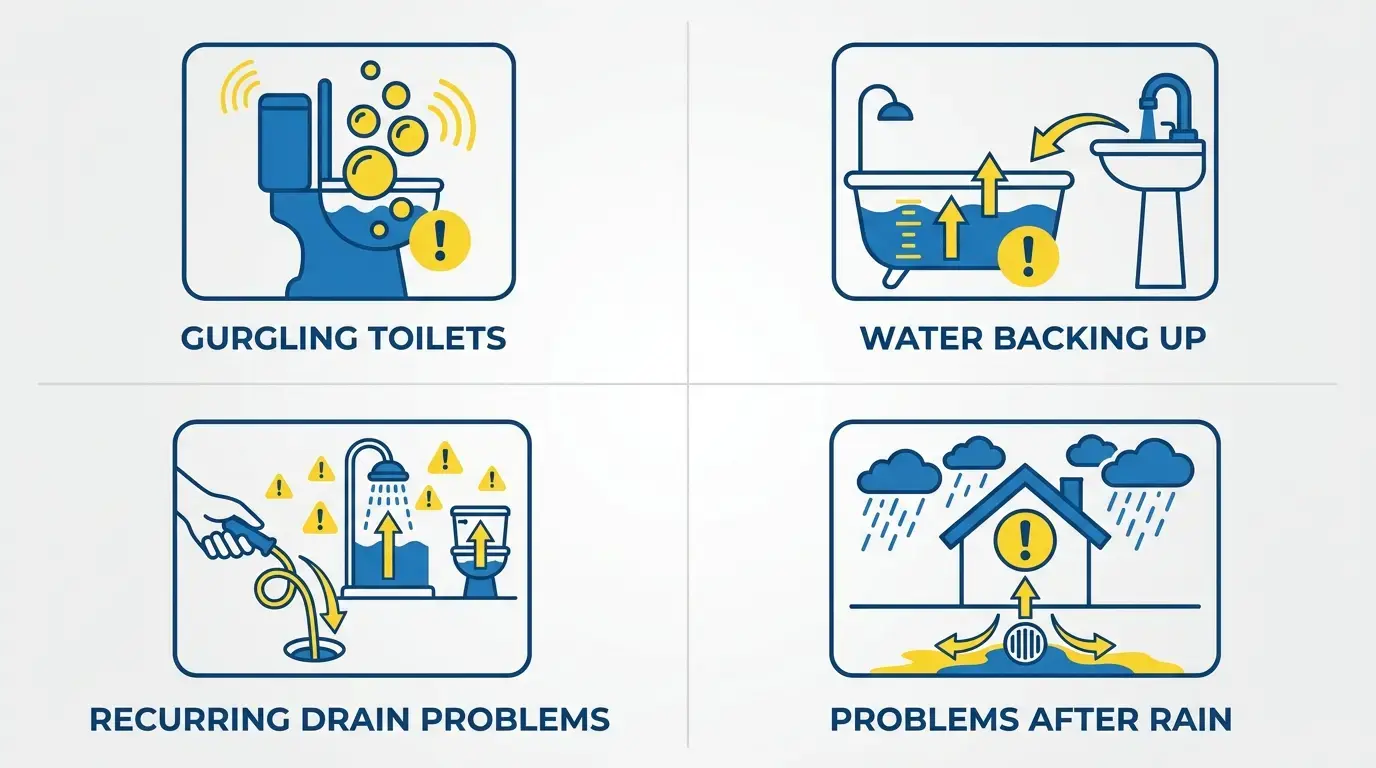
If more than one drain in your home is backing up at once, there’s a good chance the problem extends beyond a single fixture.
In many cases, it points to a blockage or damage somewhere in your main drain or sewer line, where wastewater from multiple fixtures flows together before leaving your home.
Here are some common signs that the problem may be affecting your main plumbing system.
Gurgling Toilets
If your toilet bubbles or gurgles when you run the kitchen sink, washing machine, or shower, trapped air may be struggling to move through a blocked main drain, and a flush can make the symptom more noticeable when a main drain restriction is present. This is often an early warning sign of a developing sewer line problem.
Water Backing Up
Water should never appear in one fixture because you’re using another. If your shower fills, water may rise in a tub or other low fixture when the toilet is used or another drain empties, wastewater is likely being restricted farther down the plumbing system.
Recurring Drain Problems
If you’ve plunged or snaked one drain but other fixtures remain slow or continue backing up, the blockage probably isn’t in that individual drain. If the problem continues after clearing one p trap or a nearby drain, the issue is likely deeper inside the main sewer line.
Problems After Rain
If several drains slow down during or after heavy rainfall, the issue may involve more than an existing blockage. Sewer defects can allow stormwater and groundwater to overload the system, increasing the risk of backups. A plumber can inspect the line to determine whether cracks, damaged connections, or another issue is allowing excess water to enter.
These warning signs shouldn’t be ignored. A main sewer line blockage can worsen until it causes a backup or property damage.
The Real Cause Is Usually in Your Main Sewer Line
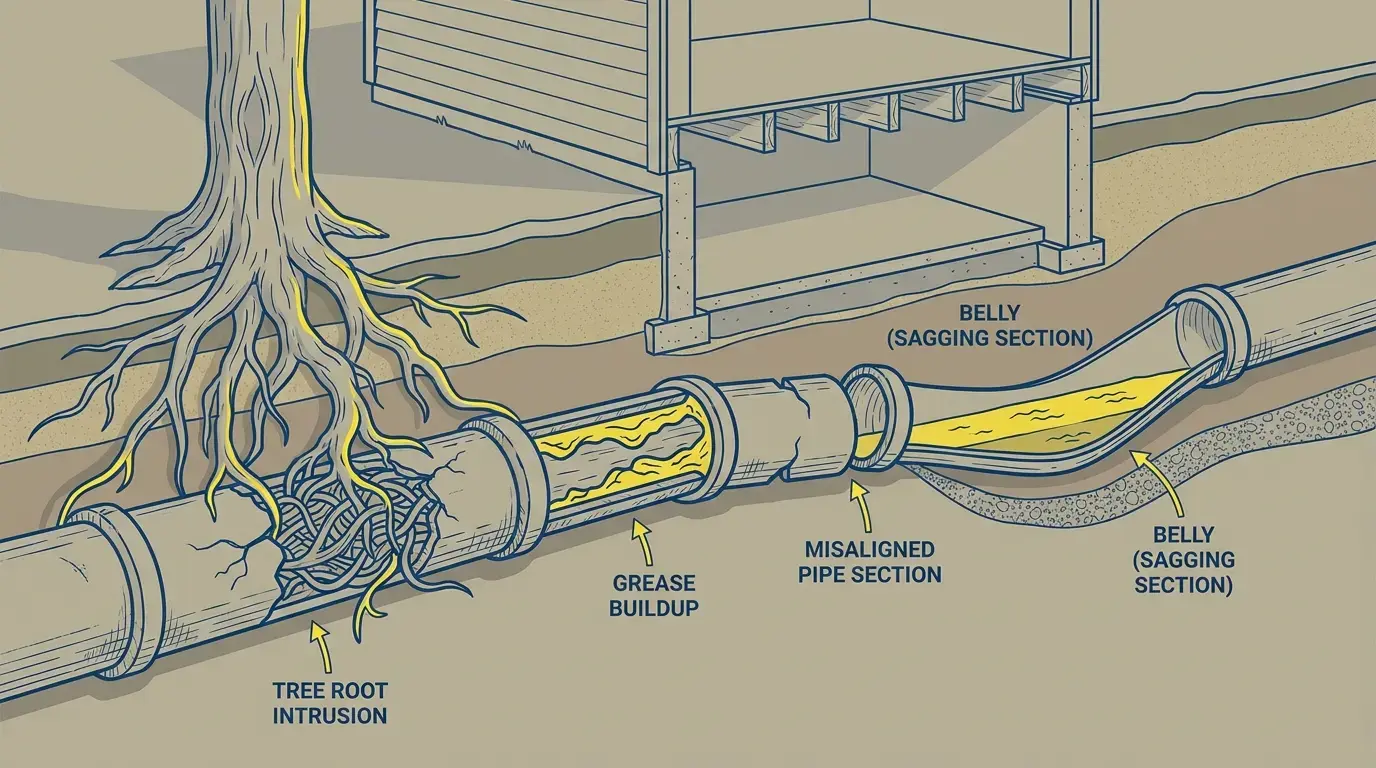
When multiple drains clog at the same time, the problem is usually located where all of your home’s drain lines connect to the main sewer line. Instead of affecting one sink or shower, a blockage in this shared pipe can disrupt several plumbing fixtures throughout your home.
Tree root intrusion, grease buildup, aging pipes, and flushing non-flushable items are among the most common causes of main sewer line blockages. Tree roots can enter tiny cracks in underground pipes and continue growing until they restrict wastewater flow.
Grease, soap residue, hair, and other debris gradually collect inside the pipe, causing it to narrow and making the blockage even worse over time.
In older homes, cracked, misaligned, or partially collapsed sewer lines can also prevent wastewater from flowing properly. Problems can also occur when a belly forms in the sewer line and traps wastewater.
Why Temporary Fixes Usually Don’t Work
If the blockage is located deep inside your main sewer line, it is wrong to assume the problem has been solved just because one sink or drain seems to improve after plunging, using a handheld drain snake, or pouring chemical drain cleaners into one fixture.
These methods only address localized clogs and can’t remove tree roots, repair damaged pipes, or clear major obstructions farther down the line; some cases need specialized sewer line issue diagnosis rather than temporary fixture-level fixes.
The most reliable way to identify the problem is with a professional sewer camera inspection.
At Beehive Plumbing, we use high-definition sewer cameras to inspect the inside of your sewer line and pinpoint the exact cause of the blockage. Once we’ve identified the issue, we recommend the most appropriate repair so you can address the root cause instead of dealing with recurring drain problems.
How Beehive Plumbing Solves Multiple Clogged Drains
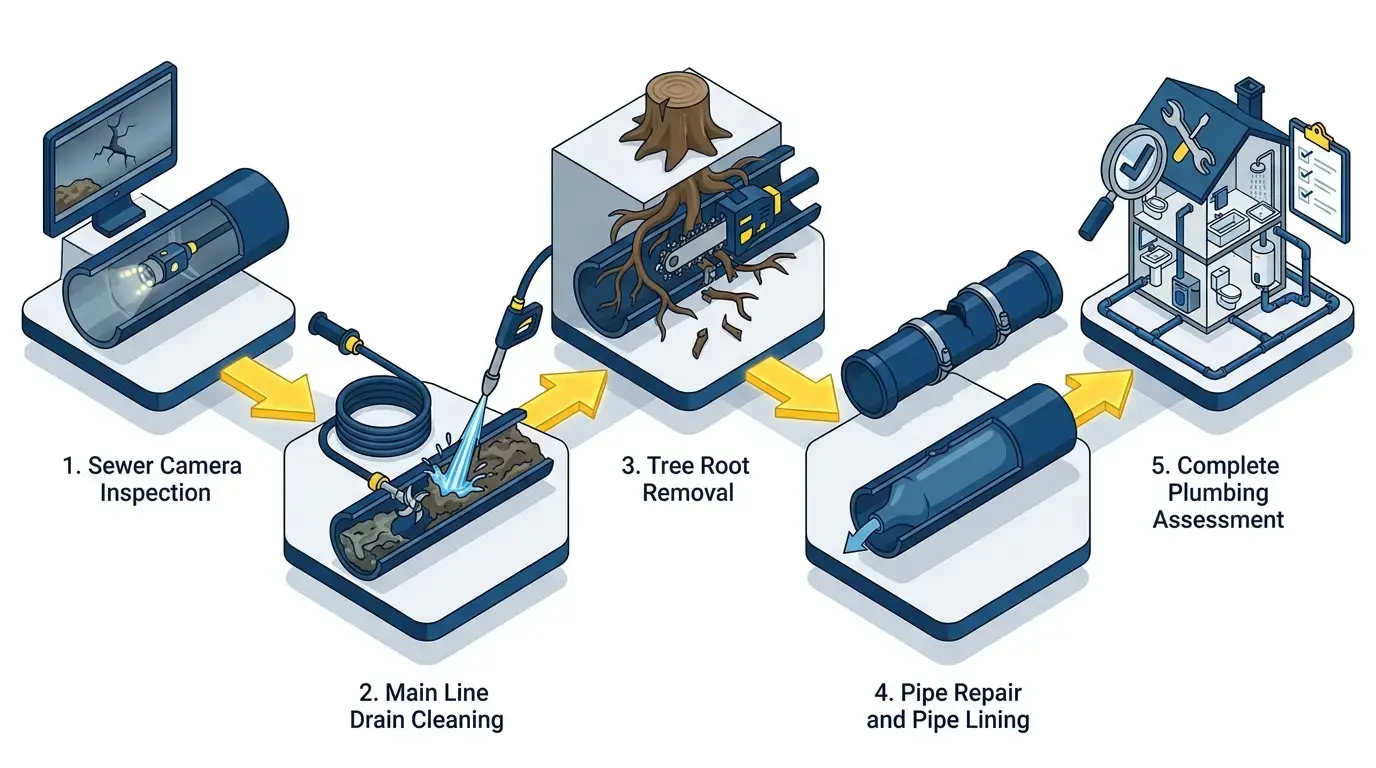
Beehive Plumbing doesn’t treat several backed-up fixtures as unrelated clogs. Our licensed master plumbers evaluate how the affected drains behave, inspect the main sewer line, and identify what’s restricting wastewater flow. Once we understand the cause and condition of the pipe, we explain the findings and recommend an appropriate solution.
Sewer Camera Inspection
We guide a high-definition camera through the main sewer line to inspect areas hidden beneath your property. The footage helps us locate the blockage, identify possible causes such as grease buildup, intrusive roots, cracks, misaligned sections, or deteriorated pipes, and confirm whether the issue is in the main drain line rather than only at one fixture.
This inspection gives us more information than repeatedly plunging or snaking individual fixtures. It also helps reduce unnecessary digging by showing where the problem is located before repair work begins.
Main Line Drain Cleaning
When grease, soap residue, waste, or other debris restricts the main line, we use professional drain-cleaning equipment to remove the obstruction; for stubborn buildup, Beehive
Plumbing may use drain cabling, with a large auger fed into the line to break apart the blockage. Hydro jetting uses high-pressure water to clear sewer clogs and flush heavy buildup from the line.
Clearing the shared pipe helps restore wastewater flow across the sinks, showers, tubs, and toilets connected to it.
We focus on clearing the source of the widespread drainage problem instead of temporarily opening one fixture. Beehive Plumbing backs main-line drain cleaning with a 60-day guarantee.
Tree Root Removal
Tree roots can enter through small cracks or loose pipe connections while searching for moisture. Once inside, they can grow through the line, collect debris, and create a blockage that becomes more severe over time.
We remove the intrusive roots to reopen the pipe and inspect the affected area for damage. Based on the line’s condition, we’ll explain whether root removal is sufficient or whether the damaged section needs a longer-term repair.
Pipe Repair and Pipe Lining
A cracked or deteriorated sewer line may continue causing backups even after the blockage has been cleared. We use the inspection findings to determine where the damage is located and which repair approach fits the pipe’s condition.
Depending on the damage, we may recommend a targeted pipe repair or trenchless pipe lining. When appropriate, trenchless repair can seal cracks in sewer lines without full excavation while limiting the disruption required around your property. If a damaged section must be replaced, PVC is often preferred because it resists tree root intrusion better than many older pipe materials.
Complete Plumbing Assessment
Multiple clogged drains can reveal a broader issue within the plumbing system, so in addition to inspecting the main line, we evaluate fixtures such as a bathroom sink or dishwasher when backups affect more than one area of the house.
In addition, we check the connected system for other restrictions or damaged areas that may be contributing to slow drainage and recurring backups.
After the assessment, we explain what we found, answer your questions, and outline the appropriate repair options. This gives you the information needed to decide how to proceed.
Stop Recurring Drain Problems Today
Why Homeowners Choose Beehive Plumbing
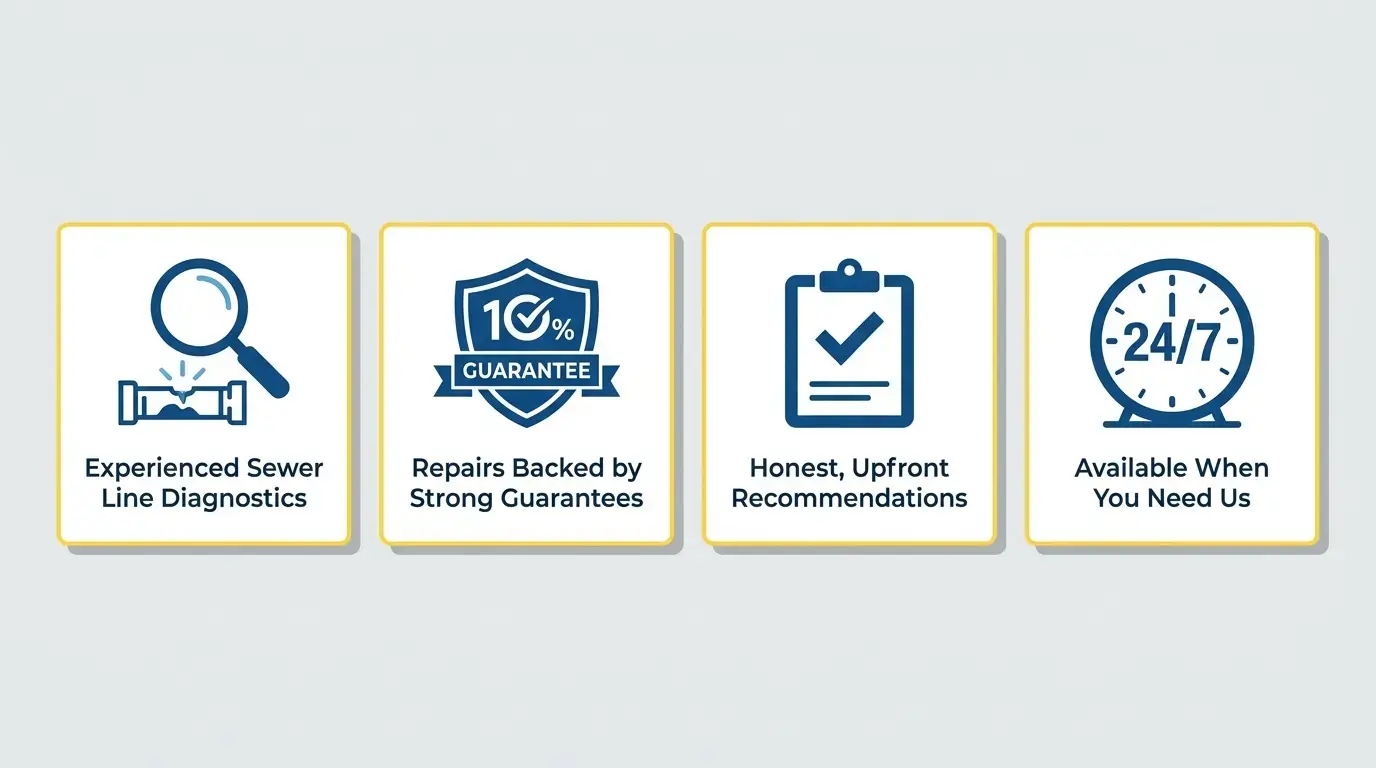
When multiple drains clog at the same time, finding the real cause is just as important as clearing the blockage. We focus on accurate diagnosis, dependable repairs, and solutions that help keep your plumbing system working reliably long after the service call.
Experienced Sewer Line Diagnostics
Our licensed, insured, and bonded master plumbers use advanced diagnostic equipment to identify the source of the problem before recommending any repair. That means you receive solutions based on the condition of your plumbing system, not guesswork.
Repairs Backed by Strong Guarantees
We stand behind the quality of our work. Main line drain cleaning is backed by a 60-day guarantee, while qualifying trenchless pipe lining services include a 50-year guarantee for long-term peace of mind.
Honest, Upfront Recommendations
Once we’ve completed the inspection, we explain what we found, answer your questions, and recommend the most appropriate repair options. Before any work begins, you’ll receive a clear, upfront project quote with no hidden charges.
Available When You Need Us
Main sewer line problems can happen without warning. That’s why we’re available 24 hours a day, 7 days a week to help homeowners address urgent plumbing issues, since waiting can allow a blockage to get worse and lead to more extensive property damage.
What to Expect When You Call Beehive Plumbing
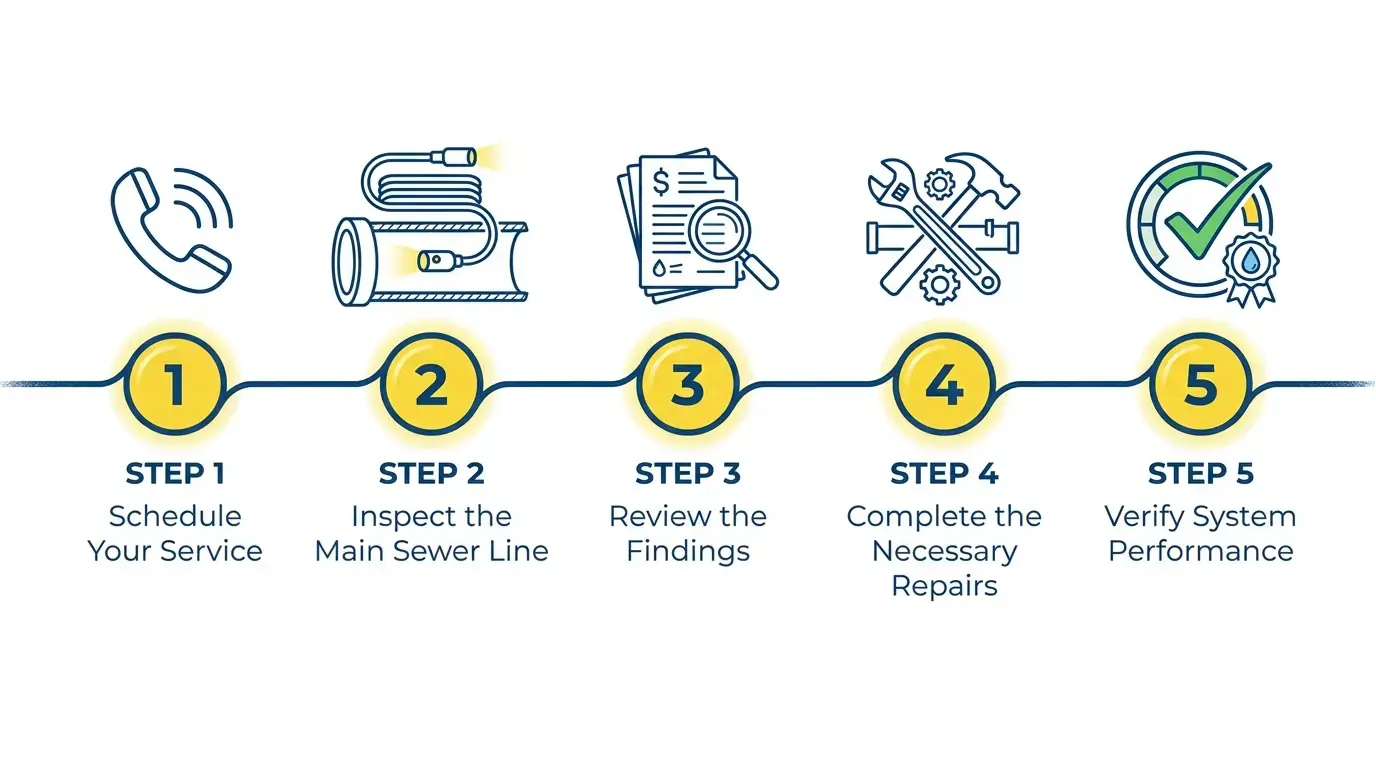
If multiple drains are backing up throughout your home, our goal is to identify the cause quickly and recommend the right solution. Here’s what you can expect during the process.
Step 1: Schedule Your Service
Call our team as soon as you notice multiple drains backing up. We offer 24/7 emergency service and same-day appointments whenever available, so you can have the problem inspected before it gets worse.
Step 2: Inspect the Main Sewer Line
A licensed master plumber performs a thorough assessment of your plumbing system and uses a high-definition sewer camera to inspect the main sewer line. This allows us to pinpoint the exact location and cause of the blockage without unnecessary guesswork.
Step 3: Review the Findings
Once we’ve identified the issue, we’ll explain what we found, discuss the available repair options, and provide a firm upfront quote before any work begins. You’ll have all the information you need to make an informed decision.
Step 4: Complete the Necessary Repairs
Depending on the condition of your sewer line, we may recommend professional drain cleaning, root removal, trenchless pipe lining, or another appropriate repair. Every solution is tailored to address the underlying problem, not just the symptoms.
Step 5: Verify System Performance
Before the job is complete, we test your plumbing system to confirm that wastewater is flowing properly through the main line, including at the lowest point where backups often appear first. We’ll also answer your questions and provide recommendations that can help reduce the risk of future sewer line problems, since a foul smell from drains or the basement can be an early sign of future sewer issues.
Don’t Ignore Multiple Clogged Drains
When several drains in your home clog at the same time, it’s usually a sign of a larger plumbing problem that won’t go away on its own. Addressing the issue early can help prevent sewage backups, water damage, and more costly repairs while restoring reliable drainage throughout your home.
If you’ve noticed multiple slow or backed-up drains, Beehive Plumbing is here to help. Our licensed, insured, and bonded master plumbers use advanced sewer camera inspections to identify the source of the problem and recommend the most appropriate repair for your plumbing system.
Contact our team today to schedule an inspection and request a free estimate.
Frequently Asked Questions About Multiple Clogged Drains
Find quick answers to common questions about multiple clogged drains, their possible causes, and when to call a plumber.
Why are multiple drains clogged at the same time?
When several drains back up together, the problem usually extends beyond a single fixture. A blockage, tree roots, grease buildup, or pipe damage in the main sewer line can restrict wastewater flow throughout your home’s plumbing system.
Can multiple clogged drains clear on their own?
No. If several drains are clogged at once, the underlying issue is unlikely to resolve without repair. Delaying service can allow the blockage to worsen and increase the risk of sewage backups or costly plumbing damage.
Should I use chemical drain cleaners?
Chemical drain cleaners may help with minor fixture clogs but rarely solve a main sewer line blockage. Frequent use can also damage certain pipe materials. A professional inspection is the safest way to identify the actual problem.
How do plumbers find the source of the blockage?
A sewer camera inspection allows plumbers to see inside the main sewer line without excavation. The inspection helps identify tree roots, grease buildup, pipe damage, or other obstructions so the appropriate repair can be recommended.
What repairs might be needed?
The recommended repair depends on the condition of your sewer line. Some blockages can be removed with professional drain cleaning, while damaged pipes may require trenchless pipe lining, trenchless methods, or replacement through targeted sewer line repairs. If your home uses a septic tank, the inspection and service approach may differ from a property connected to a municipal sewer.
When should I call a plumber?
You should schedule an inspection as soon as backups affect more than one fixture, especially if water or sewage is appearing at the lowest point in the home, which is especially important for homeowners dealing with a house connected to a city sewer system. Early diagnosis can help prevent sewage backups, water damage, and more expensive repairs.