
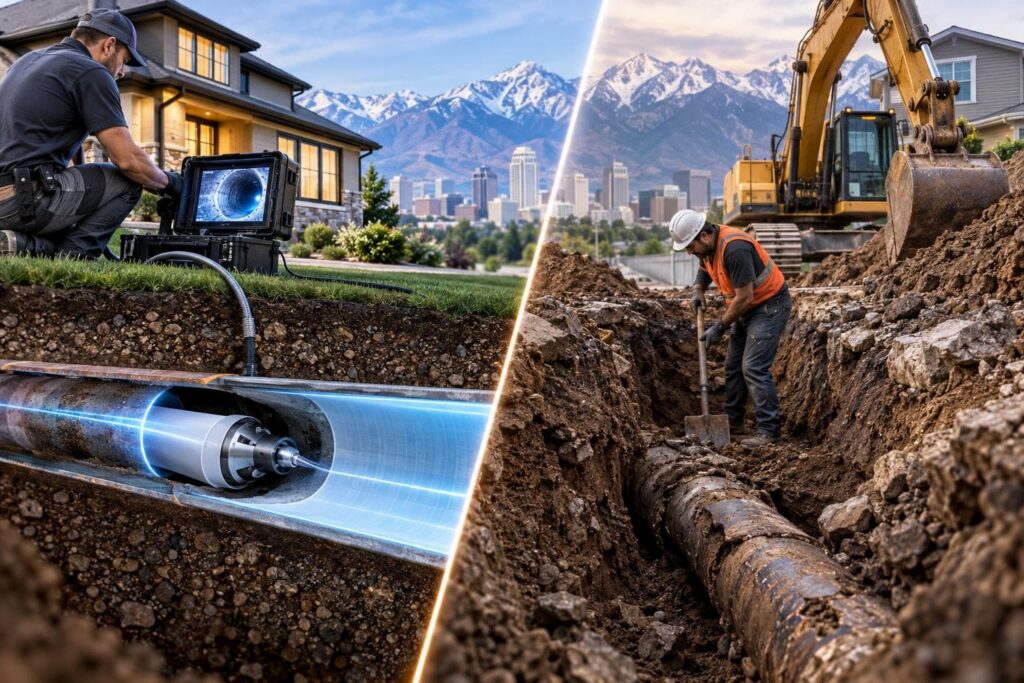
Your sewer line is backing up again, and now you’re picturing a trench through your yard, driveway, or landscaping you’ve spent years maintaining. Then someone mentions a repair that might leave most of it alone. Is trenchless really the better choice?
When deciding between trenchless sewer repair and traditional excavation, your pipe’s condition comes first. Trenchless methods can rehabilitate or replace certain damaged lines through limited access points, often reducing surface disruption. Traditional excavation exposes the pipe directly and may be more reliable when it has collapsed, shifted out of alignment, or lost the slope needed for wastewater to drain.
This guide is for Salt Lake City homeowners weighing sewer repair options now. At Beehive Plumbing, we help homeowners understand what is happening beneath their property before choosing a repair. We’ll explain how each method works, what drives the bill, and what to ask before approving the job.
Key Takeaways
- A sewer camera inspection helps identify cracks, root intrusion, and changes in pipe alignment, but a blockage or collapse can limit what the camera can reach. Site assessment and locating help complete the picture.
- Trenchless doesn’t mean no digging. Pipe lining may use an existing cleanout, while pipe bursting generally needs access pits.
- Traditional excavation can be the right choice for a badly collapsed, displaced, or incorrectly graded sewer line.
- Compare the entire project, including permits, access, bypass arrangements, and restoration, not just the price of the pipe work.
- Trenchless work can reduce excavation and restoration time, but pipe preparation, access, curing, and inspections still affect the schedule.
- The best repair addresses the actual defect and leaves a properly functioning line, not simply the one with the smallest hole.
Trenchless vs Traditional Sewer Repair at a Glance
Both approaches, including both trenchless sewer repair and excavation, can solve sewer line problems, but they reach the damaged pipe in very different ways. The table gives you the practical trade-offs before we get into the details.
| Consideration | Trenchless methods | Traditional excavation |
|---|---|---|
| What happens | A liner repairs an existing pipe, or bursting pulls in a replacement | The crew exposes and repairs or replaces the damaged section |
| Digging | Limited entry points or pits; sometimes additional excavation | An open trench or localized excavation over the affected area |
| Best suited to | Eligible cracks, leaks, root-damaged sections or feasible replacement routes | Collapse, severe misalignment, incorrect grade or difficult connections |
| Property impact | Often less surface disturbance | More direct impact on soil, paving and landscaping |
| Cost question | Equipment, cleaning, access and restoration | Excavation, shoring, pipe work and restoration |
One important distinction, though, is that traditional sewer repair methods, or traditional methods, don’t always require digging up the entire sewer line. A localized open-cut repair can be enough when the defect is isolated and accessible.
How Trenchless Sewer Repair Works
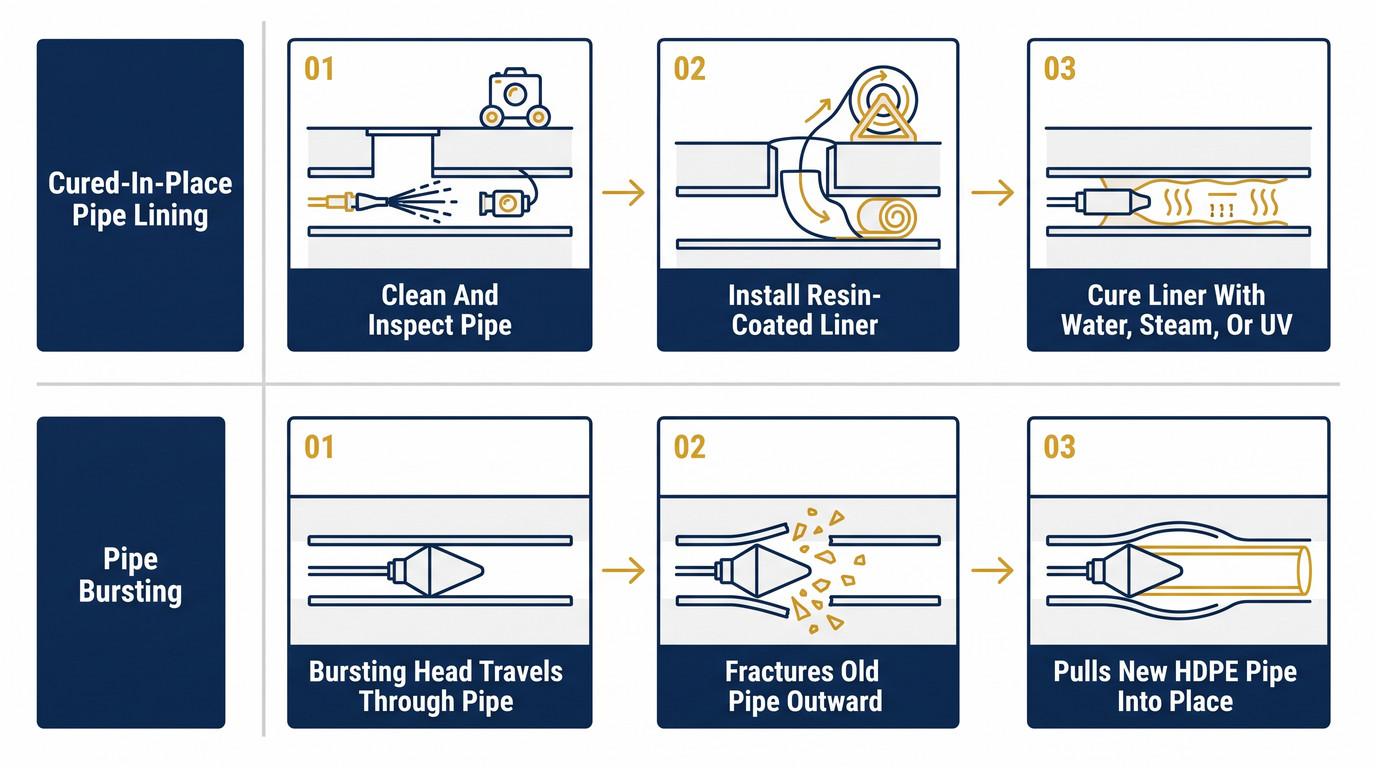
Trenchless sewer repair uses specialized equipment and trenchless repair methods to work within or along underground sewer lines. The two principal options for residential sewer line repairs in trenchless plumbing are cured-in-place pipe lining and pipe bursting. They aren’t interchangeable, and some companies offer only one technique.
Cured-in-Place Pipe Lining: A New Interior Pipe
Cured-in-place pipe (CIPP) lining forms a hardened pipe within the old pipe and is one of the most common trenchless sewer repair methods. The crew generally follows these steps:
- Clean and inspect the existing pipe.
- Install a resin-coated liner inside the prepared pipe, then invert it and press it against the pipe wall using air or water pressure.
- Cure the liner using hot water, steam, or ultraviolet light, depending on the system.
When properly installed, CIPP creates a jointless interior pipe that resists corrosion and root intrusion.
Lining needs a usable pathway and enough remaining pipe geometry to form the new interior. It cannot correct a severely collapsed section, major offset, or significant belly, a low spot where wastewater collects. The liner also slightly reduces the inside diameter, so the plumber must evaluate capacity and connections. Some CIPP systems are marketed with service lives of up to 100 years, depending on installation and site conditions.
A short sectional liner can sometimes address one isolated defect. That is different from full-length pipe relining and may make sense when the rest of the sewer pipe is sound.
Pipe Bursting: Replacing the Old Pipe Underground
Pipe bursting is one way trenchless sewer line repair can replace pipes without cutting a long trench. A bursting head travels through the old pipe, fractures or splits it outward, and pulls a new pipe, commonly high-density polyethylene (HDPE), into place behind it. Unlike lining, this method replaces the old pipe and may allow a diameter change where site conditions permit.
The crew usually needs an entry pit and a receiving pit, but the method still relies on small access points rather than continuous excavation. Nearby utilities, ground conditions, pipe bends, and available space can make bursting unsuitable.
Breaking the existing pipe outward also creates ground movement that must be assessed near other buried lines and structures. Bursting generally follows the existing route, so a new pipe does not automatically correct a belly or poor slope.
What About Slip Lining and Other Trenchless Methods?
Slip lining inserts a smaller carrier pipe into an existing line. It can help in select applications, but its smaller interior diameter and connection requirements limit where it makes sense.
For a residential sewer lateral, ask exactly which trenchless sewer repair method is being proposed rather than treating every “no-dig” quote as the same service.
What Traditional Excavation Actually Involves
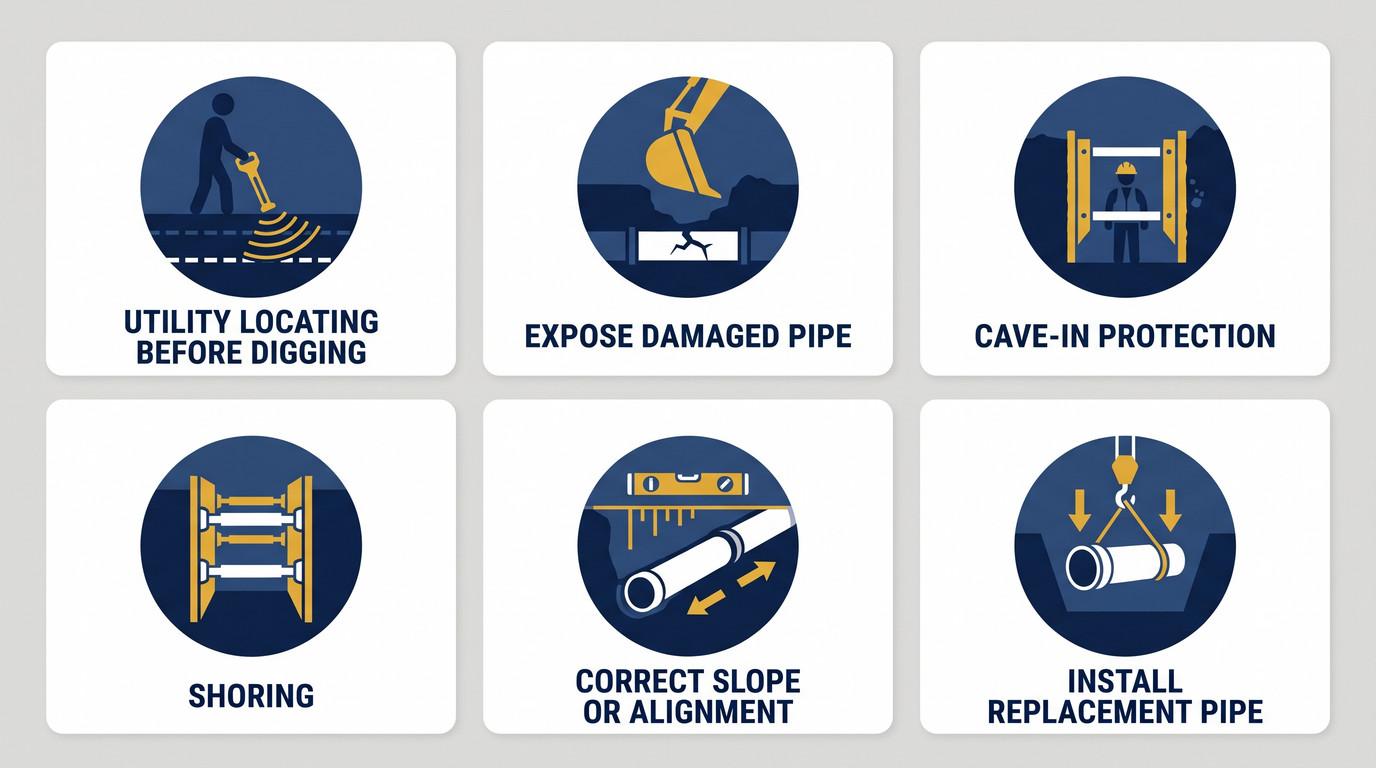
Traditional excavation methods, also called open trench sewer repair, are traditional repair methods that dig down to reach a damaged sewer line so crews can remove damaged pipe, correct its slope or alignment, and install replacement pipe. A full sewer line replacement may require a continuous trench, but an isolated defect may need only a shorter opening. Traditional repair can take several days to a week or more once digging, pipe work, backfilling, and surface restoration are included.
Direct access is especially valuable when the existing pipe is severely collapsed or misaligned.
- Traditional excavation also involves worker safety measures, not just digging. OSHA trench safety rules generally require cave-in protection for workers in trenches five feet deep or greater unless the excavation is entirely in stable rock.
- Shallower trenches also need protection when a competent person identifies a cave-in hazard.
- Sloping, shoring, and trench boxes protect crews, and these safeguards affect the excavation plan and cost.
- Before digging, crews need to identify underground utilities. In Salt Lake City, the city utility mapping guidance directs contractors and residents to Blue Stakes of Utah for utility locating and explains that city utility locators do not mark private lines.
- Private sewer laterals may require additional locating. Confirm applicable permits and inspections with the local authority before work begins.
A collapsed sewer pipe under an open patch of lawn might be straightforward to expose. A smaller defect beneath a finished driveway could make trenchless solutions especially attractive, and larger open-trench work can also increase soil erosion and habitat disruption compared with limited-access alternatives. That difference is why an on-site evaluation matters.
Trenchless Sewer Repair Cost vs Traditional Excavation: Compare the Full Bill
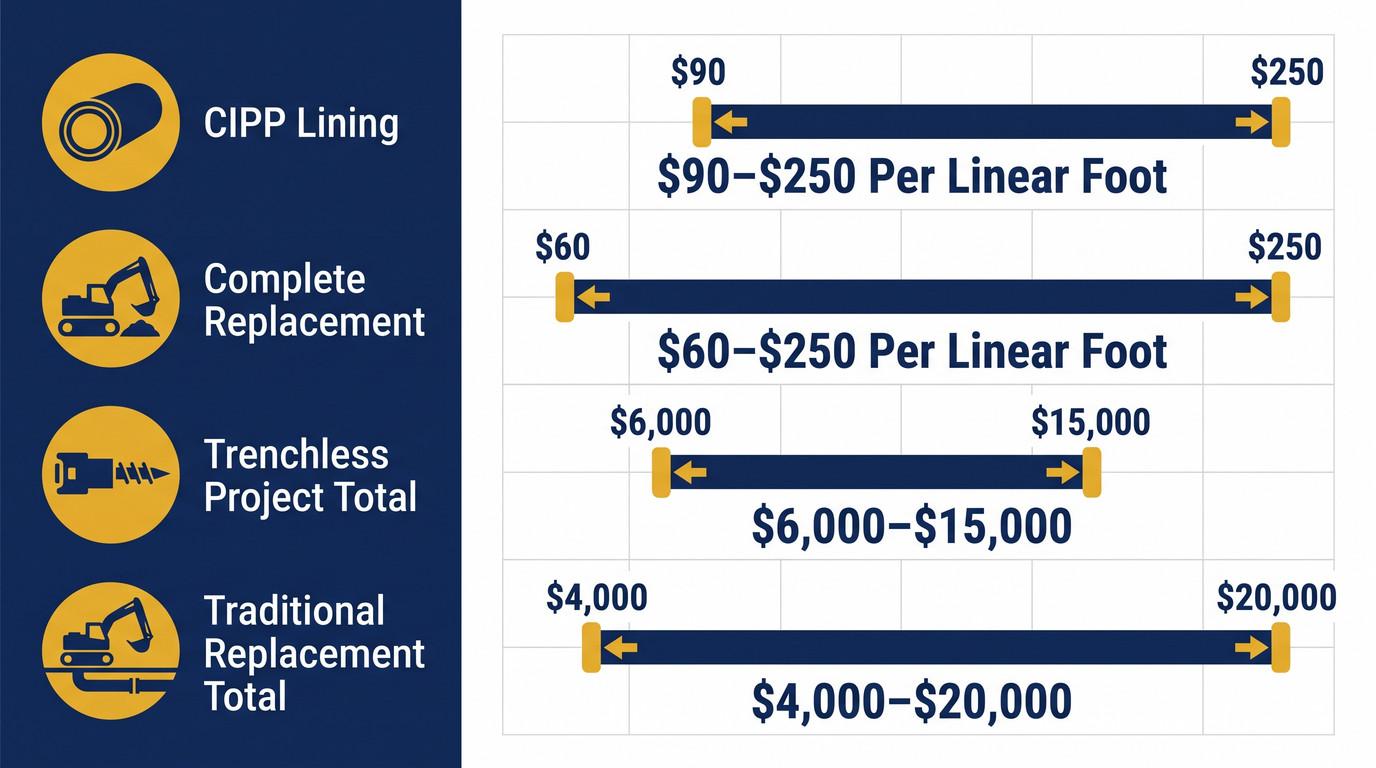
Compare the total finished project rather than just the contractor’s price per foot in any cost comparison. Avoiding driveway removal may reduce restoration costs, but trenchless equipment, access pits, and pipe preparation still affect the bill. Angi’s 2026 sewer replacement cost guide lists these national planning ranges:
- CIPP lining: $90–$250 per linear foot.
- Complete sewer line replacement: $60–$250 per linear foot.
Common project totals also vary: trenchless sewer repair often runs $6,000 to $15,000, while traditional sewer line replacement often runs $4,000 to $20,000, depending on damage, pipe length, excavation needs, and restoration.
The replacement range is not an excavation-only quote, and these figures don’t indicate whether trenchless or traditional replacement will cost less at your home. They are national benchmarks, not Salt Lake City-specific prices or Beehive Plumbing estimates.
Those national ranges offer a starting point, but your estimate should reflect the inspection findings and the work your property needs. At Beehive Plumbing, we explain the proposed repair and provide upfront pricing before we begin approved work. Ask us to clarify the repair scope and any restoration exclusions so you can compare estimates fairly.
What Makes One Sewer Repair Quote Higher Than Another?
Two properties can have similar sewer line lengths but very different repair requirements. These are the main details that affect the scope of work and the final estimate:
- Pipe length, diameter, material, and burial depth
- Whether the pipe needs cleaning, lining, a spot repair, or full pipe replacement
- Existing access points, new pits, excavation support, and utility conflicts
- Driveway, sidewalk, patio, lawn, or landscaping restoration expenses
- Permits, inspections, testing, and any temporary wastewater handling
Ask which of these items are included in the quoted price and which will be billed separately, including labor costs, restoration, and other line items. That distinction makes it much easier to compare trenchless and excavation proposals.
A Better Way to Compare Two Estimates
Restoration can determine which option is more cost effective overall. Ask who will remove and replace affected concrete, repair irrigation, restore landscaping, and handle debris. Confirm whether the price covers a finished surface or only backfilling the excavation, and ask how any later settlement will be handled.
- Compare inspection, cleaning, and pipe material in each written proposal.
- Check access pits or trench work, permits, reconnections, and temporary wastewater arrangements.
- Confirm that testing and restoration are included or clearly priced separately.
For an established Salt Lake City property with mature landscaping or a paved driveway, a trenchless option may offer better overall value because it provides minimal disruption, even if the pipe work is more expensive. An open trench can still be the better value for a short, accessible repair.
For a larger sewer repair, managing the total cost can matter as much as choosing the right method. Beehive Plumbing offers financing options for eligible sewer and mainline work, subject to credit approval and lender terms, so you can explore payment options after reviewing the proposed scope.
Explore Plumbing Financing Options
Time, Property Disruption and Environmental Tradeoffs

Trenchless repair often means less disruption than a long open trench and can often complete repairs in one to three days, with some jobs finished in one to two days depending on cleaning, access, pipe length, curing, and required inspections.
Traditional sewer line repair adds digging and backfilling, and it often takes several days to complete because excavation and restoration add steps even when the pipe work itself is straightforward. Ask for a schedule based on your actual scope rather than a blanket promise for either method.
There is also a difference between when wastewater service returns and when your property looks normal again. Concrete curing, paving, and landscape recovery can continue after the new pipe is working. Ask for both timelines.
Environmental Tradeoffs
Reducing extensive digging usually means less soil disturbance and fewer truckloads of excavated material. It may also reduce machinery use and emissions on a particular job. But environmental impact depends on the technique, materials, curing process, equipment, and site conditions; trenchless is not automatically the greener option in every case.
How Long Will the Repair Last?

Trenchless materials are designed for long service, but how long any repair lasts still depends on the extent of the sewer line damage, so “50-year design life” is not the same as a 50-year guarantee.
NASSCO explains this distinction in a 2020 technical discussion: standards such as ASTM F1216 inform CIPP design, while actual remaining useful life depends on installation and site conditions. A design target alone is not a product warranty. Many trenchless techniques are designed to last more than 50 years when properly installed, though actual service life still depends on conditions and workmanship.
Traditional excavation can also install durable new pipe. Proper installation, pipe grade, soil conditions, and connection quality matter across all approaches. No repair method automatically eliminates future sewer problems.
- Ask which design standard applies to the proposed repair.
- Confirm how the finished line will be inspected.
- Get the written warranty, including its term, coverage, and exclusions. A warranty may be much shorter than the pipe’s design life.
Which Method Does Your Salt Lake City Sewer Line Actually Need?
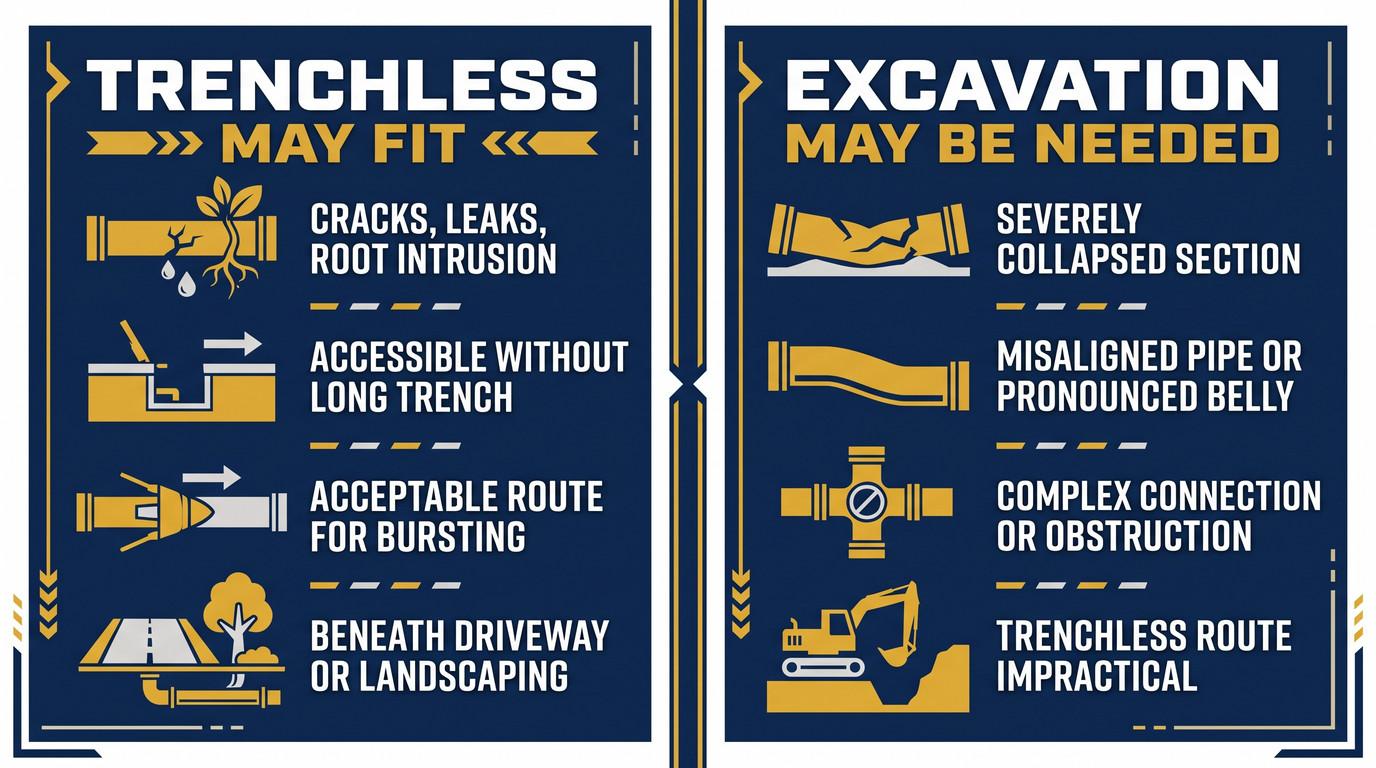
A sewer camera inspection can show where and how extensive the damage is in sewer pipes, while a site assessment helps determine which equipment can safely reach the line. Together, those findings show whether a trenchless approach is practical or excavation is a better fit.
Common sewer line issues can include recurring backups, odors, or soggy yard areas, but symptoms alone do not identify the right sewer repair solution. They don’t reveal whether the underground line needs lining, excavation, or a targeted fix.
For a closer look at the warning signs and when professional work makes sense, see our guide to when sewer lines need repair.
When Trenchless Sewer Repair May Be a Good Fit
Trenchless sewer repair methods are worth evaluating when the damaged pipe has a workable path, and the site offers suitable access through small pits or other limited entry areas. Common examples include:
- The existing pipe has cracks, leaks, or root intrusion but remains structurally sound enough for lining.
- You can access and prepare the damaged line without a long trench.
- Pipe bursting can follow an acceptable route without unacceptable risk to nearby utilities.
- The sewer line runs beneath a driveway, patio, or mature landscaping where trenchless sewer line repair may help avoid extensive repairs to the surface.
These conditions make trenchless repair possible, not guaranteed. The assessment still needs to account for pipe shape, slope, and nearby utilities before recommending lining or pipe bursting.
When Traditional Excavation May Be Necessary
Some sewer line damage cannot be corrected from within the existing pipe, so traditional sewer line repair may be the more reliable option when full access is needed:
- A section is severely collapsed and blocks the access needed for lining or pipe bursting, and traditional excavation is often needed when a pipe is completely blocked, crushed, or collapsed beyond what trenchless sewer repair can address.
- Misaligned pipes, a pronounced belly, or incorrect grade must be physically corrected.
- A complex connection or obstruction requires direct access.
- The available route, utilities, or ground conditions make trenchless repair impractical.
Excavation can be limited to the damaged section rather than the entire line. The goal is to correct the underlying defect without disturbing more of your property than necessary.
Beehive Plumbing has served Utah since 1997, and our licensed master plumbers use camera inspections when conditions allow to identify the problem. Our sewer line repair team will explain the findings and suitable options, so you understand why a targeted repair, trenchless approach, or excavation fits your property.
Explore Sewer Line Repair Services
Questions to Ask Before You Approve a Sewer Repair
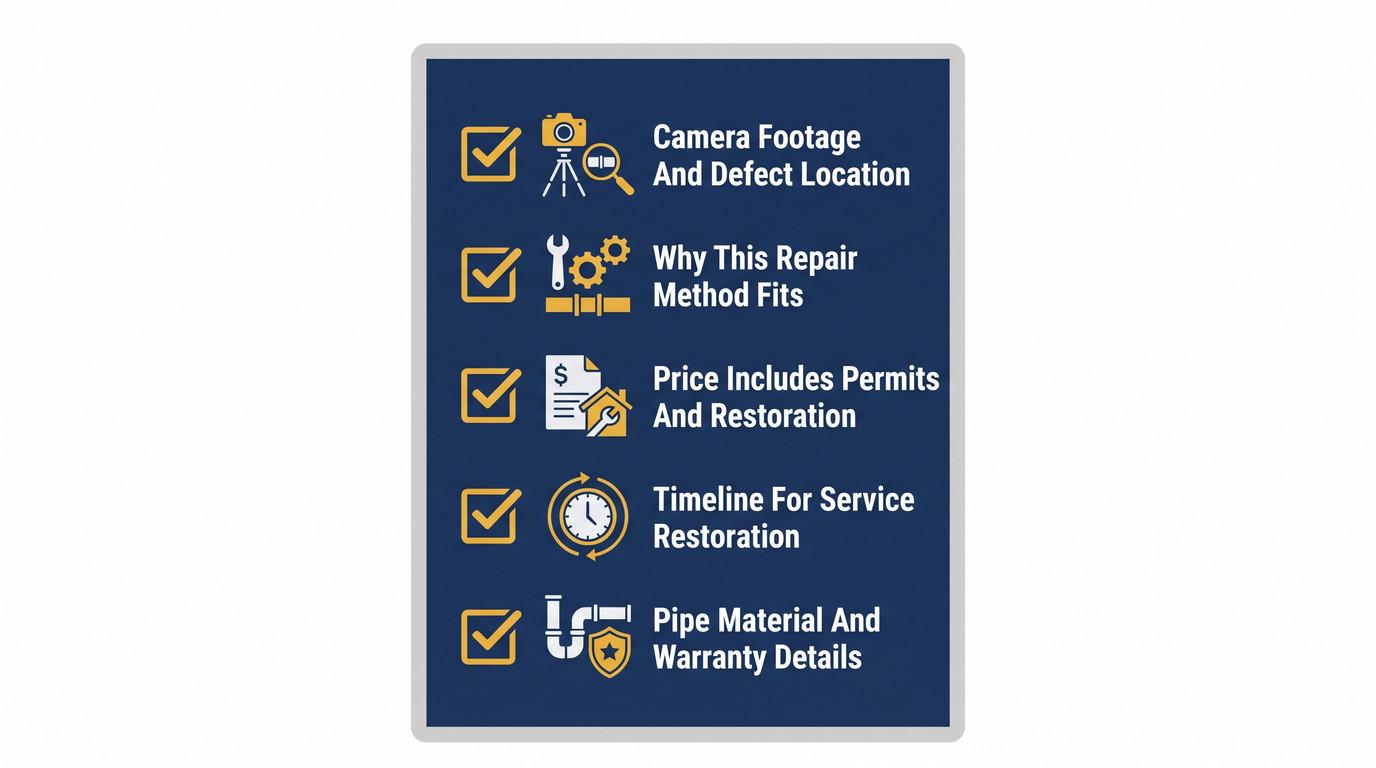
Once you know what the inspection found, compare both trenchless sewer repair and excavation against the actual work and its impact on your property. Before you approve a quote, ask:
- Can you show me the camera footage, identify the defect, and explain how you confirmed its location, depth, and affected length?
- Why does this repair method fit my pipe, and what makes the alternatives less suitable?
- Does the written price include utility locating, permits, cleaning, testing, pits or trenching, and restoration?
- How long will we be without sewer service, and when does the crew expect to restore service and complete repairs?
- What pipe material, workmanship warranty, and post-repair inspection will be included?
You should leave the estimate conversation knowing what failed, why the proposed repair fits, and what happens to your property afterward. Keep the footage, written scope, and warranty terms together so you can refer to them if questions arise during the job.
Choose the Repair Your Pipe Needs, Not Just the One That Sounds Easier
The choice between trenchless sewer repair and traditional excavation depends on the line’s condition, your property layout, and the repair goals.
- Lining can seal eligible defects while leaving much of the surface intact.
- Pipe bursting can replace a line along a suitable route.
- Excavation provides direct access when a collapse, displaced section, or drainage slope needs correction, and it may be limited to one problem area.
For a Salt Lake City home with a paved driveway or mature landscaping, restoration deserves a place in the estimate conversation. Compare the complete scope, expected sewer-service interruption, and written warranty before approving work. A lower price means little if the proposal leaves the underlying defect or essential restoration unaddressed.
At Beehive Plumbing, we help you connect the inspection findings to practical repair options. If trenchless repair looks promising, learn what the service involves, then ask which approach fits your line and how much access it will require, because the least disruptive option is not always the right one if a damaged sewer line needs direct correction.
Frequently Asked Questions
Here are answers to five common questions Salt Lake City homeowners have about sewer repairs, insurance, and property responsibilities.
Can I use my toilets during sewer repair?
Often not during the part of the job when the crew disconnects, cleans, lines, or replaces the line. Ask the crew when water use must stop and whether the plan includes temporary wastewater arrangements.
Can I repair only the section under my driveway?
Possibly. A short liner or localized excavation may work if the defect is isolated and the remaining pipe is sound. A camera inspection should confirm whether limiting the repair would leave other significant problems behind.
Does homeowners insurance cover trenchless sewer repair?
Coverage depends on the cause of damage and your policy, not simply whether the repair is trenchless. Standard homeowners insurance typically excludes sewer line deterioration and wear, while optional service-line coverage may help with eligible underground pipe failures.
Ask your insurer to distinguish pipe-repair coverage from sewer-backup damage and confirm applicable limits, exclusions, and claim requirements before work begins.
Who is responsible for the sewer line between my house and the street?
Within Salt Lake City limits, confirm responsibility with Salt Lake City Public Utilities before authorizing work near the public connection. The city’s Sewer Lateral Map provides address-based access to available permit notes, which can help identify the recorded connection. Confirm the maintenance responsibilities for your specific lateral; rules may differ outside city limits.
Do I need to move out while a sewer pipe is lined?
Not necessarily, but it depends on the lining product, curing method, ventilation plan, and the location of occupied spaces. Ask the contractor about odors, air monitoring, temporary plumbing restrictions, and whether anyone should leave during installation.