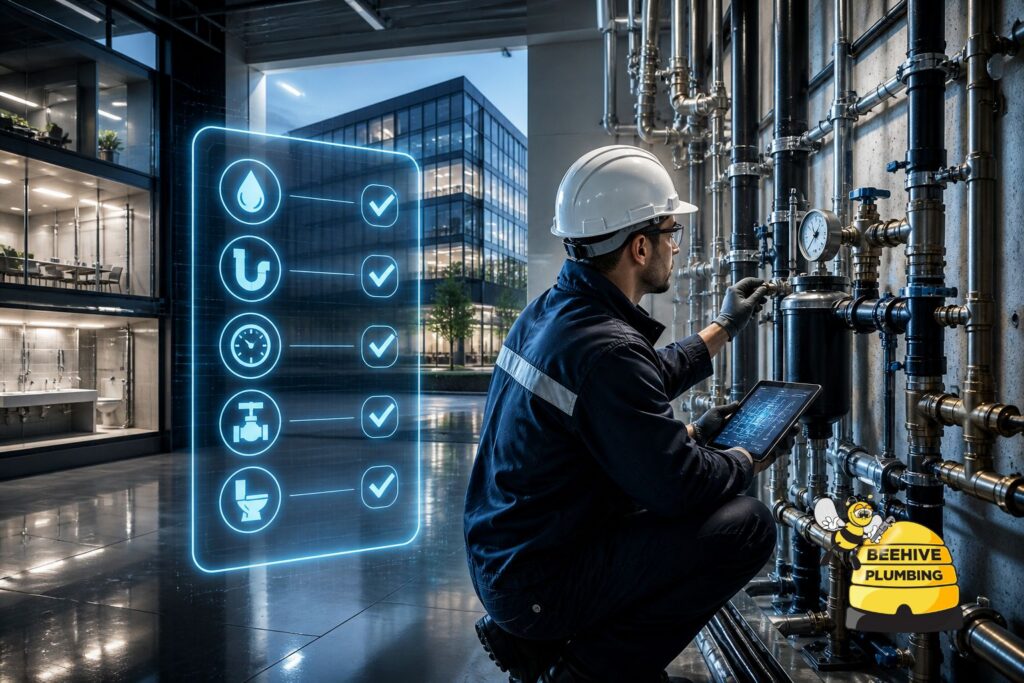
A commercial plumbing maintenance checklist is a structured plan for organizing routine inspections, cleaning, testing, servicing, warning signs, and maintenance records so your building can avoid unexpected shutdowns, expensive repairs, and compliance issues.
Unlike residential systems, commercial plumbing handles heavier daily use and stricter requirements, so even small problems can quickly disrupt operations, waste water, or create violations if they’re ignored.
For facility managers, business owners, and maintenance staff responsible for restaurants, retail spaces, office buildings, and other multi-tenant or commercial properties, this checklist lays out what to check daily, monthly, quarterly, and annually.
It includes drains and sewer lines, water heaters, grease traps, backflow prevention devices, low-use fixture flushing, bacterial growth prevention, leak detection, camera inspections, hydro jetting, and record keeping to keep the system reliable and compliant.
Key Takeaways
- Commercial plumbing maintenance helps prevent costly breakdowns, business disruptions, and avoidable compliance issues throughout the year.
- Following daily, monthly, quarterly, and annual maintenance schedules keeps plumbing systems operating reliably and efficiently.
- Regular inspections help identify leaks, slow drains, and worn components before they require expensive emergency repairs.
- Flushing low-use fixtures and maintaining safe water temperatures reduces the risk of harmful bacterial growth.
- Camera inspections and hydro jetting address recurring drain problems by identifying and removing the underlying cause.
- Tracking water meter readings and maintaining service records supports faster leak detection and simplifies compliance documentation.
- Calling a licensed commercial plumber early helps prevent minor plumbing issues from becoming major operational disruptions.
How to Use This Commercial Plumbing Maintenance Checklist
This checklist covers the routine inspections, cleaning, testing, and servicing needed as part of routine maintenance and regular plumbing maintenance to keep a commercial plumbing system operating reliably.
Use it to identify small issues before they interrupt business operations and help avoid costly repairs through proactive upkeep.
A complete maintenance plan typically includes drains, sewer lines, water heaters, pressure regulators, grease traps, backflow prevention devices, and plumbing fixtures throughout the building.
Each component has its own maintenance schedule, and following those intervals is just as important as completing the work itself for preventive plumbing maintenance.
The objective of plumbing maintenance is to support an efficient plumbing system, prevent unexpected downtime, reduce water waste, and stay compliant with health and plumbing regulations.
Commercial plumbing systems experience far more daily use than residential ones, so wear builds up much faster.
A restaurant restroom, for example, may handle hundreds of flushes in a single day, while a retail store depends on its plumbing throughout operating hours.
Commercial Plumbing Maintenance Checklist by Service Interval

Use these four service intervals to assign each task and record when it is completed. High-use properties may need more frequent checks.
- Daily: Clear drain strainers, check for visible leaks, monitor slow drains, and inspect restrooms before opening.
- Monthly: Service grease traps, test sump pumps, flush infrequently used floor drains, and inspect exposed plumbing connections.
- Quarterly: Flush water heaters, verify water pressure, inspect problem drain lines, and address mineral buildup before it affects performance.
- Annually: Complete certified backflow testing, inspect the sewer line, verify fixture performance, and update maintenance records for compliance.
Keeping up with every interval is far less expensive than responding to emergency plumbing failures. It also creates documented proof of routine system upkeep, which can be valuable during inspections, insurance claims, or property audits.
Why Commercial Plumbing Requires a More Detailed Checklist
Commercial systems experience higher daily usage, more complex equipment, and stricter compliance requirements than residential plumbing systems. The comparison below explains why commercial maintenance must be documented and scheduled.
| Factor | Residential Plumbing | Commercial Plumbing |
|---|---|---|
| Daily Usage | Serves a single household with moderate daily demand | Handles continuous, high-volume use from employees, customers, or tenants |
| System Complexity | Standard fixtures, drains, and a single water heater | Multiple restrooms, grease traps, backflow devices, larger water heaters, and extensive drain networks |
| Maintenance Requirements | Repairs are usually performed as problems arise | Preventive maintenance follows scheduled inspections and servicing |
| Compliance | Limited ongoing regulatory requirements | Regular inspections and documented compliance with health and plumbing codes |
| Impact of Failure | Temporary inconvenience for the household | Business interruptions, lost revenue, property damage, and potential code violations |
Commercial plumbing maintenance follows a documented schedule because the consequences of failure are far greater in a commercial facility.
A blocked restroom, backed-up floor drain, or failed water heater can disrupt daily operations, affect customers and employees, and lead to expensive emergency repairs.
Keeping maintenance on a calendar helps support a well functioning plumbing system, prevent those interruptions, and create service records that support inspections and long-term facility management.
Daily and Weekly Commercial Plumbing Checklist

Add these quick inspections to opening, closing, or end-of-shift routines so staff can report small problems before they cause backups, leaks, or service interruptions.
Restroom Plumbing Checks
During opening or closing rounds, have staff complete the following restroom checks:
- Running Toilets and Urinals: Listen for water that continues running after each flush.
- Leaks Under Sinks: Look for drips, damp cabinets, or corrosion around supply lines.
- Slow Drains: Watch how quickly sinks and floor drains empty, especially after busy periods.
- Unusual Odors: Sewer smells can indicate a dry trap or a developing drain blockage.
Running toilets waste significant water and can drive up utility bills.
Catching these issues early often helps prevent safety hazards and emergency repairs later.
Kitchen Plumbing Checks
Commercial kitchens place even greater demands on the plumbing system, particularly the drains and grease management equipment. A quick daily inspection should include:
- Grease Trap Condition: Check whether grease is building close to the lid or service level, and inspect visible drain connections for leaks or looseness.
- Floor Drain Screens: Remove food scraps and look for standing water around the drain.
- Prep Sink Drainage: Make sure water drains freely after cleanup by checking sink drains for proper drainage without backing up.
These daily checks also help prevent clogged drains.
Recording slow drainage or recurring issues gives you time to schedule maintenance before a blockage shuts down the kitchen.
Since these checks fit naturally into end-of-shift cleaning, they add very little time to the daily routine, while helping catch debris or buildup that can restrict water flow and lead to clogged pipes.
Weekly Checklist for Preventing Water Stagnation and Harmful Bacteria
Water that sits unused inside a plumbing system creates the right conditions for Legionella bacteria to grow. Low-use fixtures, seasonal spaces, and dead-end pipe sections can all leave water stagnant for long periods.
That’s why the CDC recommends controlling water stagnation as part of every Legionella water management program, especially in buildings with changing occupancy levels.
Flush Low-Use Fixtures Every Week
Flushing low-use outlets replaces stagnant water with fresh, treated water and helps reduce the risk of bacterial growth. Include these fixtures in your regular weekly walkthrough:
- Restrooms in rarely used areas or unoccupied floors
- Mop sinks, utility faucets, emergency showers, and eyewash stations
- Vacant tenant suites or plumbing fixtures taken out of regular service
Run each fixture until the water reaches its normal hot or cold temperature, then record the inspection to verify proper operation. If a section of pipe can’t be flushed because it no longer serves a fixture, it should be removed by a licensed plumber.
Keep Water Temperatures in a Safe Range

Legionella grows most rapidly in warm, stagnant water between 77°F and 113°F, according to the CDC. Maintaining proper water temperatures helps reduce that risk.
A good maintenance program should include checking and logging water heater temperature during weekly monitoring, along with:
- Keeping hot water storage around 140°F
- Delivering hot water near 120°F where scald protection allows
- Keeping cold water below 77°F
- Recording routine temperature readings as part of maintenance logs
TheASHRAE 188 Legionella risk management standard also recommends documenting these temperatures to support a complete building water management program.
Annual Plumbing Maintenance That Protects Equipment and Compliance
Some plumbing components only need attention once a year, but skipping them can lead to expensive repairs, equipment failures, or compliance issues.
Water heaters, backflow prevention assemblies, shut-off valves, and sump pumps all need regular servicing to stay reliable. While some checks are simple, others must be completed by a licensed plumber or a certified backflow tester to service water heaters and other annual checklist items.
Service Your Water Heater Every Year
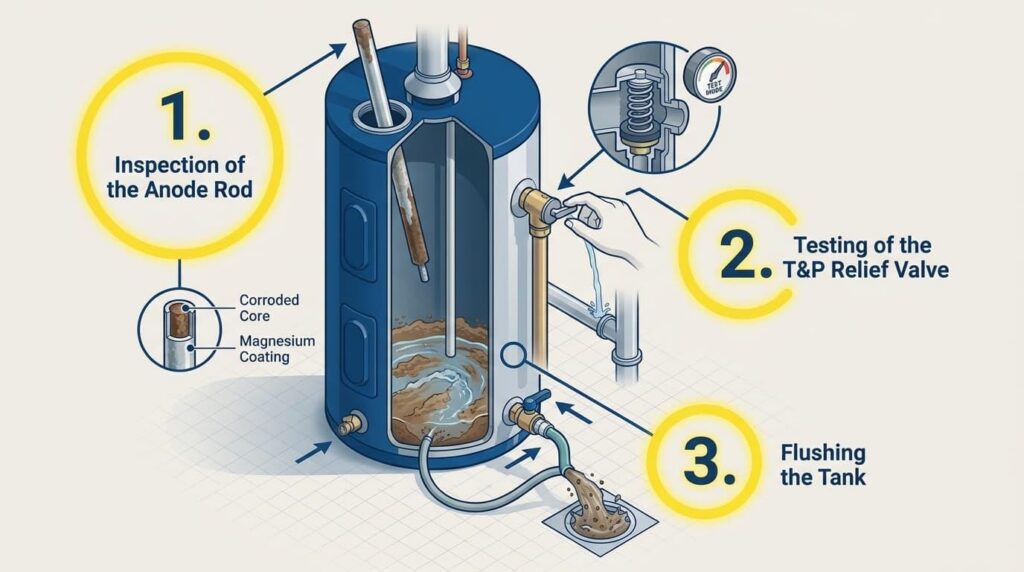
Annual maintenance for commercial water heaters helps extend the unit’s lifespan while improving efficiency. Ensure the following three tasks are included during each service visit:
- Inspection of the Anode Rod: The anode rod corrodes instead of the tank. Once it’s fully worn away, corrosion begins attacking the tank itself, greatly increasing the risk of failure.
- Testing of the T&P Relief Valve: The temperature and pressure relief valve must open properly to release excess pressure. A seized valve can create a serious safety hazard.
- Flushing the Tank: Removing sediment from the bottom of the tank helps clear sediment buildup, improves heating efficiency, and reduces wear on the burner or heating elements.
Scheduling all three tasks together keeps the water heater operating safely and reduces the chance of an unexpected breakdown. Annual service is especially important before cold weather in buildings that depend heavily on hot water.
Schedule Certified Backflow Testing
Backflow prevention assemblies protect the public water supply by stopping contaminated water from flowing back into clean water lines. Most commercial properties are required to have these devices tested annually by a certified backflow tester.
Completing the test on schedule keeps your compliance records current and provides the documentation inspectors often request. Booking the inspection before your renewal deadline also helps avoid unnecessary notices or penalties.
Exercise Valves and Test Sump Pumps
Add these equipment checks to the quarterly or annual maintenance schedule, depending on the property and manufacturer requirements:
- Main Shut-Off and Isolation Valves: Turn each valve fully closed, then fully open, before returning it to its normal position. This helps prevent valves from seizing over time.
- Sump Pumps: Pour water into the sump pit and confirm the float activates the pump. A quick test can help verify that the system is ready before heavy rainfall or an emergency occurs.
Small annual and quarterly checks like these can prevent much larger plumbing problems later while keeping critical equipment ready for service.
Preventing Recurring Drain and Sewer Line Problems
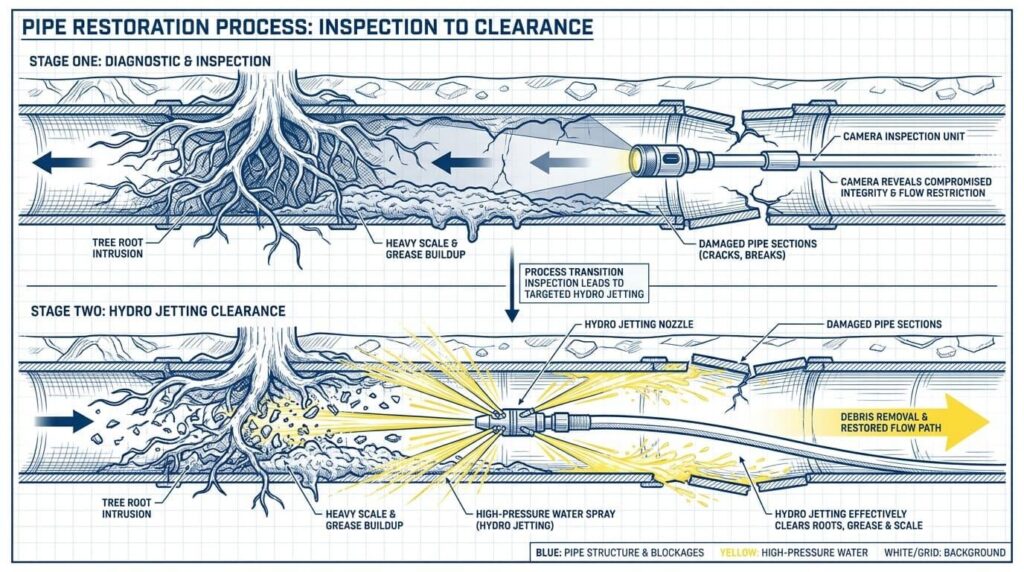
Recurring drain clogs are usually a sign that the underlying problem was never fully addressed. Clearing the blockage restores flow, but it doesn’t explain why the same drain keeps backing up. That’s where camera inspections and hydro jetting become valuable. Together, they help identify the cause of the problem and reduce the chances of another unexpected blockage.
Find the Real Cause With a Camera Inspection
When the same floor drain or sewer line clogs repeatedly, there’s often more going on than everyday debris. A high-definition sewer camera allows plumbers to inspect the inside of the pipe before recommending a repair, helping eliminate the guesswork.
A camera inspection can reveal problems that traditional drain clearing leaves behind, including:
- Tree Root Intrusion: Roots entering through pipe joints and restricting water flow.
- Damaged Pipe Sections: Cracked, offset, or bellied pipes that allow waste and debris to collect.
- Heavy Scale and Grease Buildup: Deposits coating the inside of the pipe and gradually reducing its diameter.
Finding the root cause means the repair can target the problem rather than repeatedly treating the symptom.
Remove Buildup With Hydro Jetting
Once the cause has been identified, hydro jetting provides a more thorough cleaning than conventional drain snaking.
Instead of creating a small opening through the blockage, high-pressure water cleans the entire interior surface of the pipe, removing grease, sludge, mineral deposits, and loose debris to help restore proper drainage by clearing buildup along the full pipe wall.
For commercial kitchens and other high-use facilities, scheduling hydro jetting as part of routine commercial drain and sewer line maintenance tasks helps reduce buildup before it develops into a full blockage. That preventive approach keeps drains flowing more reliably and lowers the risk of emergency service during business hours.
Monitoring Water Usage to Catch Hidden Leaks Early
Hidden leaks often develop long before they become visible. Regularly checking your water meter helps detect hidden leaks early by identifying unusual water use, giving you time to fix small problems before they turn into costly repairs or property damage and helping limit repair costs.
Record your water meter reading on the same day each week and compare it with previous records. If water usage steadily increases without a change in occupancy or business activity, there’s a good chance a leak is developing somewhere in the system.
The EPA’s leak detection best practices recommend keeping these records as part of a proactive water management program.
Higher water usage combined with reduced pressure at nearby fixtures can also help narrow the search. Research on commercial water leak loss analysis shows that many commercial leaks continue unnoticed until significant water has already been lost.
Use Submeters to Pinpoint Leaks Faster
Submeters divide a building into smaller monitoring zones, making leak detection much more efficient. Installing them in commercial kitchens, restroom blocks, irrigation systems, or individual tenant spaces helps identify exactly where abnormal water use is occurring, allowing plumbers to inspect a single area rather than search the entire property.
Signs It’s Time to Call a Master Plumber for Commercial Properties
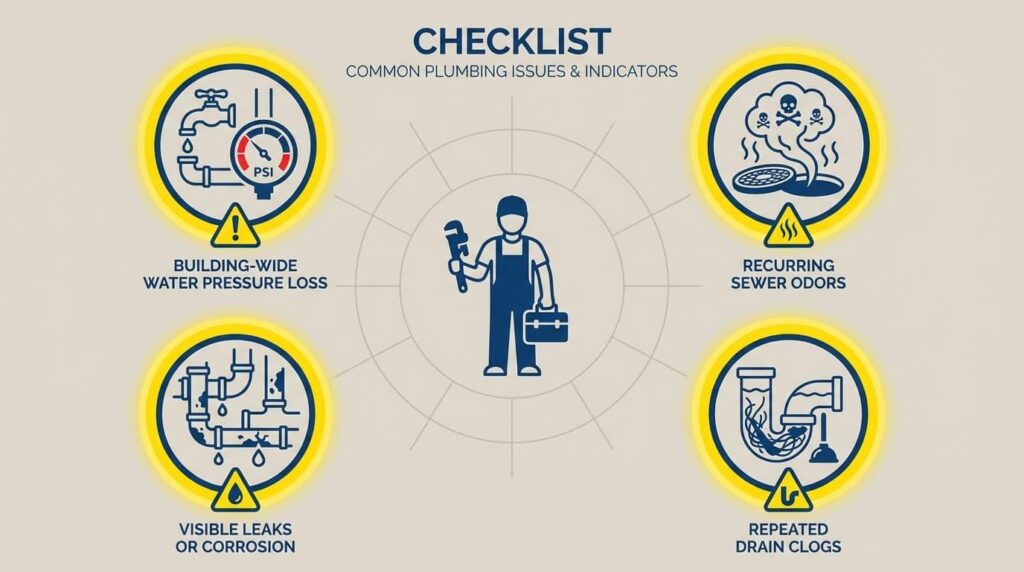
Routine inspections help catch many plumbing issues early, but some problems need more than regular maintenance. When these warning signs appear, it usually indicates that the issue extends beyond what on-site staff can safely diagnose or repair.
Reach out toprofessional commercial plumbers if you notice any of the following:
- Building-Wide Water Pressure Loss: If several fixtures lose pressure simultaneously, or you notice weak water pressure during a plumbing inspection, the problem may involve the main water line, the water heater, pressure regulating valves, or a hidden leak that requires professional testing. Testing water pressure should target levels between 40 and 80 psi, with most systems ideally operating between 40 and 60 psi.
- Recurring Sewer Odors: Odors that return after drain cleaning often point to a venting issue or a blockage deeper in the sewer line. Ignoring them can create sanitation concerns and lead to compliance issues.
- Repeated Drain Clogs: A drain that clogs again shortly after being cleared usually has an underlying problem, such as grease buildup, pipe damage, or tree root intrusion. A camera inspection can identify the actual cause.
- Visible Leaks or Corrosion: Standing water, rust, corrosion, or discoloration around fixtures, exposed pipes, or water heaters often indicates a component is beginning to fail. Addressing it early helps prevent larger repairs and water damage.
Keeping Plumbing Maintenance Records Organized
Completing plumbing maintenance is only part of the job. Keeping accurate records is just as important, especially when your business needs to demonstrate compliance, support an insurance claim, or review previous repairs. A well-maintained log shows that inspections, testing, and servicing were completed on schedule rather than only after a problem occurred.
Industry guidance, including Legionella control guidelines and the CDC’s guidance on building water systems, recommends maintaining written records as part of an effective commercial water management program.
Maintain Clear Service Records
Whether you use paper forms or digital software, every maintenance record, including records from regular plumbing inspections, should include:
- Date Completed: Record when the inspection, test, or repair was performed.
- Work Performed: Note the plumbing system, fixture, or equipment that was serviced.
- Issue Description: Every work order should include a clear description of the issue.
- Inspection Findings: Document pressure readings, water temperatures, observed issues, and any follow-up work that may be needed.
- Completed By: Record the technician or staff member responsible for the work.
Organized records simplify inspections, compliance reviews, insurance claims, and future service planning. Keep current backflow certificates, water heater service records, inspection findings, and completed repair documentation readily available.
Keep Your Commercial Plumbing System Running Reliably
A consistent commercial plumbing maintenance checklist helps reduce unexpected downtime, extend equipment life, and keep the business prepared for inspections and compliance requirements.
Staying ahead of small issues through routine inspections, scheduled servicing, and accurate maintenance records as part of a preventive maintenance program is far more cost-effective over the long term, helping avoid costly repairs and unexpected downtime instead of responding to emergency plumbing failures.
At Beehive Plumbing, our licensed master plumbers help businesses throughout Salt Lake and Davis Counties, Utah, build maintenance plans that fit their property, operations, and budget. We provide comprehensive maintenance solutions for restaurants, retail spaces, office buildings, and multi-tenant facilities to keep plumbing systems running reliably year-round.
Schedule Your Commercial Plumbing Maintenance
Frequently Asked Questions About Commercial Plumbing Maintenance
Here are quick answers to common questions about commercial plumbing maintenance.
What is the 135 rule in plumbing?
The 135 rule refers to storing hot water at approximately 135°F to help limit bacterial growth inside the water heater. The water is then tempered before reaching fixtures to provide safe temperatures for building occupants.
What are the most common commercial plumbing code violations?
Common violations include missing backflow testing, improper venting, incorrect drain slope, unpermitted plumbing modifications, and poorly maintained grease traps. Routine inspections and documented maintenance help reduce the risk of compliance issues.
Can a toilet, sink, and floor drain share the same drain line?
Yes. Multiple fixtures can connect to the same drain line when the plumbing system is properly sized, vented, and installed in accordance with code. Any modifications should be completed by a licensed commercial plumber.
How often should commercial plumbing be inspected?
Most commercial buildings benefit from routine plumbing inspections and seasonal maintenance at least once or twice a year. Some facilities also need seasonal maintenance to prepare for cold weather and help prevent frozen pipes. High-use facilities such as restaurants, hotels, healthcare buildings, and schools often require more frequent maintenance to prevent unexpected failures.
Why is preventative plumbing maintenance important for commercial buildings?
Preventative maintenance helps identify minor plumbing issues before they become expensive repairs. It also reduces downtime, extends the lifespan of plumbing equipment, supports compliance requirements, and helps businesses avoid unexpected service interruptions