
Common sink plumbing problems can range from a quick DIY fix to an issue that signals trouble deeper in your plumbing system. A slow drain, dripping faucet, or leak under the sink might seem minor at first, but ignoring the cause can lead to water damage, mold growth, or costly repairs down the road.
So, how do you know when it’s safe to grab a wrench and when it’s time to call a plumber? The answer depends on what’s causing the problem.
In this guide, we’ll walk through the most common sink and faucet issues homeowners face, explain which ones you can often fix yourself, and show you the warning signs that indicate when to call a professional plumber.
Key Takeaways
- Most sink plumbing problems start with common issues like clogs, leaks, or mineral buildup.
- Kitchen and bathroom sinks tend to develop different types of clogs.
- Many faucet drips are caused by worn cartridges, O-rings, or valve seats.
- Low water pressure at one sink often starts with a clogged aerator.
- Recurring clogs or multiple slow drains can signal deeper drain line problems.
- Regular maintenance can help prevent clogs, leaks, and other common sink issues.
- Knowing when to DIY and when to call a plumber can prevent costly damage.
The Most Common Sink Plumbing Problems Homeowners Face
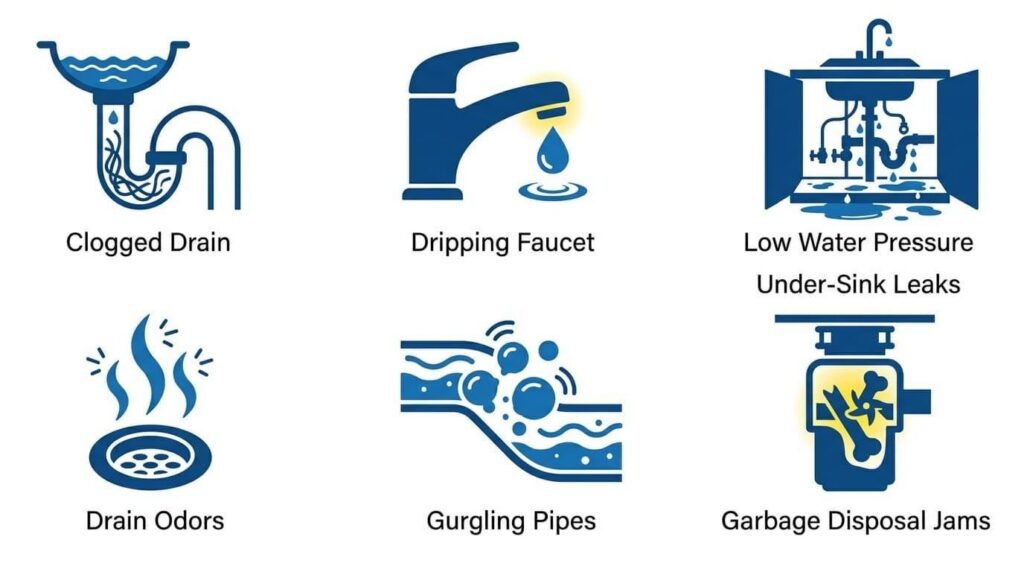
Most sink plumbing issues fall into a handful of common categories. Some are quick DIY fixes, while others point to a larger plumbing problem that needs professional attention.
Here are the issues homeowners encounter most often:
- Clogged Drain: Hair, soap scum, grease, food scraps, and other debris gradually build up inside the drainpipe, slowing water flow until the sink begins to back up.
- Dripping Faucet: A worn washer, cartridge, O-ring, or valve seal allows pressurized water to leak through, thereby creating a constant drip that wastes water over time.
- Low Water Pressure: Mineral deposits inside the faucet aerator, partially closed shut-off valves, or aging supply lines can all reduce water flow at the sink.
- Under-Sink Leaks: Loose drain connections, deteriorated supply lines, worn washers, or cracked drain components can allow water to collect inside the cabinet.
- Drain Odors: Sewer-like smells often develop when the P-trap dries out or when organic debris begins to decompose inside the drain.
- Gurgling Pipes: Gurgling noises usually indicate trapped air caused by a partial blockage or a plumbing vent that isn’t functioning properly.
- Garbage Disposal Jams: Fibrous food waste, grease, bones, or foreign objects can prevent the disposal from turning freely and stop it from working.
Many of these problems can be resolved with basic tools and a little patience. However, if the same issue keeps returning or the source isn’t easy to identify, it’s best to have a licensed plumber inspect the system before a minor repair turns into costly water damage.
What Causes a Kitchen or Bathroom Sink to Drain Slowly
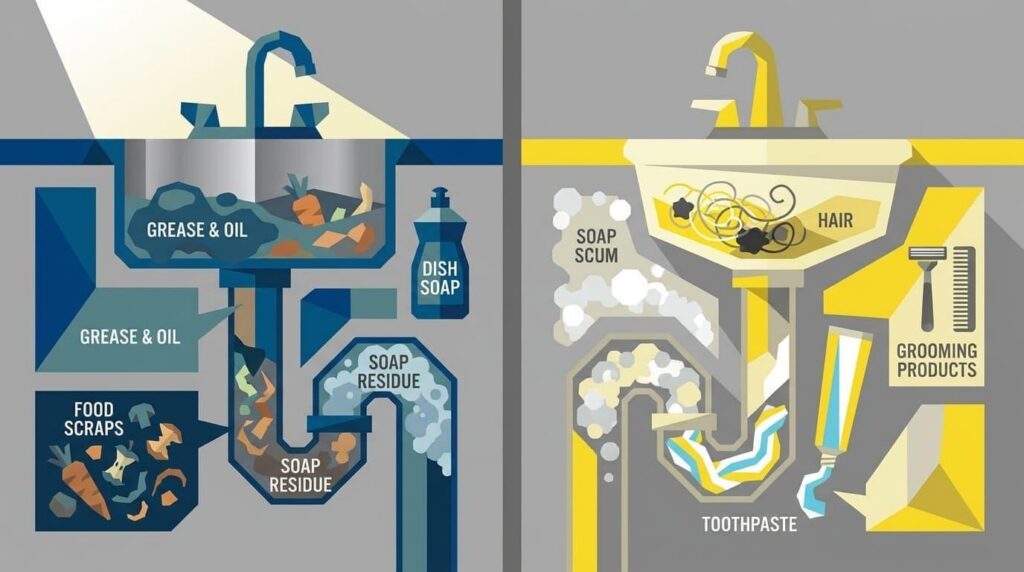
A slow-draining sink usually means the pipe is narrowing from buildup, not completely blocked. The cause often depends on whether it’s a kitchen or bathroom sink, which is why the right solution isn’t always the same.
Kitchen Sink Clogs
Kitchen sinks handle a wider variety of waste than bathroom sinks, making them more prone to stubborn blockages. The biggest culprits include:
- Grease and Cooking Oil: They enter the drain as liquids but cool into a sticky coating that traps other debris.
- Food Scraps: Coffee grounds, rice, pasta, and starchy foods easily cling to grease-coated pipe walls.
- Soap Residue: Dish soap can combine with grease over time, adding to the buildup.
Most kitchen clogs develop within the first few feet of the drain line. In many cases, removing and rinsing the P-trap or using a hand-operated drain snake is enough to restore normal flow. Just remember to place a bucket underneath before loosening the slip nuts.
Bathroom Sink Clogs
Bathroom sink drains are more likely to clog from hair, soap scum, toothpaste, and grooming products. Over time, these materials collect around the pop-up stopper, gradually restricting water flow.
Before reaching for stronger solutions, start by removing and cleaning the sink pop-up, as that simple step clears hair and other organic matter before it turns into persistent clogs and resolves many common bathroom sink clogs.
In most cases, this is one of the easiest DIY methods for a slow-draining bathroom sink. If the drain slows down again soon afterward, or multiple fixtures begin draining slowly at the same time, the blockage is likely farther down the drain line.
Common Causes of a Dripping Faucet
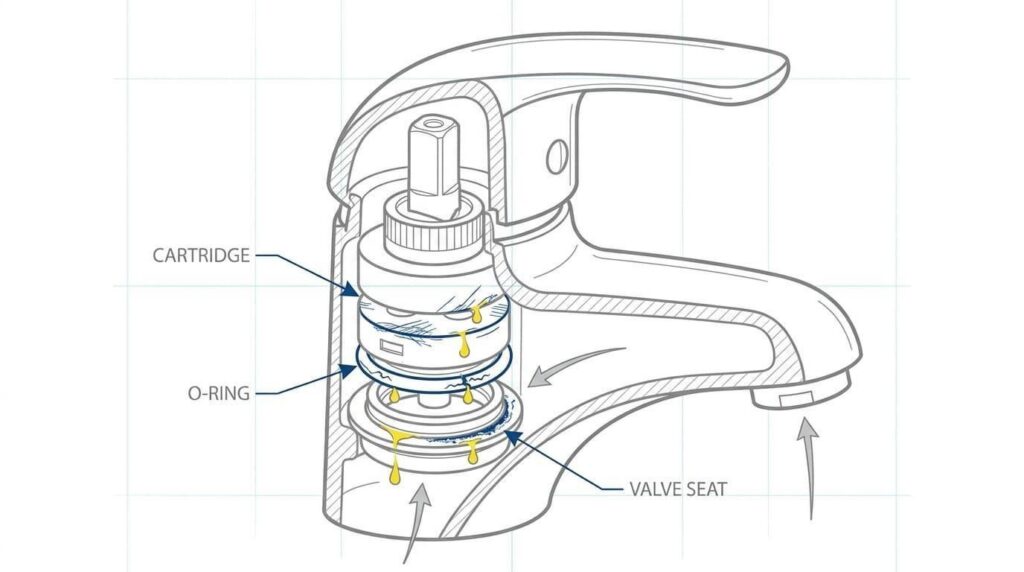
A dripping faucet usually comes down to one worn component, not a failed fixture. Knowing which part is causing the leak helps you decide whether it’s a quick DIY repair or something that needs professional attention.
Cartridge Problems
The cartridge controls both water flow and temperature. When its internal seals wear down, water can slip through even when the handle is fully closed.
If you’re comfortable with a basic faucet repair:
- Shut off the water supply under the sink
- Remove the handle and the retaining clip or nut
- Pull out the old cartridge and compare it with the replacement
- Reassemble the faucet and turn the water back on
If the handle simply feels loose but the faucet isn’t dripping, try tightening the handle’s set screw before replacing any parts.
O-Ring Problems
A worn or cracked O-ring can cause water to collect around the faucet base or drip from the spout as you move the handle.
Replacing the ring is usually a straightforward repair once you have access to the faucet or spout components. If the faucet continues to drip after replacing the O-ring and cartridge, another internal component may be damaged. At that point, a continuing drip may indicate a leaky faucet that needs professional help rather than more part-swapping.
Worn Valve Seats
A worn or corroded valve seat can keep a faucet from sealing completely, allowing a steady drip even when the handle is turned off. This is more common with older compression-style faucets, where the valve seat and washer work together to stop the flow of water.
Signs of a valve-seat problem can include:
- Persistent Dripping: The faucet continues to drip after the washer has been replaced.
- Visible corrosion: Mineral buildup or corrosion appears around the valve components.
- Repeated repairs: A new washer temporarily fixes the drip, but the leak returns soon after.
Replacing a valve seat requires taking apart more of the faucet than a typical cartridge or O-ring repair. This is the territory where a small repair can become more complicated, so call a professional plumber to avoid damaging the faucet or creating a larger leak.
Common Causes of Low Sink Water Pressure
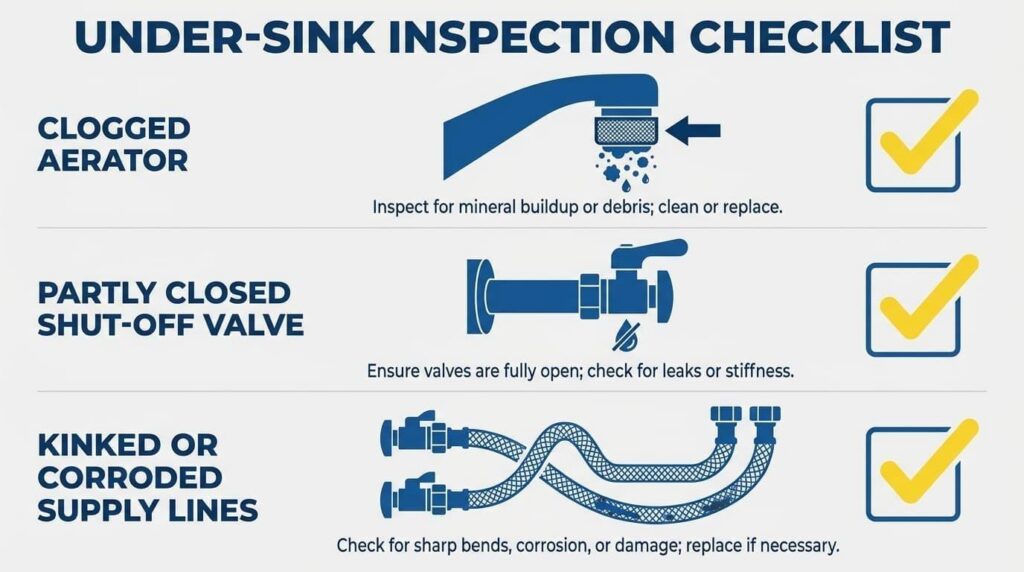
When water pressure drops at just one sink, often described as low pressure, the problem usually starts at the fixture rather than somewhere in the main water supply. Mineral buildup is a common culprit, especially with Utah’s hard water.
Before calling a plumber, check these three areas:
- Clogged Aerator: Unscrew the aerator from the end of the faucet and soak the screen in vinegar overnight. Brush away any remaining mineral buildup, since sediment buildup on the screen can reduce flow at the tap, then rinse and reinstall it.
- Partly Closed Shut-Off Valve: Check the hot and cold shut-off valves beneath the sink. Turn both fully counterclockwise to make sure they’re not restricting the flow.
- Kinked or Corroded Supply Lines: Look for sharp bends, green buildup, bulges, or damp spots along the braided lines. Replace any line showing visible damage.
If pressure is low at several fixtures throughout the home, the issue likely goes beyond the sink. At that point, a plumber should inspect for a deeper plumbing issue if the problem does not improve or affects several fixtures.
At Beehive Plumbing, we get calls from homeowners for all kinds of plumbing problems, from low water pressure to persistent leaks. Our master plumbers can diagnose the underlying issue and recommend the right fix without unnecessary guesswork.
Get Professional Plumbing Help
Common Causes of Leaks Under the Sink
Under-sink leaks can look like one problem, but the source usually falls into one of two areas: the drain assembly or the faucet’s water supply lines. Finding where the water starts makes it much easier to narrow down the repair.
P-Trap Leaks
The P-trap connects the sink drain to the drain line, and loose slip nuts or flattened washers can let water seep into the cabinet. Hand-tighten the nuts first.
If the leak returns, replace the washers rather than forcing the plastic threads. If that still does not stop the leak, remove and clean the trap or the adjacent drain pipe before reassembling it.
Supply Line Leaks
Supply lines usually show warning signs before they fail. Look for green buildup around the fittings, bulges in the braided line, or dampness near the shut-off valve.
If you spot any of these, replace any visible damage rather than simply tightening it, especially on aging or visibly leaky pipes.
Small Leaks Add Up
Even a small leak can waste more water than you’d expect and raise the water bill. The Environmental Protection Agency estimates that household leaks waste nearly 10,000 gallons of water annually.
Check beneath your sink regularly for dampness, staining, or moisture before a small leak becomes cabinet damage, since catching leaks early can save money in the long run and extend the life of the surrounding cabinet materials.
Safer Ways to Clear a Clogged Sink
Chemical drain cleaners can seem like the quickest fix, but they aren’t always the safest choice for your pipes.
For most sink clogs, mechanical clearing removes the blockage directly without exposing the drain to harsh chemicals. Many clogged drains can be cleared first with basic tools before stronger products are considered.
| Method | How It Works | Risk to Pipes | Best For |
| Drain snake or P-trap removal | Physically removes the blockage | Low | Most kitchen and bathroom clogs |
| Chemical drain cleaner | Uses chemicals to break down buildup | Higher, especially on older pipes | Occasional light buildup |
A plunger is also an affordable tool many homeowners purchase for sink clogs, as long as it is the right type for the fixture and used correctly.
Skip chemical cleaners when:
- The Clog Keeps Coming Back: Recurring or persistent clogs that resist diy methods may need professional assistance.
- The Pipes Are Older: Corroded or weakened pipes may be more vulnerable to the heat and chemicals these products create.
- Water Isn’t Moving: Standing water keeps the cleaner concentrated in one spot, increasing the risk of pipe damage.
Professional plumbers are better equipped to safely handle deeper blockages.
Common Sink Drain Warning Signs
Strange smells, gurgling sounds, or drain flies are more than minor annoyances. Each can point to a different problem inside the drain, and knowing the difference helps you decide what to tackle yourself.
Gurgling Usually Points to a Drain or Vent Problem
Gurgling occurs when air can’t move freely through the drain, often due to a partial clog or a blocked vent. If several fixtures gurgle at once, especially with slow drains or foul odors, the problem may involve the main sewer line and needs a plumber’s attention.
Drain Flies Feed on Buildup
Drain flies can live in the organic film coating the inside of a drain, even when the basin itself looks clean. Scrub the stopper, tailpiece, and drain walls with a stiff brush to remove buildup that can cause foul odors; after scrubbing, a baking soda and vinegar mixture can help eliminate lingering smells.
Pouring baking soda and vinegar can also eliminate bad odors when the smell is coming from organic buildup in the drain. If odors stick around, check that the P-trap still holds water.
Dishwasher Backups Can Start in the Sink Drain
If dishwasher water backs up into the sink, the two fixtures likely share a blocked section of the drain, and recurring backups may indicate persistent clogs rather than a one-time blockage.
Check the trap and dishwasher branch for food debris, and avoid running another cycle until the water drains normally. Pouring baking soda and vinegar can also help eliminate bad odors.
How to Safely Reset a Jammed Garbage Disposal
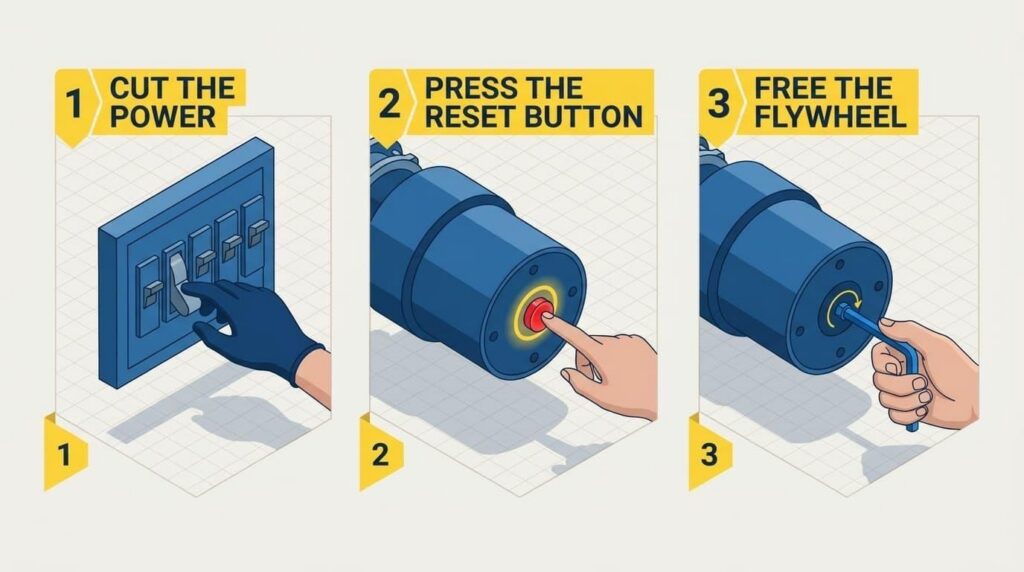
A jammed garbage disposal is often fixable at home, but safety comes first. The following three steps can free most stalled disposals:
- Cut the Power: Turn off the breaker that powers the disposal, not just the wall switch. This prevents the unit from starting while you’re working on it.
- Press the Reset Button: Reach underneath the disposal and press the small red reset button until it clicks. This can restore the motor after an overload trips the unit.
- Free the Flywheel: Insert an Allen wrench into the socket underneath the disposal and gently rock it back and forth until the flywheel moves freely. Use tongs to remove any visible debris.
If the disposal still hums without spinning, makes unusual grinding noises, or smells like something is burning, stop troubleshooting. A seized motor or an internal electrical problem needs professional attention.
Find and Test Your Sink Shut-Off Valves
Every sink has two shut-off valves under the basin, one for hot water and one for cold water. Your main shut-off controls the entire home and is usually located near the water meter, in the garage, or where the service line enters the home.
Don’t wait for a leak to find out whether those valves work. Twice a year, turn each valve fully closed, then open it again. Valves that sit untouched for years can seize when you need them most.
Knowing where these valves are and making sure they actually turn can save you from searching for them while water is spreading across the floor.
Recognizing a Bigger Drain Line Problem
One slow sink usually points to a local clog. When several fixtures back up together or the same clog keeps returning, the problem may be farther down the drain line.
Multiple Fixtures Backing Up
When several fixtures start draining slowly or backing up at the same time, look beyond the individual sink. Watch for:
- Several Slow Drains: The kitchen sink, bathtub, and toilet all drain slowly or back up together.
- Gurgling From Other Fixtures: A toilet or drain gurgles even when you’re not using it.
- Water Backing Up Elsewhere: Running one fixture causes water to rise in another.
These signs can point to a restriction in the shared drain line or a venting problem. Stop running water until the cause is identified, especially if multiple fixtures are affected.
Recurring Clogs Need a Closer Look
A persistent clogging issue that returns within days of being cleared is another warning sign. Hardened buildup, a damaged or bellied pipe, or tree roots could be blocking the line farther downstream.
Repeated snaking may temporarily restore flow without addressing the cause of the blockage, and in some cases, the recurring problem may indicate structural damage farther down the line.
At that point, a sewer camera can show what’s happening inside the pipe and help determine the right repair. These sink repair warning signs can also help you recognize when it’s time to call a professional.
Simple Maintenance for Healthier Sinks and Faucets
A few quick checks throughout the year can help prevent many of the clogs, leaks, and faucet problems covered above. They won’t prevent every issue, but they can catch small problems before they become bigger repairs.
Keep Kitchen Drains Clear
Pouring hot water weekly can help prevent minor clogs in kitchen drains. A mixture of baking soda and vinegar can help clear minor clogs before buildup becomes more serious. Use a strainer in each basin to help catch hair and food scraps before they reach the trap.
You can also avoid putting grease, coffee grounds, rice, or starchy food scraps down the drain in the first place. A little prevention goes a long way with kitchen sink clogs.
Check Under the Sink
Twice a year, take a quick look underneath each sink. Feel the supply lines and angle stops for dampness, and check for crusty buildup around the connections. Catching a small leak early can save the cabinet and flooring from prolonged water damage.
While you’re there, soak the faucet aerator in vinegar to clear mineral buildup and help keep water flowing normally. Regular checks and small fixes can make a big difference over time.
Know When to Fix It Yourself and When to Call a Plumber
Most sink and faucet problems are smaller than they first appear. In most cases, a dripping faucet, slow drain, or weak water pressure comes down to a worn component, mineral buildup, or a dirty trap that you can handle with diy methods, but not every plumbing issue should be approached that way.
The bigger warning signs are recurring clogs, persistent leaks, damp cabinets, or several fixtures draining slowly at once. Those problems can point to an issue farther down the drain line, where professional help is the smarter way to deal with it than trying another DIY fix that only delays the real repair.
If the same sink problem keeps coming back, it’s time to stop guessing. Reach out to Beehive Plumbing, and our licensed master plumbers can provide professional assistance when a repeat issue won’t respond to DIY work and recommend the right fix.
Common Sink Plumbing Problems FAQs
Why is my sink draining slowly, but there’s no clog?
A slow sink can be caused by buildup farther down the drain line or a partially blocked vent. If it gurgles while draining, the issue may involve venting rather than a simple clog.
Can a toilet, shower, and sink share the same drain?
Yes. Multiple fixtures commonly connect to shared branch drain lines before reaching the main drain. That’s why a single downstream blockage can cause several fixtures to drain slowly or back up simultaneously.
What can I pour down my sink to make it drain faster?
Hot water can help loosen minor grease buildup in kitchen drains. If water is pooling instead of draining, skip pour-in remedies and remove the trap or have a plumber clear the blockage.
How do I stop my sink from clogging?
Use drain strainers to catch food, hair, and debris before they enter the pipe. Avoid pouring grease or coffee grounds down the drain, and clean the stopper and trap regularly.
Why does my sink smell even after cleaning it?
Persistent sink odors often come from organic buildup inside the drain, a dirty trap, or sewer gas entering through a dry trap. Cleaning the drain and refilling the trap can help identify the cause.