A drain that slows down again days after being cleared is telling you something. The clog may not be a single obstruction. Grease, roots, scale, or a damaged sewer line may be narrowing the pipe.
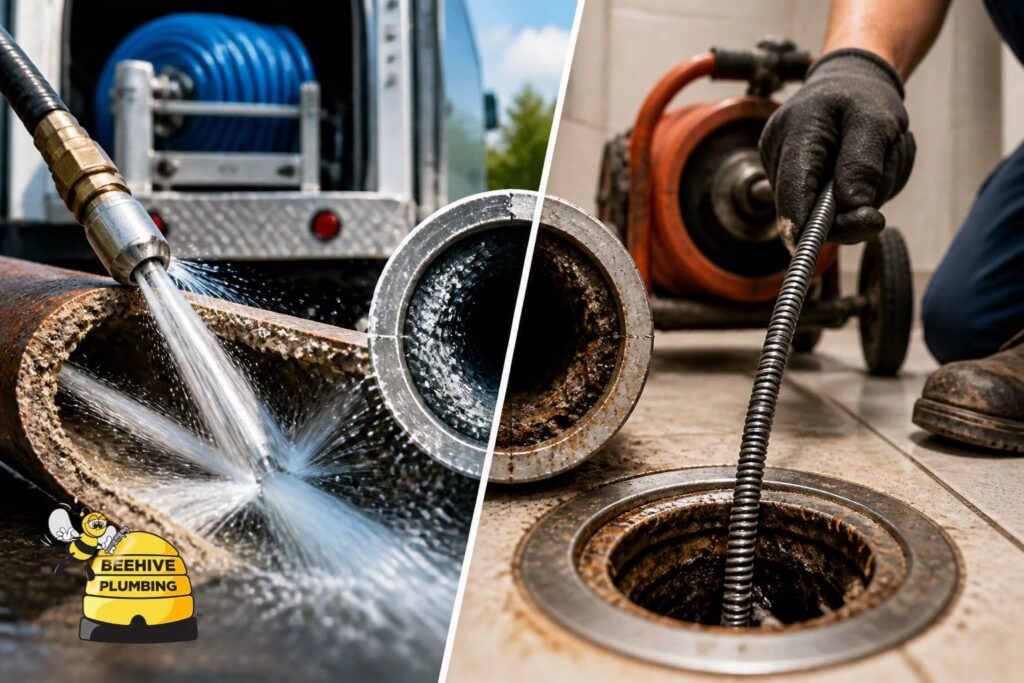
Hydro jetting and drain snaking can both restore flow, but they do different jobs. A snake works directly on an obstruction. Hydro jetting uses controlled water pressure to remove buildup from accessible pipe surfaces.
At Beehive Plumbing, we diagnose the blockage and review the line before recommending a method. We have served Utah homes and businesses since 1999, and our licensed team handles drain problems across the Wasatch Front 24 hours a day.
This guide compares hydro jetting vs. snaking by clog type, pipe condition, cleaning goal, and risk. It also explains when clearing the line is not enough because the pipe itself needs repair.
Key Takeaways
- Drain snaking is often a practical first step for an isolated clog made of hair, paper, or other soft material.
- Hydro jetting is better suited to grease, sludge, and widespread residue when the pipe can safely handle the selected pressure and nozzle.
- A camera inspection helps separate ordinary buildup from roots, offsets, cracks, corrosion, bellies, or collapse.
- Neither method repairs a broken or misaligned pipe. Cleaning may restore flow, but structural defects can keep causing backups.
- The right choice depends on evidence inside the line, not a blanket claim that one method is always better.
Hydro Jetting and Drain Snaking Solve Different Problems
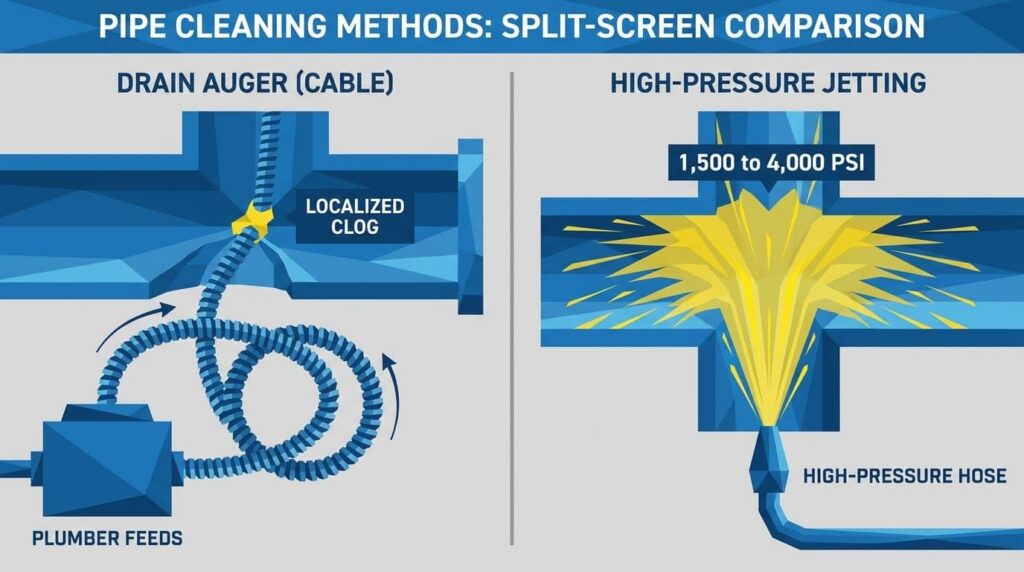
The main difference is the cleaning goal. Snaking targets a clog at a specific point, while hydro jetting can clean a longer section of pipe when buildup coats the interior.
Drain Snaking Opens a Blocked Path
A drain snake sends a flexible cable through the line. In practice, a drain auger uses a flexible metal cable that the plumber feeds through the line until it reaches the clog, where the attached head can bore through material, break it apart, or pull part of it back through the access point.
That direct approach works well for many localized obstructions. Snaking typically creates only a 2-3 inch opening through soft clogs rather than fully cleaning the pipe walls. It may not remove grease or sludge that remains beyond the cable’s contact area, so a buildup-driven clog can return even after water starts moving again. That makes it a strong fit for bathroom drains and clogs close to the drain opening, where hair and soap scum are common examples it handles well.
Hydro Jetting Removes Buildup Along the Pipe
Professional high-pressure drain cleaning or hydro jetting service sends water through a specialized hose and nozzle as a high pressure cleaning method, typically at 1,500 to 4,000 PSI. Forward-facing jets may open a path, while rear-facing jets help move the hose and carry loosened debris toward an access point.
Hydraulic cleaning uses water pressure to remove deposits. The operator still has to match the nozzle, flow, pressure, and cleaning technique to the pipe material, diameter, condition, and blockage, because this cleaning method relies on water alone rather than chemical drain cleaners.
Hydro jetting can remove grease, sludge, and some scale more broadly than a snake. It can deliver more thorough cleaning across the full pipe wall and entire pipe, removing buildup from the pipe walls unlike snaking. It does not guarantee a like-new pipe, remove every hardened deposit, or correct structural damage.
How Both Drain Cleaning Methods Work

The equipment follows a different path through the line, but both services should begin with a clear diagnosis and a safe access point.
What Happens During Drain Snaking
The plumber selects a cable and head for the fixture, pipe size, and suspected material. The cable advances until it meets resistance, then the rotating head works through or retrieves the obstruction.
Restored flow confirms that an opening exists, but it does not prove that the line is clean or undamaged. Recurring symptoms may justify a camera inspection after the line is open.
What Happens During Hydro Jetting
The plumber first reviews the likely blockage, available cleanout, pipe material, and known repair history, and when possible uses a sewer camera inspection to confirm pipe condition before deciding whether hydro jetting safe for that line is the right call.
If a camera can pass through the line, the inspection can reveal defects, including signs of fragile pipes, and help select the cleaning approach before high-pressure cleaning starts.
A complete obstruction may need to be opened before a camera can travel far enough to inspect the pipe. Very old or fragile pipes may be better candidates for snaking than jetting until the line is fully evaluated. In that case, the plumber may clear limited access first, inspect the line, and then decide whether jetting is appropriate.
During jetting, the operator controls pressure and hose movement while debris is flushed from the line. A follow-up camera pass can confirm what was removed and reveal pipe damage that buildup had concealed before repairs such as pipe lining are considered.
Match the Method to the Material Causing the Clog
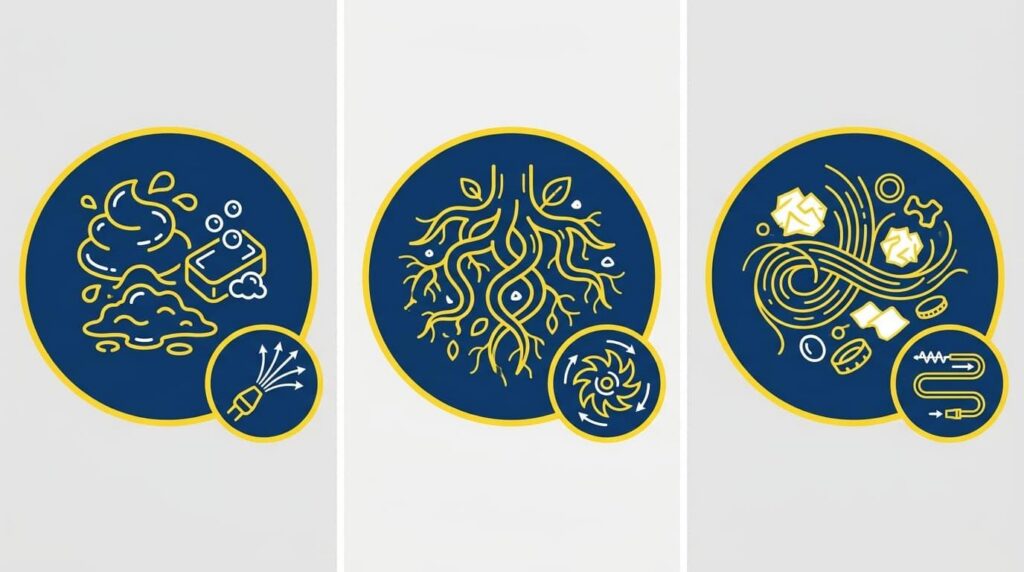
Clog material is one part of the decision. Its location, depth, recurrence, and connection to a damaged pipe matter just as much.
Grease, Soap, and Sludge
A snake may punch through a grease blockage without removing the film along the pipe. In kitchen drains, grease buildup is a common cause of repeat clogs, while bathroom-related lines often collect soap scum.
The EPA notes that fats and grease clog pipes, which is why recurring kitchen or commercial drain problems need more than a temporary opening.
Hydro jetting is often the stronger cleaning option when a camera shows grease buildup, soap scum, or widespread soft residue coating the plumbing system and the pipe is sound. For a small, first-time obstruction near a fixture, snaking may solve the problem with less equipment and setup, but a minor first clog in kitchen drains can still be a snaking job while broader buildup points more toward sewer cleaning or sewer line cleaning instead.
Tree Roots
A cutting head can open a channel through roots. Hydro jetting may then flush loose root pieces and surrounding debris, but neither service seals the crack, failed joint, or sewer laterals opening that allowed the roots to enter.
Root intrusion is evidence of a pipe defect. Cleaning can restore flow, but a main sewer line or sewer pipes with repeated root intrusion often still need repair, pipe lining, or replacement to stop repeated growth and reduce the risk of a larger failure.
Hair, Paper, and Foreign Objects
A snake is often the better starting point when the obstruction is localized, especially for minor clogs and partial blockages that can be hooked, cut, or broken apart. Typical examples include:
- Hair collected near a tub or shower drain opening in bathroom drains.
- Paper or soft organic material in a toilet or branch line.
- A small object that can be retrieved without washing it farther into the system.
These are common drain clogs in the same drain rather than signs of a system-wide sewer problem.
Hydro jetting is not automatically better because it is more powerful. A plumber should choose the least aggressive method that can safely address the confirmed problem.
Pipe Condition Matters Before Either Method Begins
A clog does not reveal whether the pipe around it is stable. Material, age, prior repairs, offsets, corrosion, and access all affect the safest way to clear the line.
Use Camera Findings Instead of Guesswork
A camera can inspect clogged pipes and the sewer system from inside and show the location of buildup, roots, cracks, corrosion, offsets, or standing water. That information helps a plumber confirm pipe condition before choosing the right drain cleaning method and where to begin.
Camera access is not always possible before the clog is opened. When slow drainage, slow drains, multiple slow drains, or gurgling toilets are part of the picture, it becomes even more important to inspect as early as conditions allow and reassess the pipe after cleaning when recurring backups or structural damage are suspected.
At Beehive Plumbing, we use the inspection findings to explain why snaking, hydro jetting, or repair fits the line. That keeps the recommendation tied to what is visible inside the system and guides the right drain cleaning method for each line instead of a one-size-fits-all cleaning method.
Older or Damaged Pipes Need a Cautious Plan
Cast iron can corrode, and older iron pipes often collect heavy scaling and mineral scale along the walls. Clay lines can crack or separate at joints.
PVC and other plastic lines can also be offset, crushed, poorly supported, or damaged by earlier work. Older pipes may require a gentler cleaning method like snaking, especially when the goal is to avoid damage pipe joints in weakened sections.
ASTM’s practice for thermoplastic sewer pipe says cleaning procedures for other materials should be evaluated against manufacturer guidance. Research also shows that jetting can cause rare blowouts2) through connected laterals under certain hydraulic conditions.
Snaking also requires judgment. An aggressive cutter or cable can become stuck, damage a fragile line, or worsen an existing defect.
No cleaning method should be labeled safe without considering pipe condition, especially in very old lines.
Warning Signs That Help Locate the Drain Problem
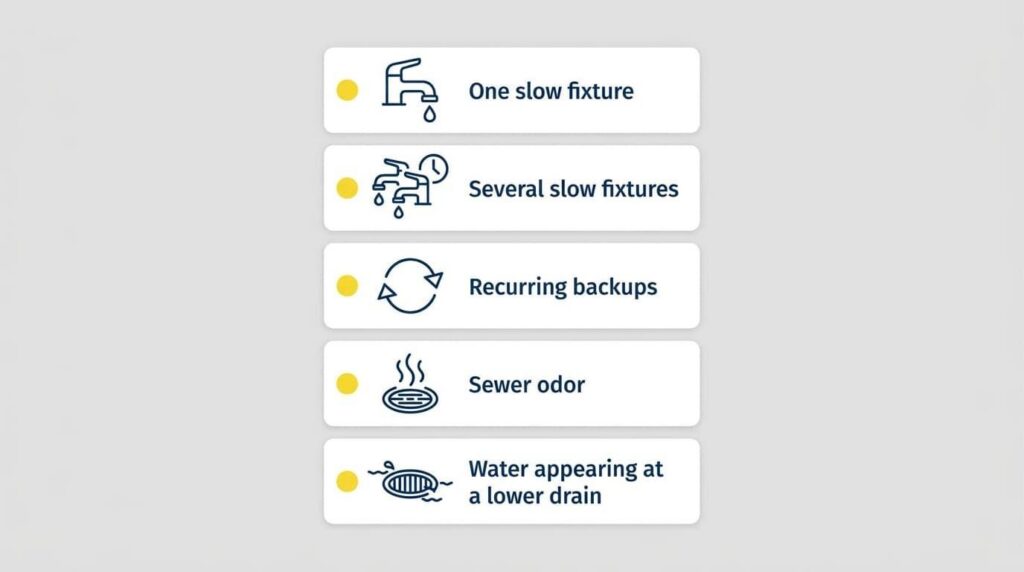
The pattern of symptoms helps distinguish a fixture clog from a branch-line or main-sewer problem. Watch for the following signs before the drain stops completely:
- One slow fixture: The obstruction may be near that sink, tub, shower, or toilet.
- Several slow fixtures: If multiple drains or several fixtures are slowing at once, a shared branch or main line may be restricted, especially when gurgling affects several plumbing fixtures.
- Recurring backups: A prior cleaning may have opened the line without removing the cause, and recurring clogs or recurring blockages in the same system can point to buildup beyond a single obstruction or to a structural defect that remains.
- Sewer odor: A dry trap, venting problem, loose seal, or drain-line issue may be allowing odor into the building.
- Water appearing at a lower drain: Wastewater rising at floor drains, a tub, or a shower can point to a downstream blockage.
Stop using affected fixtures if wastewater is backing up. Avoid contact with sewage, keep people and pets away, and request 24/7 plumbing service before more water enters the line.
How to Choose Between Snaking and Hydro Jetting
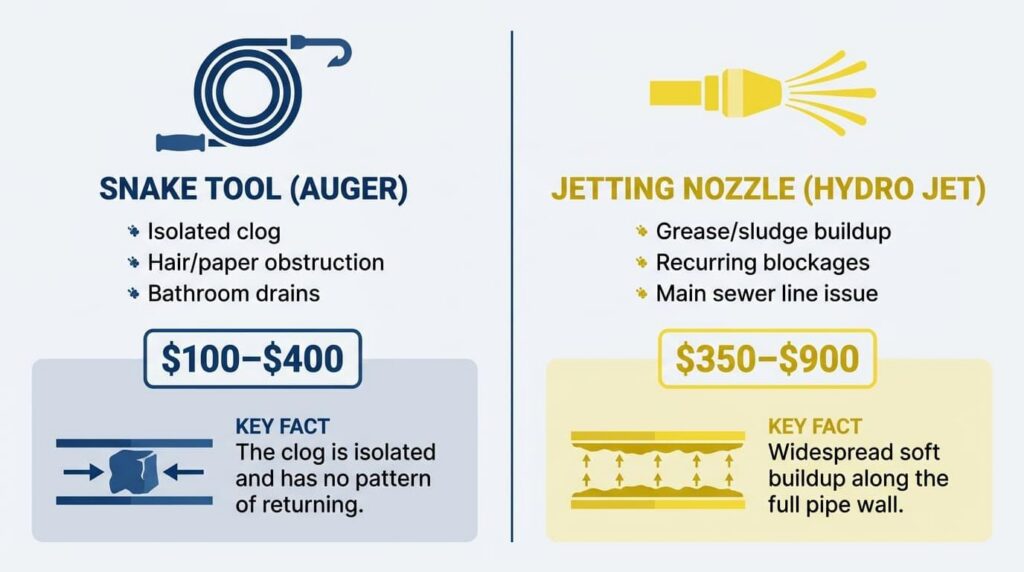
The best method should match the evidence, not the size of the machine. Use the following decision points as a starting framework, then confirm the plan with an inspection.
Choose Drain Snaking When
Snaking is often a practical first option when the problem appears localized, especially in the same drain, or when older or fragile lines make a lower-impact approach the safer place to start. It may fit when:
- The clog is isolated and has no pattern of returning.
- Hair, paper, or another soft obstruction is the likely cause.
- The issue is limited to bathroom drains or another branch line near the drain opening.
- The goal is to retrieve an object rather than push it deeper.
- The line must be opened before a camera can complete the diagnosis.
Typical residential drain cleaning with a snake costs about $100–$400.
Snaking should still be performed with the correct cable and head. Trying to force store-bought or rented drain equipment through an unknown line can damage fittings or leave the tool trapped.
Choose Hydro Jetting When
Hydro jetting becomes more useful when the problem extends beyond one point and the pipe can safely handle the planned cleaning, especially with slow drains, trouble in multiple drains, or recurring clogs when the line itself is sound. It may fit when:
- A camera confirms grease, sludge, or widespread soft buildup along the full pipe wall.
- The same line has recurring blockages because residue remains inside it and keeps coming back after snaking.
- Loose root fragments or debris remain after mechanical cutting.
- A main sewer line issue is affecting several fixtures at once and broad cleaning is needed.
- A commercial kitchen or high-use drain needs cleaning based on its actual service history.
Hydro jetting is typically more expensive upfront, usually about $350–$900 for residential service, but it can be more economical over time because repeated snaking can add up to roughly $450–$1,000 a year when buildup keeps returning.
High-pressure equipment belongs in trained hands because water jets can pierce skin and uncontrolled hoses or debris can cause severe injuries. Professional operation also allows the pressure and nozzle to be adjusted for the line.
Recognize When Cleaning Is Not the Fix
A collapsed pipe, severe offset, broken joint, deep belly, or extensive corrosion cannot be cleaned back into sound condition. Snaking or jetting may create temporary flow, but the defect remains.
The same is true for roots entering through a failed joint. Removing them treats the obstruction, while repairing the entry point addresses why the problem keeps returning.
If camera footage shows structural failure, ask for a repair scope that explains the location, material, access method, and reason cleaning alone will not hold.
Quick Comparison of Drain Snaking and Hydro Jetting
| Factor | Drain Snaking | Hydro Jetting |
|---|---|---|
| Primary job | Breaks, cuts, or retrieves a localized obstruction | Washes buildup from a broader pipe section |
| Best fit | Hair, paper, soft debris, or a retrievable object | Grease, sludge, and widespread residue in a sound pipe |
| Pipe-wall cleaning | Limited to cable or head contact | Cleans the pipe walls more thoroughly, unlike snaking, which mainly opens a path |
| Typical residential cost | $100–$400 | $350–$900 |
| How long results often last | Often months, depending on the cause | Often 2–3 years, depending on buildup and pipe condition |
| Inspection need | Useful for recurring or unclear clogs | Recommended as early as access allows |
| Main limitation | May leave buildup behind | Cannot repair cracks, offsets, bellies, or collapse |
Choose the Right Drain Cleaning Solution
Hydro jetting and snaking are tools, not competing promises. Snaking is often right for a localized obstruction. Hydro jetting can provide broader cleaning when buildup coats a sound pipe.
The deciding factor is what the line actually shows. A camera inspection can reveal whether the problem is grease, roots, debris, scale, or damage that requires repair instead of more cleaning.
It also helps determine whether professional cleaning should be part of preventive maintenance rather than just an emergency fix.
Beehive Plumbing is locally owned and has served Utah since 1999. Our team is licensed, bonded, and insured under contractor license 13140937-5501, including P200, B100, and E100 classifications for demanding plumbing and excavation work.
We provide 24/7 service across Salt Lake, Utah, and Davis Counties and surrounding areas. Main-line drain cleaning carries a 60-day guarantee, while the applicable guarantee for other drain services depends on the line and service performed. For lines with a history of buildup, scheduled hydro jetting every 18–24 months can help prevent sewer backups.
If a drain keeps slowing down or backing up, call (801) 661-8155 to schedule a professional drain inspection before the next blockage becomes an emergency.
Schedule Your Drain Inspection Today
Frequently Asked Questions
These quick answers clarify what both methods can do and when a closer inspection is needed.
Is hydro jetting better than snaking?
Not in every situation. Hydro jetting is often better for widespread grease, sludge, or residue in a sound pipe, while snaking may be more practical for a first-time, localized clog. A camera inspection and the pipe’s condition should guide the choice.
Can hydro jetting damage pipes?
It can damage a weakened pipe or worsen an existing defect if the equipment, pressure, nozzle, or technique does not fit the line. Hydro jetting is generally safe when a licensed plumber inspects the material and condition first, then controls the pressure—often 3,500 to 4,000 PSI for many sewer-jetting jobs—based on what the line can handle.
How long do hydro jetting results last?
There is no reliable universal timeline. In a sound line, hydro jetting can last 2–3 years, while snaking may last only months when buildup remains on the pipe walls. Recurring clogs in the same drain or sewer line often shorten snaking results because the method opens a path instead of fully cleaning the line. Results depend on pipe condition, water use, grease disposal, root entry, maintenance, and whether a structural defect remains. Any company promising a fixed number of clog-free years without inspecting the line is skipping important context.
Can hydro jetting remove tree roots?
It may remove loose or cut root material, depending on the equipment and pipe condition. It does not repair the crack or separated joint where roots entered, so lasting correction may require sewer-line repair.
Do I need a camera inspection before hydro jetting?
A sewer camera inspection is recommended as early as access allows to help confirm pipe condition before hydro jetting, especially for an older line, recurring blockage, or suspected damage. If a complete clog blocks the camera, the plumber may first create enough access to inspect the pipe before proceeding with full jetting, which is especially important for fragile pipes, older cast iron, or suspected pipe damage.