
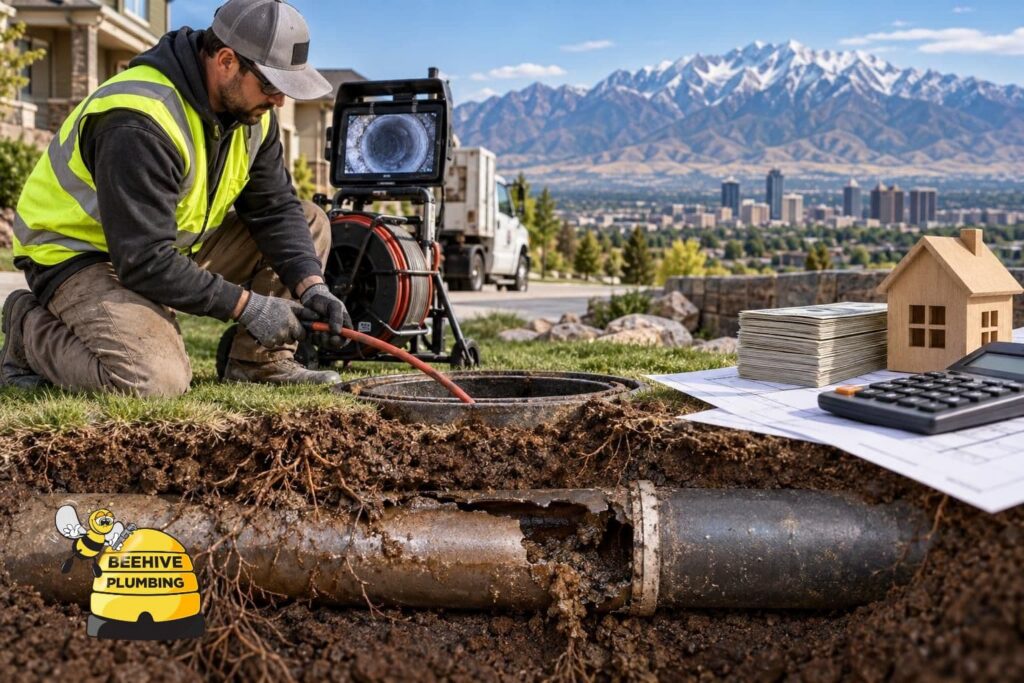
A gurgling toilet, slow drains throughout the house, or wastewater rising in a basement shower can turn an ordinary day into a plumbing emergency. The immediate worry is stopping a sewer backup, but the next question is often just as stressful: how much will it cost to fix? If the line runs beneath a driveway or established landscaping, the possibility of excavation only adds to the uncertainty.
National sewer line repair cost estimates range from $150 to $3,800, while replacing a 40-foot line typically costs $2,000 to $10,000. The price for your Utah home depends on whether the problem calls for cleaning, a localized repair, or a new sewer line, as well as the pipe’s condition and accessibility. We’ll break down the costs and repair options, including how a sewer camera inspection helps determine what Beehive Plumbing can recommend for your property.
Key Takeaways
- National planning figures put many sewer line repairs at $150-$3,800; a 40-foot replacement can cost $2,000-$10,000.
- Cleaning a blockage is different from repairing a broken pipe or replacing a deteriorated line.
- Pipe depth, damage, access, and surface restoration can matter as much as pipe length.
- Trenchless lining can limit excavation, but only when the existing sewer line is a suitable candidate.
- A camera inspection and clearly scoped written estimate help you compare the right options.
Sewer Line Repair Cost vs. Sewer Line Replacement Cost
The national ranges in HomeGuide’s sewer repair cost guide offer a starting point for planning a sewer project. The table separates the types of work that are often grouped together under “sewer repair.”
| Type of work | National planning cost | What it addresses |
| Sewer line repair | $150–$3,800 | An isolated defect or damaged section |
| Full replacement (40-foot example) | $2,000–$10,000 | A line with widespread damage or deterioration |
| Drain snaking | $150–$500 | A removable blockage without structural damage |
| Hydro jetting | $250–$800 | Heavy buildup or suitable root/debris obstruction |
The ranges overlap because the work varies widely; the next step is determining whether the pipe needs cleaning, a targeted repair, or replacement.
When Sewer Cleaning Is Enough and When Repair or Replacement Makes Sense
The first step is determining whether you are dealing with a blockage or damage to the pipe. Slow drains caused by buildup may respond to cleaning; recurring backups, tree-root entry, or a damaged joint call for a closer look at the line’s condition.
- Cleaning clears grease, debris, and certain obstructions, but does not repair a structural defect.
- Localized sewer line repair addresses a limited crack, break, or joint problem when the surrounding pipe remains sound.
- Complete sewer line replacement is worth considering when failures recur, the pipe has collapsed, or deterioration extends through much of the run.
A sewer camera inspection helps show whether a defect is isolated or extends along an older clay or cast iron line. Beehive Plumbing’s licensed master plumbers use those findings to explain which repairs are practical, what the work involves, and when replacing the pipe may be the better long-term option.
Explore Sewer Line Repair Options
How Excavation and Trenchless Sewer Repair Affect the Total Cost
The repair method affects both the pipe work and what you may need to restore afterward. Sewer line repairs generally fall into two categories: traditional trench excavation and trenchless repair. Open-trench excavation exposes the sewer pipe directly, while trenchless methods use limited access points when site and pipe conditions permit. In practice, traditional digging requires extensive digging and can cause significant surface disruption.
| Method | How it works | Main cost consideration |
|---|---|---|
| Spot excavation | Expose and repair a damaged section | Efficient when the defect is isolated and accessible |
| Traditional excavation | Dig along the affected route and install new pipe | Traditional trenching costs between $50 and $250 per linear foot, with total pricing also affected by trenching plus driveway, walkway, or landscape restoration |
| CIPP pipe lining | Cure a liner inside a suitable existing pipe | Specialized installation at $90-$250 per linear foot with potentially less surface disturbance |
| Pipe bursting | Break apart an old line while pulling in new pipe | Typically $60-$200 per linear foot and requires suitable alignment, soil, utility clearance, and access |
Trenchless repair costs may be higher upfront, but trenchless methods often reduce restoration costs significantly because they disturb less surface area.
Trenchless lining can limit disruption to a finished driveway or established landscaping, but it is not suitable for every sewer line. A collapsed or badly misaligned pipe may require excavation, so the best comparison includes both installation and surface restoration. Beehive Plumbing uses camera findings to assess whether its trenchless sewer lining service is appropriate for the existing pipe.
See Trenchless Sewer Repair Options
What Affects Sewer Line Repair Cost Across Utah Properties?
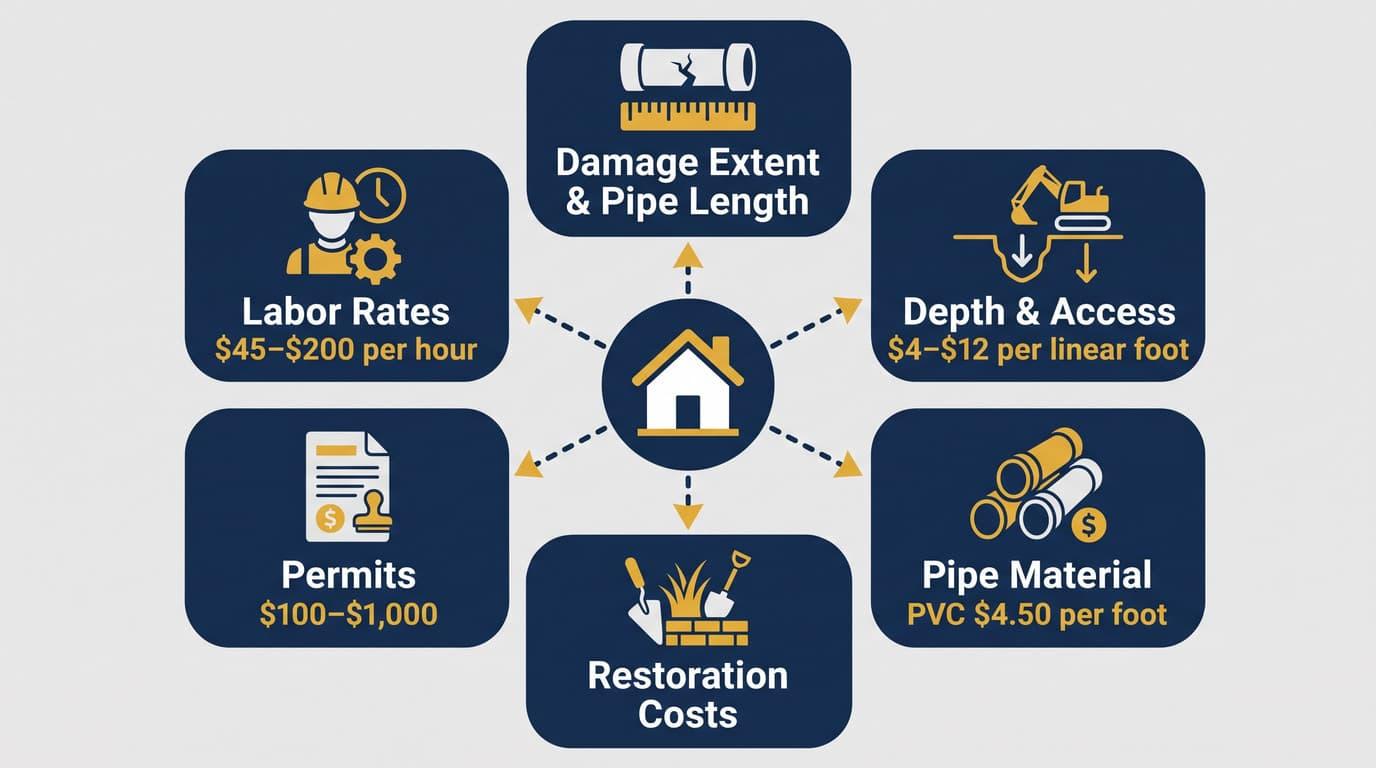
Two homes with similar symptoms can receive very different estimates because the work below ground is rarely identical, and the key factors below can change project costs from one property to another:
- Damage extent and pipe length: One broken joint is a different project from replacing the entire sewer line, and the extent of damage is a major driver of pricing.
- Depth and access: A deeply buried pipe, narrow side yard, or line beneath concrete takes more labor and planning; deeper sewer lines cost more to repair, and depth can add about $4–$12 per linear foot, especially under driveways or other hard surfaces.
- Pipe material and condition: Aging clay, cast iron, and other older sewer line materials may change the viable repair options and price, with material costs varying by pipe type, including PVC at about $4.50 per foot.
- Restoration: Replacing paving, patios, lawns, or landscaping can add work beyond the sewer installation.
- Permits, inspections, and urgency: Local approvals, testing, and emergency scheduling can affect the final quote, and permits often run about $100–$1,000.
Local labor rates commonly fall between $45 and $200 per hour, and location can raise costs where access is difficult.
In established Salt Lake City neighborhoods and other older Utah communities, clay or cast iron sewer laterals may run beneath mature trees, sidewalks, or finished driveways. Winter freeze-thaw conditions and saturated spring soil can complicate excavation and restoration, depending on the site.
How Sewer Camera Inspections Shape Your Repair Estimate
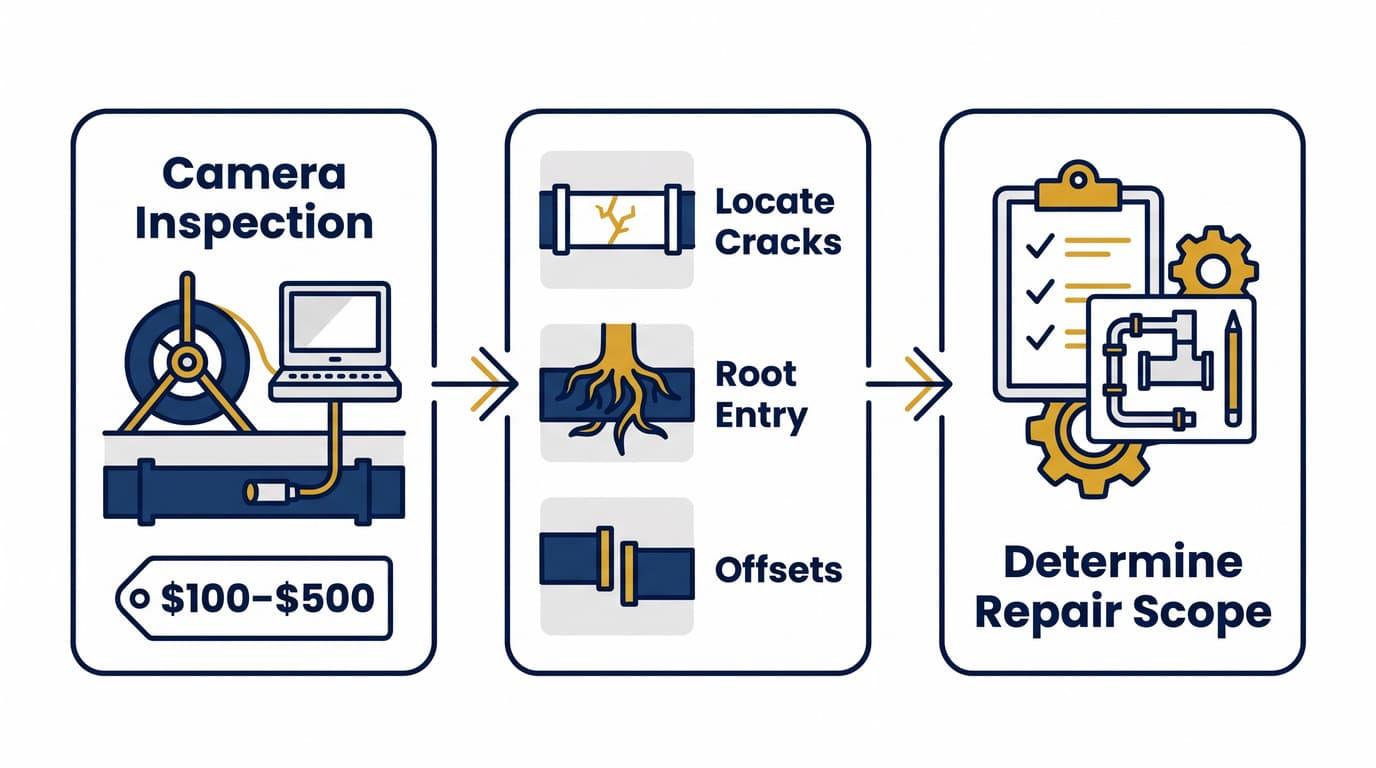
A sewer camera inspection helps locate cracks, root entry, offsets, and other visible problems before the repair method is chosen. It can show whether damage is limited to one section or appears throughout the line, helping pinpoint specific sewer line issues, although some conditions still require on-site verification. HomeGuide lists national camera inspection costs of $125 to $500. A sewer camera inspection typically costs about $100 to $500 before repair work begins, and it can help clarify the repair scope before excavation begins.
Warning Signs Your Main Sewer Line May Need Repair
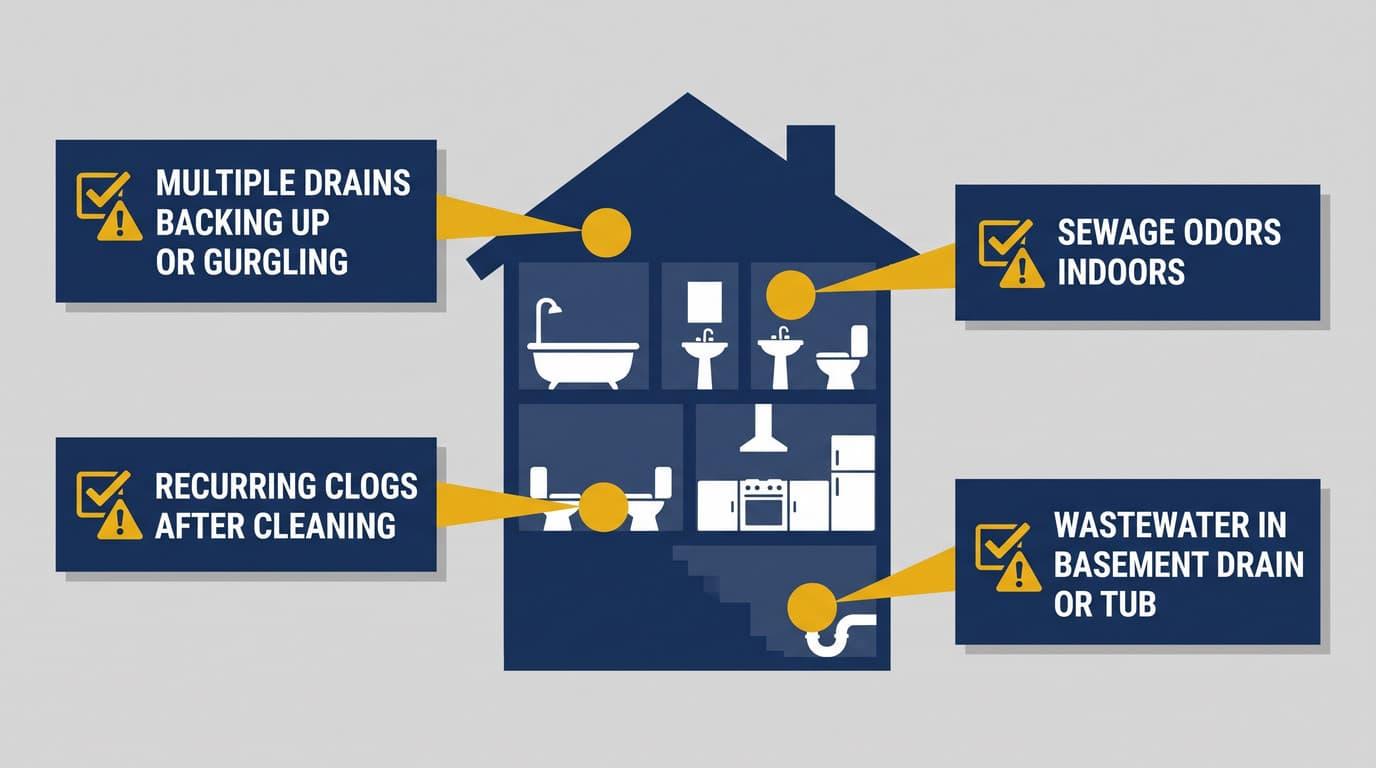
A single slow sink may point to a local clog, but several fixtures slowing or gurgling together can signal trouble farther along the sewer line. Recognizing plumbing problems early is especially useful in Utah homes with older sewer laterals or mature trees nearby, where recurring blockages may indicate root intrusion or damaged joints. Gurgling can accompany restricted drainage, although unusual plumbing noises can also have causes unrelated to the sewer line.
- Multiple drains backing up or gurgling, especially when another fixture is used.
- Sewage odors indoors or near the sewer line route.
- Recurring clogs soon after cleaning, particularly where tree roots are involved.
- Wastewater appearing in a basement drain, tub, or other low fixture.
If raw sewage is backing up through a floor drain, tub, or toilet, stop using water fixtures and contact a plumber promptly. In these cases, emergency repairs, especially after-hours calls for severe sewer line problems, can cost 25% to 100% more than regular rates. Avoid opening the pipe or attempting to clear a sewage-filled drain yourself, since the backup may involve a damaged main line rather than an ordinary household clog.
Who Pays for Sewer Lateral Repairs in Utah?
A sewer lateral carries wastewater from a property to the public sewer system, but responsibility for repairs depends on the utility and type of connection. Salt Lake City Public Utilities publishes homeowner responsibility graphics distinguishing private from utility-owned infrastructure. Homeowners elsewhere in Utah should confirm their sewer district’s rules before assuming that repairs beyond the property line are publicly funded. Private septic systems have different maintenance arrangements.
Insurance coverage is another consideration. The Insurance Information Institute explains that homeowners generally maintain their private sewer laterals and that sewer-backup protection may be available separately. Coverage for sewage damage inside a home can differ from coverage for repairing a deteriorated pipe, so review your policy, endorsements, deductibles, and exclusions. For larger projects, ask whether payment plans are available.
What to Check Before Approving a Sewer Repair Quote
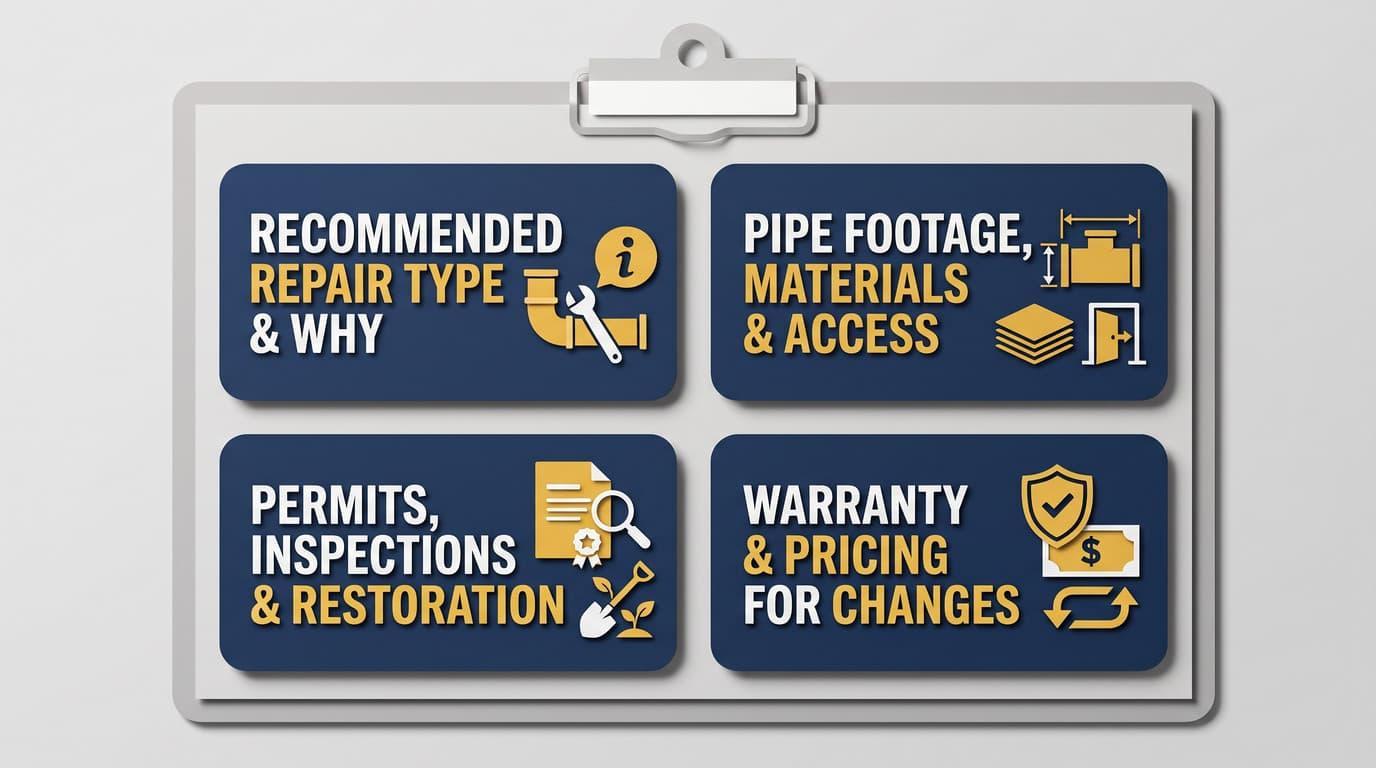
Once the inspection identifies the likely cause, compare the full scope of each proposal rather than the headline price. The cost to replace a sewer line should be weighed against a targeted repair when both are viable, which can also help you save money. For complete replacement, installing a new sewer line may involve utility locating, excavation, proper pipe grading, testing, and municipal inspection, all of which should be addressed in the written scope. Before approving the work, confirm:
- Whether the recommendation is cleaning, spot repair, lining, or full replacement, and why.
- The pipe footage, materials, access requirements, and expected service interruption.
- Who obtains permits and handles inspections, cleanup, and restoration.
- What the written warranty covers and how unexpected findings or changes are priced.
With those details in writing, you can compare multiple estimates on equal terms, and getting multiple quotes can help you find the best price as long as each proposal covers the same scope.
Know What Your Sewer Line Needs Before the Damage Spreads
Sewer problems rarely become less disruptive when left unresolved, especially when multiple drains are backing up, or sewage is entering the home. Understanding sewer line repair cost starts with identifying the damage, then comparing the full price of a targeted repair, trenchless lining, or replacement, including any restoration work. Restoration costs for landscaping, concrete, or driveways can significantly increase the total project cost and affect the overall cost.
At Beehive Plumbing, our licensed master plumbers use sewer camera inspections to pinpoint the problem before recommending a solution. Whether your line has a localized break or widespread deterioration, we’ll explain the findings and provide a firm written quote before approved work begins, so you can move forward with clarity instead of guesswork. When the pipe is a good candidate, trenchless methods may save 30–50% compared with traditional excavation because they reduce disruption and restoration.
Get My Sewer Line Repair Quote
Frequently Asked Questions About Sewer Line Repair Costs
These answers cover practical concerns that can affect your plans once a sewer problem has been identified.
How long does sewer line repair take?
A small, accessible repair may be completed relatively quickly, while excavation, permitting, or extensive replacement can take several days. Ask when your sewer system can safely return to service and whether restoration will occur separately.
Will I need a permit for sewer line repair in Utah?
Permit requirements depend on the municipality, the sewer district, and the scope of the work. Replacement and excavation may require permits and inspections, especially where work affects a public right-of-way. Ask your plumber which approvals are needed and whether the quote includes them.
Does homeowners insurance cover a broken sewer line?
Coverage depends on what caused the damage and the policy terms. Wear and deterioration may be excluded, while separate service-line or sewer-backup endorsements may address different costs. Confirm coverage with your insurer before relying on it.
Is hydro jetting the same as sewer line repair?
No. Hydro jetting removes buildup and certain obstructions; it does not reconstruct cracked, separated, or collapsed pipe. It may be part of preparing a line for inspection or lining.
Can I use my plumbing while the sewer line is being repaired?
Often not during work that takes the main sewer line out of service. Your plumber should explain the expected shutoff window, any temporary arrangements, and when fixtures can be used again. In some cases, other plumbing services elsewhere in the home may continue, but fixtures connected to the residential sewer line are usually off-limits until the repair is finished.