
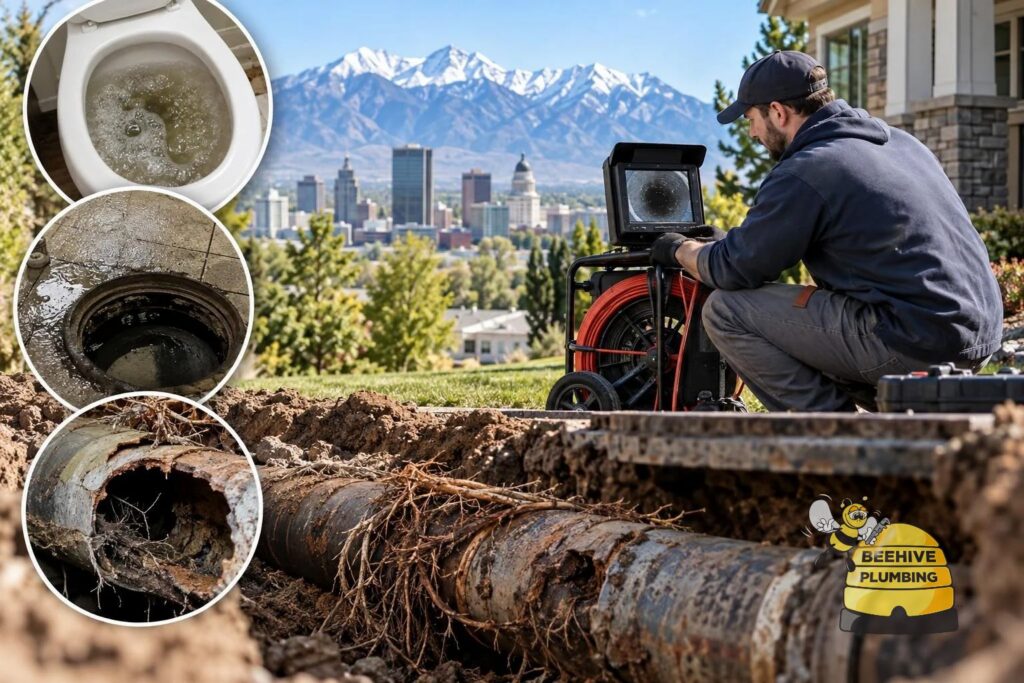
Sewage spills out of your basement drain, and suddenly those earlier clues make sense: the slow shower, the gurgling toilet, the clog that kept coming back. Could you have spotted the signs you need sewer line repair before it reached this point?
Recurring backups, sewer odors, soggy lawns, and stubborn root blockages deserve attention. But even alarming symptoms don’t automatically mean replacement. At Beehive Plumbing, we help Salt Lake City homeowners find out what’s happening underground. Here’s how to spot seven warning signs, tell a repairable problem from a failing pipe, and decide what to do next.
Key Takeaways
- Multiple fixtures backing up together can point to the main sewer line, not just one clogged sink.
- Recurring root blockages or sewage backups deserve investigation even after drain cleaning restores flow.
- Odors, wet lawn patches, and gurgling are clues, not proof of a broken sewer line.
- A sewer camera inspection helps locate cracks, misaligned joints, pipe collapse, and the extent of damage.
- One isolated defect may be repairable; widespread deterioration or a collapsed sewer line may require replacement.
7 Warning Signs of a Damaged Main Sewer Line
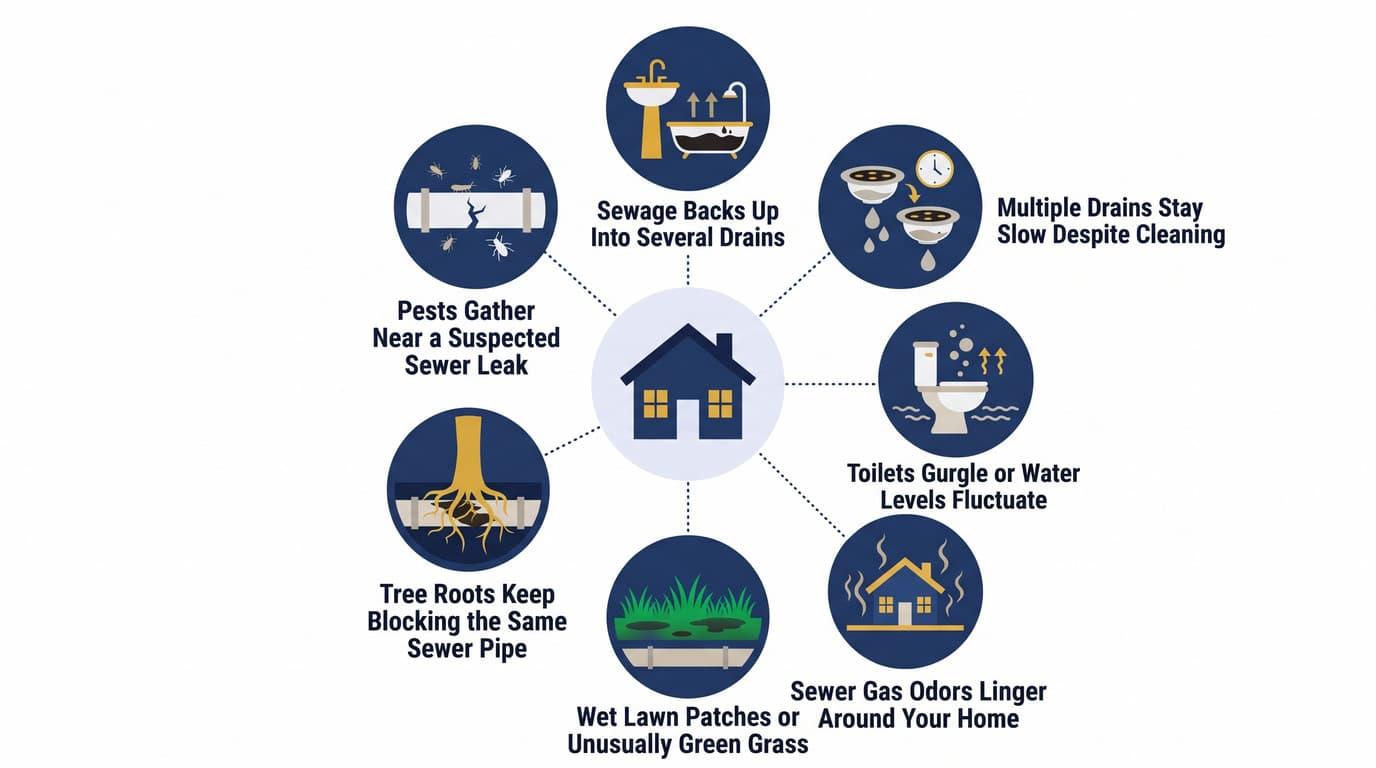
Your home’s drains connect to a shared main sewer line. Trouble there can show up at several fixtures or even outside. These seven signs help you spot a pattern worth investigating.
1. Sewage Backs Up Into Several Drains
If flushing a toilet causes sewage coming up through a shower or basement floor drain, the blockage is likely in the main line downstream of both fixtures. Raw sewage backing up into the house needs prompt attention because it can carry harmful microorganisms. If you notice water backing into lower drains, that escalation should be addressed before a full backup spreads wastewater damage. Stop using water and call a plumber rather than trying another flush.
2. Multiple Drains Stay Slow Despite Cleaning
Slow drains may simply start with one sink and a clogged trap. But when they become a recurring problem affecting several fixtures, even after cleaning, wastewater may be struggling to pass through a restriction in the home’s plumbing system rather than just one fixture drain. Buildup such as soap scum can cause a local slowdown, but multiple slow fixtures suggest a larger sewer-line issue. Unlike an active backup, this can be an earlier warning worth investigating.
3. Toilets Gurgle or Water Levels Fluctuate
Hear gurgling sounds after a shower drains or notice the toilet water level rising and falling? Air may be moving through the plumbing system abnormally because wastewater cannot pass freely. Gurgling toilets can also reflect venting problems; a plumber needs to distinguish those from a main sewer line blockage.
4. Sewer Gas Odors Linger Around Your Home
Foul odors near floor drains, the basement, or the yard can signal escaping sewer gas or wastewater. First, consider a simpler cause: a rarely used drain may have a dry trap that no longer blocks odors. If the smell persists after refilling the trap, arrange an inspection. According to OSHA’s hydrogen sulfide guidance, hydrogen sulfide can occur in sewers and pose serious exposure risks, especially in enclosed spaces. Prolonged sewer gas exposure can also lead to respiratory issues, which is one reason persistent smells should be investigated promptly. Never enter a sewer access structure to investigate a smell.
5. Wet Lawn Patches or Unusually Green Grass
A damp strip of lawn or unusually lush grass during dry weather can point to wastewater leaking underground, and leaking wastewater can make grass look unusually green because it can act as fertilizer. Irrigation leaks can look similar, so confirm the source before digging. Indoor moisture matters too: the EPA’s mold and health guidance explains how damp conditions can encourage mold growth and related health concerns. Prolonged underground leaks can also undermine soil near the foundation and contribute to foundation cracks or settlement, which can lead to bigger structural issues. Have the source confirmed before digging.
6. Tree Roots Keep Blocking the Same Sewer Pipe
Sewer line tree roots can enter underground pipes through small cracks and separated joints in older sewer lines. Drain cleaning may remove the obstruction and restore flow, but it doesn’t close the opening. Roots often regrow within 6–12 months after clearing if the pipe opening remains unrepaired. Snaking and hydro jetting also address blockages differently, and neither repairs a cracked pipe. If root intrusion keeps returning, ask whether the entry point can be repaired or whether repeated intrusion points to damaged sewer lines or broader sewer line damage.
7. Pests Gather Near a Suspected Sewer Leak
An unexpected increase in insects or rodents around a damp basement, cleanout, or yard may accompany a plumbing leak, since damaged sewer lines can create damp shelter or access points near the home. Pests alone don’t prove sewer damage, but when they appear with odors or drain trouble, they can point to sewer line problems and are another reason to investigate. Avoid disturbing potentially contaminated soil while the source is unknown.
Some of these warning signs give you time to schedule an inspection. An active sewage backup is different and calls for immediate action.
What Salt Lake City Homeowners Should Do During a Sewage Backup
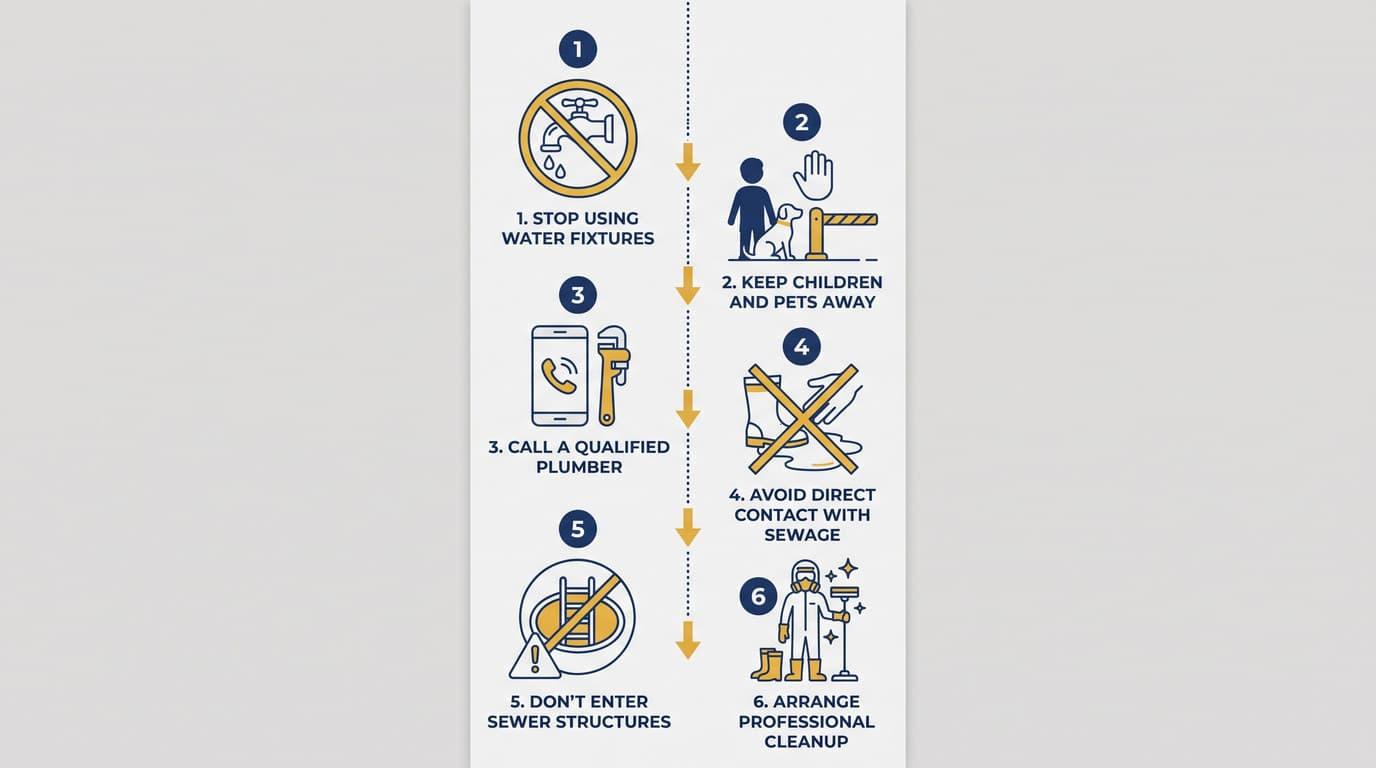
An active sewage backup is a safety issue, not a wait-and-see drain problem. Stop using toilets, sinks, and appliances that discharge water; keep children and pets away from contaminated areas; and call a qualified plumber. Avoid direct contact with raw sewage, don’t open or enter sewer structures, and don’t use chemical drain cleaners on a suspected main-line failure. If sewage reaches living spaces, arrange appropriate professional cleanup.
When sewage is entering your home, getting the water use under control is only the first step. Beehive Plumbing’s Salt Lake City team can assess the suspected sewer problem, help identify what’s causing the backup, and explain the next steps for your home. If you’re dealing with an active backup, reach out for local plumbing assistance rather than waiting for it to happen again.
Schedule Salt Lake City Plumbing
When a Localized Sewer Line Repair May Be Enough
A localized repair can make sense when one cracked joint, a short damaged section of pipes, or a single root entry point is found, and the remaining line is sound. If the pipe is intact and only blocked by debris, cleaning may be enough, and early targeted work can help protect the rest of the line and property from worsening damage. The goal is to correct the cause without replacing healthy pipe.
At Beehive Plumbing, we look at the condition of the affected sewer line before recommending how to fix it. Whether the problem calls for clearing an obstruction or repairing a damaged section, our sewer line repair service helps homeowners understand the available options and choose a solution that addresses the underlying issue.
When a Collapsed or Deteriorating Sewer Line Needs Replacement
Replacement becomes more likely when damage is widespread, the pipe has collapsed, or repeated failures show that spot repairs won’t restore dependable flow. Severe misalignment or a low section that traps waste may also require extensive correction. Progressive sewer line damage does not heal on its own and may justify planned replacement before an emergency.
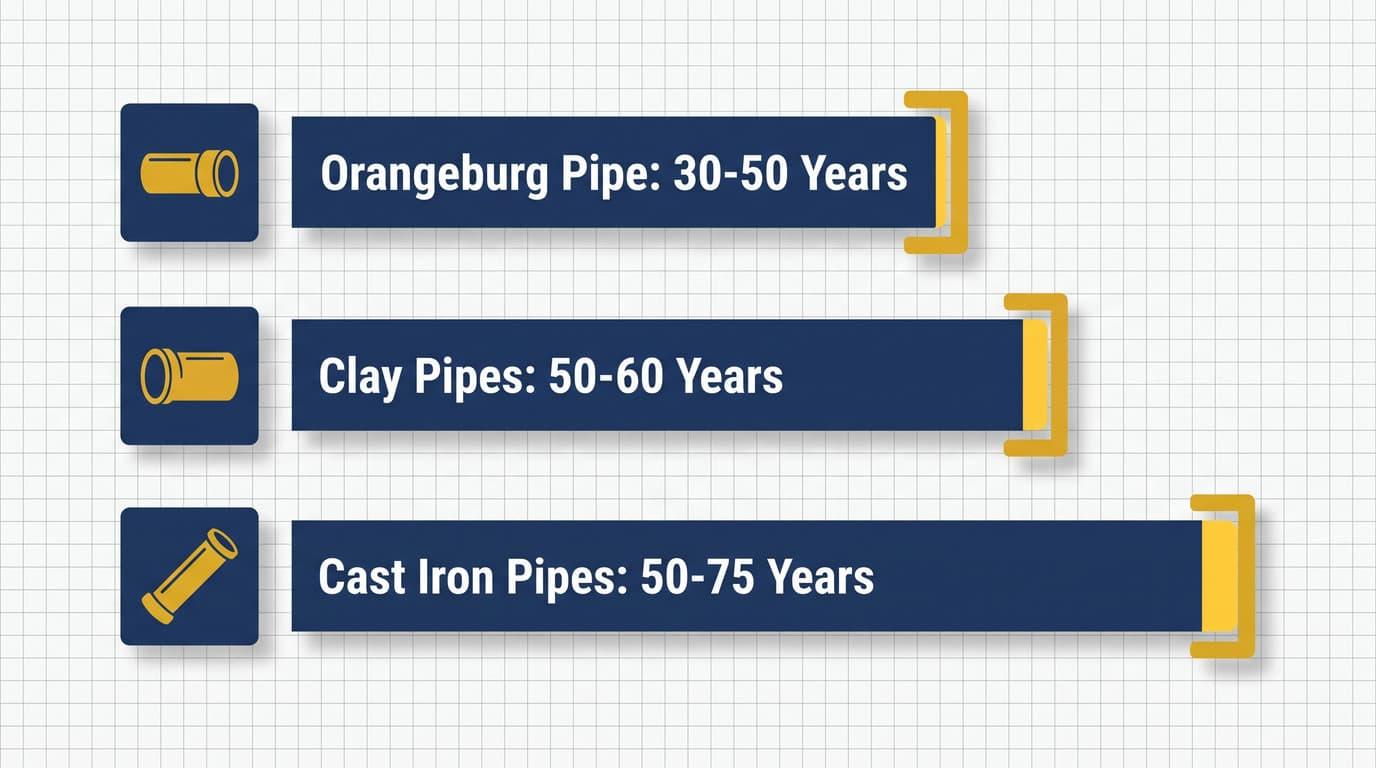
Salt Lake City has established neighborhoods with mature trees and older sewer laterals, and many homeowners may have aging lines made from these materials. Sewer pipes typically last 50-60 years before failing: clay pipes around 50-60 years, cast iron generally provides 50-75 years of service, and older Orangeburg pipe often deteriorates within 30-50 years. None of these materials automatically requires replacement: the pipe’s actual condition, location, slope, and repair history should drive the recommendation.
Sewer Line Repair vs. Replacement: Compare the Evidence
The real difference is whether the damage affects one section or the line as a whole. These findings show how the recommended scope can change:
| Inspection finding | Likely next step | Why it matters |
| One isolated crack; sound pipe elsewhere | Localized repair | Only a short section needs correction |
| Clog without structural damage | Cleaning and monitoring | The pipe may not need reconstruction |
| Repeated defects along the run | Compare replacement options | New patches may not solve the wider failure |
| Severe collapse or incorrect slope | Replacement or excavation assessment | Lining cannot restore a missing pipe shape or correct grade |
If an obstruction stops the camera, the full extent may remain unknown until it’s cleared or another access point is used. Ask which damage has actually been confirmed and where it lies.
How a Camera Inspection Guides the Repair Method

A camera inspection can locate root masses, cracks, separated joints, corrosion, and low spots. Along with access and site conditions, those findings help a plumber choose between cleaning, spot repair, trenchless rehabilitation, and excavation.
Trenchless methods can limit excavation in suitable conditions, but they aren’t interchangeable. Lining follows the existing pipe route and won’t correct an improper slope, while pipe bursting requires suitable access and site conditions. The choice between trenchless and traditional excavation also depends on the pipe’s shape, surrounding soil, and what’s above it. Before anyone digs, confirm that underground utilities will be marked through 811 utility locating.
Once the inspection confirms what’s wrong and which repair methods are possible, the next question is what the work will cost.
What Drives Sewer Line Repair and Replacement Costs?
The length and depth of the sewer run, access to the pipe, its condition, and the surface above it all affect the estimate. Work beneath a concrete driveway or established landscaping may include significant restoration costs. According to Angi’s 2026 sewer replacement cost guide, complete sewer line replacement typically costs $60 to $250 per linear foot nationally. That’s a planning range, not a Salt Lake City quote; local labor, soil, permits, and the actual scope can change the price.
When comparing quotes, look beyond the pipe installation itself. Check whether excavation, permits, surface restoration, and unexpected site conditions are included in the estimate.
Five Questions to Ask Before Approving Sewer Work
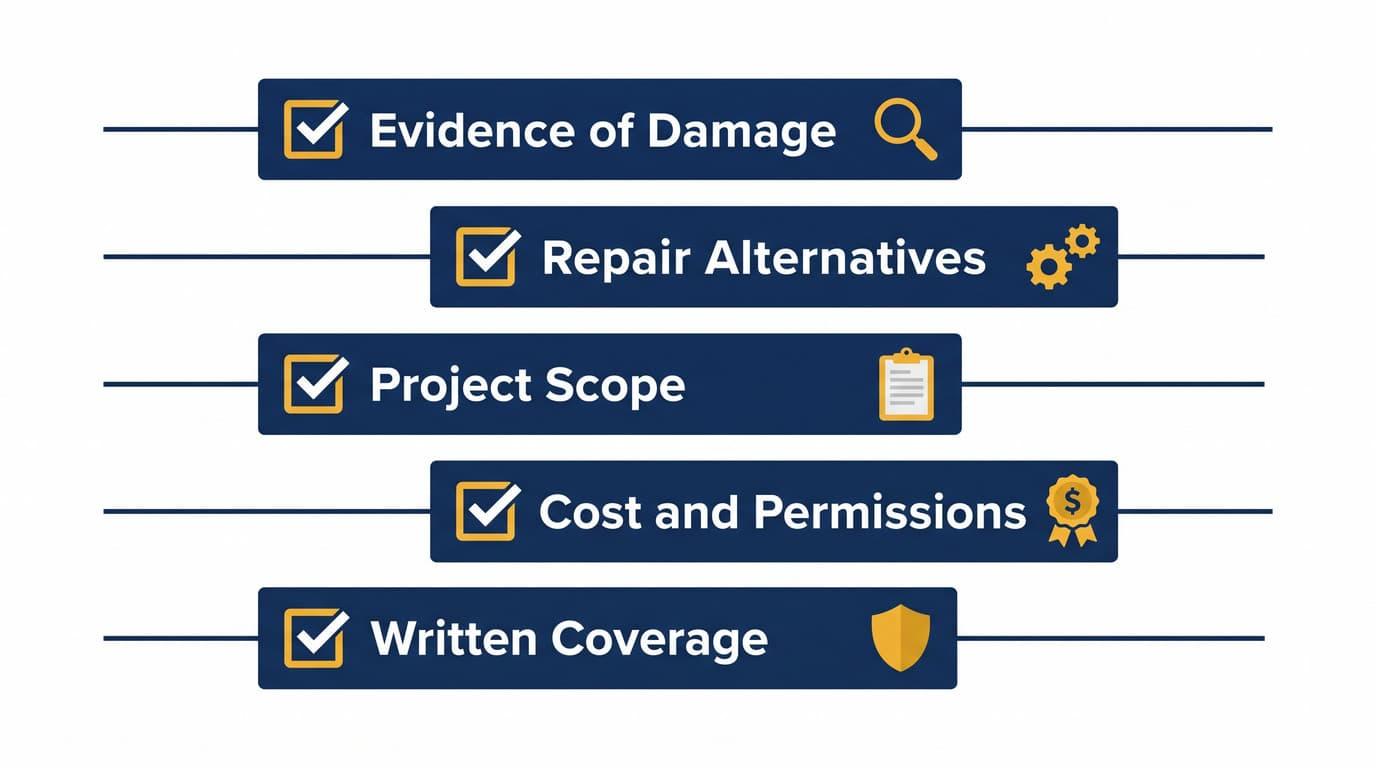
Once you know what the inspection found, a few specific questions can help you compare proposals without getting lost in technical terms:
- Evidence of damage: Can I see the camera footage and the exact location of each defect?
- Repair alternatives: Why wouldn’t cleaning or a spot repair last in this case?
- Project scope: Which pipe sections, excavation areas, and surface restoration are included?
- Cost and permissions: Who handles permits, utility locating, and any changes discovered during work?
- Written coverage: What does the workmanship or material warranty actually cover?
Use these answers to compare what each contractor includes. The factors behind sewer line repair costs in Utah help explain why quotes for seemingly similar work can differ.
Know When to Repair or Replace Your Sewer Line
The signs you need sewer line repair can start small, but recurring backups, yard changes, and confirmed structural damage deserve more than another quick clearing. Knowing when to replace a sewer line means looking at the extent of the defect, the remaining pipe’s condition, and whether a repair will last.
Beehive Plumbing can help you move from worrying about the symptoms to understanding your options. We’ll discuss what an inspection reveals, explain the recommended work, and help you weigh repair against replacement without assuming that every sewer problem calls for a new line. When you’re ready to get started, contact our team to discuss your home’s needs and request a quote.
Five Common Questions About Sewer Line Projects
These answers cover practical details that can matter after you’ve identified a possible sewer line problem.
Is the sewer line my responsibility or the city’s?
Responsibility depends on the local sewer utility and where the defect lies. Confirm the property boundary and applicable lateral rules with the utility serving your Salt Lake City address before authorizing work.
Will homeowners insurance pay for sewer line replacement?
Coverage varies by policy and cause of damage. Standard policies may exclude gradual deterioration, while optional service-line endorsements may apply. Review your policy and ask your insurer what documentation it needs.
Can I stay home during sewer line replacement?
Often, yes, but water and sewer use may be restricted while the line is disconnected. Ask the contractor about downtime, access, odors, and whether the work affects bathrooms or laundry.
How long does sewer line replacement take?
Timing depends on the pipe’s length and depth, access, weather, permits, and restoration needs. A contractor should give you a project-specific schedule rather than promise the same timeline for every property.
Does every home connect to a public sewer system?
No. Some properties use a septic system rather than a municipal sewer. Confirm which system serves your property because diagnosis, maintenance, and repair responsibilities differ. If sewer-related leaks create wet areas or mold and go untreated, they can also contribute to health issues indoors.