
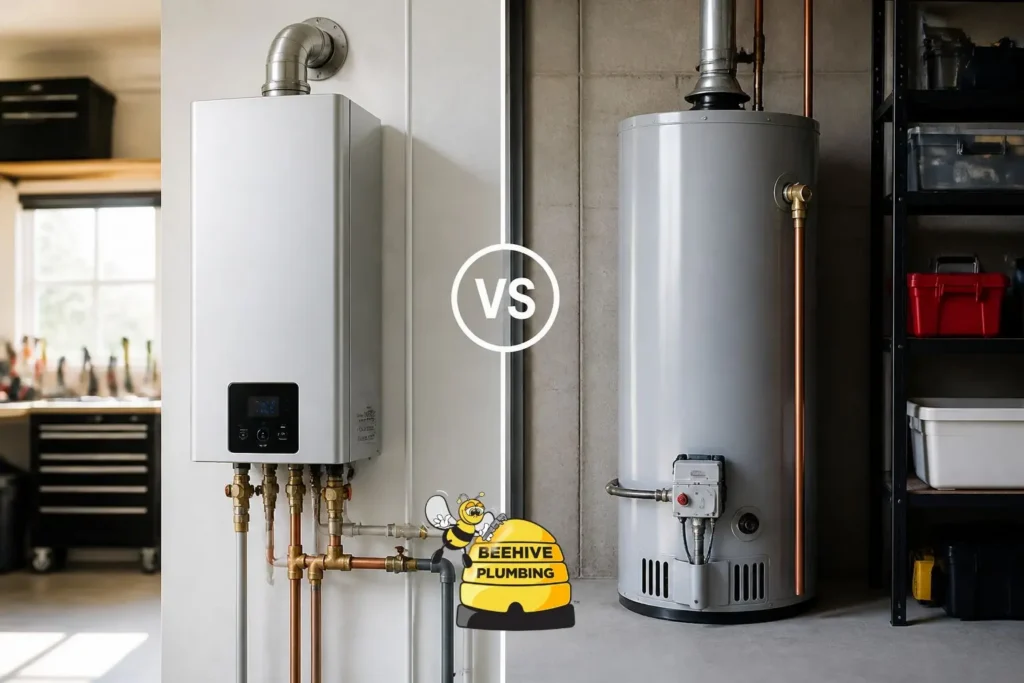
Buying a new water heater isn’t just about replacing old equipment. It’s about choosing a system that fits your home’s hot-water needs, budget, and long-term plans.
While both tankless and traditional water heaters can provide reliable performance, they work differently and come with their own advantages and tradeoffs.
If you live in Utah, there’s another factor you can’t ignore. How does hard water affect your decision?
Mineral-rich water can influence efficiency, maintenance, and overall lifespan.
In this guide, we’ll compare tankless and traditional water heaters, explain their key differences, and help you decide which option makes the most sense for your home.
Key Takeaways
- Tankless water heaters generally cost more upfront but may reduce energy use by eliminating standby heat loss.
- Traditional storage tanks are more affordable to install and simpler to replace.
- Your household’s peak hot-water demand should determine the right system size.
- Hard water in Utah increases maintenance needs for both water heater types.
- Tankless units may require regular descaling, while storage tanks may need periodic sediment flushing.
- Installation costs can rise if gas, electrical, or venting upgrades are required.
The Short Answer: Which One Should You Get?
There’s no single winner in the tankless vs. traditional water heater debate. The better choice depends on your budget, household size, hot-water usage, and how long you expect to stay in your home.
A tankless water heater typically costs more to install, but it offers greater energy efficiency and a longer service life. A traditional storage tank water heater has a lower upfront cost and can be a practical choice for homeowners looking for a straightforward replacement.
In Utah homes, mineral buildup can affect each system differently, changing its maintenance needs, efficiency, and long-term operating costs.
Here’s a simple way to compare them:
- Best for Efficiency: Tankless water heaters are well suited for homeowners who want to lower energy use, maximize long-term value, and plan to stay in their home for many years.
- Best for Affordability: Traditional storage tank water heaters are often the better fit if keeping installation costs lower is the top priority or you need a quick replacement.
To understand why these systems differ in cost, efficiency, and maintenance, it’s important to first look at how each one heats and delivers hot water.
How Tankless and Traditional Water Heaters Work
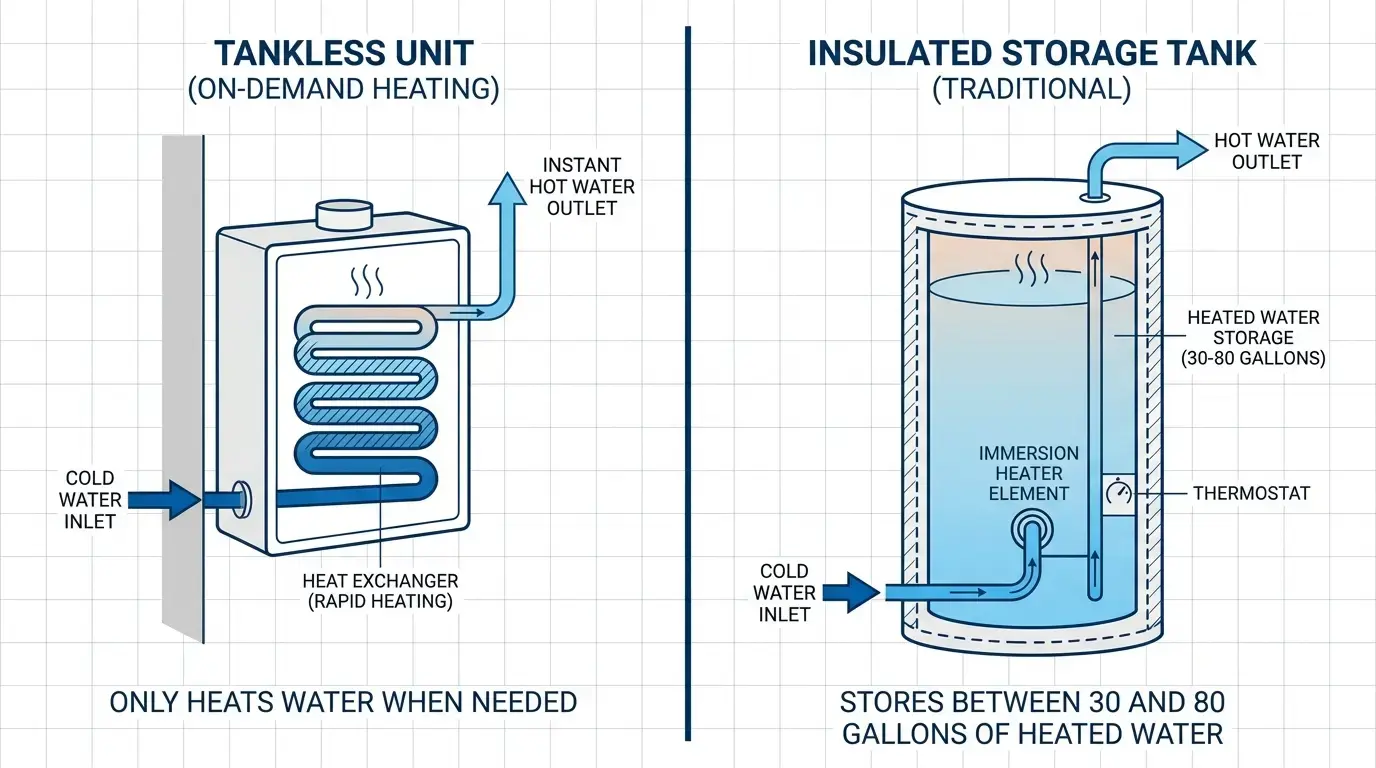
The main difference between how these two systems work comes down to one question: Do you heat water when you need it, or keep it hot all the time?
[Image: Side-by-side diagram comparing tankless on-demand water flow versus storage tank water heater model]
Tankless Water Heaters Heat Water On Demand
When comparing the two main types of water heaters, a tankless hot water heater works differently from a conventional tank model. Also called on demand water heaters, these tankless heaters are known for only heating water when needed. Instead of storing hot water in a tank, cold water flows through the unit and passes over a heat exchanger that quickly raises it to your desired temperature before it reaches your tap. By using less energy on standby losses, they can be an energy efficient alternative for many homes.
A traditional tank system uses a large tank to store water for your household hot water supply, while tankless units use less space and require less floor space. This on-demand design can also deliver endless hot water, provided the unit is properly sized for your home’s peak demand.
Tankless models are available in both gas and electric versions, with gas units generally delivering higher flow rates for larger households.
Traditional Water Heaters Store Hot Water
A traditional water heater, also called a tank style water heater, stores between 30 and 80 gallons of heated water in an insulated large tank, keeping it ready whenever you turn on a hot-water tap. These storage water heaters store water in a conventional tank or tank system, while tankless hot water heaters, also called on-demand water heaters, heat water only when a tap or fixture calls for it. As hot water leaves the tank, fresh cold water enters and is heated to maintain the set temperature.
The biggest tradeoff with conventional water heaters is standby heat loss. Even when no one is using hot water, the system continues reheating the stored water to replace heat that naturally escapes through the tank. Although modern insulation helps reduce this energy loss, it cannot eliminate it completely.
Traditional water heaters are available in both gas and electric models and remain a dependable choice for many homes because of their lower upfront cost and ability to supply several fixtures at once until the stored hot water is depleted. This design can provide endless hot water if the unit is sized to meet household demand.
Cost Comparison: Upfront Price vs. Long-Term Value
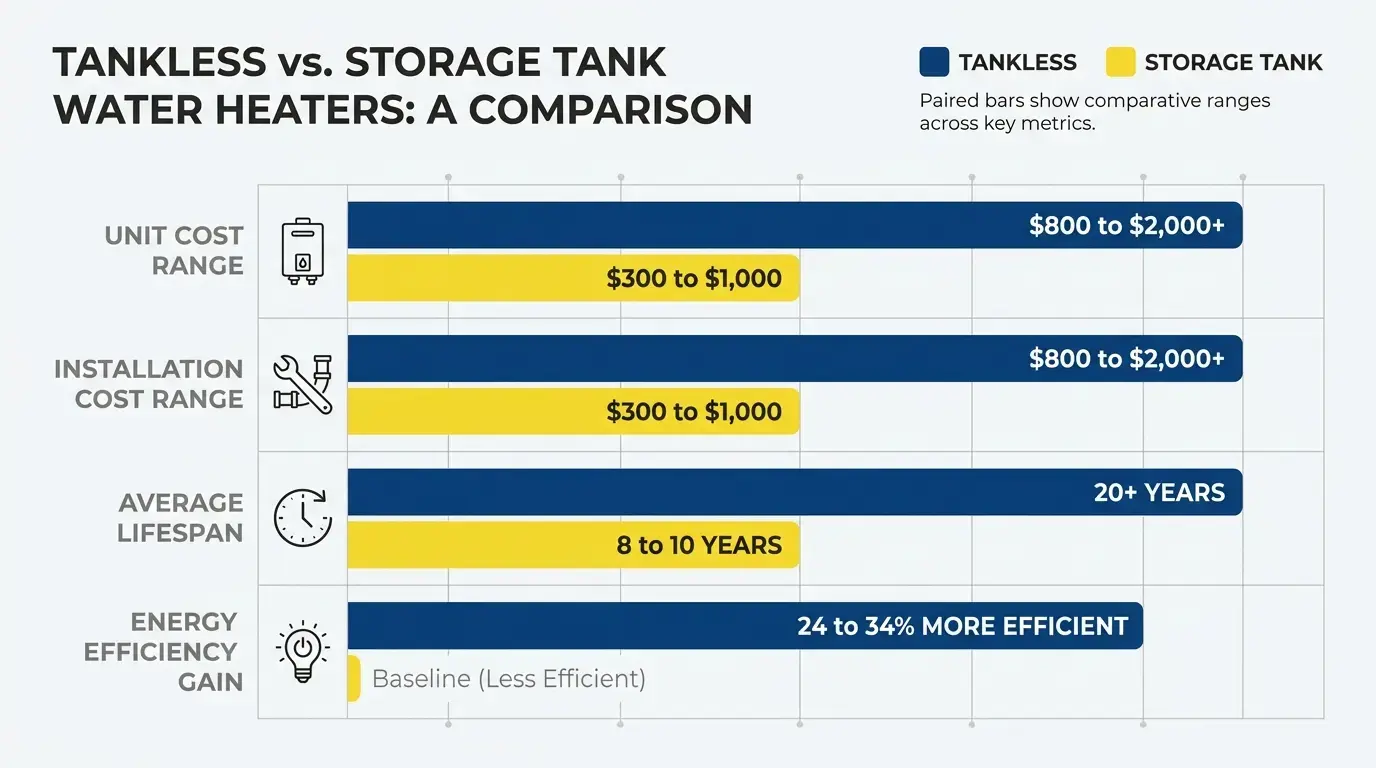
The purchase price is only one part of the equation. To understand the true cost of a water heater, you also need to consider installation, expected lifespan, and ongoing energy expenses. While one system may cost less today, the other could save you more over the years.
Upfront Purchase and Installation Costs
A tankless water heater generally costs between $800 and $2,000+, depending on its size, fuel type, and features. Installation often adds another $1,000 to $3,000, particularly if your home needs a gas line upgrade, electrical panel improvements, or new venting. Those additional requirements can significantly increase the total project cost.
A traditional storage tank water heater is usually the more affordable option upfront. Most units cost $300 to $1,000, with installation commonly ranging from $200 to $500 for a straightforward replacement. If your existing plumbing and utility connections are compatible, installation is typically faster and less expensive.
A Consumer Reports water heater cost analysis also highlights the noticeable difference in upfront costs between these two systems.
Looking Beyond the Initial Price
The long-term value tells a different story. Many tankless water heaters tend to cost a few thousand dollars once equipment and labor are combined, but a tankless water heater can last 20 years or more, while a traditional storage tank typically has a lifespan of 8 to 10 years. Over the same period, a homeowner may replace a traditional unit twice.
So, if you’re wondering how long a water heater should last, it’s worth considering the expected lifespan of each system alongside its purchase price. Whether a tankless water heater depends on your budget, household demand, and long term energy savings. Looking beyond the initial cost can give you a much clearer picture of overall ownership costs and potential cost savings.
Energy savings also play a role. Consumer Reports found that tankless water heaters generally scored higher for energy efficiency than traditional storage tank models in its testing, which can reduce energy costs and lead to lower utility bills over time. Those gains are often most noticeable on utility bills in homes that use fewer gallons of hot water each day.
The table below summarizes the primary cost and ownership differences between the two water heater types. Actual costs and savings vary by model, household usage, local utility rates, and required installation upgrades such as venting, electrical work, and gas line modifications. In some cases, a gas tankless unit using natural gas requires more extensive retrofit work, which adds to upfront costs.
| Cost Factor | Tankless Water Heater | Storage Tank Water Heater |
|---|---|---|
| Unit cost | $800 to $2,000+ | $300 to $1,000 |
| Installation cost | $1,000 to $3,000 | $200 to $500 |
| Average lifespan | 20+ years | 8 to 10 years |
| Energy efficiency gain | 24 to 34% more efficient | Baseline |
| Typical break-even | 5 to 10 years | N/A |
Energy Efficiency and Your Monthly Utility Bill
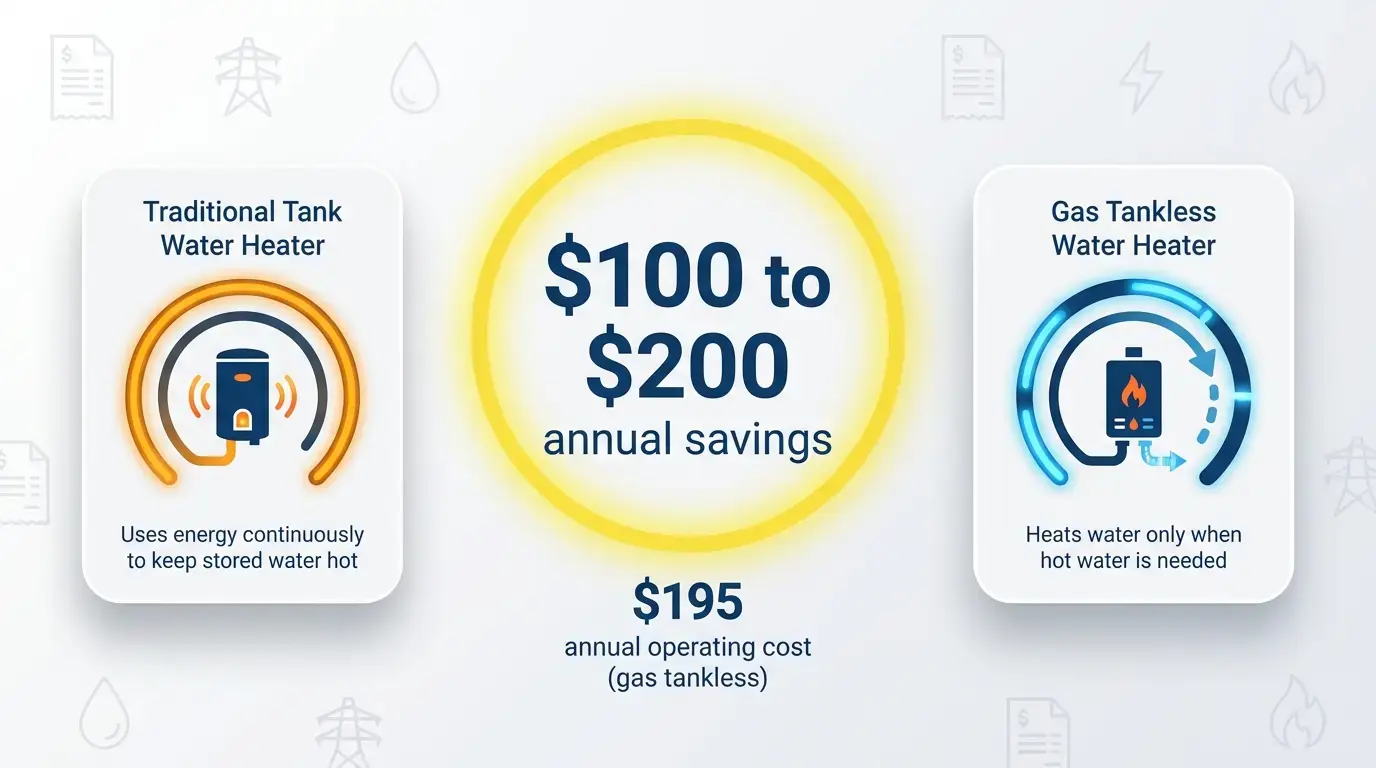
Energy efficiency can have a noticeable impact on your long-term operating costs. While both systems can be efficient, the amount of energy they use depends on how they’re designed and how well they’re matched to your household’s needs.
Here’s a quick comparison:
- Traditional Tank: Uses energy continuously to keep stored water hot.
- Tankless: Heats water only when hot water is needed, so it typically uses less energy.
Energy savings also play a role, and tankless units can deliver $100 to $200 in annual cost savings on energy costs, helping support lower utility bills over time. Typical estimates also put the annual operating cost for gas tankless models at about $195.
Actual savings also depend on your household’s hot-water habits. Homes with lower or moderate usage often benefit the most, while larger households with heavy simultaneous demand may see a smaller difference on utility bills.
When comparing models, look at the Uniform Energy Factor (UEF). A higher UEF rating indicates better energy efficiency. It’s also worth considering ENERGY STAR® certified models, which meet stricter efficiency standards and may qualify for rebates.
Ultimately, whether a tankless water heater is the more efficient choice depends on your usage patterns, how long you expect to own the home, and the long term energy savings you expect.
Hot Water Performance and Househ
old Demand
The biggest concern for most homeowners isn’t energy efficiency. It’s whether you’ll have enough hot water when everyone needs it. The answer depends on the type of water heater you choose and whether it’s properly sized for your household.
How Each System Delivers Hot Water
A traditional storage tank supplies hot water until the tank is empty. Once the stored water is used up, you’ll need to wait while the unit reheats, which typically takes 20 to 60 minutes depending on the tank size and fuel type.
A tankless water heater works differently. Since it heats water on demand, it can provide a continuous supply of hot water as long as your household stays within the unit’s flow rate, which is measured in gallons per minute (GPM).
Why Proper Sizing Matters
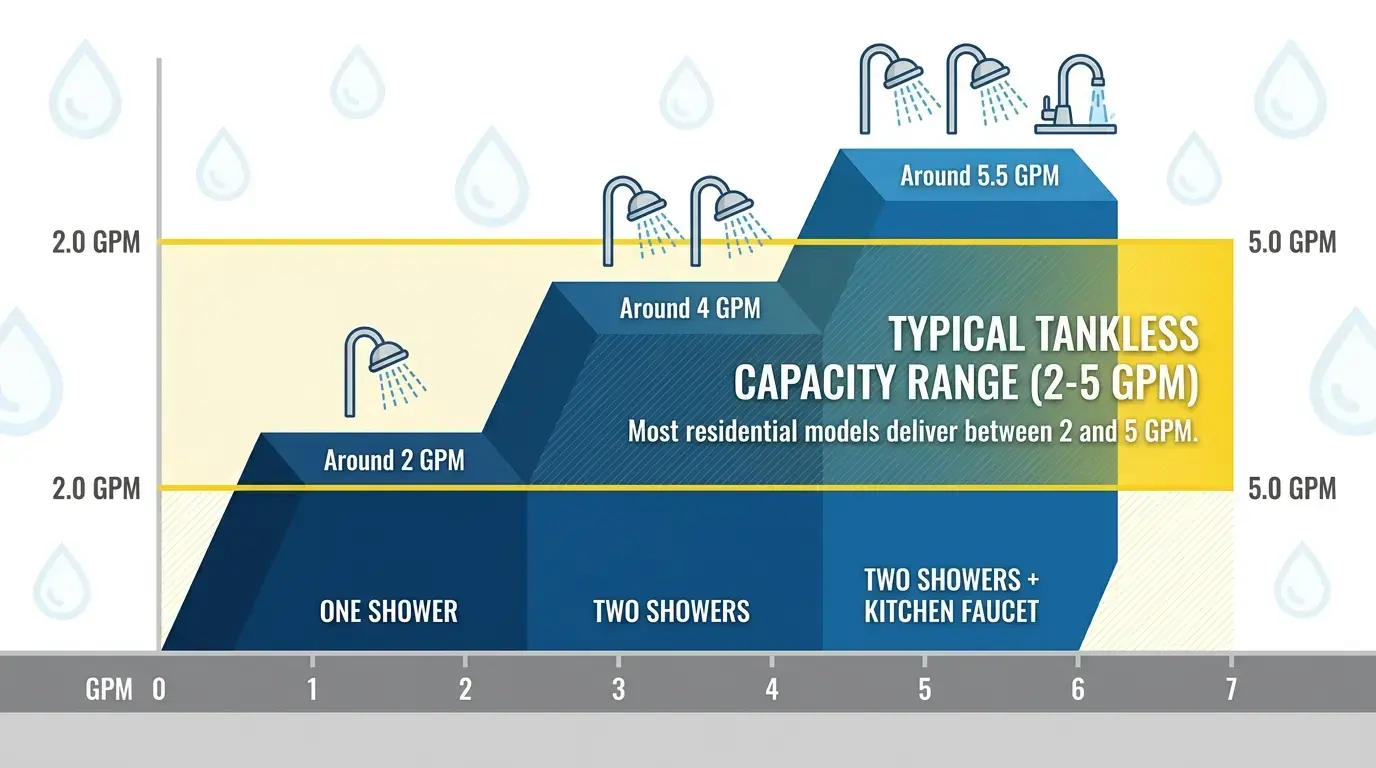
A tankless unit isn’t unlimited. Most residential models deliver between 2 and 5 GPM, so choosing the right size is essential for a steady hot water supply. Whether a tankless water heater depends on your budget, household needs, and long-term savings; efficiency is often most noticeable in homes using fewer gallons of hot water per day, though performance still depends on flow rate.
A sizing calculation should account for:
- One shower: Around 2 GPM
- Two showers: Around 4 GPM
- Two showers and a kitchen faucet: Around 5.5 GPM
If your home’s peak demand exceeds your unit’s capacity, you’ll notice reduced water pressure, cooler water, or both. That’s why choosing the right water heater for your home starts with understanding your household’s peak hot-water demand, not simply the number of bathrooms.
Maintenance, Hard Water, and What Utah Homeowners Need to Know
Utah’s water chemistry can vary depending on the geology it passes through. According to the Utah Geological Survey, groundwater in many Utah basin and valley aquifers is commonly dominated by minerals like calcium and magnesium, which contribute to dissolved solids in the water.
While these minerals aren’t harmful to your health, they can contribute to scale buildup inside plumbing components and water heaters, increasing maintenance needs and affecting long-term performance.
Hard water affects both systems, but tankless heat exchangers and storage tanks require different maintenance approaches.
Tankless Water Heaters Need Regular Descaling
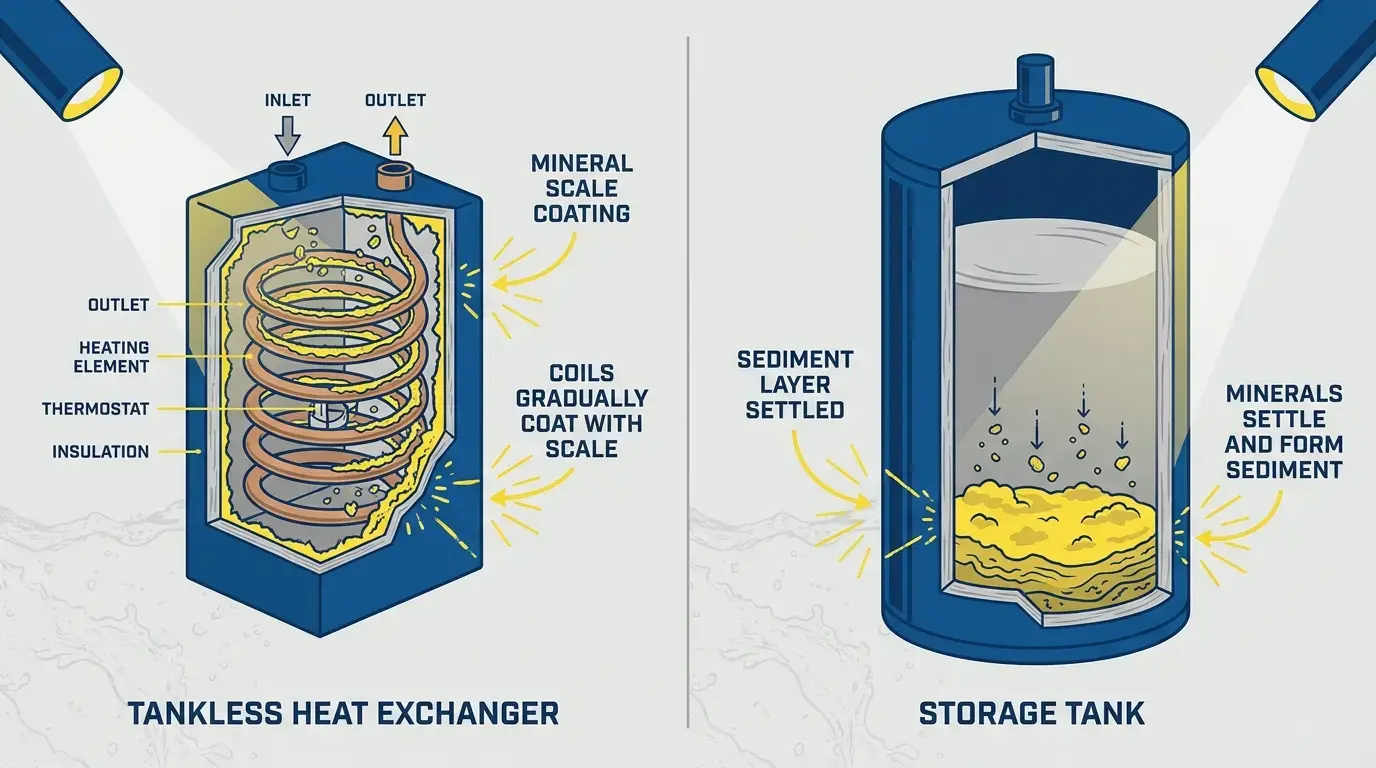
A tankless water heater heats water through a compact heat exchanger. In areas with hard water, minerals gradually coat the inside of that heat exchanger, restricting water flow and making the unit work harder to deliver the same amount of hot water.
Manufacturers commonly recommend annual descaling for homes with hard water. Staying on top of this maintenance helps maintain efficiency and protects one of the most expensive components inside the unit.
Watch for signs such as:
- Reduced hot water flow
- Longer wait times for hot water
- Fluctuating water temperatures
- Higher energy usage than usual
If you’re unsure whether hard water is affecting your plumbing, learning the signs your home has hard water is a good place to start.
Traditional Tank Water Heaters Need Sediment Flushing
Traditional water heaters face a different challenge. Instead of coating a heat exchanger, minerals settle at the bottom of the storage tank and gradually form a layer of sediment. As that layer grows thicker, the burner or heating element has to work harder to heat the water above it, reducing efficiency and increasing wear.
An annual tank flush is typically recommended, although the right schedule depends on your household’s water quality and usage. A professional can also advise you on how often to drain a water heater based on your specific conditions.
If your home has hard water, a water softener can help reduce mineral scale before it reaches your water heater, which may improve efficiency and reduce maintenance over time.
Beehive Plumbing installs and services water softeners for Utah homeowners, helping protect both tankless and traditional water heater systems from excessive scale buildup. Pairing a water softener with routine plumbing maintenance can help keep your system performing reliably for years to come.
Installation: What Most Homeowners Don’t Anticipate
A new water heater must be compatible with the home’s gas supply, electrical service, venting, plumbing, and available installation space. Identifying necessary upgrades before installation helps homeowners understand the full project scope and avoid preventable delays.
Gas and Electrical Requirements
Tankless water heaters often require upgrades that traditional tank replacements do not. Gas-powered tankless units may need a larger gas line to support their higher BTU demand. If your existing line cannot handle the load, that upgrade adds extra time and cost before installation begins.
Electric tankless models have a different challenge. Many require more electrical capacity than a standard electric tank heater, which may mean upgrading the electrical panel or adding dedicated circuits.
Venting and Retrofit Challenges
Replacing a traditional water heater with a tankless model is not always a direct swap. Tankless systems use different venting requirements, and some homes may need modifications before the new unit can be installed properly, including natural gas supply upgrades that may include gas line modifications before installation can proceed.
This is especially common in older homes where the existing setup was designed around a storage tank heater, which can lead to higher upfront installation costs. Understanding these requirements early helps you avoid unexpected costs halfway through the project.
Pre-Installation Assessment
Before installing a new water heater, it’s important to confirm that your home’s plumbing and utilities can support the system you’ve chosen.
At Beehive Plumbing, every installation begins with a pre-installation assessment to identify any requirements that could affect performance, installation, or cost.
Our assessment includes:
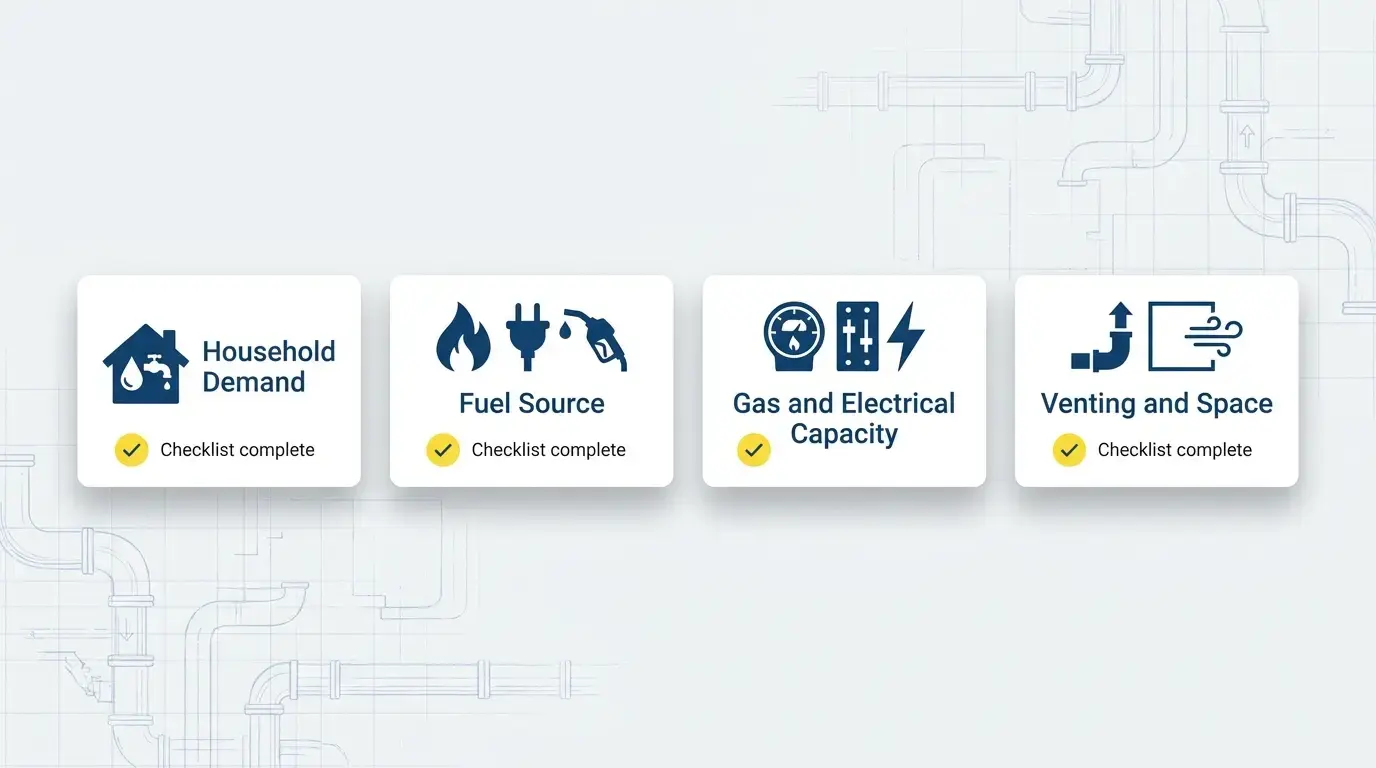
- Household Demand: Your typical hot-water usage and household size.
- Fuel Source: Whether gas or electric is the better fit for your home.
- Gas and Electrical Capacity: Whether existing gas lines or electrical service need upgrading.
- Venting and Space: Available installation space and any venting requirements for the new unit.
Knowing when to hire a master plumber instead of attempting the installation yourself is important, as improper sizing or installation can lead to poor performance, safety concerns, and unnecessary repair costs. A professional assessment helps ensure your new water heater is compatible with your home before installation begins.
What Happens During a Power Outage?
For Utah homeowners, power reliability is worth considering before choosing water heater installation services in Utah. A winter storm can make a hot shower feel less like a convenience and more like a necessity, but how your system handles an outage depends on the type of unit you have.
Traditional Tanks Have the Edge
Some gas storage-tank water heaters with standing pilot lights can continue heating during a power outage. However, models that use electronic ignition, powered venting, or electronic controls may still require electricity, so homeowners should confirm the specifications of the unit they’re considering.
Electric storage tank heaters are different. Without power, the heating elements cannot operate, so hot water production stops until electricity returns.
Tankless Units Need Electricity
Even gas-powered tankless water heaters typically need electricity to run the control board, sensors, and ignition system. When the power goes out, the unit shuts down unless it is connected to a compatible backup power source.
If outage protection is a major priority for your home, a gas storage tank may have the advantage. If efficiency, space savings, and long-term performance are more important, tankless may still be the better fit. The right choice depends on what matters most for your household.
Signs Your Water Heater Needs to Be Replaced
Sometimes the decision between repair and replacement has already been made for you. Your water heater may still be working, but it could already be showing signs that a failure is coming. Catching these issues early gives you time to plan instead of dealing with a sudden loss of hot water.
Age is one of the clearest warning signs. If your water heater is approaching or has exceeded its expected service life, it’s worth having it professionally evaluated before an unexpected failure leaves you without hot water.
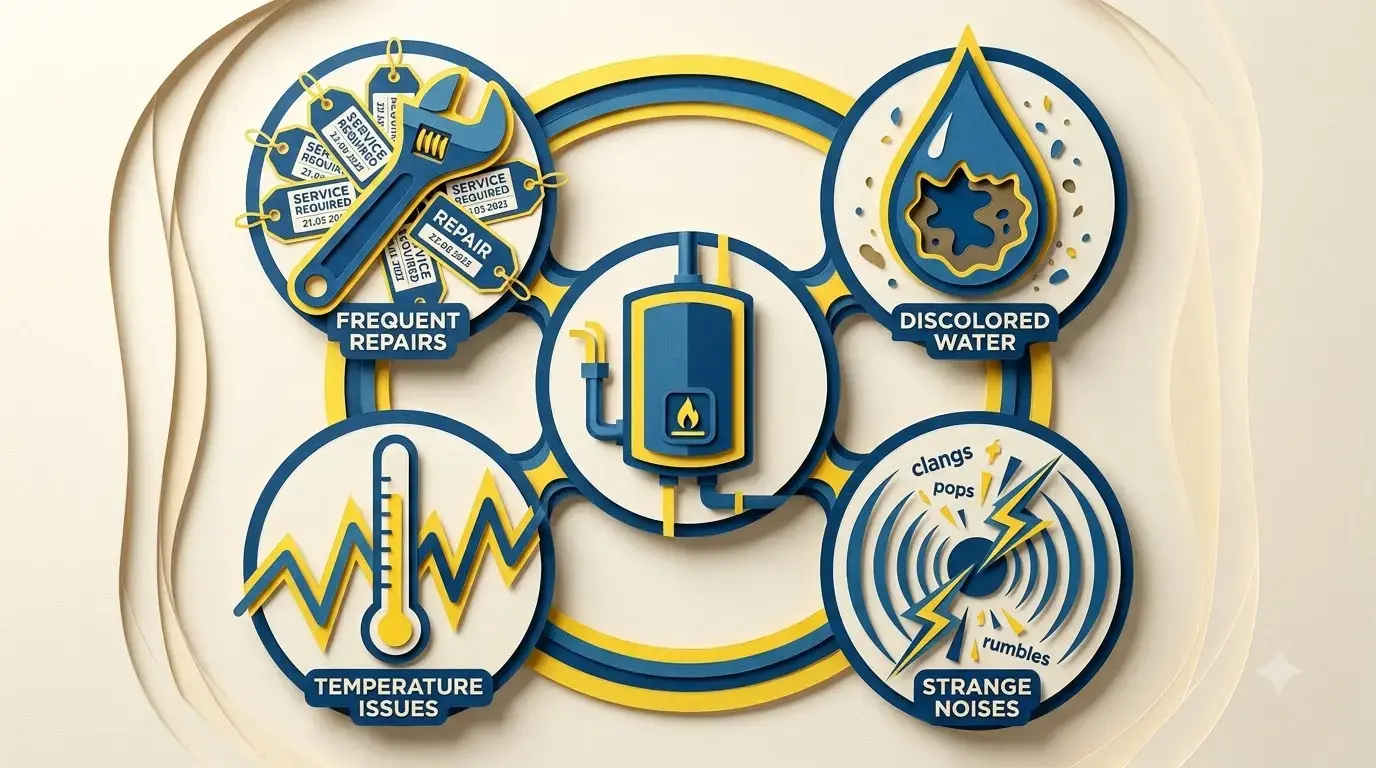
Watch for these warning signs:
- Discolored Water: Rusty or brown hot water often points to internal corrosion inside the tank. Once the tank begins deteriorating from the inside, replacement is usually the better option.
- Strange Noises: Rumbling or popping sounds from a tank water heater often indicate heavy sediment buildup that may no longer be solved with a simple flush.
- Temperature Issues: Inconsistent hot water or a system that struggles to recover can point to failing heating components, a damaged heat exchanger, or other internal problems.
- Frequent Repairs: Multiple service calls in a short period are often a sign that repair costs are adding up faster than the value of keeping the unit.
Knowing the early signs your water heater is failing gives you more control over your next step. Waiting until the system completely stops working can leave you dealing with an urgent replacement when you have fewer options.
At Beehive Plumbing, our master plumbers can help you determine whether repair or replacement makes the most sense for your home. We’ll assess your system, explain your options, and help you choose a solution that fits your needs.
Schedule Your Water Heater Assessment Today
Still Not Sure Which Water Heater Is Right for You?
Both tankless and traditional water heaters can be the right choice depending on your home’s needs. The best option comes down to your hot water usage, budget, installation requirements, and how long you plan to stay in your home.
For Utah homeowners, hard water is another important factor that affects maintenance and long-term performance.
At Beehive Plumbing, we help you compare your options based on your actual setup, not a one-size-fits-all recommendation. Our licensed master plumbers evaluate your home’s plumbing system and help you choose a water heater that fits your needs.
Get Your Water Heater Assessment Today
Common Questions About Tankless vs. Tank Water Heaters
Still weighing your options? These are the questions homeowners ask most often before making a final call.
What Is the Downside of a Tankless Water Heater?
The biggest drawback is the higher upfront cost. Tankless units often require additional installation work, such as gas line, electrical, or venting upgrades. In Utah, hard water also means regular descaling is important for long-term performance.
Can You Run Two Showers at the Same Time With a Tankless Water Heater?
Yes, but the unit must be properly sized for your household’s peak demand. Tankless systems are rated by gallons per minute (GPM), so an undersized unit may struggle when multiple fixtures run at once.
How Much Money Will I Save by Switching to Tankless?
Savings depend on your household’s hot water usage, energy rates, and system efficiency. Tankless units can reduce standby heat loss, but the higher installation cost means the long-term value depends on how long you own the home.
How Big of a Tankless Water Heater Do I Need for 3 Bathrooms?
A three-bathroom home needs careful sizing based on actual fixture demand, not just bathroom count. Multiple showers, faucets, and appliances running together require enough GPM capacity to maintain consistent water temperature.
Does Hard Water Affect Tankless and Traditional Water Heaters Differently?
Yes. Hard water causes mineral buildup in both systems, but tankless units are especially sensitive because deposits can collect inside the heat exchanger. Traditional tanks can also develop sediment buildup that reduces efficiency over time.
How Often Should I Maintain a Tankless or Traditional Water Heater?
Maintenance needs vary by system and water quality. Tankless units in Utah often benefit from annual descaling, while traditional tanks typically need periodic flushing to remove sediment and maintain efficiency.