

Rusty water, weakening pressure, and leaks that keep coming back can feel like separate plumbing problems. But when several of these issues show up throughout your home, the pipes themselves may be telling you something.
For homeowners in Salt Lake, Utah, and Davis Counties, older plumbing systems can develop problems as materials corrode, deteriorate, or become restricted over time. That doesn’t mean every leak calls for a whole-house repipe. The bigger question is whether the problems are isolated or signs of a system-wide decline.
So, how do you know when repairs are no longer enough?
This guide walks through the most common signs you need repiping, how plumbers evaluate the condition of your pipes, and what to consider before replacing the plumbing throughout your home.
Beehive Plumbing helps homeowners across Northern Utah evaluate aging and failing supply systems. We focus on identifying the actual condition of your plumbing before recommending a repair or whole-house repipe.
Key Takeaways
- Multiple leaks, low water pressure, and recurring discolored water can indicate widespread supply-pipe deterioration rather than isolated plumbing problems.
- Galvanized steel and polybutylene piping deserve closer attention because they can be prone to corrosion and premature failure.
- A single leak, weak fixture, or occasional drain problem does not automatically mean your home needs whole-house repiping.
- Plumbers can evaluate the need for repiping through visual inspection, pressure testing, water quality checks, and your history of plumbing repairs.
- If repiping is necessary, the right replacement material depends on your home’s layout, plumbing, and budget.
Five Warning Signs Your Plumbing System Is Failing
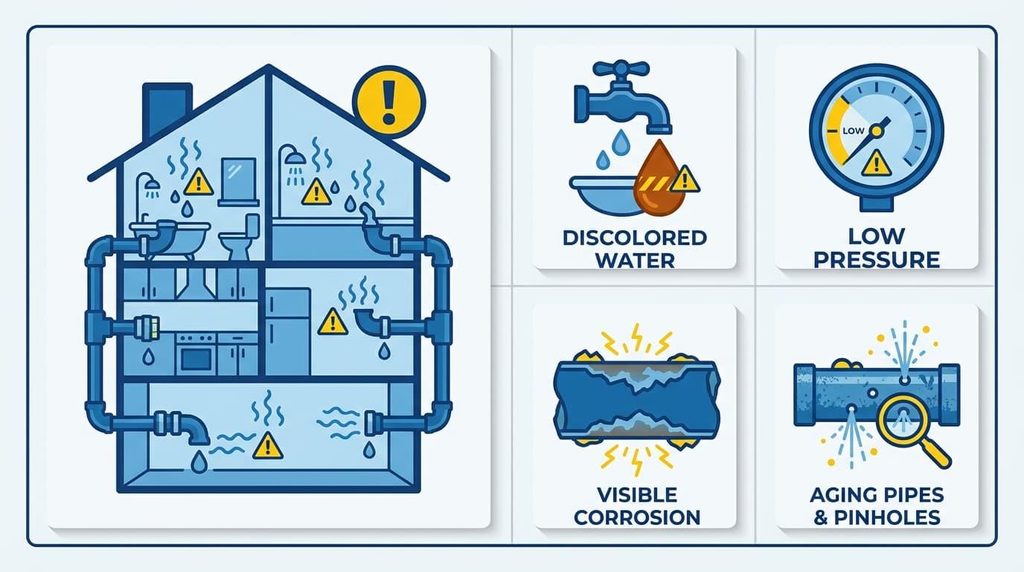
When several plumbing problems keep appearing throughout your home, another patch may only delay the bigger issue. Looking at the bigger picture is more useful than focusing on any one symptom, and noisy pipes can be an early warning sign when they show up alongside the issues below.
Here are the signs our master plumbers look for:
- Frequent pipe leaks in different areas of the home, especially when they aren’t limited to one connection; recurring pipe leaks usually point to deterioration across the entire plumbing system and may mean it’s time to repipe.
- Rust-colored or discolored water coming from multiple hot and cold faucets, since brown or reddish water often means rust particles are being shed by corroded pipes.
- Low water pressure throughout the home rather than at just one faucet or showerhead, since a whole-house drop often points to mineral deposits or internal corrosion instead of a single fixture issue.
- Visible corrosion, flaking, or buildup on exposed pipes in basements and crawl spaces, including rust or greenish discoloration; these sections may be at risk of failure.
- Older galvanized steel or polybutylene piping showing pinholes, splits, or significant scale buildup.
Pipe age alone doesn’t mean your home needs repiping. A plumber should assess the condition of the entire supply system, including pressure, pipe material, visible deterioration, and the history of recurring problems. If the findings point to widespread failure, understanding the benefits of repiping your Northern Utah home can help you weigh replacement against continued repairs.
Whole-House Repiping vs. Single Pipe Repair
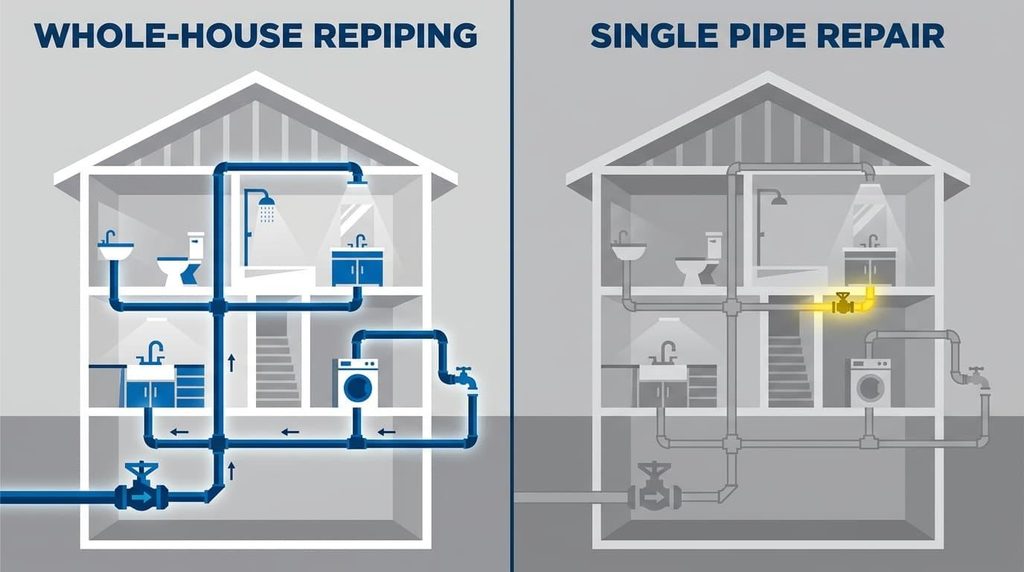
Whole-house repiping replaces the supply lines throughout your home, from the main shutoff to the branch lines serving individual fixtures. A single pipe repair takes a more targeted approach, replacing only the damaged section, fitting, or fixture line while leaving the rest of the system intact.
Neither option is automatically better. The right choice depends on the condition of your plumbing system, the extent of the damage, and whether problems are isolated or appearing in multiple areas. That’s why our master plumbers assess the full system before recommending whole-home repiping rather than basing the decision on the home’s age alone.
Choosing the wrong approach can lead to unnecessary expense. Treating widespread pipe deterioration as an isolated repair can mean repeated service calls. On the other hand, replacing an otherwise healthy system because of one failed section can add costs you didn’t need.
When Multiple Plumbing Problems Point to a Bigger Issue
When leaks, pressure loss, and discolored water appear in different parts of your home, it’s worth looking beyond each individual fixture. Multiple symptoms can indicate deterioration across the supply system rather than one isolated plumbing failure.
Recurring Pinhole Leaks
A pinhole leak in the bathroom followed by another in the kitchen may start as an occasional leak or small leaks, but when they keep showing up in different areas, it often means the pipes are failing in multiple locations. Repeatedly patching individual leaks can become a cycle of repairs, and patching leaks over and over can lead to frequent repairs and costly repairs over time, which may indicate the piping system is breaking down in several spots. Knowing how to spot plumbing problems early can help you recognize when those repairs point to a larger plumbing issue.
Leaks Beneath the Slab
A slab leak develops when a water supply line beneath the foundation starts leaking. Because the pipe is hidden, early signs can include unexplained warm spots on the floor, water running when every fixture is off, or a sudden increase in your water bill that may point to hidden leaks beneath the slab. A professional inspection can help locate the source before concrete needs to be opened. While a slab leak may be one major leak, repeated slab or supply-line failures can point to broader ongoing plumbing issues in the home’s plumbing system.
Low Water Pressure
When water pressure drops throughout the house, restricted supply lines may be contributing to the problem. Low water pressure may start by varying from room to room before becoming more widespread, and a sudden drop can also signal plumbing issues. Mineral buildup and internal corrosion can reduce the space available for water to flow, particularly in older metal pipes, and corrosion inside weakened pipe walls can further restrict flow and worsen pressure problems. Persistent banging or knocking sounds can also indicate plumbing issues, so these strange noises in the plumbing are worth having checked. If the supply lines are the cause, repiping may restore proper water pressure and more reliable hot and cold water flow.
Rust-Colored Water
Brown, yellow, or rust-colored water from multiple faucets can indicate corrosion inside older metal supply pipes, and discoloration paired with changes in water taste or odor may point to degrading pipes. Check whether the discoloration appears at both hot and cold taps and whether it returns after the water has been sitting. If it shows up in only your hot water, the water heater may be the source rather than the supply piping. If it keeps recurring throughout the home, a professional inspection can determine whether the piping needs repair or replacement, since discolored water may affect taste and safety and corroded pipes can raise leak risk and water quality concerns that help show when you need to repipe.
At Beehive Plumbing, our master plumbers look at the entire supply system when recurring leaks, pressure problems, or discolored water suggest a larger issue. We identify the condition and material of your existing pipes before recommending repairs or whole-house repiping. You’ll get a clear explanation of what we find, along with upfront pricing for the recommended work.
Schedule a Repiping Evaluation
Your Pipe Material Can Reveal the Bigger Problem
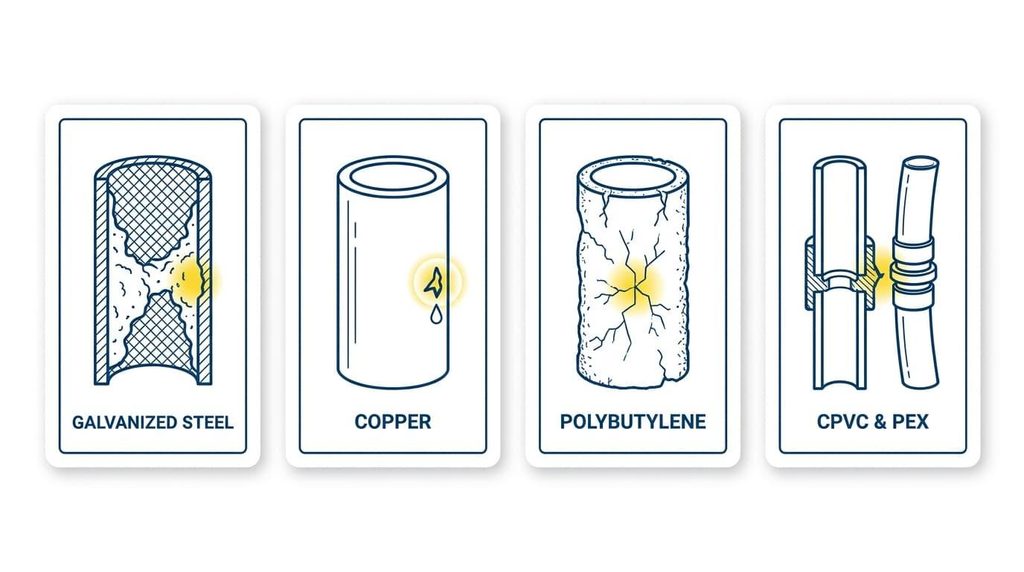
The leaks, pressure loss, and discoloration discussed above can have different causes, but the material of your supply lines is an important part of the diagnosis. Different plumbing materials can age very differently, so identifying what’s installed is crucial before repiping your home. Different pipe materials have different failure patterns.
Galvanized Steel
Galvanized steel can corrode from the inside, allowing rust and mineral buildup to gradually restrict water flow. Even when the outside looks acceptable, galvanized steel pipes often have deteriorated interiors, which is why the entire system needs evaluation. The outside of the pipe may still look intact even when the interior has deteriorated significantly. That’s why an inspection goes beyond what can be seen in an exposed section.
Copper
Copper can provide decades of service, but it isn’t immune to corrosion. Water chemistry and other conditions can contribute to pinhole leaks that eventually cause problems in different parts of the home.
Green staining, damp spots, or recurring leaks around copper lines can justify a closer inspection. Research on copper pipe corrosion also explains how factors such as dissolved oxygen and disinfectant levels in water can contribute to copper corrosion, helping explain why copper pipes can develop pinhole leaks even after years of service.
Polybutylene
Polybutylene piping has a history of premature failures associated with exposure to chlorine and other conditions in treated water. The pipe can become brittle internally while still appearing normal from the outside. If your home contains polybutylene supply lines, identifying the material early can help you determine whether replacement should be considered.
CPVC and PEX
CPVC and PEX don’t corrode like metal piping, but they have different installation and performance characteristics. CPVC is rigid and uses solvent-welded connections, while flexible PEX can require fewer fittings and navigate tight spaces more easily. The right replacement material depends on your home’s layout, existing plumbing, and installation requirements, and proper installation affects long-term durability as much as material choice. In practice, modern materials such as pex piping and CPVC perform best when matched to the home and installed correctly.
Lead Service Lines Require a Separate Assessment

The water service line connecting your property to the municipal main is separate from the supply piping inside your home, so finding an older or potentially hazardous service line doesn’t automatically mean your interior plumbing needs repiping. If you suspect lead pipes or other outdated service materials, have the plumbing system inspected, since service-line issues are assessed separately from interior repiping.
The EPA estimates that about 9.2 million lead service lines and galvanized service lines requiring replacement remain in the United States. Galvanized lines that were previously downstream of lead can also retain lead particles and potentially contribute to exposure. The CDC’s lead pipe guidance explains why these lines can require replacement.
If you don’t know what’s buried between your home and the street, don’t rely on the home’s construction date to make the call. The EPA’s public service line inventory can provide information about documented service line materials. That assessment is separate from evaluating the pipes inside your home, and both should be considered when determining the appropriate scope of work.
Problems That Usually Need a Targeted Repair
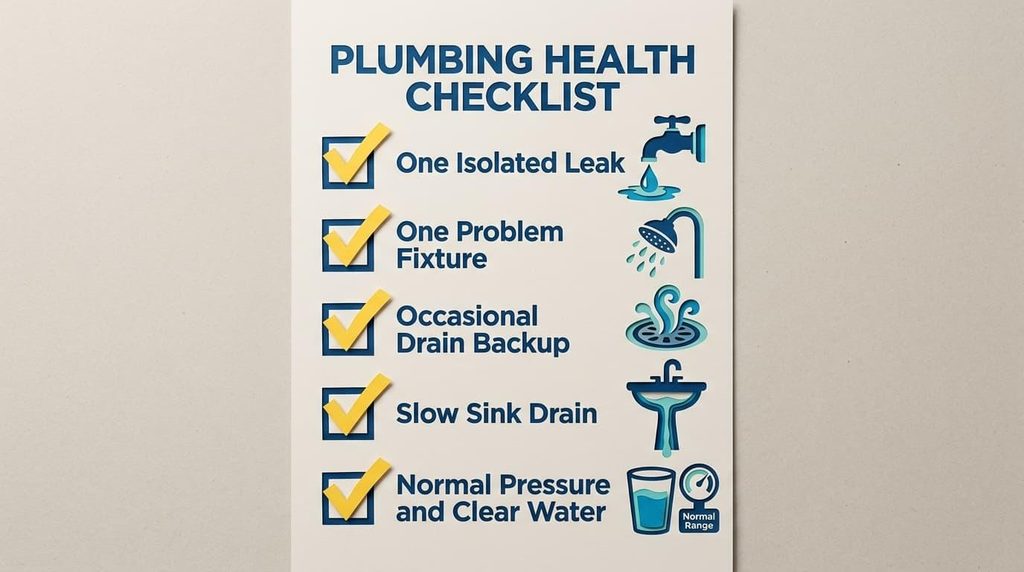
Not every plumbing problem points to a whole-house repipe. When the rest of the system has normal pressure, clear water, and no signs of widespread deterioration, a targeted repair may be all that’s needed. An issue with one fixture or one instance of leaky pipes is different from frequent leaks showing up across the home.
Here’s when a targeted repair may be all you need:
- One Isolated Leak: A single leak at one fixture or connection usually points to a localized failure rather than system-wide pipe deterioration.
- One Problem Fixture: If one faucet or shower has weak flow while the rest of the home has normal pressure, the issue may be the fixture, aerator, or nearby supply line; for example, a clogged aerator can cause weak flow at one faucet even when the rest of the house has proper pressure.
- Occasional Drain Backup: Drain and sewer problems involve wastewater piping, not the home’s clean-water supply lines. Thesesewer line clog signs can help distinguish the two.
- Slow Sink Drain: A single slow drain is usually a localized waste-line issue. Cleaning may resolve common problems such as buildup or debris, including manycommon sink problems.
- Normal Pressure and Clear Water: If pressure remains consistent and your water stays clear throughout the home, there’s less evidence of widespread supply-pipe deterioration.
A good repiping assessment should identify when replacement is actually necessary, and when it isn’t. If the problem is isolated, our master plumbers can recommend the targeted repair rather than turning one plumbing issue into a whole-house project.
How Plumbers Confirm Your Home Needs Repiping
Pipe age can raise a question, but it doesn’t answer it. At Beehive Plumbing, our master plumbers look at the condition of the supply system, its performance, and its repair history to determine whether isolated repairs are enough or repiping makes more sense. That closer evaluation matters with aging pipes, especially in homes more than 40 to 50 years old, even if one symptom on its own seems minor.
Visual Inspection
The inspection starts with accessible supply lines in basements, crawl spaces, and under sinks. We inspect exposed pipes, identify the pipe material, and look closely at fittings, valves, and connections for visible pipe corrosion, staining, mineral buildup, or signs of active leakage; these visible signs often justify a professional evaluation of the supply lines.
Pressure Testing
Pressure testing helps identify problems that aren’t visible from exposed piping. By testing the supply system under controlled conditions, plumbers can determine whether pressure is holding as expected or whether a hidden leak may be present behind walls or beneath the slab.
Repair History and Water Quality
Your repair history can reveal whether today’s leak is part of ongoing plumbing issues rather than an isolated event. We review previous supply-line repairs by location and frequency, while water quality testing can provide additional information when pipe material may be affecting the water, and the pattern of pipe leaks helps determine whether isolated work is enough or whether the entire plumbing system may need replacement.
Choosing the Right Replacement Pipe Material
Once repiping is recommended, the next decision is which material best suits the home. PEX, CPVC, and copper each have different installation characteristics, costs, and performance considerations, so the choice should fit the home’s layout rather than follow a one-size-fits-all rule.
| Material | Key Advantage | Installation Consideration |
| PEX | Flexible and easy to route | Works well around existing framing and tight spaces |
| CPVC | Rigid and corrosion-resistant | Requires solvent-welded connections |
| Copper | Proven long-term performance | Requires soldered joints and more labor |
How to Match the Material to the Home
PEX is one of several modern materials used in repiping and can be especially practical in finished spaces where supply lines need to navigate walls, tight framing, or difficult-to-access areas because it is easier to route. CPVC works well for straightforward runs where rigid piping is practical, while copper remains an established option for homeowners who prefer a traditional metal system.
The best material isn’t necessarily the most expensive one, and the long term solution depends not just on the material itself but on choosing the right option for your home’s layout and installation conditions. Your home’s layout, accessibility, existing plumbing configuration, and project budget all influence the practical choice.
What to Expect During Whole-House Repiping
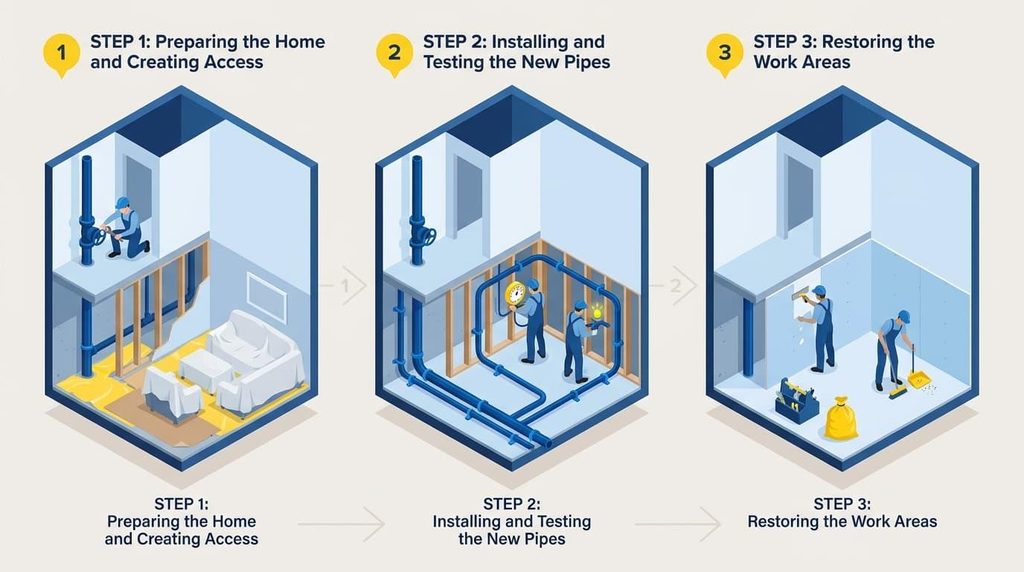
A whole-house repiping project typically moves through preparation, installation, testing, and cleanup. Knowing what happens at each stage can make the process feel much more manageable and help you plan around temporary water interruptions.
Preparing the Home and Creating Access
Before installation begins, the plumbing team shuts off the main water supply and protects floors, furniture, and nearby belongings. Access points are then created where new supply lines need to run, with the crew planning around plumbing fixtures as key connection points. Careful planning helps keep the project to minimal disruption. Your plumber should explain where those openings will be before work begins.
Installing and Testing the New Pipes
The new supply lines are routed through the home as part of the home’s piping system and connected to the fixtures they serve. Once installation is complete, the system is pressure-tested before walls or ceilings are closed. Proper testing also helps confirm proper water pressure, stable water temperature, and dependable hot water performance once the work is complete. This gives the plumbing team an opportunity to identify and correct leaks before restoration begins.
Restoring the Work Areas
After the new piping passes inspection and testing, the work areas can be restored. Depending on the project, this may include closing access points, completing drywall repairs, and cleaning up construction debris, with good planning and cleanup helping keep the disruption temporary and the finished service reliable once the work is complete.
The disruption is temporary, but planning for some noise, dust, and limited water access can make the project easier to manage. Once the new system is in place, learning how to save water at your Northern Utah home can also help you make the most of your new plumbing system.
What to Do When a Pipe Bursts
A burst pipe can release a large amount of water quickly, so the first few minutes should focus on stopping the flow and protecting your home. Once the immediate threat is under control, a professional can determine whether the failure is isolated or part of a larger plumbing problem.
Shut Off the Water
Turn off the main water supply as soon as you can safely reach it. In many Northern Utah homes, the valve is located in the basement, garage, crawl space, or near where the service line enters the home.
After shutting off the water, open a faucet to release pressure remaining in the pipes. Avoid using other fixtures until the damaged line has been assessed.
Call a Professional for the Assessment
Once the water is under control, have a professional inspect the failed pipe after emergency repairs for a burst line to determine whether the failure was isolated or part of aging pipe deterioration across the entire system. One burst section doesn’t automatically mean you need a whole-house repipe, but repeated failures or widespread deterioration can change the recommendation.
If burst failures follow frequent leaks or recurring pipe leaks, repiping may be more practical than continued patch repairs. Before approving a major repiping project, ask:
- Scope: Which supply lines will be replaced?
- Material: What pipe material will be installed, and why?
- Access: Which walls or ceilings need to be opened?
- Warranty: What does the warranty cover and for how long?
- Documentation: What records will you receive after the work?
Clear answers can help you understand whether the recommended work addresses an isolated failure or a broader plumbing problem. Working with a qualified local contractor can also make the process easier, which is one benefit of hiring a local plumbing contractor.
Know When Your Northern Utah Home Needs Repiping
The decision to repipe should come from the condition of your plumbing system, not simply the age of your home. When recurring leaks, widespread discoloration, and persistent pressure problems continue, there may come a clear time to repipe instead of continuing with isolated fixes, especially when pipe materials are also deteriorating.
A proper evaluation can help separate a localized problem from widespread pipe deterioration. Our master plumbers provide comprehensive plumbing services that inspect the whole house, test system performance, review repair history, explain whether whole-house repiping is necessary, and recommend the right scope of work.
At Beehive Plumbing, our licensed and insured master plumbers provide 24/7 service across Salt Lake, Utah, and Davis Counties. We explain what we find, recommend the appropriate solution, and provide upfront pricing before work begins. Whether you need a targeted repair or a complete repipe, you’ll know the scope of the work before we get started.
Schedule Your Repiping Evaluation
Frequently Asked Questions About Whole-House Repiping
Does homeowners insurance cover a repipe?
Coverage depends on your specific policy and the cause of the failure. Gradual corrosion is often excluded, while sudden water damage may be covered. Your plumber can provide documentation for your adjuster.
How often should you repipe a house?
There is no fixed repiping schedule. Pipe material, water chemistry, installation quality, and overall condition all affect service life. An inspection can determine whether your existing supply lines need replacement.
How long does a full-house repipe take?
Most whole-house repiping projects in Northern Utah take a few days, although larger or multi-story homes may require more time. Wall access, pipe routing, and restoration work can extend the schedule.
What should I do if I have a burst water pipe outside my house?
Shut off the exterior valve if you can safely isolate the line. If you can’t, turn off the main water supply and avoid digging around the break. Then call a professional plumber.
What types of pipes are used for whole-house repiping?
Common replacement materials include PEX, CPVC, and copper. Each has different installation requirements, performance characteristics, and costs, so the best choice depends on your home’s layout, existing plumbing, and project requirements.
Is repiping worth it for an older home?
Repiping can be worthwhile when an aging plumbing system develops repeated leaks, restricted flow, or widespread deterioration. It often makes more sense when corroded pipes have weakened, increased leak risks, or led to recurring repairs across the home. Replacing failing supply lines can reduce recurring repairs and provide a more reliable water system.