
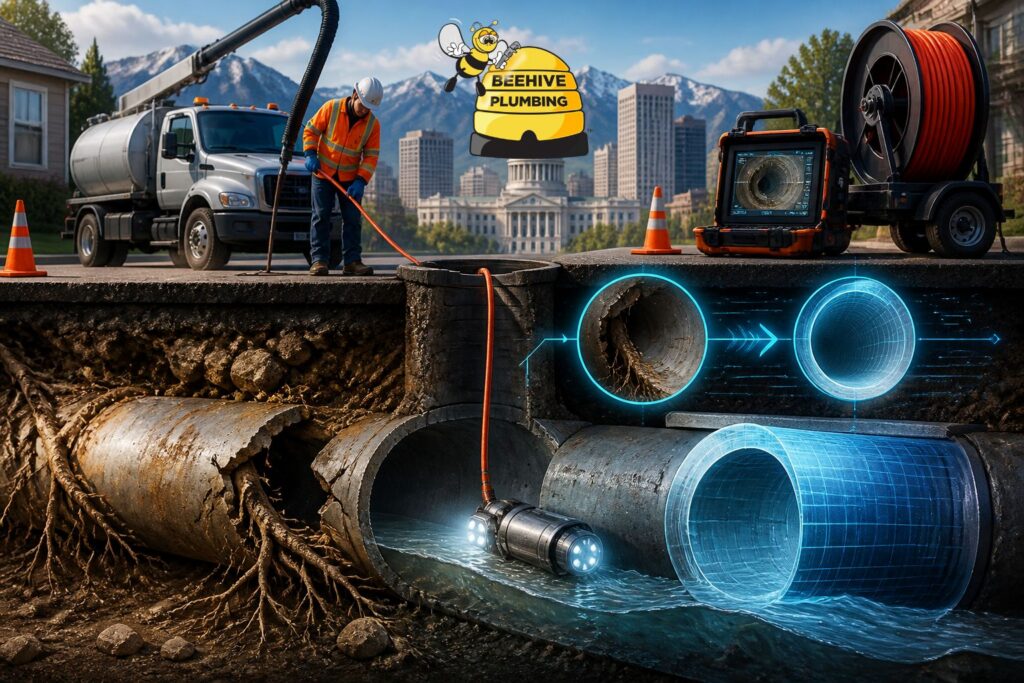
A failing main sewer line can turn a minor drainage problem into a whole-house plumbing emergency. Because this buried pipe carries wastewater from your toilets, sinks, showers, and floor drains to the city sewer, a serious blockage or break can affect nearly every fixture at once.
Salt Lake City homes face several conditions that can contribute to sewer line damage, including shifting soil, mature tree roots, and aging clay or cast iron pipes. The warning signs are often easy to overlook until wastewater backs up indoors or a buried leak damages the yard.
In this guide, we’ll explain how to recognize main sewer line problems, what plumbers use to diagnose them, which repair methods may apply, and what factors influence repair costs in Salt Lake City.
Key Takeaways
- Multiple slow drains or backups can indicate a problem with your main sewer line.
- Tree roots, shifting soil, aging pipes, and structural damage can cause sewer line failures.
- A camera inspection helps identify the location, severity, and cause of sewer line damage.
- Repair costs depend on pipe length, depth, material, accessibility, damage, and repair method.
- Spot repairs, pipe lining, pipe bursting, and excavation address different types of sewer damage.
- Homeowners are generally responsible for sewer laterals connecting their property to Salt Lake City’s sewer system.
- Early diagnosis can help prevent sewage backups, property damage, and more expensive sewer line repairs.
Main Sewer Line Problems vs. Branch Drains and Sewer Laterals

A main sewer line problem affects the buried pipe carrying wastewater from your home to the city sewer. When it becomes blocked or damaged, multiple fixtures may back up at once, unlike a clog limited to one drain or branch line.
Branch Drain Clogs Affect One Area
A branch drain clog occurs in the smaller pipe serving one fixture or section of the home, so other drains typically continue working normally. Hair can block a shower drain, while grease or debris can contribute to common sink problems. If only one fixture drains slowly or backs up, the issue is more likely isolated to that branch rather than the main sewer line.
Sewer Laterals Connect to the City Main
A sewer lateral is the buried pipe that runs as one continuous section from your home’s foundation wall to the municipal sewer connection, covering the entire line. In Salt Lake City, homeowners are generally responsible for maintaining this private section of the system. Responsibility typically changes at or near the property line, depending on local rules.
Tree roots, shifting soil, and aging clay pipes can damage the lateral over time. This makes it especially important to know how to spot plumbing problems early. Identifying damage early can give you more repair options and help limit the eventual cost.
Warning Signs of Main Sewer Line Failure
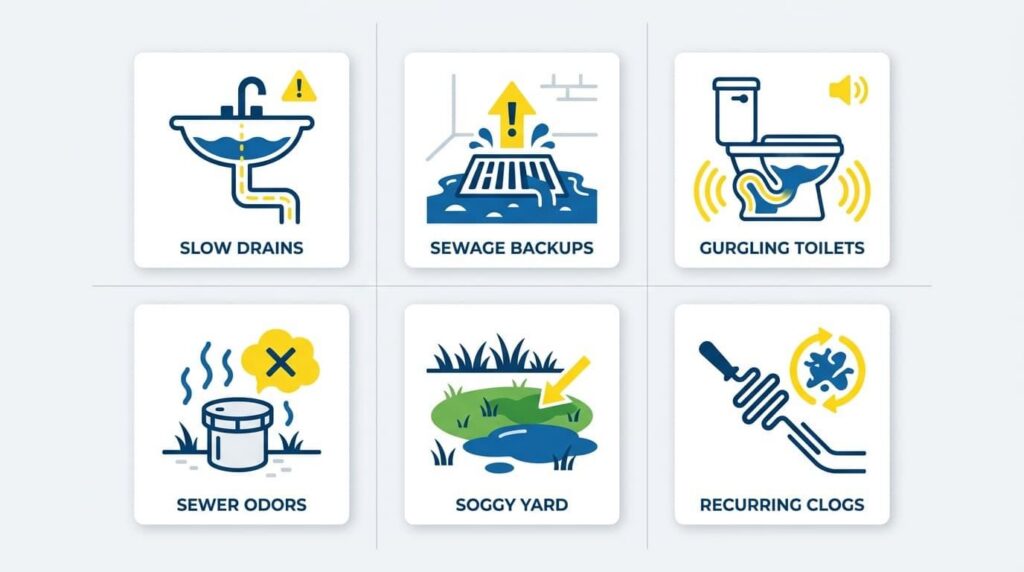
A failing main sewer line usually affects multiple drains, not just one fixture. Since the pipe is buried underground, changes in drainage, odors, and yard conditions can provide the first clues before major sewer backups occur.
Watch for these warning signs:
- Multiple Slow Drains: Sinks, tubs, and toilets in separate rooms begin draining sluggishly around the same time.
- Sewage Backups at Low Points: Wastewater surfaces first through basement floor drains or other low fixtures.
- Gurgling Toilets and Drains: Trapped air escaping through the system can create unusual sounds before a blockage becomes severe. These strange noises in the plumbing can signal developing drainage problems.
- Sewer Odors Outdoors: Persistent foul odors near a cleanout or sewer route may indicate sewage leaks or leaking sewage from a broken sewer line.
- Soggy or Lush Yard Patches: Unusually wet or green areas above the sewer route can indicate an underground leak.
- Recurring Clogs After Snaking: Blockages that return shortly after cleaning may point to roots, damaged pipe, or another deeper obstruction.
One symptom doesn’t always confirm a main line failure, but several appearing together deserve professional inspection. Reviewing thesesewer line clog signs can help determine when another drain cleaning isn’t enough and a sewer camera inspection is warranted.
What to Do During a Sewage Backup
Stop using all water fixtures as soon as sewage begins backing up or you notice sewer backs. Continued water use can push more wastewater into the home, increasing the risk of contamination and property damage. Focus on containing the problem while waiting for professional help.
Start with these immediate steps to contain the backup and protect your home.
- Stop using the washing machine and dishwasher because both discharge large amounts of water into the sewer line.
- Avoid showers, baths, sinks, toilets, and other fixtures until the blockage has been assessed.
- Keep children and pets away from backed-up wastewater because it may contain harmful bacteria and contaminants.
- Avoid touching or cleaning sewage without proper protective equipment, especially if wastewater has reached flooring or other surfaces.
- Contact professional plumbers as soon as possible to identify the blockage and prevent further damage.
At Beehive Plumbing, our master plumbers provide 24/7 emergency response and sewer service when urgent backups can’t wait. We diagnose the cause, explain your repair options, and provide upfront pricing before work begins.
Common Causes of Main Sewer Line Failure in Salt Lake City

Main sewer line failures can develop gradually or occur suddenly, disrupting multiple fixtures throughout the home. Identifying why the line failed helps determine the right repair and prevent the problem from becoming more costly.
Freeze-Thaw Pipe Damage
Repeated freezing and thawing can shift the soil around buried sewer pipes, placing stress on rigid sections and their joints. Over time, this movement can separate connections, create cracks, or push sections out of alignment. Older pipes are especially vulnerable because years of wear leave less structural strength to absorb ground movement.
Expansive Soil Movement
Utah’s changing soil conditions can put additional pressure on underground sewer lines. Soil that expands when wet and contracts as it dries can gradually move or misalign sections of pipe. That movement can create gaps at joints, cracks, or low spots where wastewater and debris begin collecting.
Tree Root Intrusion
Tree roots naturally seek moisture, making small cracks and loose pipe joints potential entry points. Once inside a sewer line, the roots can restrict the passage of wastewater and trap paper or other debris. They can also infiltrate sewer lines through tiny openings and spread over time. If the underlying pipe damage remains, removing the roots alone may only provide a temporary solution, and older clay or cast iron lines may respond differently to repair methods depending on how much structural damage the roots caused.
Aging Pipe Materials
Older clay and cast iron sewer lines become more vulnerable as their materials deteriorate. Clay sections can crack or separate at their joints, while cast iron can develop internal corrosion that weakens the pipe walls. Once deterioration becomes widespread, repeated repairs may no longer provide a practical long-term solution.
Sagging Sewer Pipes
A sewer pipe can develop a low section when surrounding soil shifts or loses support beneath the line. This creates a belly where wastewater and solids can settle instead of flowing freely. Recurring blockages in the same location can indicate this type of structural problem, which typically requires more than routine drain cleaning.
Sewer Pipe Collapse
A severely damaged sewer line can eventually collapse, with broken pipes also creating a path to failure that blocks wastewater from leaving the home. Collapse may result from advanced corrosion, repeated soil movement, extensive cracking, or weakened pipe sections. Because the pipe has lost its structural shape, this type of failure often requires excavation or sewer line replacement rather than simple cleaning.
How Beehive Master Plumbers Diagnose Main Sewer Line

At Beehive Plumbing, our master plumbers diagnose sewer line problems by inspecting the pipe before recommending a repair. This approach identifies the location, cause, and severity of the damage, giving homeowners a clearer understanding of their repair options and expected costs.
Camera Inspections Locate Pipe Damage
Our plumbers perform a sewer camera inspection through the cleanout and guide a high-definition camera through the pipe. The footage can reveal:
- Root intrusion or heavy debris buildup
- Cracked, separated, or offset joints
- Sagging sections that hold standing water
- Collapsed or severely damaged pipe
Camera inspections are especially important when recurring sewer issues suggest a hidden main-line problem.
The camera’s distance counter also helps pinpoint where the defect sits, making it easier to determine whether a localized repair or broader replacement is appropriate.
Line Locating and Hydro Jetting Refine the Diagnosis
After identifying a problem, our plumbers can use line locating equipment to trace the pipe’s route and determine its depth from above ground. This helps establish where excavation may be necessary and limits unnecessary digging.
If roots, grease, or debris obstruct the camera’s view, hydro jetting can clean the pipe to restore flow before another inspection or repair. Sewer jetting typically runs at 20 to 30 gallons per minute at 3,000 to 4,000 PSI. High-pressure water clears buildup from the pipe walls, while hydro jetting vs snaking highlights why thorough cleaning can provide a clearer view than conventional cabling. Regular cleaning can extend the life of sewer lines by reducing recurring buildup.
Main Sewer Line Repair Cost Factors in Salt Lake City
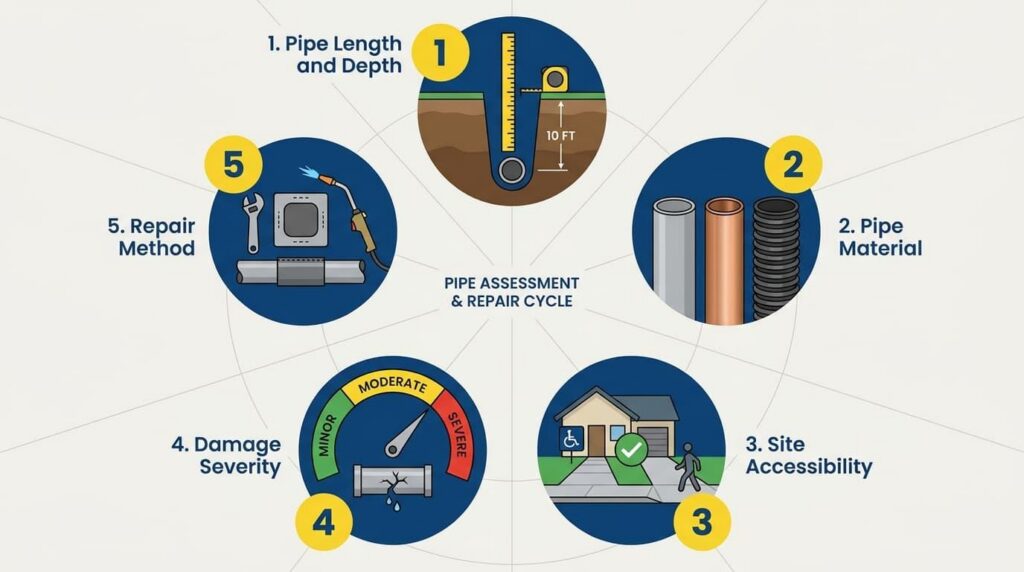
Main sewer line repair costs depend on several factors, including the pipe’s length, depth, material, accessibility, and the extent of the damage. Camera footage helps determine these variables before work begins, giving our master plumbers a clearer basis for the repair scope and upfront quote. The extent and severity of damage also help determine whether a standard repair, trenchless work, or full replacement is the most appropriate solution.
Five factors typically influence the total cost:
- Pipe Length and Depth: Longer or deeper sewer runs generally require more labor, excavation, or liner material.
- Pipe Material: Clay, cast iron, and PVC each have different failure patterns and repair requirements.
- Site Accessibility: Lines beneath driveways, patios, landscaping, or concrete can require additional removal and restoration.
- Damage Severity: Localized damage may allow spot repair, while widespread deterioration or collapse can require replacement.
- Repair Method: Open excavation involves digging and restoration, while trenchless sewer repair methods rely on specialized equipment and materials and can sometimes cost less overall than traditional excavation because they reduce surface disruption.
Why a Sewer Line Inspection Comes Before the Quote
A sewer line can’t be priced accurately from symptoms alone. Before recommending a repair, our master plumbers assess the pipe’s condition, identify the location of the damage, and determine which repair method fits the situation. That inspection helps separate a straightforward repair from a larger replacement project and gives homeowners a clearer picture of what the work involves.
The EPA’s national wastewater infrastructure needs survey highlights the broader challenges surrounding aging wastewater infrastructure. Following essential plumbing tips for every homeowner can also help you catch problems before they become more extensive.
Main Sewer Line Repair Options
The right repair method depends on what the camera inspection reveals. Today, main sewer line repair often includes trenchless repair options alongside traditional excavation. Localized damage may need only a small repair, while widespread deterioration, severe misalignment, or a collapsed pipe can require a different approach.
Spot Repair for Localized Damage
Spot repair targets localized damage rather than replacing the entire sewer line, while leaving the rest of the pipe intact. Our master plumbers excavate only around the affected area, replace the damaged segment, and reconnect the existing pipe. This approach makes sense when the surrounding pipe remains structurally sound, making it the more practical choice for repair or replacement.
CIPP Lining for Widespread Cracking
Cured-in-place pipe (CIPP) lining rehabilitates an existing sewer line from the inside. A resin-saturated liner is inserted into the host pipe and cured to create a new pipe inside the old one. It’s well suited to longer sections with cracks or root intrusion when the existing pipe remains structurally intact, and homeowners may also hear this trenchless method described as pipe relining.
Pipe Bursting for Full Trenchless Replacement
Pipe bursting replaces a deteriorated sewer line without excavating its entire length. This trenchless option involves pulling a new HDPE pipe through the same underground path while breaking apart the old line. The work is typically done from small access pits rather than a full trench. This method can work when the existing route is accessible, but the original pipe is too damaged for lining, and our replacement services often recommend it beneath driveways, landscaping, or other surface obstructions because it can reduce restoration costs even if upfront costs are higher.
Excavation for Severe Pipe Damage
Traditional excavation may be necessary when the sewer line has collapsed, shifted significantly, developed a severe belly, or runs under concrete, structures, or severe grade problems that make trenchless methods impractical. Digging exposes the damaged section so plumbers can correct the underlying problem and install new pipe, and traditional replacement relies on excavation equipment to expose and rebuild the damaged section. For homeowners facing a full replacement, what to expect with a new sewer line installation explains how the process works.
Should You Repair or Replace Your Sewer Line?
The decision depends more on the pipe’s condition, material, and the extent of the damage than its age alone. Camera footage shows whether the existing line remains structurally sound enough to repair or whether replacement makes more sense.
The table below compares common pipe materials, failure patterns, and typical repair approaches.
| Pipe Material | Common Failure Pattern | Typical Approach |
| Clay pipe | Cracking and root intrusion at multiple joints | Replacement or lining when the host pipe remains sound |
| Cast iron pipe | Interior corrosion and weakened sections | Lining when corrosion is localized |
| PVC | Isolated crushing or offsets from soil movement | Spot repair when damage is limited |
Sewer Lateral Responsibility and Salt Lake City Requirements
The sewer lateral and city sewer main have different ownership and maintenance responsibilities. Understanding where that boundary falls can help homeowners know who handles a problem and what requirements apply before repair work begins.
Homeowner Responsibility for the Sewer Lateral
In Salt Lake City, homeowners are responsible for the sewer lateral connecting their property to the city sewer main. The Salt Lake City sewer lateral ordinance defines these responsibilities and the applicable connection requirements. The city maintains the public sewer system beyond that connection point, including its extensive collection network. Salt Lake City’s sewer system annual report provides additional information about the city’s sewer infrastructure and maintenance activities.
Permits and Utility Locates Before Excavation
Sewer line repairs and replacements may require permits and inspections within Salt Lake City. Before excavation begins, Utah’s 811 utility-locating service helps identify underground gas, electric, water, and other utility lines near the work area. Our master plumbers coordinate the required permitting and utility locating before work starts, then document the completed repair for your records.
Get Ahead of Main Sewer Line Problems
A failing sewer line rarely gets better on its own. Catching warning signs early can help prevent sewage backups, extensive property damage, and more disruptive repairs. A professional camera inspection can identify the location and severity of the problem, giving you a clearer understanding of whether spot repair, trenchless rehabilitation, or replacement makes sense.
At Beehive Plumbing, our master plumbers inspect the line before recommending a repair, so you know what needs to be fixed before excavation begins.
If your Salt Lake City home is experiencing recurring clogs, multiple slow drains, or sewage backups, don’t wait for a complete failure. Schedule an inspection and get a clear, upfront recommendation for your sewer line.
Schedule Your Sewer Inspection
Frequently Asked Questions About Main Sewer Line Repair in Salt Lake City
Will homeowners insurance cover sewer line repair?
Standard policies often exclude gradual deterioration, root intrusion, and corrosion. However, coverage may apply to sudden damage or resulting water damage, depending on your policy and any service line endorsement. Check with your insurer.
What is the life expectancy of a sewer line?
Sewer line lifespan varies by material, soil conditions, installation quality, and maintenance. Clay and cast iron can last decades, while PVC generally offers longer service. Local soil movement and root growth can shorten that lifespan.
How much does it cost to repair a collapsed sewer pipe?
A collapsed sewer pipe typically requires excavation and replacement because lining cannot restore a severely deformed section. Total costs depend on pipe depth, length, accessibility, restoration needs, and the replacement method selected.
How do I know if my main sewer line needs repair?
Multiple slow drains, recurring backups, sewage odors, gurgling fixtures, and wastewater appearing at low drains can indicate a main line problem. A camera inspection can confirm whether the buried pipe is damaged.
Can tree roots damage a main sewer line?
Yes. Tree roots can enter small cracks or separated pipe joints while seeking moisture, gradually restricting flow and worsening structural damage. Older clay and cast iron sewer lines are particularly vulnerable to root intrusion.
Is trenchless sewer repair available for residential properties?
Trenchless pipe repair can repair or replace some residential sewer lines with less excavation than traditional replacement, usually through lining or pipe bursting. Pipe condition, alignment, accessibility, and the extent of damage determine whether lining is suitable or full sewer line replacement is the better option.