
Noticed a crack in your fiberglass tub? You’re not alone — and you don’t automatically need to call a plumber. Small, stable cracks are actually one of the more manageable bathroom repairs homeowners tackle on their own.
That said, larger cracks or ones with flex underneath tell a different story entirely. This guide walks you through assessing what you’re dealing with, fixing it the right way, and recognizing when it’s smarter to hand things off to a pro.
Here’s what you’ll learn:
• How to tell if your tub crack is cosmetic or structural
• When it’s safe to use your tub and when to stop
• Step-by-step instructions for a DIY fiberglass tub repair
• Signs that indicate you need a professional plumber’s help
• Tips to protect your tub and prevent future cracks
Ready to restore your tub’s strength and appearance? Keep reading to get started on your repair journey!
Key Takeaways
• Assess first, repair second: Before grabbing a fiberglass repair kit, check if your tub floor flexes underfoot, if you see brown stains on the ceiling below, or if there’s soft drywall nearby — these signs mean the crack is structural, not cosmetic.
• DIY works for small, stable cracks: Hairline spider cracks under about ½ inch wide with no flex can be successfully patched using a two-part epoxy or fiberglass resin adhesive kit costing $20–$140, with full cure times of 24–48 hours.
• Structural cracks need professional help: Cracks larger than ½ inch, multiple radiating fractures, or visible tub movement often stem from deteriorated support foam common in 1980s–1990s Utah homes — patching the surface won’t fix the underlying problem.
• Safety is non-negotiable: Fiberglass dust and resin fumes require N95/P100 respirators, gloves, eye protection, and strong ventilation to avoid skin irritation and respiratory issues.
• Know when to call Beehive Plumbing: If you’re unsure whether a crack is safe or already causing hidden damage, a professional assessment can prevent a $40 DIY project from becoming a $4,000 subfloor replacement.
Understanding Your Fiberglass Tub Crack
Imagine you’re standing in your bathroom, probably barefoot, and there it is — a crack you swear wasn’t there last week. Maybe you spotted it while scrubbing the tub, or your spouse pointed it out after a shower. Now the questions start piling up. Is it getting worse? Can you still use the tub tonight? Is water already seeping behind the wall?
Take a breath. You’re not the first Utah homeowner to face this moment, and you definitely won’t be the last.
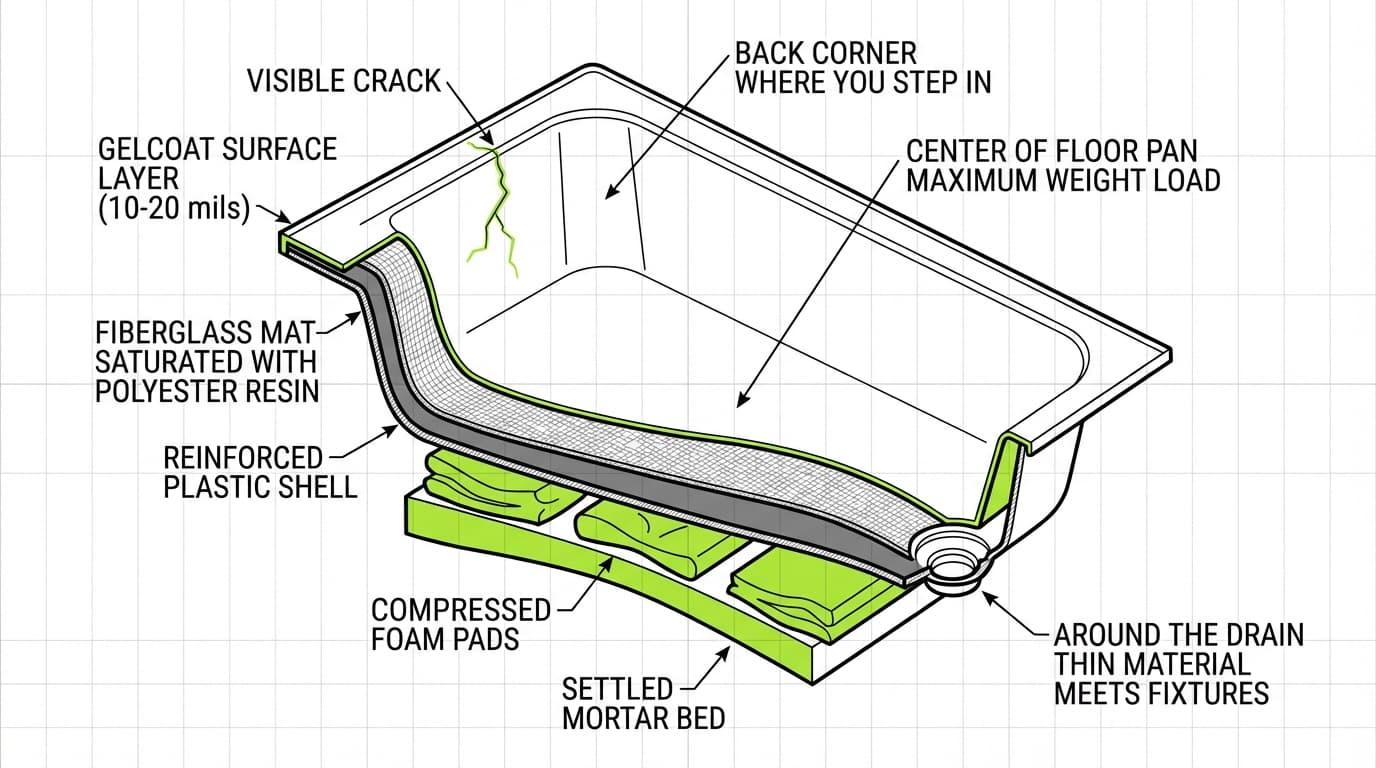
Fiberglass tubs are built from a reinforced plastic shell — essentially fiberglass mat or cloth saturated with polyester resin — covered by a thin gelcoat layer that gives the tub’s surface its glossy, waterproof finish. That gelcoat is only about 10–20 mils thick, which makes it vulnerable to stress fractures after years of daily use.
Here’s the thing most DIY guides skip over: the crack isn’t the problem. The crack is the symptom. In most cases, cracks develop because of flexing caused by insufficient support underneath the tub — foam pads that have compressed, mortar beds that have settled, or subfloors that weren’t built to handle the load. Fix just the surface without addressing what’s underneath, and you’re back to square one.
Where the crack sits tells you a lot:
• Center of the floor pan: Maximum weight load hits here, which usually signals general undersupport.
• Around the drain: Thin material meets fixtures at this spot, pointing to localized stress.
• Back corner where you step in: Heels press hard during entry, which can indicate edge settling or support voids underneath.
Once you understand where your crack sits, you can start figuring out whether you’re dealing with a quick DIY fix or something that needs professional eyes. Let’s begin with the most urgent question: Is it even safe to use the tub right now?
Is It Safe to Use the Tub? Quick Assessment Checklist
This section should take you under 60 seconds to run through — and it answers the question everyone’s thinking: Can I still shower tonight?
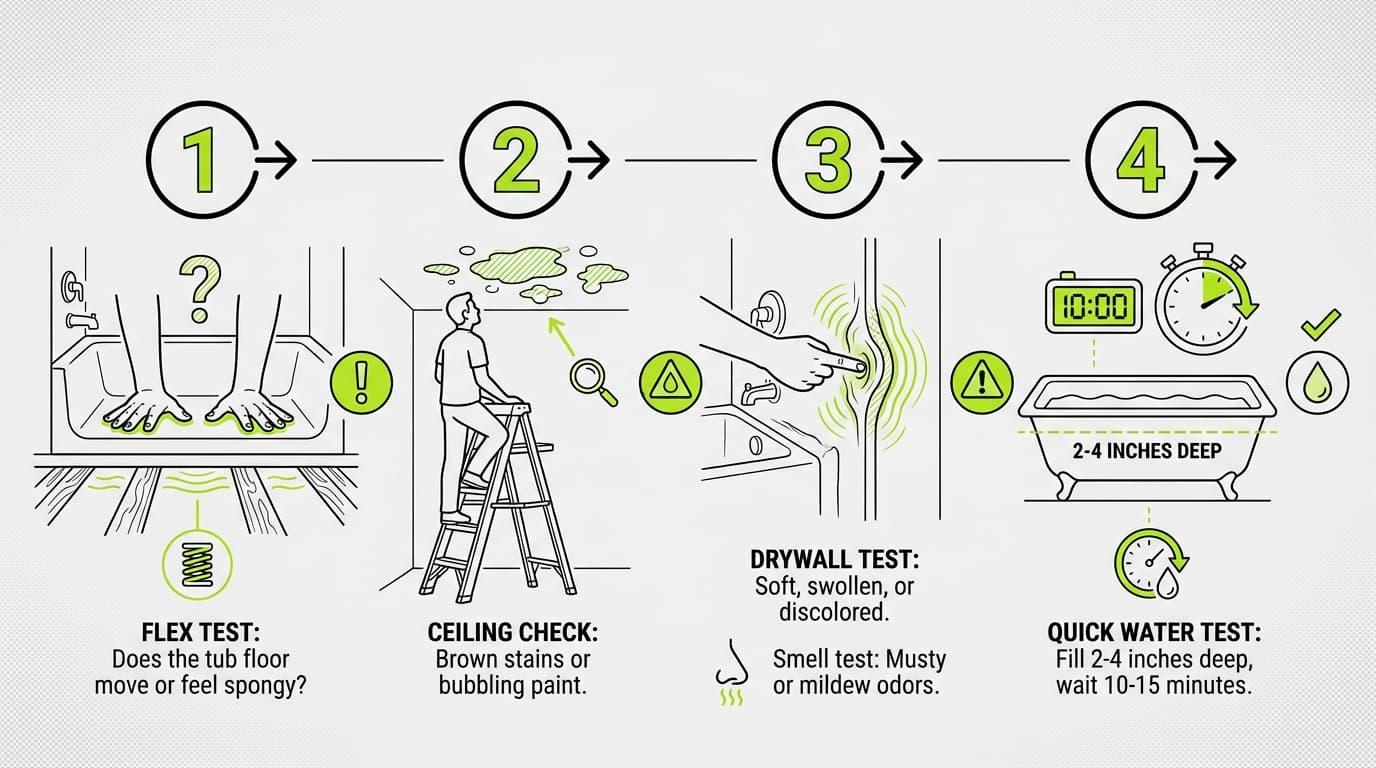
Run through these quick checks:
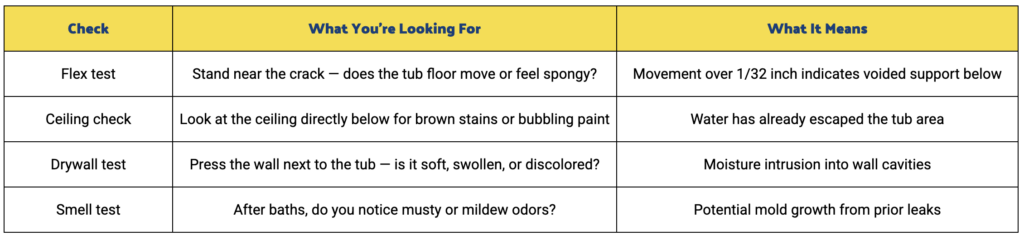
Quick water test: Plug the drain, fill the tub 2–4 inches deep, and wait 10–15 minutes. Then check the ceiling below or any access panel for damp spots, drips, or discoloration.
If there’s flexing, visible water damage, or a crack wider than about ½ inch: stop using the tub and call a plumber before more showers. If the crack has compromised the drain fitting or caused water to seep behind the wall, licensed plumbing repair specialists in Utah can assess the full extent of the damage and prevent costly water damage down the line.
If you have stable, hairline spider cracks with no flex, no dampness, and no discoloration: you’re generally a good candidate for careful DIY repair.
Cosmetic vs. Structural Cracks: How to Tell the Difference
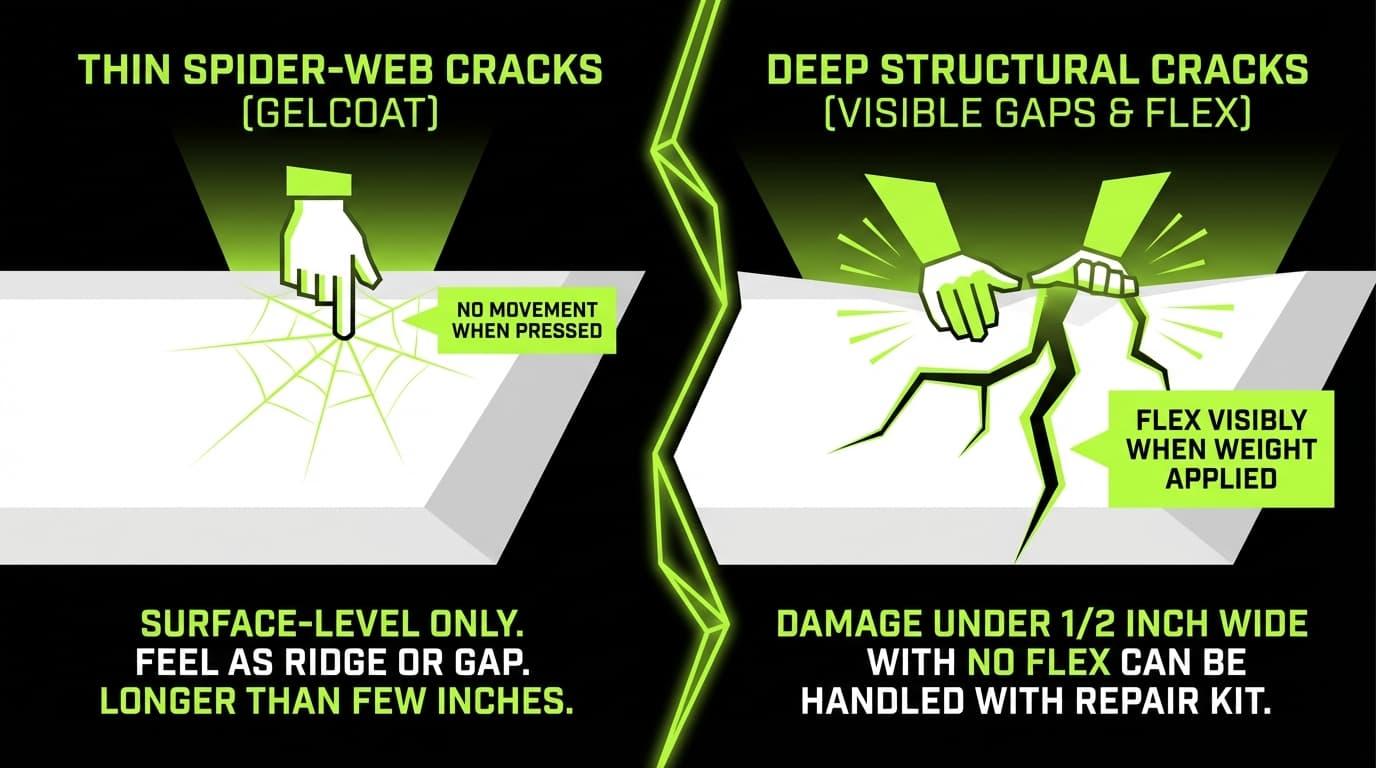
Not every crack calls for the same response. The difference between a cosmetic spider crack and a structural fracture completely changes your repair strategy — and your timeline.
Cosmetic cracks
These are thin, shallow spider-web lines in the gelcoat layer. They typically show up near high-wear spots, don’t open when you press on them, and show no movement or flex when someone stands nearby. These are surface-level issues — annoying and worth fixing, but not dangerous.
Structural cracks
These cracks are a different problem entirely. They’re longer than a few inches, you can feel them as a ridge or gap when you run a finger across them, and we often flex visibly when weight is applied. You might even hear creaking when stepping into the tub. These cracks have pushed through the gelcoat into the underlying fiberglass laminate.
Rule of thumb: Damage under about ½ inch wide and up to a few inches long with no flex can often be handled with a fiberglass tub repair kit. Larger cracks or holes usually need professional structural work.
In many Wasatch Front homes built during the 1980s and 1990s housing booms, fiberglass tubs were installed over low-density foam blocks that degrade after 20–30 years. Utah’s hard water and temperature swings accelerate this process. When that support fails, even a perfect patch will crack again because the underlying problem remains untouched.
What You’ll Need for DIY Fiberglass Tub Crack Repair
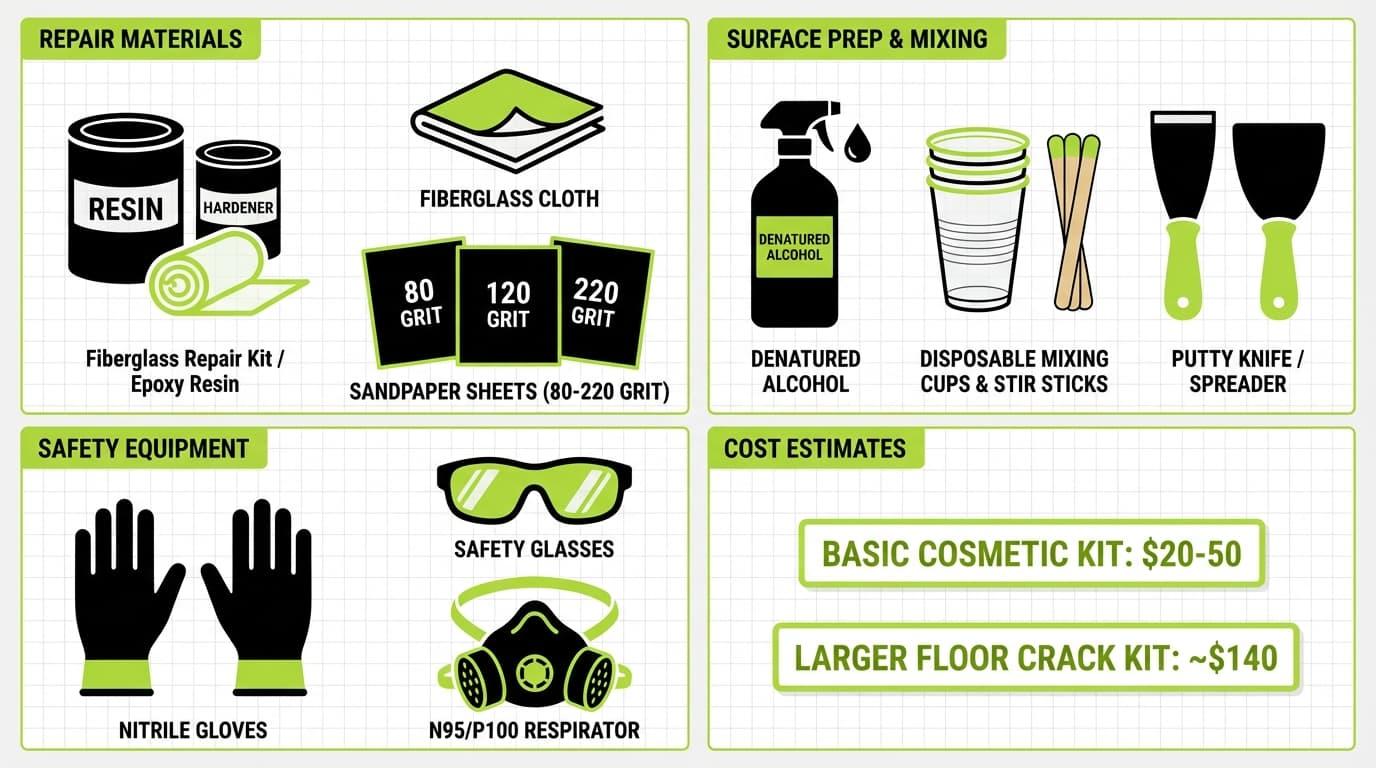
This section is for small, non-leaking cosmetic or minor structural cracks only. If your tub failed the assessment checklist above, skip ahead to the professional options.
Materials
Before you start any repairs, gather the right materials so you’re not scrambling mid-project and can complete the crack repair in one smooth, efficient session. Some of which include;
• Fiberglass bathtub repair kit or two-part epoxy resin with fiberglass cloth
• 80–220 grit sandpaper (80–120 for initial sanding, 220 for finishing)
• Denatured alcohol or alcohol wipes for degreasing
• Disposable mixing cups and stir sticks
• Putty knife or plastic spreader
• Masking tape
• Color-matched gelcoat or pigmented epoxy finishing sealer (if possible)
Approximate DIY costs (February 2026)
To help you budget realistically for your project, here’s a breakdown of typical DIY fiberglass tub crack repair costs as of February 2026 — so you know what to expect before you head to the store.
• Basic cosmetic chip kit: $20–$50
• Larger floor crack kit (covers up to 10-inch crack): ~$140
Safety gear (non-negotiable)
When working with fiberglass dust and resin, the right safety gear isn’t optional—it’s essential for protecting your skin, eyes, and lungs throughout the repair process.
• Nitrile gloves
• Safety glasses
• N95 or P100 respirator
• Box fan or open window for ventilation
Results depend heavily on following the manufacturer’s mixing ratios and cure times exactly. Read all product instructions before you open a single container — epoxy mixed incorrectly creates soft spots that won’t hold up to water or daily use.
Step-by-Step: How to Repair a Small Crack in a Fiberglass Tub
This process takes you from first prep all the way to final sealer, focused on a single small crack. Count on 2–3 hours of active work plus 24–48 hours of cure time before the tub is ready to use again.
Important: The tub must stay completely dry from start to the full cure period. Schedule this project when you have access to another shower.
1. Clean and Dry the Cracked Area
Start by removing all soap scum with a non-abrasive bathroom cleaner and a sponge. Scrub thoroughly around the crack — any residue left behind can cause your patch to peel or bubble later. This step matters more than most people realize.
Rinse completely, then wipe the cracked area with denatured alcohol or alcohol wipes. This removes body oils and silicone residues that block bonding (silicone contamination accounts for up to 90% of bond failures in tub repair).
The tub’s surface must be bone dry before you move forward. Allow 30–60 minutes of drying time, and point a fan at the crack to speed things along. Moisture content above 2% will cause bubbling in your repair and compromise the bond you’re working to create.
2. Sand and Bevel Around the Crack
Using 80–120 grit sandpaper, rough up a zone about 1½ inches around the crack. You’re creating a surface that the resin adhesive can grip — the glossy gelcoat finish needs to be dulled for a proper bond to form.
Open up the crack itself into a shallow V-shape (about 45 degrees) with sandpaper or a Dremel tool. This V-groove lets the fiberglass resin penetrate fully and creates mechanical interlock for a stronger repair. Extend the bevel at least one inch beyond the visible crack on each side.
Yes, sanding will dull the glossy finish. That’s exactly the point. A smooth, shiny surface won’t hold your patch.
Wipe away all dust and debris with a damp cloth or vacuum, then follow up with an alcohol wipe to leave the space completely clean and ready.
3. Drill Stop Holes for Spreading Cracks (Optional but Recommended)
Stop holes are tiny holes drilled at each end of the crack to prevent it from spreading further. This technique comes from marine fiberglass repair and can make a DIY fix last significantly longer.
Using a 1/8-inch drill bit, gently drill at the very end of the visible crack. Try not to go all the way through the tub shell — you want to relieve stress, not create a new leak point. This simple step halts crack propagation in about 80% of cases by releasing the stress concentration at the crack tip.
Caution: If drilling reveals the tub is extremely thin, or water weeps out of the hole, stop immediately and call a professional. Your tub may have more serious damage than surface repair can tackle.
4. Restore Support Under the Crack if Needed
If the tub showed slight flexing during your assessment, you’ll need to restore support beneath the crack before any surface repair will hold. There’s no point in finishing the surface if the floor still moves.
Access the area under the tub through an access panel (if available) or by drilling a 3/8-inch hole adjacent to the crack ends. Inject two-component expanding foam — like Great Stuff Big Gap Filler, which expands about 3x its volume — into the void space underneath.
Watch the foam as it extrudes. You want to fill the void without over-lifting the tub shell, which can warp it. Typical depth is ¼–½ inch to the substrate.
Important limitations: This approach works for small areas of flex, not entire sagging tubs or large voids in the subfloor. If the floor feels like a trampoline across a wide area, it’s beyond DIY foam injection and needs professional evaluation.
Many northern Utah homes have original foam pads from the 1980s–1990s installed that have compressed entirely — without restored support, cracks will reappear even after a perfect surface patch.
5. Apply Resin or Epoxy and Fiberglass Cloth
Mix the two-part epoxy or fiberglass resin exactly to the ratio specified on your kit — for example, 10 drops hardener per ounce of resin, or equal parts base and hardener. Stir for a full 1–2 minutes until the mixture is uniform with no streaks. Uneven catalysis creates soft spots that fail under daily use.
Using a putty knife or brush, spread a thin base layer into the V-groove and over the sanded area. Slightly overfill the crack to allow for shrinkage and later sanding.
For larger cracks (wider than about ¼ inch)
For larger cracks (wider than about ¼ inch), you’ll need to reinforce the repair with fiberglass cloth so the patch can handle daily flexing and long-term use. Follow these steps:
1. Cut a piece of fiberglass cloth so it extends at least two inches beyond the crack on all sides
2. Place fiberglass cloth into the wet resin
3. Saturate the cloth completely using a brush, working out air bubbles firmly with a plastic spreader
4. Air pockets reduce repair strength by up to 50%, so press out every bubble you can find
You’ll typically have 10–15 minutes of working time before the epoxy starts to thicken. Multiple thinner coats beat one thick layer every time — plan on 2–3 layers at 30–60 minute intervals for cracks that need reinforcement.
6. Let It Cure, Then Sand Smooth
The initial set time varies by product, but expect 30–60 minutes for the repaired area to be non-tacky. Full cure typically takes 12–24 hours, depending on product and room temperature — check your kit’s label for specifics.
Once fully cured, sand the hardened patch with 120-grit sandpaper, then 220-grit to blend it flush with the surrounding tub surface. Work carefully — aggressive sanding at the edges can thin the repair and create visible depressions you’ll have to fill again.
Wipe away all sanding debris and inspect for low spots or pinholes. If needed, apply another thin layer of fiberglass filler, let it cure, and sand again until the surface is smooth and level.
7. Finish with Color-Matched Gelcoat or Sealer
The final step for appearance is applying a color-matched gelcoat or pigmented epoxy topcoat over the repaired area. Extend it slightly beyond the patch for better blending into the surrounding tub surface.
Here’s the honest truth: exact color matching is difficult on older tubs that have yellowed over time. DIY results typically achieve only 70–80% color fidelity due to UV-induced oxidation. Your patch may look slightly different in gloss or shade — that’s normal, not a sign you did anything wrong.
Lightly wet-sand once more with very fine paper (400–600 grit) and polish with a rubbing compound to restore shine if your kit includes it.
Do not use the tub for at least 24–48 hours after the final coat. This gives the repair enough time to fully cure and reach its advertised strength and waterproofing capability.
When DIY Isn’t Enough: Structural Damage and Hidden Leaks
A homeowner months ago patched what looked like a small floor pan crack with a kit from the hardware store. Three months later, brown water stains appeared on the basement ceiling below the bathroom. The patch had looked fine on the surface — but underneath, water had been quietly migrating into the subfloor through micro-channels in the compromised fiberglass. A $40 fix had turned into a much bigger, costlier project.
This scenario plays out constantly. According to repair professionals, 60–70% of called-in cracks in older homes stem from support failure rather than surface wear alone.
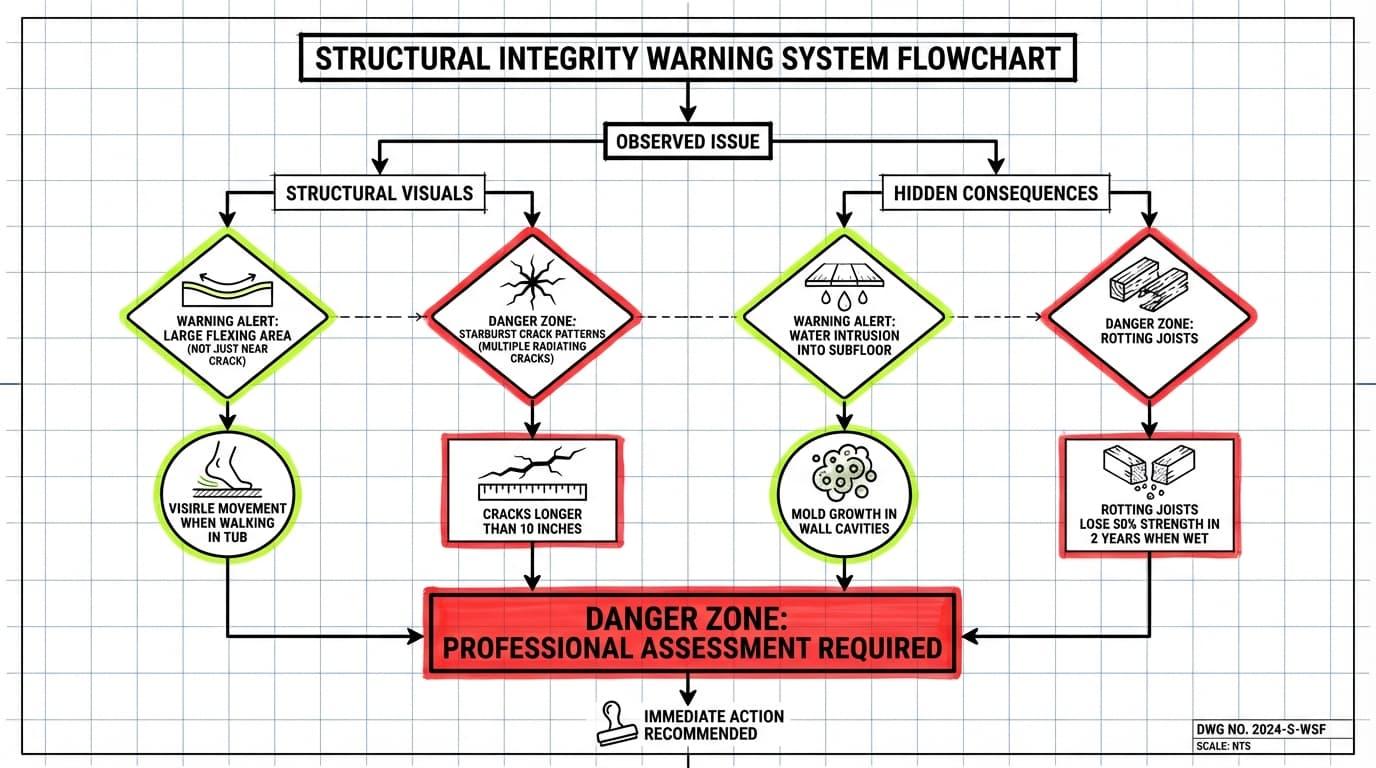
Warning signs your crack is part of a bigger structural problem:
• Large flexing area (not just near the crack)
• Multiple radiating cracks in a starburst pattern
• Cracks longer than roughly 10 inches
• Visible movement when someone walks in the tub
• Audible creaking underfoot
Long-term risks of ignoring structural cracks:
• Water intrusion into the subfloor (particleboard substrates are common and absorb water via capillary action)
• Mold growth in wall cavities (Stachybotrys growth doubles biweekly in damp environments)
• Rotting joists (can lose 50% strength in just 2 years when wet)
• Repair costs that jump from a few hundred dollars to several thousand
Professional-grade structural repairs involve grinding back multiple fiberglass laminate layers, installing new fiberglass reinforcement, and spraying a full gelcoat finish. This requires specialized equipment, proper ventilation systems, and expertise most homeowners simply don’t have on hand.
If your home already shows signs of damage — sagging ceiling below, musty odors that won’t quit, soft subfloor at the tub’s edge — the priority should be leak detection and structural assessment, not surface patching.
Repair vs. Replace: Costs and Options in 2026
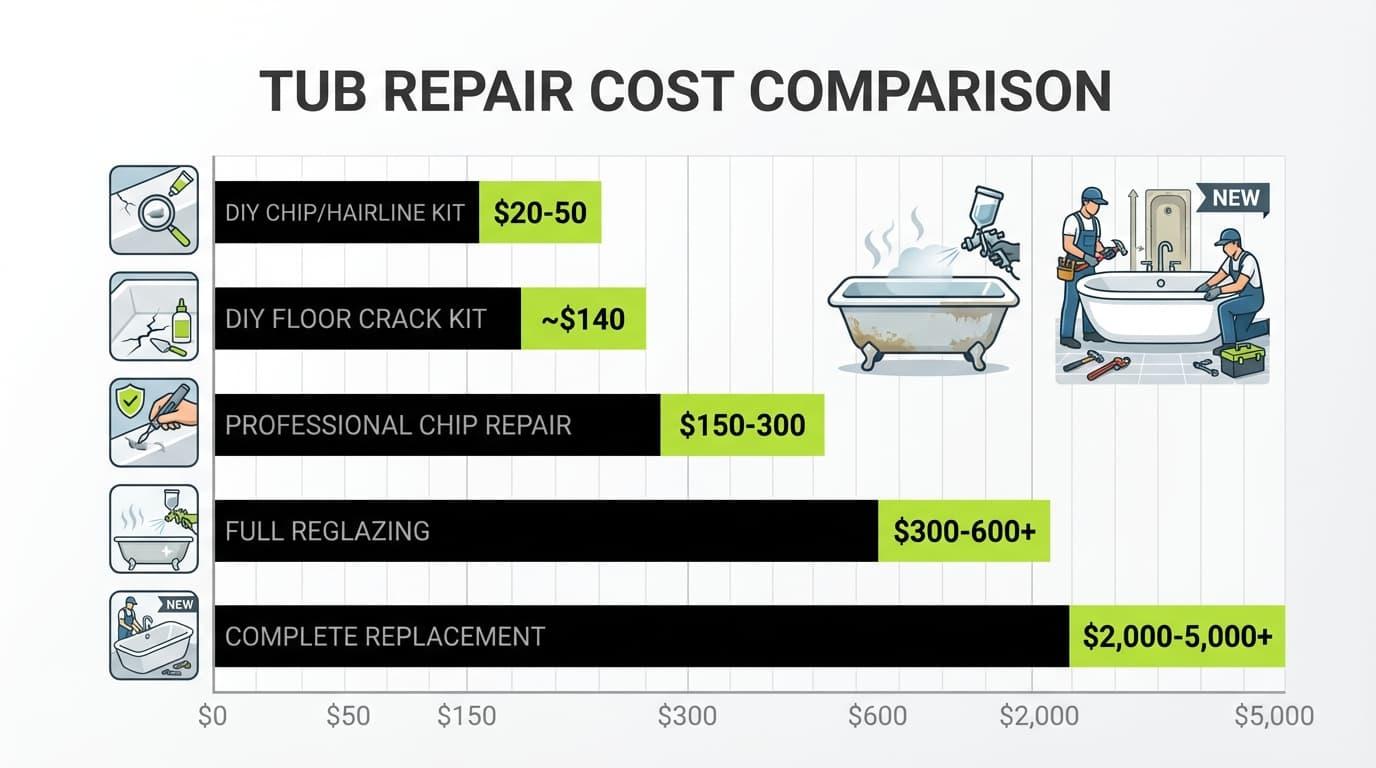
The basic decision framework: small, stable cracks often justify DIY or small professional repairs. Widespread damage, older tubs, or recurring cracks often point toward replacement or reglazing. Here’s how the numbers break down:
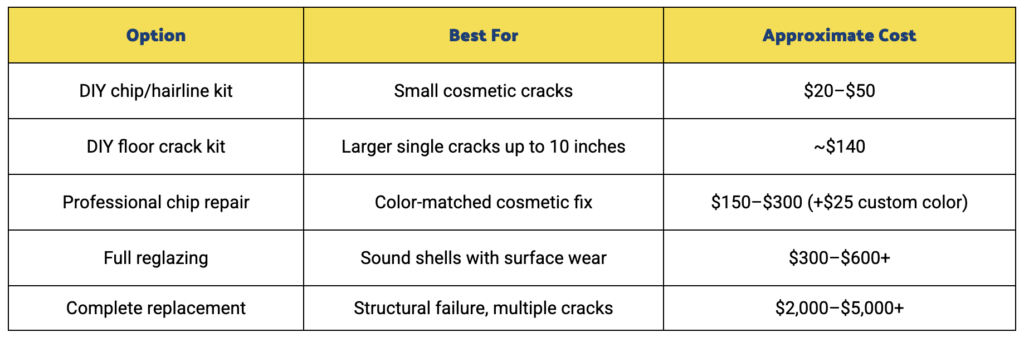
For cracks or holes larger than about ½ inch, or where the tub shell has significant flex, many pros recommend either a full structural fiberglass rebuild or replacing the unit entirely. Reglazing a flexing tub is money wasted — it addresses appearance, not the structural weakness underneath.
Consider the age of your existing tub alongside the repair costs. If you’re already unhappy with the layout, finish, or size, investing in a new tub or shower system may make more financial sense than repeating short-term fixes every few years.
Safety Tips for Fiberglass Tub Crack Repair
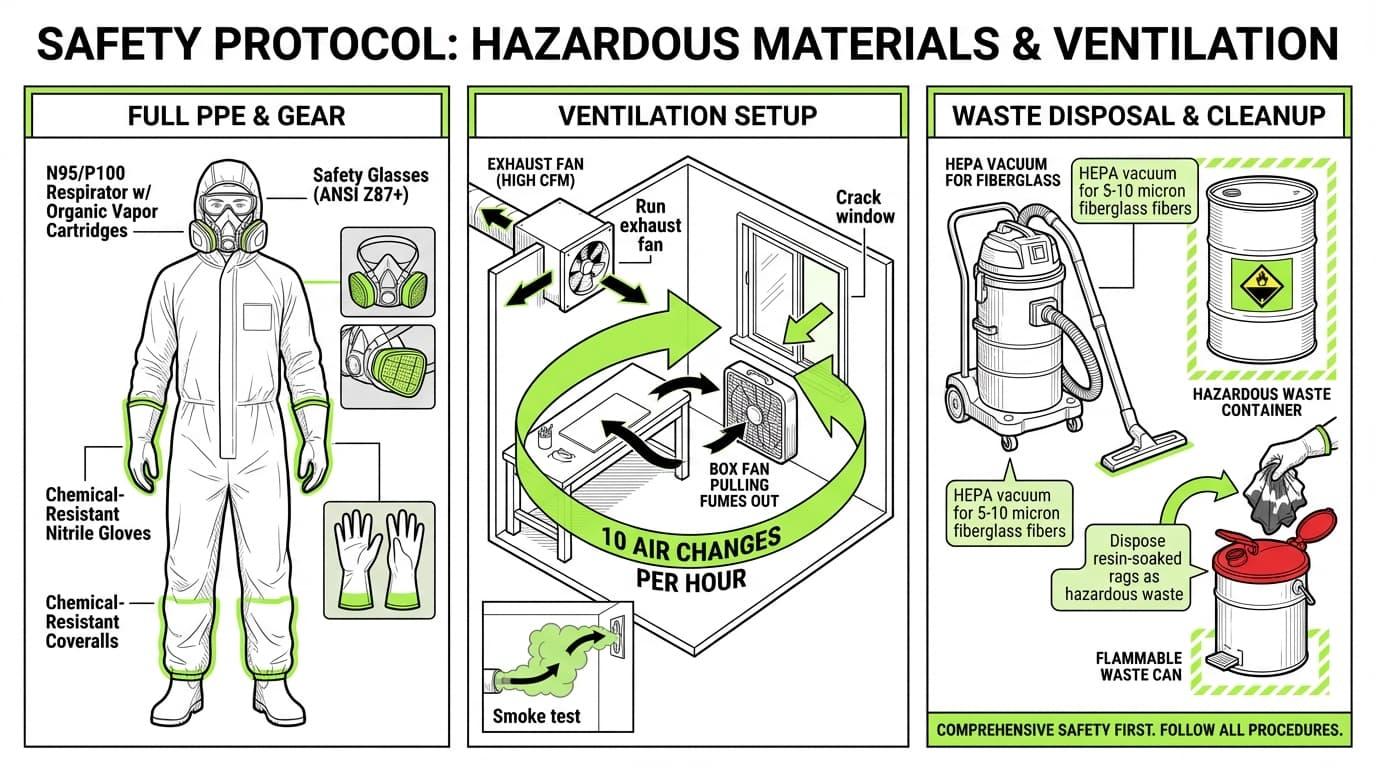
Resin, hardeners, and fiberglass dust carry real health risks. This isn’t the section to skip.
Personal protective equipment:
When repairing a fiberglass tub, protecting your skin, eyes, and lungs is non-negotiable. Start with chemical-resistant nitrile gloves to keep resins and solvents off your hands, and wear a long-sleeve shirt to reduce itchy fiberglass particles contacting your skin.
Eye and respiratory protection are just as important. Always wear safety glasses to guard against resin splashes, which can cause serious irritation. Use an N95 or P100 respirator whenever you’re sanding fiberglass to keep fine dust out of your lungs and avoid respiratory problems.
For projects involving strong-smelling resins or solvents, take your protection a step further with an organic vapor cartridge respirator. This added layer filters harmful fumes, helping you work more comfortably and safely in a confined bathroom space.
Ventilation requirements:
When working with fiberglass resins and hardeners in a bathroom, strong ventilation is essential for your safety. Keep the space as open as possible by running the exhaust fan and cracking a window so fresh air can move through the room.
You can improve airflow even more by positioning a box fan to pull fumes out of the work area rather than blowing them around. This helps remove resin odors and airborne chemicals from your breathing zone and keeps the overall air quality in the bathroom healthier while you work.
Take chemical exposure seriously, especially with MEKP hardeners, which are commonly used in polyester resins. These can irritate your eyes, skin, and respiratory tract, and VOC exposure above 50 ppm can lead to nausea. As a rule of thumb, aim for at least 10 air changes per hour in your workspace to dilute fumes and keep conditions safe.
Cleanup and disposal:
Sanding fiberglass creates tiny respirable fibers, typically in the 5–10 micron range, that can irritate both your lungs and your skin. That’s why cleanup after any grinding or sanding step is just as important as wearing a respirator and protective clothing while you work.
Instead of reaching for a regular broom, which only stirs dust back into the air, clean the work area thoroughly with a HEPA vacuum. This captures the fine fiberglass particles and sanding dust more effectively, helping keep the bathroom safer for everyone who uses it after the repair.
Finally, treat your waste materials like the hazardous products we are. Dispose of resin-soaked rags, empty containers, and collected sanding dust according to your local hazardous waste regulations, and keep all chemicals locked away from children and pets during both the work and cure time. This reduces the risk of accidental exposure or ingestion long after the repair is done.
How Beehive Plumbing Helps Utah Homeowners with Cracked Fiberglass Tubs
Over more than 26 years of service on the Wasatch Front, Beehive Plumbing technicians have seen how a “small” fiberglass crack can be either a simple fix or the first sign of a much bigger problem hiding behind the walls. The key is knowing which one you’re dealing with before you start spending money.
Beehive’s Approach To Tub Assessment
Beehive’s tub assessments go beyond simply looking at the visible crack, focusing instead on the underlying support, hidden moisture, and overall condition of the surrounding structure so you can choose the smartest long-term repair option.
We start every cracked tub assessment with an on-site evaluation of the tub itself, the subfloor beneath it, and the surrounding walls. This helps our technicians see whether the damage is truly limited to the visible crack or if there are signs of movement, sagging, or previous leaks that could point to a deeper problem.
From there, we look for hidden moisture that most homeowners can’t see. Using professional detection tools — including borescope inspection, which can detect up to 90% of support voids — we check behind and beneath the tub for damp insulation, darkened framing, and gaps in the original support foam or mortar bed that might allow the shell to flex.
Once we understand what’s happening under and around the tub, we give clear, practical advice on next steps. That might mean a localized repair, a full tub replacement, or other plumbing work, depending on what makes the most financial sense for your specific situation.
Our goal is to help you choose the option that protects your home and budget over the long term, not just the quickest patch. When major work is needed, Beehive can coordinate with other trades — tile, drywall, finish carpentry — to reduce hassle during bathroom remodels.
Why Northern Utah Homeowners Choose Beehive
Northern Utah homeowners turn to Beehive because we know a calm, experienced team will show up when it matters most, explain every option clearly, and treat our home like it’s our own from the first call to the final cleanup.
One of the biggest reasons homeowners choose Beehive is the peace of mind that comes from always being able to reach a real person. With 24/7 live-answer phone support — not frustrating automated phone trees; you can get help, ask questions, or schedule service whenever something goes wrong, day or night.
Beehive also builds trust by being transparent about costs from the very beginning. You’ll receive upfront pricing before any work begins, so you’re never surprised by hidden fees or last-minute add-ons. That clarity helps you make informed decisions that fit your budget and your home’s needs.
Finally, Beehive’s team brings deep local expertise to every job. Our master plumbers understand older Utah installations and current code requirements, and they have extensive experience with the 1980s–1990s construction practices that created many of today’s tub support problems.
If you’re unsure whether a crack is safe to DIY or already causing hidden damage, calling Beehive Plumbing or requesting an online appointment gets professional eyes on the problem before a $40 repair turns into a $4,000 subfloor replacement.
FAQ
These questions address common concerns that go beyond the step-by-step guide, focusing on longevity, alternative approaches, and decision-making for northern Utah homeowners.
How long does a fiberglass tub crack repair last?
A well-prepared DIY repair on a small cosmetic crack can last 3–7 years — especially if the tub floor is solid, you drilled stop holes, and properly filled the crack with quality fiberglass resin adhesive.
Structural cracks on flexing tubs are a different story. Even professional repairs may only buy time if underlying support issues aren’t addressed. Without fixing the void beneath the tub, surface patches typically fail within 6–18 months.
If a crack reappears within a few months of patching, that’s a strong indicator of support or subfloor problems needing professional evaluation — not a sign that you did the repair wrong.
Can I repair a fiberglass tub without buying a full kit?
Technically, yes. You can purchase separate two-part epoxy, fiberglass cloth, sandpaper, and colorant individually. However, matched kits are generally easier for first-time DIYers because the fiberglass resin, filler, and tints are formulated to work together with compatible cure times and adhesion properties.
Ad-hoc solutions like household caulk alone are temporary at best — we provide no structural strength and will fail under flex or water exposure. For anything deeper than superficial spider cracks, a purpose-made fiberglass bathtub repair kit is strongly recommended for durability and waterproofing.
Will repairing a cracked fiberglass tub affect my home’s value?
A properly repaired and dry tub generally does not hurt home value, especially if the crack was small and the finish looks clean and professional. Buyers typically won’t notice a well-executed repair.
Visible patches, mismatched colors, or evidence of ongoing leaks are a different matter. These raise red flags during home inspections and may lead to requests for credits or replacement. Documenting any professional repair or inspection by a licensed plumber helps future buyers see the issue was handled correctly.
How do I know if water has already gotten behind the tub?
Practical signs of water intrusion include:
• Bubbling or soft paint on the wall next to the tub
• Musty smells that persist after cleaning
• Water stains and peeling drywall on the ceiling below the bathroom
• Soft or spongy flooring near the tub base
Sometimes the only way to confirm hidden water damage is to open an access panel or cut a small inspection hole behind the tub. Look for damp insulation, discolored framing, or visible mold growth. If you suspect hidden water, have a plumber check it sooner rather than later — early repairs are far cheaper than replacing rotten framing and subfloors.
Is it better to reglaze or replace an old fiberglass tub with cracks?
Reglazing works best when the tub is structurally sound but cosmetically worn — surface scratches, staining, or a dull finish. A quality reglazing job costs $300–$600 and can add 5–10 years of useful life to a solid tub.
Replacement makes more sense when the fiberglass shell is thin, flexing, or cracked in multiple places. Reglazing a structurally compromised tub is coating over a problem, not fixing it.
For homeowners with 30–40-year-old tubs and repeated cracking issues, investing in a new, properly supported tub or complete shower system often makes more financial sense than repeating short-term fixes every few years. A Beehive Plumbing assessment can help you determine which path saves you money in the long run.