
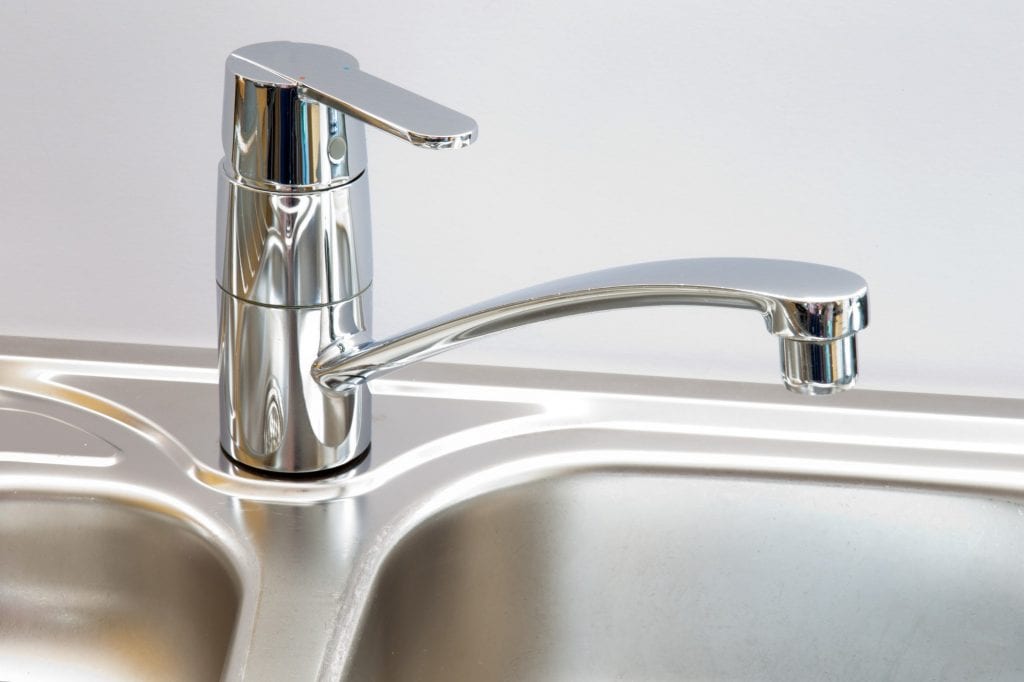
A dripping faucet is typically caused by the mechanical failure of internal seals, specifically worn rubber washers, cracked O-rings, degraded cartridges, or a corroded valve seat.
In certain cases, excessive municipal water pressure exceeding 80 psi can force water past intact seals, requiring professional pressure-reducing valve adjustments.
This article explains the common causes behind faucet leaks, how to identify the source, and whether you should fix it yourself or call a professional plumber.
You’ll learn which parts are most likely to cause a slow drip, what risks come with leaving a leaky faucet untreated, and practical repair options for every faucet type. By the end, you’ll know how to diagnose your faucet issue and take the right steps to stop it.
This diagnostic guide answers the most critical repair questions, including:
- Why is a dripping faucet a serious financial issue?
- What are the most common mechanical reasons for a dripping faucet?
- How much water does a dripping faucet actually waste?
- When should you attempt a DIY fix versus calling a plumber?
Key Takeaways
• A faucet dripping at just one drip per second wastes more than 3,000 gallons of water per year — a real hit to your Utah water bill.
• A dripping faucet is a symptom, not a single problem. The cause could be worn washers and O-rings, a damaged cartridge, a corroded valve seat, high water pressure, or loose internal parts.
• You can often narrow down the cause by observing where and when the faucet leaks — from the faucet spout, around the handle, at the base, or only at certain times of day.
• Some fixes need just a $3 washer from your local hardware store, while others require a licensed plumber to diagnose water pressure problems or valve seat damage.
• Even a slow leak left untreated leads to wasted water, higher bills, cabinet damage, and mold growth that costs far more to fix later.
Why Your Faucet Is Dripping (And Why You Shouldn’t Ignore It)
You’re lying in bed, and there it is again — that steady drip-drip-drip from the bathroom faucet. It started a few weeks ago, maybe longer. You’ve been meaning to deal with it, but life kept getting in the way. Then the water bill arrived, and suddenly that “minor” annoyance feels a lot more expensive.
A single faucet dripping at a rate of one drop per second wastes over 3,000 gallons of water annually. According to 2024 data from the Environmental Protection Agency (EPA) WaterSense program, approximately 10% of U.S. households currently sustain leaks that waste 90 gallons of water daily.
For homeowners in the Wasatch Front paying tiered utility rates, this mechanical failure directly inflates municipal water bills while simultaneously depleting regional reservoirs.
The good news? You were smart to search before grabbing a wrench and disassembling things. A dripping faucet isn’t one problem — it’s a symptom. The underlying cause might be a worn $3 washer you can swap out yourself, or it could be a high water pressure issue that needs professional diagnosis. This article will help you figure out which situation you’re actually in.
The guidance here draws on decades of residential plumbing experience serving homeowners along the Wasatch Front — Salt Lake City, Sandy, Draper, West Jordan, and surrounding areas. But the principles apply to household faucets just about anywhere.
What Are the Most Common Mechanical Reasons for a Dripping Faucet?
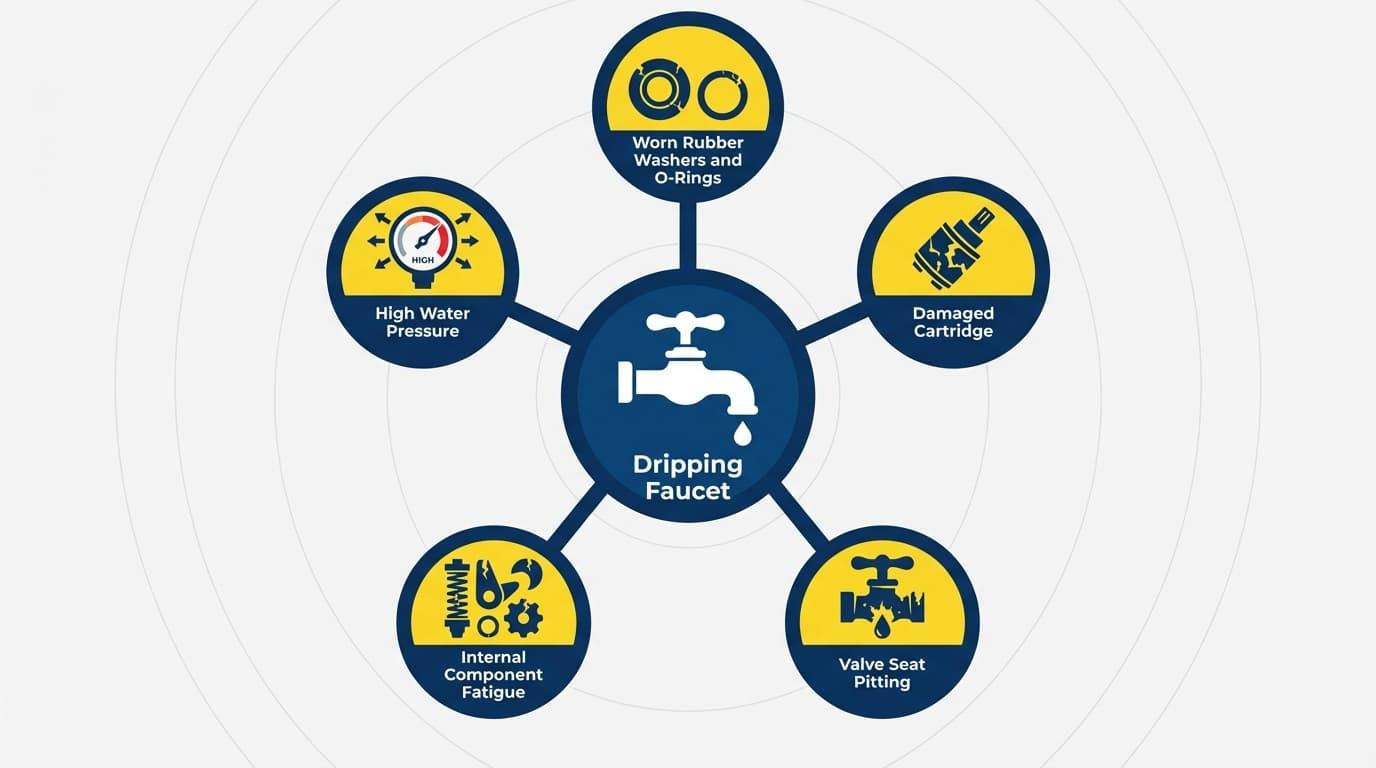
Mechanical faucet drips never resolve independently; leaking fixtures progressively worsen over time. Because constant friction and hard water continuously erode internal seals, an occasional drip rapidly accelerates into a steady stream of water waste.
This section covers the most frequent root causes of a leaking faucet, organized by the specific component that fails. Keep in mind that different faucet designs — compression, cartridge, ball, and ceramic disc — tend to fail in different ways. The comparison section below covers those specifics.
For each cause, you’ll learn what the part does, how it typically fails, and what symptom you’ll see. This isn’t a step-by-step repair guide — it’s a diagnostic framework to help you identify what’s actually wrong.
The Failure of Rubber Washers and O-Rings Over Time
Rubber washers and O-rings create the watertight seals that keep water from escaping when your faucet is turned off. These parts are especially common in compression faucets and older cartridge models.
Over time, friction, heat, and hard water gradually harden or crack these rubber components. Worn-out washers are the number one cause of faucet drips in many homes.
What you’ll notice:
- Spout Leakage: A degraded seat washer causes a persistent, steady drip directly from the aerator/spout, even when the handle is tightly closed.”
- Base Seepage: A cracked or hardened O-ring forces water to leak from the base of the spout or pool underneath the handle mechanism during operation.
Replacement washers and rings are inexpensive — often just $2–$10 at The Home Depot or your local hardware store. For careful homeowners comfortable with basic tools, this can be a reasonable DIY fix.
That said, using the wrong size washer or overtightening during reinstallation can deform the seals and make the faucet drip worse. If the slow drip continues after replacing them, you’re likely dealing with something deeper.
Mineral Damage and Warping in Modern Faucet Cartridges
Many modern single-handle kitchen and bathroom faucets from brands like Moen, Delta, and Kohler use cartridges to control both water flow and temperature. Inside each cartridge are seals and moving parts that can crack, warp, or clog with mineral buildup over time.
What you’ll notice:
• The faucet keeps dripping slowly from the faucet spout after you’ve shut it off completely.
• The handle feels rough, stiff, or gritty when you turn it.
• Water temperature control becomes erratic or unpredictable.
Replacement cartridges typically cost $15–$40, depending on brand and model. The catch is that they must be matched precisely by make and part number — a generic cartridge usually won’t fit correctly.
DIY cartridge replacement is possible, but it often trips homeowners up when they can’t identify the correct replacement part or struggle to reinstall small springs and seals. If your faucet is older, discontinued, or if a previous cartridge replacement didn’t stop the faucet dripping, professional help is the safer route.
Valve Seat Pitting from Utah Hard Water Sediment
The valve seat is the metal or plastic surface where the faucet mechanism seals against the spout to stop water flow. It’s a critical contact point, and when it’s damaged, no amount of washer or cartridge replacement will stop the faucet leak.
Utah’s hard water is notorious for leaving mineral deposits on internal faucet surfaces. Over time, mineral buildup corrodes or pits the valve seat, creating tiny escape paths for water dripping through, even when everything else is working properly.
What you’ll notice:
- A persistent drip from the spout that continues even after you’ve replaced the washer or cartridge.
- Discolored or flaky debris at the aerator.
- Sometimes cloudy or mineral-tinged dripping water.
Licensed plumbers can occasionally remediate light corrosion using a specialized seat-dressing tool to grind the brass smooth.
However, homeowners should avoid DIY valve seat resurfacing, as improper grinding angles will permanently destroy the faucet body’s internal threads, necessitating a complete fixture replacement.
If you suspect mineral buildup, or if DIY washer and cartridge fixes have already failed, it’s time for a licensed plumber to inspect the valve seat. Beehive diagnoses hard-water faucet problems without unnecessary disassembly.
Internal Component Fatigue and Thread Stripping
Over years of daily use, screws, packing nuts, springs, and other small internal parts can loosen or break inside the faucet body. Hard water sediment accelerates this wear by scratching surfaces and restricting the smooth movement of components.
What You’ll Notice:
• Handles that wobble or have noticeable play.
• The drip changes location or intensity when you move the handle slightly.
• Water leaking from joints or appearing under decorative caps rather than from the spout.
Tightening a packing nut or loose screw may provide temporary relief, but if parts keep loosening, components are wearing out and need replacement. Internal breakage often requires a partial or full faucet rebuild, which is better handled by a professional when parts are corroded or seized. Forcing stuck parts with pliers can crack the faucet body and turn a small faucet leak into a full replacement job.
The Impact of High Municipal Water Pressure on Plumbing Seals
Sometimes the faucet components are perfectly fine, but your home’s water pressure is too high. Elevated pressure forces water through micro-gaps that would otherwise stay sealed.
What you’ll notice:
• The faucet only drips at certain times of day or night — often late at night when municipal supply pressure spikes.
• The leak gets worse when other fixtures in the house are off.
• Multiple fixtures throughout the home show similar symptoms.
Hot water expansion in closed plumbing systems can also briefly raise pressure, revealing weaknesses in seals and worn washers. Sustained pressure above about 80 psi will shorten the life of faucets, water heaters, and appliances.
Diagnosing pressure-related leaks typically requires testing with a pressure gauge and inspecting the home’s pressure-reducing valve (PRV). For homeowners along the Wasatch Front, we would typically recommend maintaining water pressure between 50 and 70 psi. High-pressure issues are not a DIY job — they need a professional plumber.
High water pressure quietly damages every fixture in your home. Beehive checks and adjusts your PRV before it becomes a costly repair.
How Much Water (and Money) A Dripping Faucet Wastes
That persistent drip isn’t just annoying — it’s a real financial and environmental cost that adds up faster than most homeowners realize.
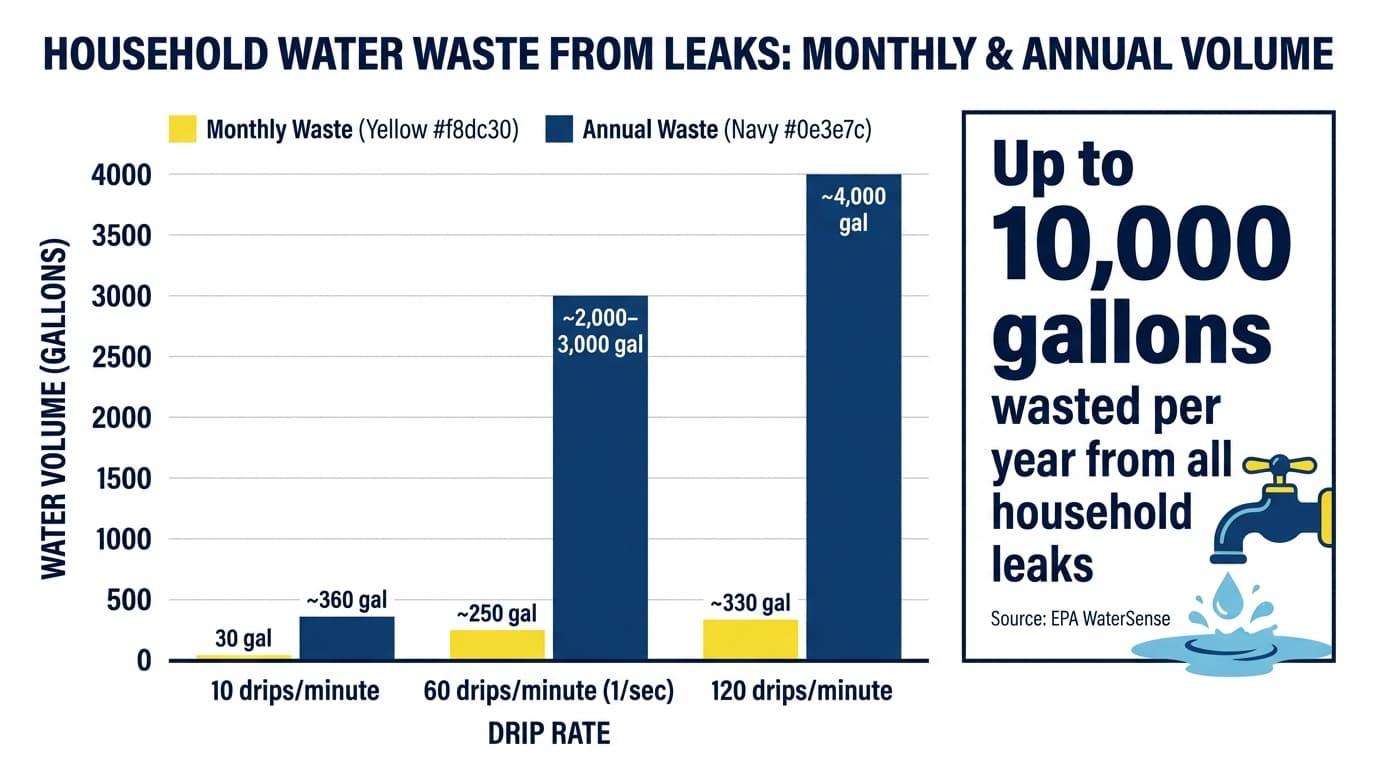
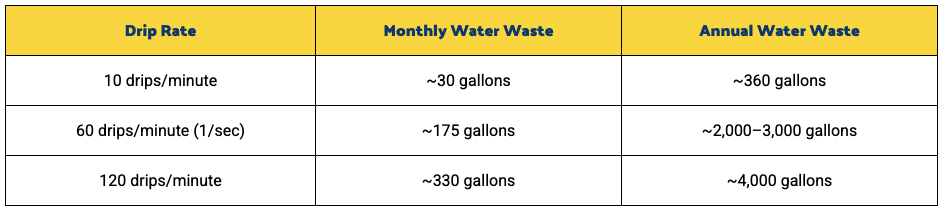
According to EPA estimates, one faucet dripping at about one drop per second wastes more than 3,000 gallons of water per year. If that sounds unbelievable, you can use this calculator based on USGS methodology to see just how many gallons of water your faucet would have wasted by the end of the year.
Here’s how the numbers scale:
EPA data shows the average household wastes up to 10,000 gallons per year from all leaks combined — faucets, toilets, and showerheads. Fixing these common leaks can reduce your water bill by roughly 10%.
For Utah homeowners, where water districts charge tiered rates per thousand gallons, even a slow leak can translate into noticeable monthly costs. At $2–$3+ per thousand gallons in many Wasatch Front districts, a 3,000-gallon annual leak adds $6–$10 or more to your yearly bill from a single faucet — and that’s before accounting for wasted hot water heating costs.
Beyond the Bill: Damage and Health Risks
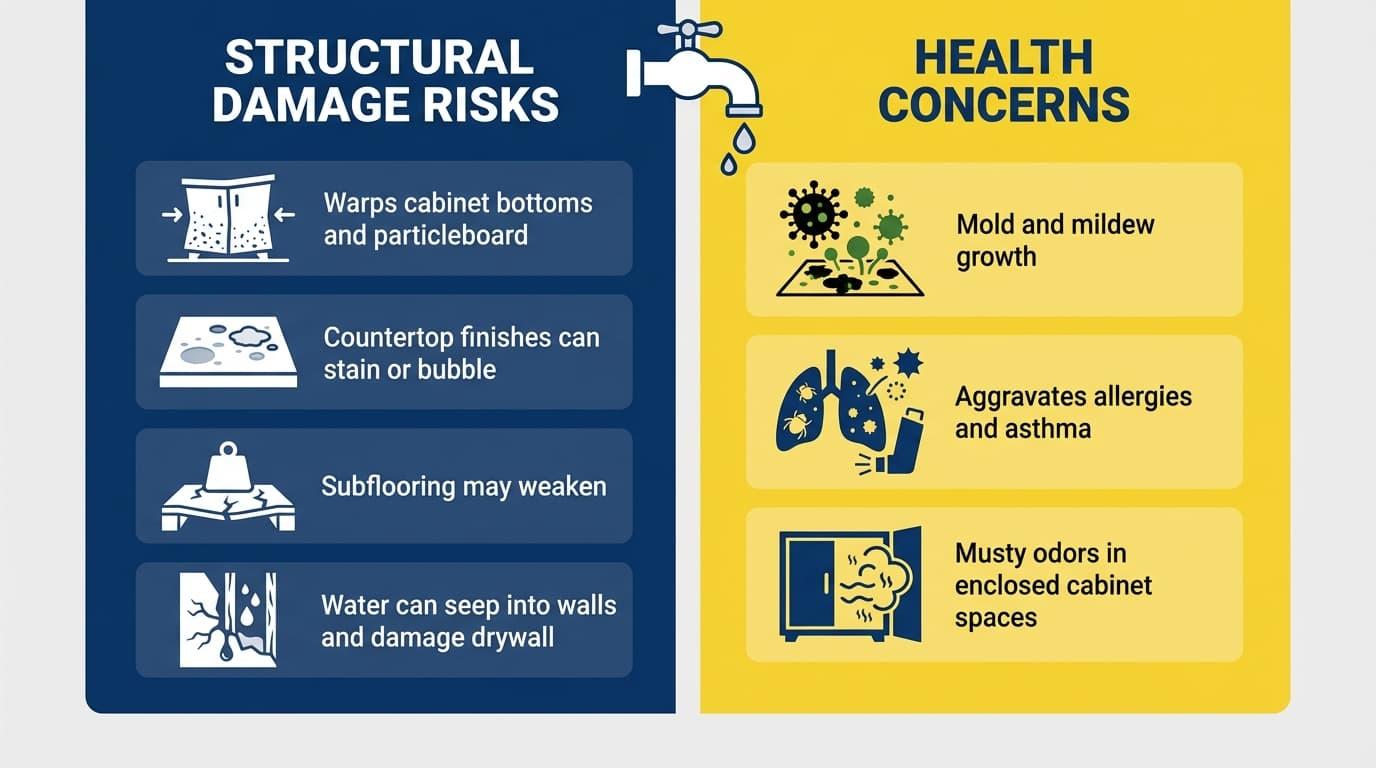
The cost of a faucet leak extends well beyond your water bill. Water dripping from a leaky faucet can pool around the sink deck, under the faucet base, or inside cabinets, slowly causing damage that’s expensive to repair.
Structural damage risks:
• Persistent moisture warps cabinet bottoms and particleboard
• Countertop finishes can stain or bubble
• Subflooring may weaken over months or years
• Left unchecked, water can seep into walls and damage drywall
Health concerns:
• Constant dampness encourages mold and mildew growth
• Mold aggravates allergies and asthma, especially in children and immunocompromised individuals
• Musty odors develop in enclosed cabinet spaces
Bathroom faucets and kitchen sinks on exterior walls are particularly vulnerable during cold weather, where unnoticed leaks can contribute to cold spots and condensation issues. Fixing a slow leak now prevents a much bigger problem later. Beehive catches these problems early.
Faucet Type vs. Typical Leak and Repair Difficulty
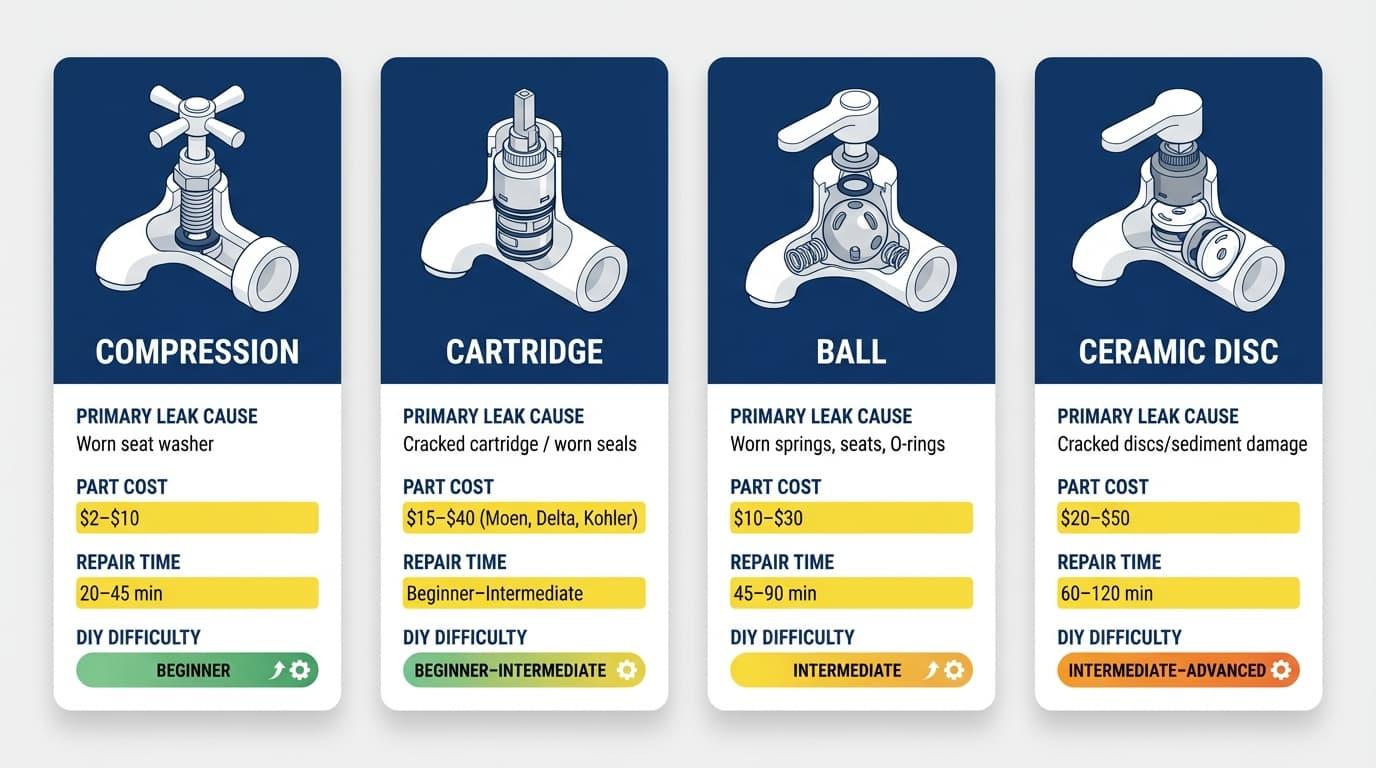
Not all faucets are built the same. The type of faucet you have strongly influences both the likely cause of your faucet dripping and how difficult it is to repair.
The four common residential faucet types — compression, cartridge, ball, and ceramic disc — each have distinct failure modes. Some are manageable for careful DIY homeowners; others are better left to a plumber.

Is your ball faucet or ceramic disc giving you trouble? Beehive’s plumbers carry the right parts for every major brand.
Compression Faucets
Compression faucets are the older style with separate hot and cold handles that you tighten down to close the water flow. If you have to really crank the handle to stop the drip, you likely have a compression faucet.
Primary leak cause: Worn rubber seat washer at the end of the valve stem.
This is the most DIY-friendly faucet style, provided you shut off the water supply and use the correct washer size. However, if you encounter severely corroded valve stems or frozen shutoff valves that won’t turn, that’s a warning to call a plumber rather than force anything.
Cartridge Faucets
Many modern single-handle kitchen and bathroom faucets are cartridge-style, including popular models from Moen, Delta, and Kohler. They’re smooth to operate and generally reliable, but when they fail, the entire cartridge typically needs replacement.
Primary leak cause: Worn or cracked cartridge and its internal seals.
An organized DIYer can handle cartridge replacement, but the job takes longer if the cartridge is stuck due to mineral buildup. The biggest challenge is identifying and sourcing the exact replacement part. If the faucet continues dripping after the swap, a deeper issue like valve seat damage or high water pressure is likely — and that warrants a plumber visit.
Ball Faucets
Ball faucets, often found in older single-handle kitchen sinks, use a rotating metal or plastic ball with springs and rubber seats to control flow. More moving parts mean more potential failure points.
Primary leak cause: Worn springs and seats, or deteriorated O-rings around the ball.
Repair kits include multiple small parts that must all go back in the right order. First-time DIYers often find ball faucet rebuilds confusing. If you’re not comfortable keeping track of many small parts and components, a plumber is the better call.
Ceramic Disc Faucets
Ceramic disc faucets are newer, higher-end designs that use two hard ceramic discs to control water flow with minimal wear. They’re durable and long-lasting, but when they fail, repairs require careful handling.
Primary leak cause: Cracked discs, worn seals, or sediment scratching the disc surfaces.
Because of their cost and the fragility of ceramic parts, disc faucet repairs are generally better suited for experienced DIYers or a professional plumber. Dropping or cracking a disc during reinstallation means buying another replacement.
DIY Fix or Call a Plumber? How to Decide
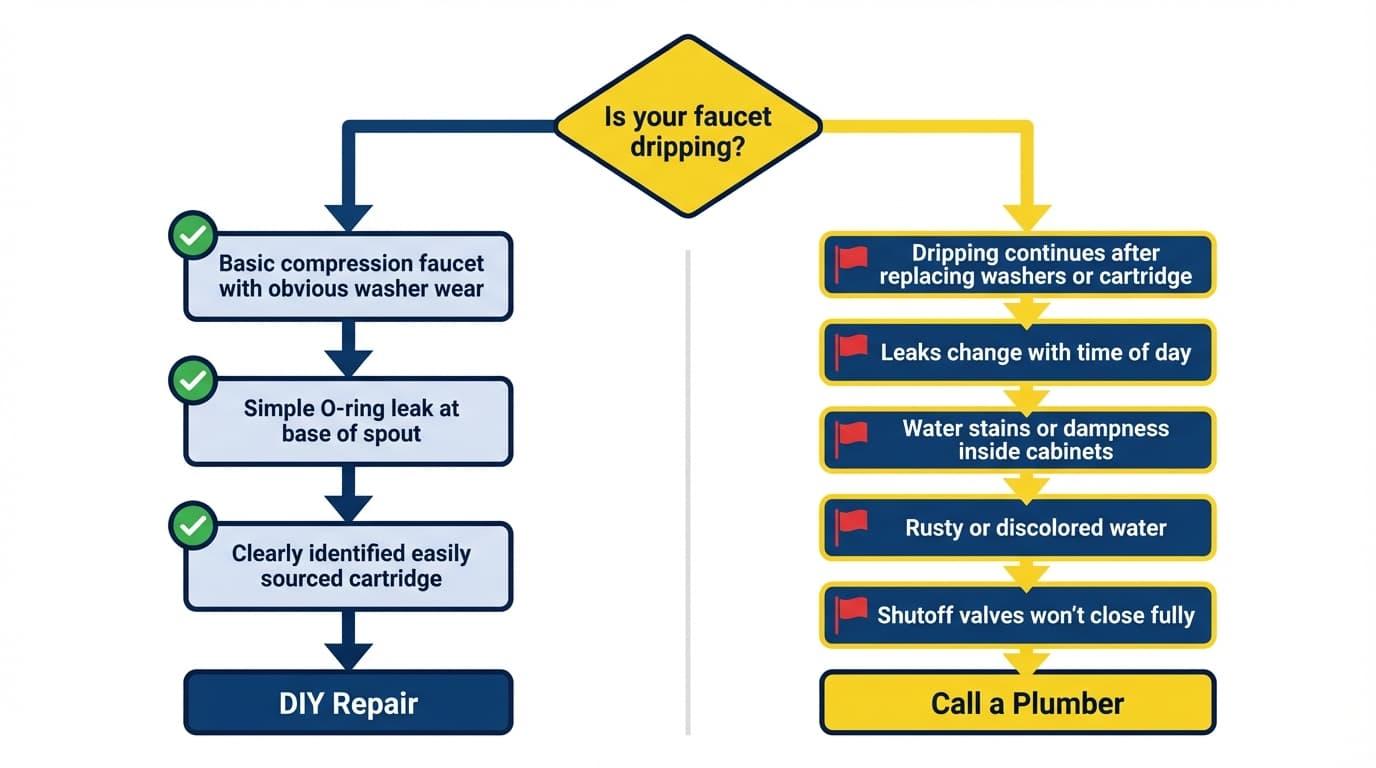
Most homeowners want to save money by fixing a drip themselves, and sometimes that’s completely reasonable. But misdiagnosing the cause or forcing stuck parts can easily turn a $50 fix into a $500+ repair — or require a full faucet replacement.
Licensed plumbers bring the right tools, correct replacement parts, and experience diagnosing underlying issues like high water pressure or hidden corrosion that aren’t visible during a basic inspection. Many local plumbing companies offer upfront pricing and free estimates, making it easy to compare DIY versus professional costs before committing.
When a DIY Repair Is Reasonable
A DIY approach often makes sense in these situations:
• Basic compression faucet with obvious washer wear: The most straightforward fix for most homeowners.
• Simple O-ring leak at the base of the spout: Usually just requires matching the right replacement.
• Clearly identified, easily sourced cartridge: If you know your faucet brand and model, and the part is readily available.
Must-do safety steps:
1. Always shut off the water at the supply valves before disassembly.
2. Relieve any remaining pressure by turning on the faucet briefly.
3. Take clear photos of the faucet and existing parts before removal.
4. Bring old parts to The Home Depot or your local hardware store to match replacements exactly.
❗One important caveat: if the faucet still drips after a careful DIY attempt with the correct parts, that’s a strong signal of a deeper issue that needs professional diagnosis. Don’t keep throwing replacement parts at the problem — you’re likely missing the real cause.
When You Should Call a Plumber First
Contact a professional plumber for these red-flag scenarios:
• Dripping continues after replacing washers or a cartridge: suggests valve seat damage or another underlying issue
• Leaks change with time of day: indicates water pressure problems requiring gauge testing
• Water stains, swelling, or dampness inside cabinets: possible hidden leak or further damage already occurring
• Rusty or discolored water at the drip: points to corrosion inside the plumbing system
• Mineral flakes clogging the aerator: hard water damage likely affecting internal components
• Visible corrosion around the faucet base or supply lines: aging fixtures that may break during DIY attempts
• Shutoff valves won’t close fully, are frozen, or start leaking when touched: never force these; call a pro
Complex faucet types like ball faucets and many ceramic disc models, along with older, delicate fixtures, are typically safer for a licensed professional. The cost of a short diagnostic visit is far less than water damage, mold remediation, or costly repairs from a DIY attempt gone wrong.
If any of those red flags match your situation, don’t wait. Beehive Plumbing serves the Wasatch Front with same-day availability.
Preventing Future Faucet Drips
Once you’ve fixed the current drip, a few simple habits can reduce the chance of repeat leaks and extend your faucet’s lifespan. Many of the common causes of dripping, especially mineral buildup and high water pressure, can be managed with routine maintenance and occasional inspections.
Simple Maintenance Habits
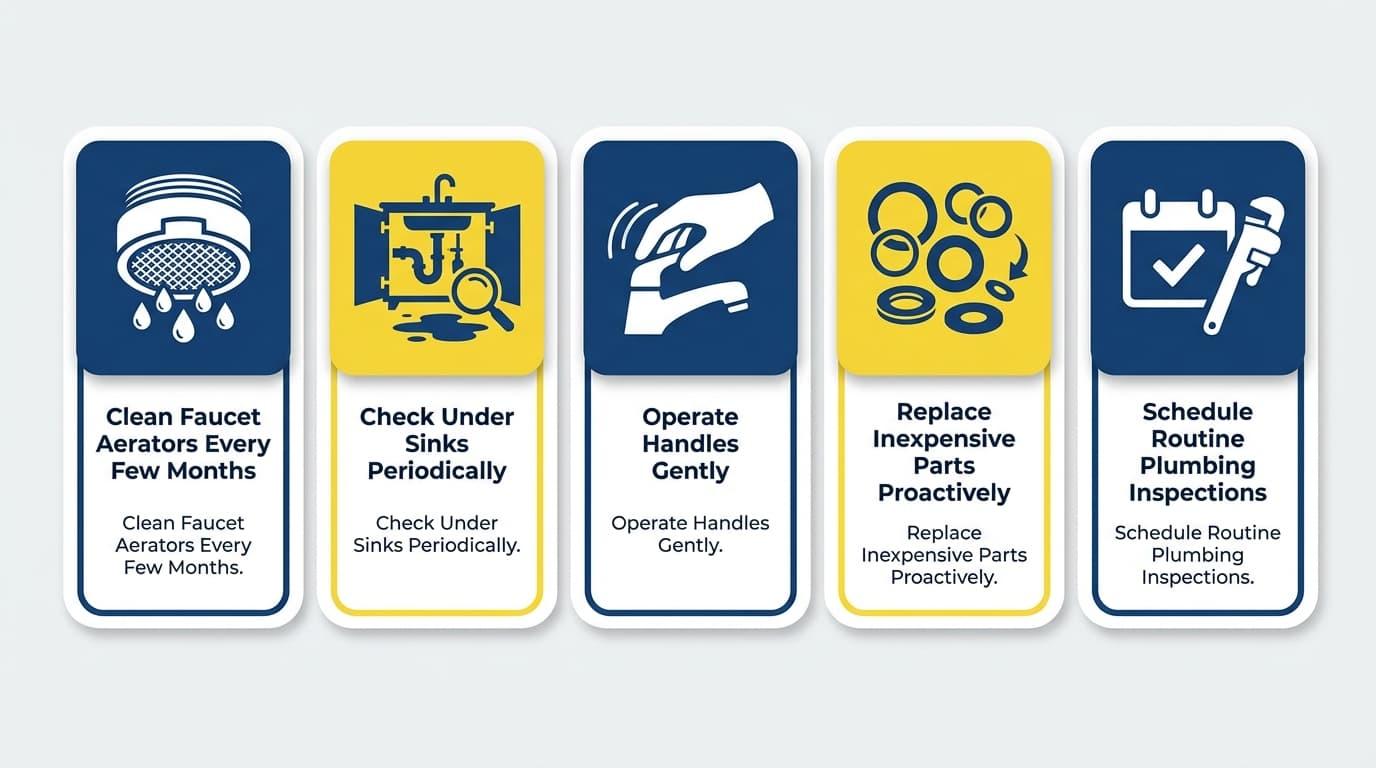
Simple maintenance habits can dramatically reduce faucet leaks, protect your fixtures, and save you from costly plumbing repairs down the road.
• Clean faucet aerators every few months: You should do this to remove sediment and improve water flow, especially if you have hard water.
• Check under sinks periodically: You should check for dampness, discoloration, or musty smells that indicate a slow leak.
• Operate handles gently: Rather than over-tightening, which prematurely wears washers and cartridges, you should operate the handles with more care.
• Replace inexpensive parts proactively: swapping O-rings and worn washers at the first sign of seepage often prevents larger failures. It’s just the smart thing to do.
• Schedule routine plumbing inspections: Every few years, particularly in homes with older plumbing or visible corrosion, it’s important to schedule routine inspections.
Managing Hard Water and Water Pressure
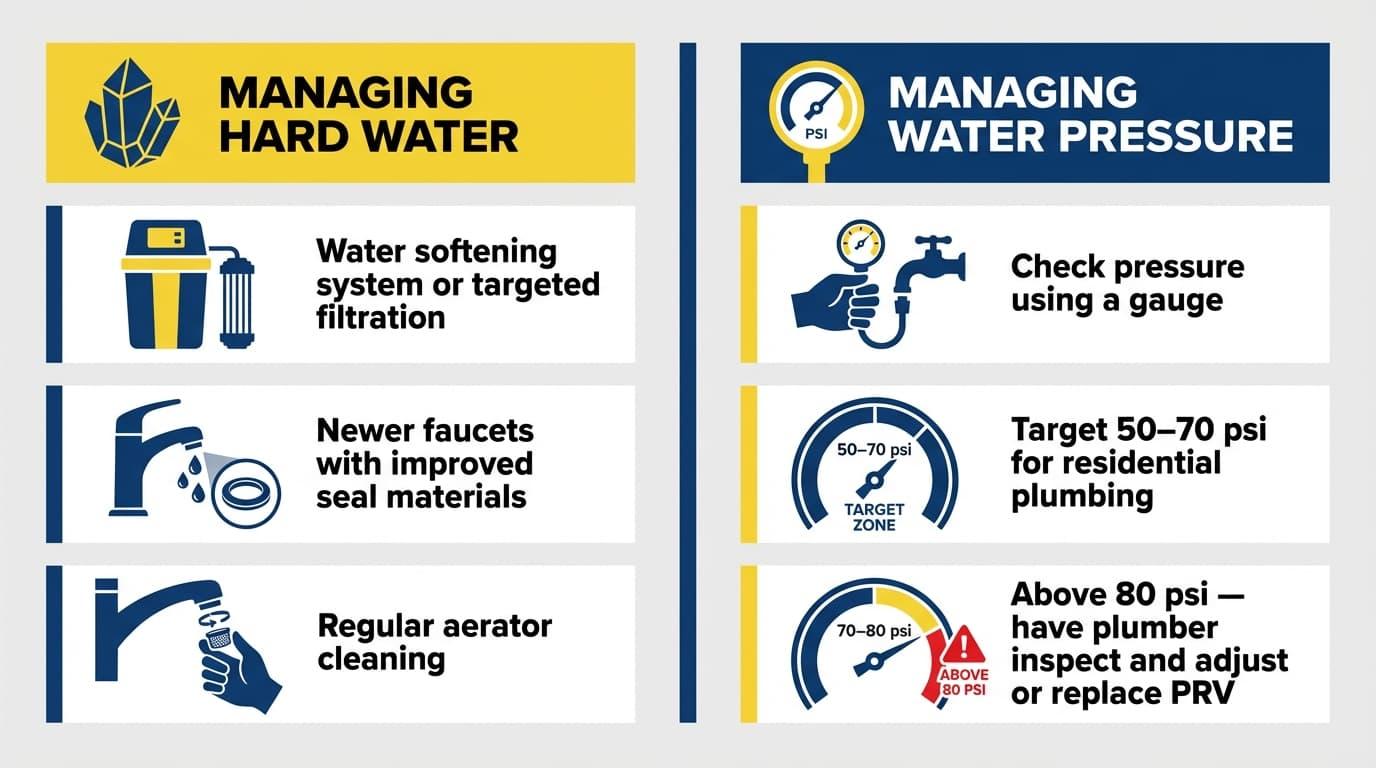
Hard water along Utah’s Wasatch Front deposits minerals on internal faucet surfaces, accelerating corrosion and seal failure. High water pressure compounds the problem by stressing every seal and connection in your plumbing system.
To Manage Hard Water:
• Consider a water softening system or targeted filtration to reduce mineral buildup throughout the plumbing system
• Newer faucets with improved seal materials handle hard water better, but still benefit from softened water
• Regular aerator cleaning removes buildup before it migrates deeper into the faucet body
To Manage Water Pressure:
• Check your home’s water pressure using a gauge attached to an outdoor spigot or laundry tap
• Target a pressure range between 50–70 psi for most residential plumbing
• If readings are consistently above 80 psi, have a professional plumber inspect and adjust or replace your pressure-reducing valve
Professionally managing pressure and hard water is often cheaper than repeatedly replacing faucets, water heaters, and appliances. A single PRV adjustment can add years to the life of every fixture in your home.
Still dealing with a drip? Beehive has been solving Utah faucet problems for over 26 years.
Learn More About Our Plumbing Solutions Today!
FAQ
These frequently asked questions address common concerns not fully covered above. Each answer gives clear, practical guidance for Utah homeowners dealing with a faucet drip.
How long can I safely ignore a dripping faucet?
From a water-waste perspective, not long at all — damage and costs accumulate from day one. While a few days of dripping water won’t usually destroy cabinets, months of constant moisture can cause wood swelling, staining, and mold growth.
Aim to address any new drip within a week or two at most, with either a simple DIY fix or a quick plumber visit. The longer you wait, the more likely secondary damage becomes.
Is a dripping faucet an emergency that requires same-day service?
Most slow drips are not immediate emergencies, as long as water isn’t flooding, spraying, or reaching electrical outlets. It becomes urgent if water is pooling rapidly, running inside walls, or keeping the cabinet bottom always wet.
If shutting off the local supply stops the leak and the area can dry out, next-business-day or scheduled service is usually appropriate. Save emergency calls for situations where the water can’t be controlled.
Can a dripping faucet be a sign of bigger plumbing problems?
Yes. Sometimes a drip reflects underlying issues like excessive water pressure, aging supply lines, or widespread corrosion in your plumbing system. If multiple faucets or fixtures are developing problems at the same time, it’s more likely a system-wide issue than just one bad washer.
Have a plumber evaluate your overall plumbing health if leaks are recurring in different locations within a short timeframe. What looks like separate problems may share a common cause.
Will tightening the faucet handle harder make the drip stop?
Homeowners who attempt to stop a drip by over-tightening the handle directly accelerate the degradation of internal cartridges. Applying excessive torque strips the brass valve threads and shatters the ceramic internal discs, permanently destroying the fixture’s shut-off mechanism.
Use normal hand pressure only. If you have to muscle the handle to stop the drip, that’s the faucet telling you something inside needs attention — not more force.
Should I replace a very old faucet instead of repairing the drip?
If the faucet is decades old, visibly corroded, or has been repaired multiple times, replacement often makes more economic sense than another patch. Newer faucets are typically more water-efficient, easier to service, and have much better replacement parts availability.
Based on Beehive Plumbing’s experience repairing over 5,000 Wasatch Front fixtures, our licensed technicians will structurally assess the brass faucet body for irreversible hard-water pitting to determine if a full replacement yields a higher long-term ROI than a temporary washer patch.