
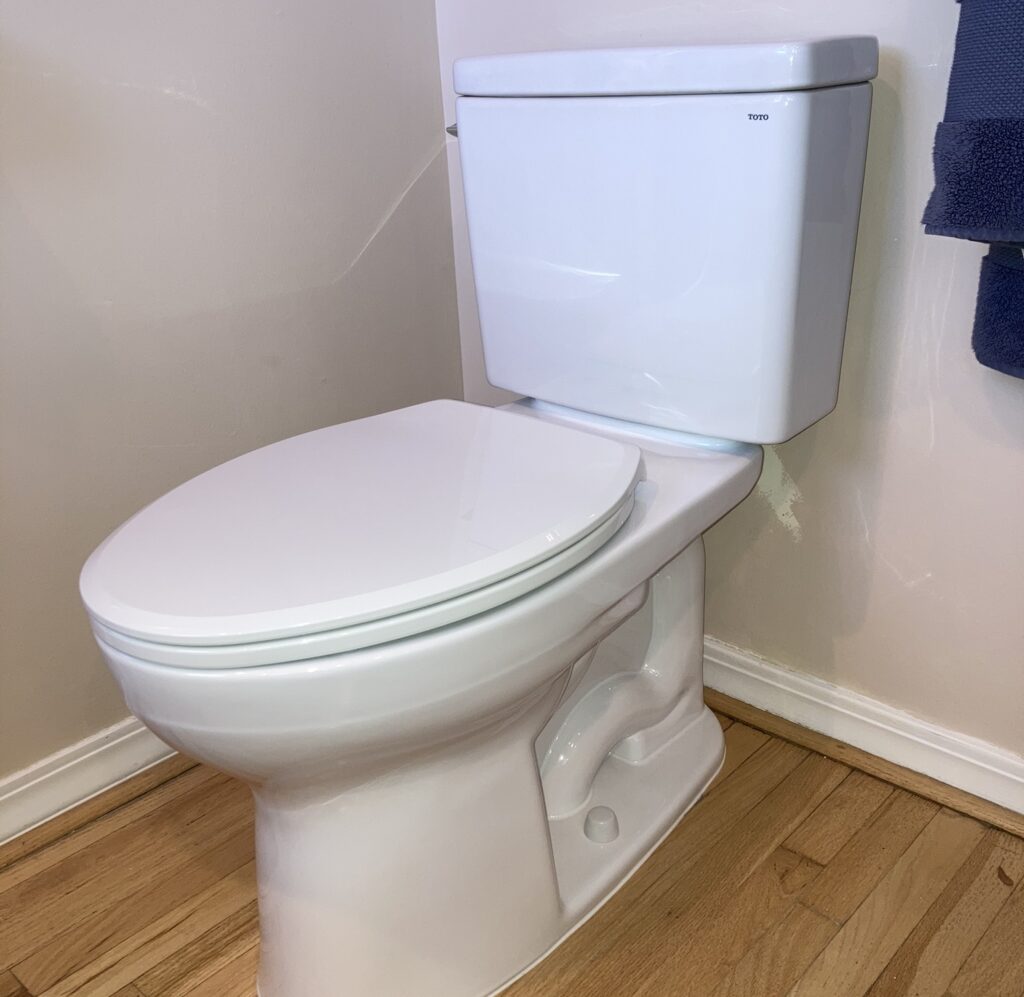
Blue toilet water is caused by either dissolved Acid Blue 9 dye from in-tank chemical cleaning tablets or by elevated copper levels leaching from corroding household pipes. In hard-water regions like Utah, these chemicals rapidly degrade toilet flappers and create stubborn mineral-dye rings.
This article walks through the main causes of blue toilet water, the real risks it poses to your plumbing system and your family, and practical steps to fix and prevent it. You’ll also learn how Utah’s hard water makes these issues more common here than in most other parts of the country, and discover safer alternatives to blue tablets that protect your toilet’s internal parts.
This diagnostic guide explores how to identify and resolve these two distinct plumbing failures:
- What are the mechanical risks of using blue bleach tablets in your toilet tank?
- How do you distinguish between tablet dye and copper-induced blue-green water?
- What are the EPA health risks associated with copper pipe corrosion?
- Which safe, non-corrosive alternatives effectively prevent toilet bowl stains?
Key Takeaways
- Blue toilet water in Utah homes almost always comes from one of two sources: blue tank tablets (like Clorox or 2000 Flushes) or corroding copper pipes leaching metal into your water supply.
- Tank tablets quietly damage flush valves, flappers, and rubber gaskets through constant chemical exposure — most plumbers advise against using them entirely.
- Blue-green water with no tablets present often signals copper corrosion in your pipes, which is both a plumbing and water-quality concern that requires professional attention.
- Utah’s hard water (around 13 grains per gallon on the Wasatch Front) accelerates both tablet staining and copper corrosion, making these issues more common locally than in most other regions.
- If removing tablets and cleaning the tank don’t solve the problem—or if you see blue-green staining at multiple fixtures—call Beehive Plumbing for an inspection before hidden damage compounds.
Noticing a running toilet, weak flush, or blue sludge in the tank? Beehive Plumbing’s master plumbers serve Northern Utah homeowners with same-day availability.
What Is Blue Toilet Water?
Blue toilet water is simply toilet water that’s been tinted by either dissolved dye from in-tank cleaning tablets or by copper that’s leached into the water from corroding pipes. If you’ve noticed your toilet bowl or toilet tank has turned an unexpected shade of blue or blue-green, you’re not alone — and the cause is almost always one of those two things.
The most common culprit is blue cleaning tablets — products like Clorox Automatic Toilet Bowl Cleaner, 2000 Flushes, and Ultra Big Blue, available at major retailers. These tablets sit in your tank and slowly release blue dye, surfactants, and bleach compounds into the tank water with every flush.
Here’s what many Utah homeowners don’t realize: the blue color is purely cosmetic. It’s not proof that your bowl is clean. The dye creates the appearance of freshness, but it doesn’t replace regular toilet cleaning with a toilet brush and a proper bowl cleaner.
In Utah homes without tablets, blue or blue-green toilet water can indicate something more serious — copper dissolving from aging copper pipes or brass fittings. This is a distinct issue with different risks and different solutions. The rest of this article will help you quickly identify which situation you’re dealing with and what to do next.
Why Your Toilet Water Turns Blue: The Two Main Causes
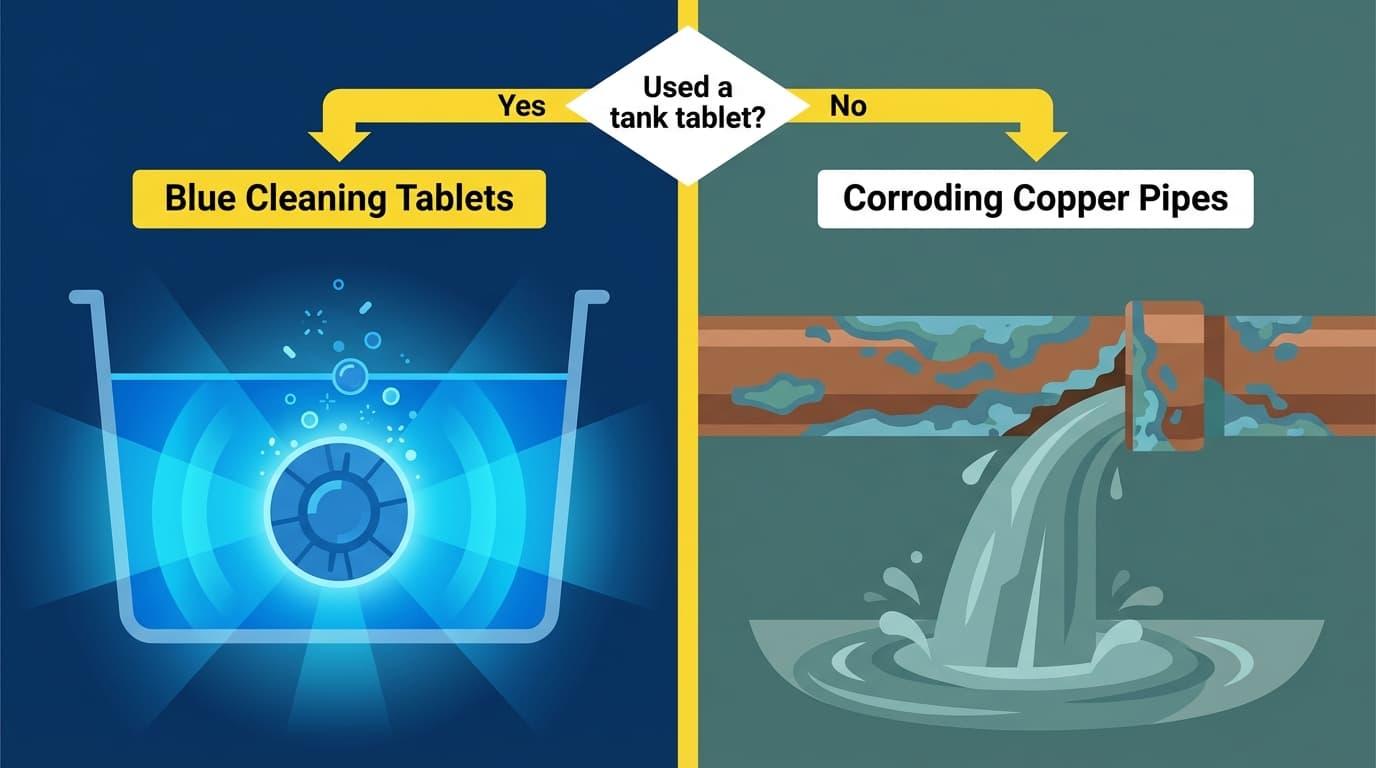
For most Wasatch Front homeowners, blue water traces back to two sources: blue cleaning tablets or corroding copper pipes. Here’s a simple way to work it out:
Did you put a tablet in your toilet tank?
- Yes → Your blue water is almost certainly from the tablet. See the section below.
- No → Your blue-green water may indicate copper corrosion. Keep reading.
A third, less common possibility is naturally elevated copper in your local water supply or private well. However, this still ties back to copper levels and requires a similar investigation. Identifying the cause early prevents both hidden plumbing damage and unnecessary worry about your family’s water.
Acid Blue 9 Dye from In-Tank Cleaning Tablets
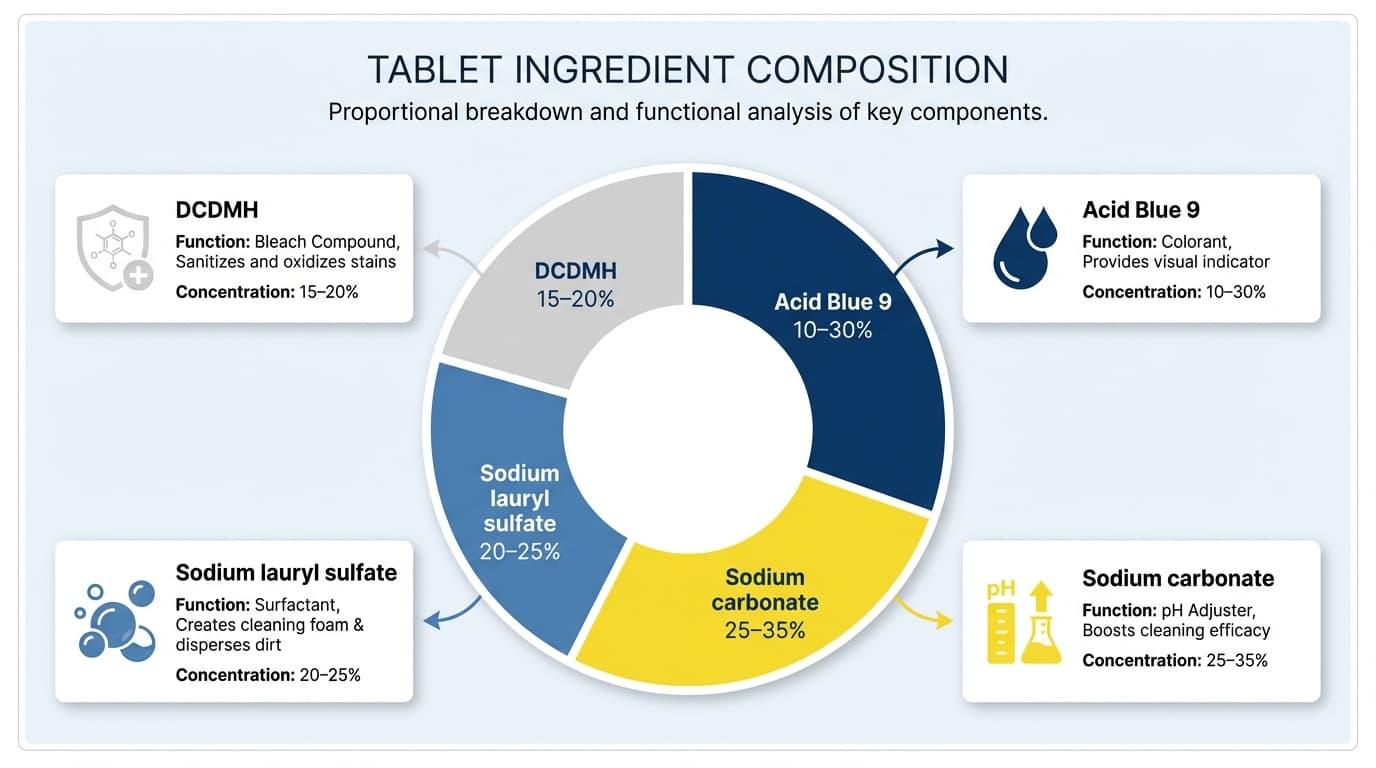
In-tank cleaning tablets chemically alter toilet water by releasing concentrated dyes and oxidizing agents into the reservoir.
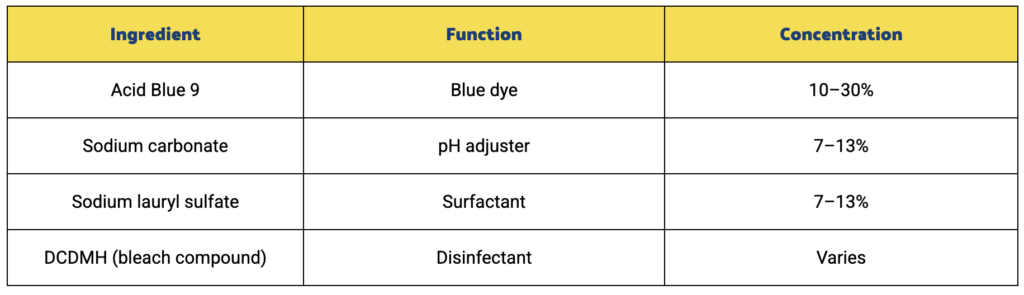
According to manufacturer Safety Data Sheets (SDS), these tablets contain 10–30% Acid Blue 9 (CAS 3844-45-9), alongside sodium lauryl sulfate and DCDMH bleach compounds.
Because the tablet remains submerged 24/7, these chemicals dissolve continuously, hyper-saturating the standing water and subjecting the toilet’s internal components to constant, highly concentrated chemical exposure.
Already hearing hissing, ghost flushing, or noticing a higher water bill? Those are signs that tablet damage has reached your flush valve or flapper.
Typical tablet ingredients include:
The primary mechanical risk of blue tank tablets is the structural degradation of internal toilet components caused by continuous bleach exposure.
Oxidizing agents in the tablets chemically break down rubber flappers, plastic fill valves, and overflow tubes, causing them to lose elasticity, warp, and crack within a few months of use.
This material failure breaks the watertight seal between the tank and the bowl, resulting in ‘ghost flushing,’ constant running water, and significantly inflated monthly municipal water bills.
Utah’s hard water makes things worse. Minerals in Salt Lake Valley municipal water react with blue dye and tablet chemicals, forming stubborn blue rings and residue that resist even aggressive scrubbing.
Copper Carbonate Leaching from Corroding Plumbing Pipes
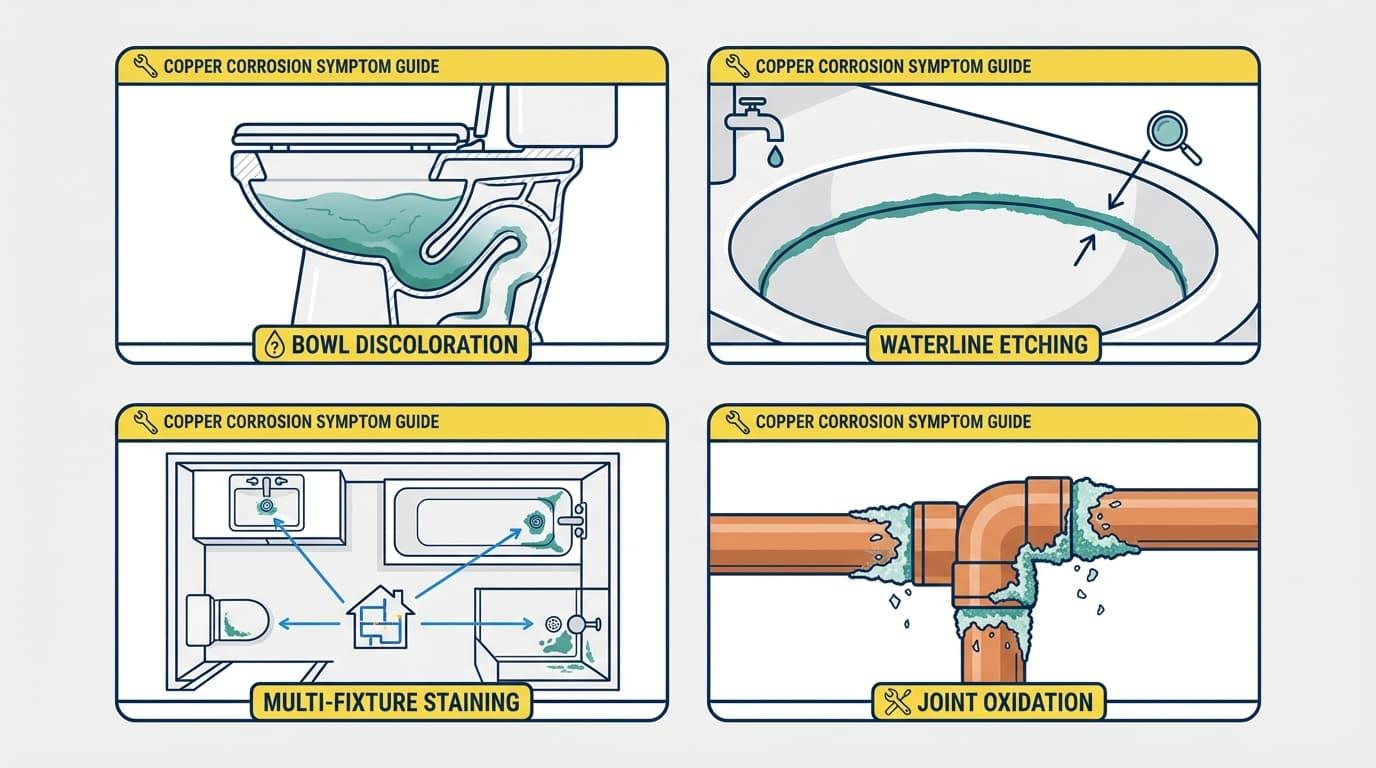
If you notice blue or blue-green water in your toilet bowl but haven’t used any cleaning tablets, pay close attention. This often means copper is dissolving into your water as aging copper pipes or brass fittings corrode internally — and that’s a different problem with more serious implications.
Blue-green water at multiple fixtures is a whole-house plumbing concern, not just a cosmetic one. Beehive Plumbing can inspect your pipes and test water quality in a single visit.
What Homeowners Typically Notice:
- Bowl Discoloration: A distinct blue-green tint in the toilet bowl water, visibly different from the bright artificial blue of cleaning tablets.
- Waterline Etching: Hardened blue stains forming exactly at the resting water line inside the porcelain bowl.
- Multi-Fixture Staining: Matching blue-green deposits appearing around sink drains, bathtub surrounds, and shower fixtures.
- Joint Oxidation: Visible greenish-white crusting (patina) forming on the exterior of exposed copper pipe joints or brass supply valves.
Corrosion accelerates when Utah’s hard water interacts with older copper plumbing or mixed-metal connections. Homes built before the early 2000s are particularly susceptible, especially those with original copper supply lines.
You can confirm elevated copper levels with inexpensive home test kits or through certified laboratory analysis. The EPA action level for copper in drinking water is 1.3 mg/L (1,300 ppb). Salt Lake City’s 2024 Consumer Confidence Report showed a 90th percentile copper level of around 302 ppb — well under that threshold — but individual homes with older plumbing may experience higher localized readings.
If blue or blue-green water appears at multiple fixtures throughout your house, treat it as a call-a-plumber situation, not just a cosmetic issue.
Naturally Elevated Copper Levels in Municipal Water Supplies
Some areas naturally have higher background copper in their source water due to local geology or aging municipal infrastructure. On the Wasatch Front, the bigger concern is usually copper leaching from in-home plumbing rather than elevated copper directly from the treatment plant. That said, it’s worth checking your city’s annual Consumer Confidence Report to understand baseline copper levels and compare them with any home test results.
Signs That Warrant Professional Investigation:
- Repeated blue-green staining even after cleaning
- Metallic-tasting water
- Blue-green deposits on multiple fixtures
- Discoloration that persists after flushing lines
If you notice these patterns, a professional plumbing inspection can identify whether your pipes, fittings, or water chemistry are contributing to the problem.
Is Blue Toilet Water Safe For Your Family And Your Home?
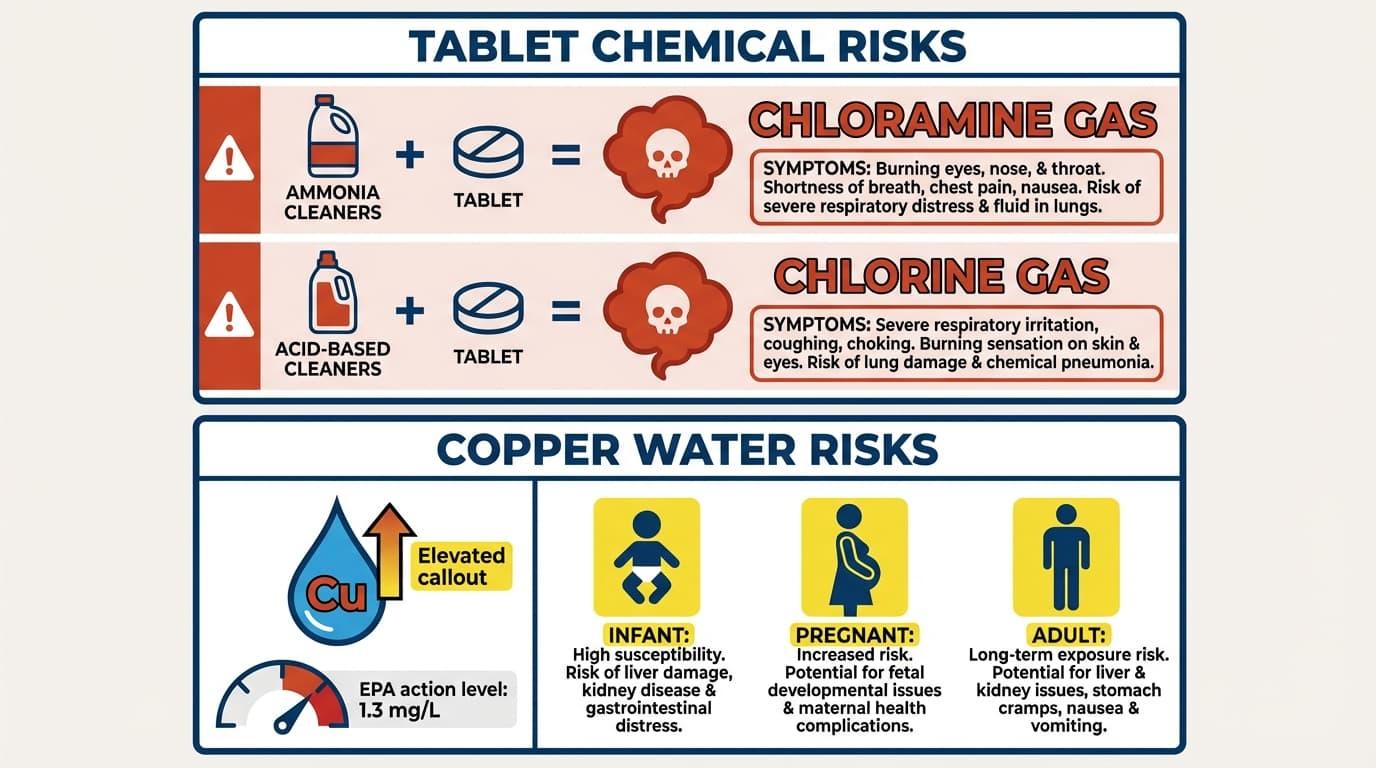
Blue toilet water isn’t intended for drinking or direct contact, and the risks it carries differ depending on whether it comes from cleaning tablets or copper corrosion. Understanding these distinctions helps you protect your family, your pets, your septic system, and your plumbing hardware.
Health Implications Of Blue Cleaning Tablets
Manufacturer Safety Data Sheets reveal the chemical toxicity of these products. Clorox’s official SDS documentation classifies Acid Blue 9 as a suspected germ cell mutagen and explicitly lists hazards including severe skin burns and eye damage upon direct contact with the concentrated tablet.
The diluted blue water in your bowl is far less concentrated — but it’s still not safe to ingest. This matters especially for children drawn to the bright blue color, and for pets that drink from toilet bowls when lids are left up.
Dangerous Chemical Combinations To Avoid:
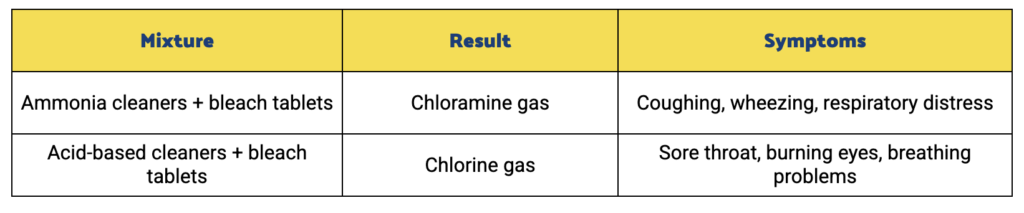
If a child or pet drinks blue water, or if anyone inhales strong fumes from mixing cleaning products, contact Poison Control immediately or seek medical attention.
Basic Safety Practices:
- Never mix toilet cleaning products
- Keep tablets and cleaners out of children’s reach
- Ventilate bathrooms when using strong cleaners
- Keep toilet lids closed, especially in households with pets
Health Concerns From Copper-Related Blue Water
Copper is an essential nutrient in trace amounts, but elevated levels in drinking water can cause gastrointestinal problems, including stomach cramps, nausea, and vomiting. Long-term exposure is a particular concern for infants (especially when formula is mixed with tap water), pregnant individuals, and people with Wilson’s disease or other liver conditions.
If you see blue or blue-green water at fixtures you use for drinking or cooking, switch to filtered or bottled water until testing confirms safety. The EPA provides guidance on copper in drinking water, and your local utility or a certified lab can help you understand your exposure level.
If you’re concerned about copper levels in your home’s water, Beehive Plumbing identifies the plumbing source first, so you know exactly what you’re dealing with before committing to any treatment.
Check The Copper Levels In Your Home’s Water
Impact On Toilet Components, Plumbing & Septic Systems
Most plumbers — including Beehive’s master plumbers — consider in-tank blue tablets a leading cause of premature failure of flush valves, flappers, and other internal toilet components.
Common Tablet-Related Symptoms:
- Constantly running toilets
- Weak or incomplete flushes
- Blue “goo” or sludge is building up in the tank
- Blue dye staining in the bowl and under the rim
- Unexplained increases in your water bill
If tablet residue has already caused a partial blockage or your toilet is flushing sluggishly, professional toilet drain cleaning backed by a guarantee is a safer and more effective solution than continuing to rely on chemical shortcuts.
For homes with septic systems, the problem extends beyond the toilet itself. Many blue tablets contain antimicrobial agents designed to kill bacteria, but they also harm the beneficial bacteria your septic tank relies on to break down waste. Repeated flushing of these chemicals can reduce system efficiency and lead to backups or more frequent pumping needs.
Addressing these issues early typically costs far less than waiting for a visible leak, floor damage, or a non-functioning toilet. Beehive Plumbing’s Premier Plans include annual plumbing checkups that catch flush valve and flapper wear before they become leaks.
Environmental And Indoor Air Considerations
Every flush sends tablet chemicals — dyes, bleach, and surfactants — into municipal or septic systems, adding to the chemical load in local wastewater.
According to the 2024 UN-Water Report, over 40% of household wastewater worldwide is discharged without safe treatment, meaning the persistent artificial dyes and bleach compounds from toilet tablets directly enter and contaminate local river systems and groundwater tables.
Strong-scented tablets also emit fumes in small, poorly ventilated bathrooms, which can affect indoor air quality and cause headaches or irritation in sensitive individuals.
Utah homeowners looking to reduce their environmental footprint should avoid automatic tank tablets in favor of targeted, lower-toxicity bowl cleaners. This approach protects both local waterways and the long-term health of your plumbing system.
How To Diagnose Your Blue Toilet Water At Home
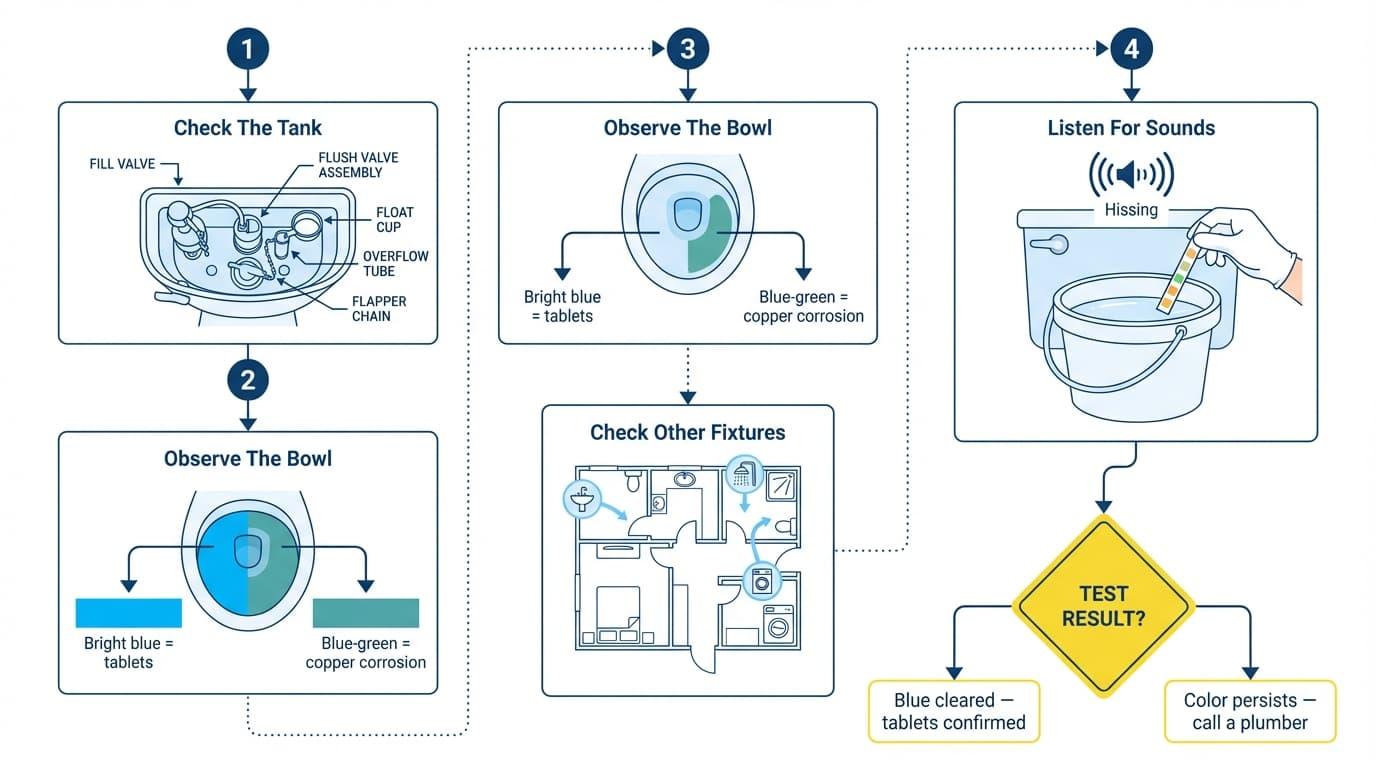
Before calling anyone, you can often figure out what’s causing your blue toilet water with a few simple checks. Here’s a step-by-step approach any Northern Utah homeowner can follow without special tools.
Quick Visual Checks In The Tank And Bowl
Start by carefully lifting your tank lid and looking inside.
In The Tank, Look For:
- Tablet pieces or fragments
- Blue sludge or residue coating internal surfaces
- Strongly blue-tinted standing water
- Deteriorated rubber or plastic components
In The Bowl, Observe:
- Uniform bright blue water right after flushing (suggests tablets)
- Blue-green streaks or localized stains without any tablets (suggests copper corrosion)
- Blue rings are forming at the water line
Check Other Fixtures Around The House:
- Kitchen sink
- Bathtub
- Bathroom sinks
- Shower drains
If you see similar blue or blue-green staining at multiple fixtures, you’re likely dealing with a whole-house water or piping issue rather than a simple tablet problem in one toilet tank.
Listen For:
- Constant hissing from the tank
- Running water between flushes
- Weak flush despite a full tank
These sounds often point to tablet-damaged flush valves or rim jets partially blocked by chemical residue. Photograph any unusual staining or discoloration to show a plumber if you decide to schedule a service call.
Simple At-Home Water Tests
Affordable home test strips for copper and pH are available at major retailers and online. These give you a basic snapshot of your water conditions without waiting for a lab.
Testing Process:
- Collect water in a white bucket after running the tap for about a minute
- Use test strips according to package directions
- Compare results to EPA guidance (copper action level: 1.3 mg/L)
If tests show copper near or above action levels, avoid drinking from affected fixtures and contact a plumber and your local water provider.
To Isolate The Source:
- Remove any blue tablets from the tank
- Flush the toilet several times to clear the tank water
- Wait 24–48 hours
- Check whether the blue color returns
If the blue disappears after removing tablets, you’ve confirmed the source. If persistent color or a metallic taste remains without tablets, corroding pipes or fittings behind the walls may be the culprit.
When To Call Beehive Plumbing Instead Of DIY
Knowing when to tackle a toilet issue yourself and when to bring in a professional can save you both money and headaches.
Clear Triggers For A Professional Call:
- Blue-green water with no tablets present
- Blue-green staining at multiple fixtures
- Running toilet that continues after tablet removal
- Signs of damp flooring or water damage near the toilet base
- Weak flush despite cleaning tank and rim jets
- Visible corrosion on accessible pipe fittings
Beehive Plumbing’s master plumbers have been serving Northern Utah homeowners since 1999. We understand how local hard water and older housing stock interact to create these problems.
A Professional Inspection Can Include:
- Checking internal toilet components for wear
- Testing water pressure
- Identifying corrosion or mixed-metal connections
- Recommending targeted repairs versus broader solutions
We offer clear, up-front estimates and can often replace damaged toilet components or corroded piping sections in a single visit. A quick inspection now can cost far less than dealing with a full leak, floor replacement, or repeated toilet failures down the road.
How To Get Rid Of Blue Toilet Water And Stains
Removal steps differ depending on whether you’re dealing with blue dye from tablets or copper-related staining. Both benefit from tackling the underlying cause, not just the color.
Removing Blue Water And Residue From Tank Tablets
Remove blue water and tablet residue from your toilet tank safely and effectively by following these simple cleanup steps before damage spreads to your toilet’s internal parts.
Step-By-Step Tank Cleaning:
- Turn off the water supply at the shutoff valve near the toilet base
- Flush to empty most of the tank water
- Put on rubber gloves before touching any residue
- Remove tablet pieces carefully — dispose of them in the trash, not down the drain
- Scoop out blue sludge with a disposable plastic cup, taking care around fragile tank parts
- Wipe down surfaces inside the tank with a sponge soaked in plain water or a mild vinegar solution
- Turn the water supply back on and let the tank refill
- Flush several times until the bowl water runs clear
If the toilet still runs, flushes weakly, or shows signs of leaking after cleanup, the flush valve, flapper, or fill components have likely been damaged by the tablets and need to be replaced.
Cleaning Blue Rings And Stains In The Bowl
In hard water in Utah, tablet dyes often bind to mineral deposits, creating stubborn blue rings that don’t respond to a quick swish with a standard toilet brush.
Effective Cleaning Options:
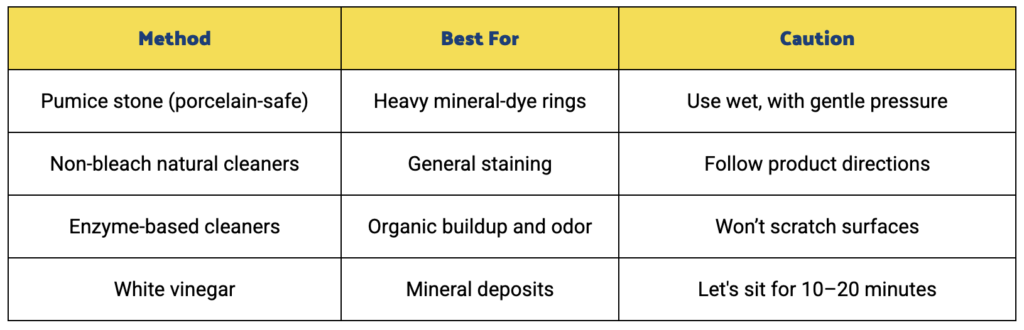
Avoid:
- Metal scrapers
- Extremely abrasive pads
- Steel wool
These can etch the bowl’s glaze, worsening future staining. Let any cleaner sit for 10–20 minutes before scrubbing to loosen mineral and dye buildup along the waterline and under the rim. Very old or deeply etched bowls may never return to pure white — in some cases, replacement is more cost-effective than endless aggressive scrubbing.
Addressing Copper-Related Blue-Green Staining
Cleaning removes visible stains, but copper-related discoloration will return until you fix the underlying corrosion or water chemistry issue.
For Surface Cleaning:
- Apply white vinegar to dissolve copper carbonate deposits on porcelain
- Let it sit for 15–20 minutes
- Scrub with a non-abrasive brush
- Rinse thoroughly
For The Root Cause, Have Beehive Plumbing Inspect For:
- Pinhole leaks in copper lines
- Corroded fittings
- Older copper pipes that may be shedding material into the water supply
Potential solutions include replacing targeted pipe sections with modern materials like PEX or installing whole-home filtration or water conditioning systems. Resolving copper leaching early protects both your plumbing and your household’s long-term exposure to metals in your water.
Beehive can evaluate whether targeted pipe repairs, a water conditioning system, or partial repiping is the right solution for your home’s copper situation.
Safer Alternatives To Blue Toilet Water Tablets
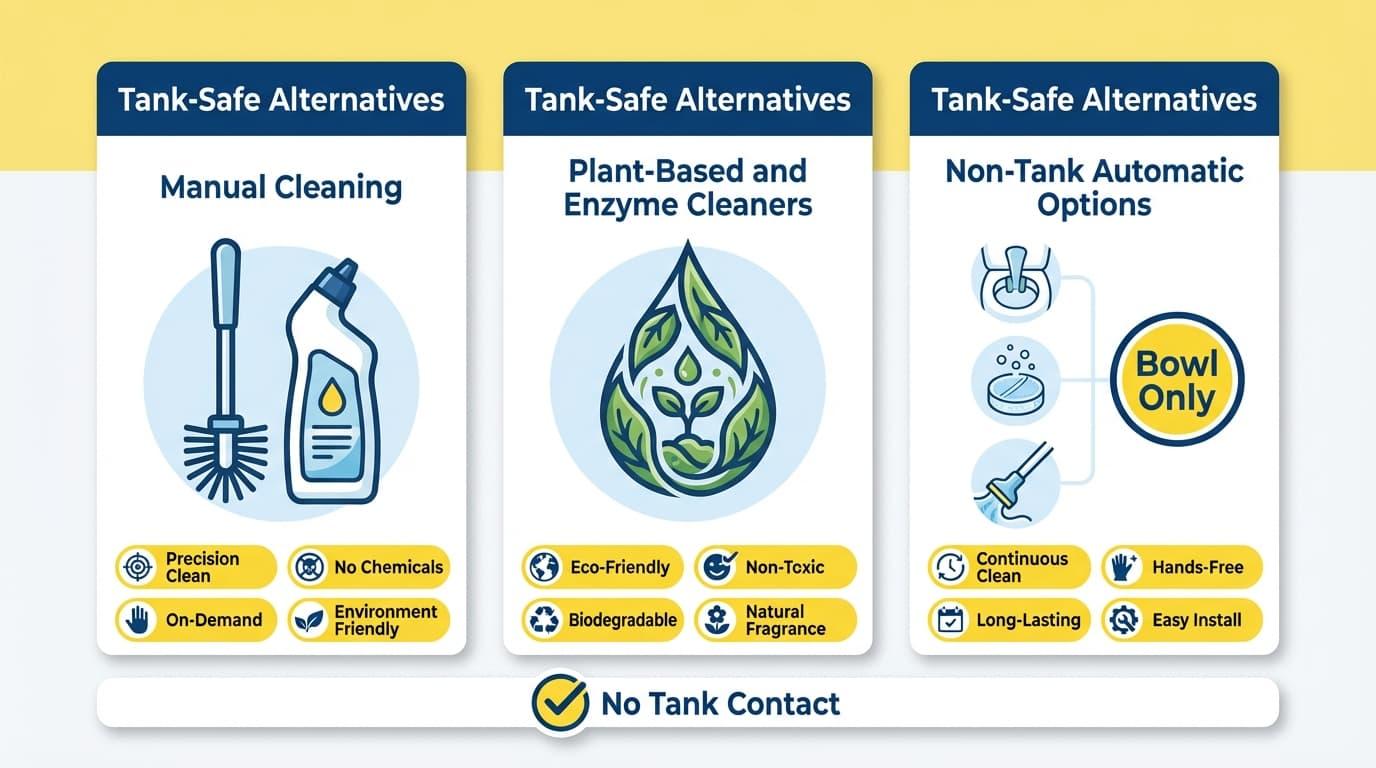
You can have a clean, fresh toilet bowl without relying on bleach-heavy, blue-dye cleaning tablets that damage tank components over time. Here are options that are friendlier to rubber seals, septic systems, indoor air quality, and Utah’s environment.
Manual Cleaning With Brushes And Liquid Cleaners
A consistent routine of scrubbing the bowl with a good-quality toilet brush and a liquid cleaner applied directly to the bowl — not the tank — is more effective than passive tablets and far safer for your plumbing system.
Benefits Of Manual Cleaning:
- Actually removes mineral deposits and limescale that tablets leave behind
- Doesn’t expose tank components to harmful chemicals
- Costs less than replacing damaged toilet parts
- Gives you a chance to spot problems early
In hard water regions like Northern Utah, homeowners may need to clean more frequently to stay ahead of mineral rings and deposits. Weekly scrubbing prevents the buildup that tablets claim to prevent but often make worse. Avoid mixing bleach and acid-based cleaners, and always follow label directions.
Plant-Based and Enzyme-Based Cleaners
Newer plant-based or enzyme-based cleaners use biodegradable ingredients without heavy dyes or harsh chemicals. Brands like Blueland offer sheet-style products that dissolve directly in the bowl, not the tank.
Advantages:
- No exposure to the flush valve or rubber seals inside the tank
- Break down stains and odors naturally
- Often comes in plastic-free packaging
- Avoid chlorine bleach, reducing fumes and environmental impact
Use these products according to directions — typically dropping them into the bowl or using them with a brush — rather than placing anything in the tank hold area.
Non-Tank Automatic Cleaning Options
If you want some automation without the risk of tank damage, consider these alternatives:
- Clip-on rim blocks that release cleaner into the bowl only
- Bowl-only drop-in products that sit below the waterline
- Wand-based systems like Clorox ToiletWand with disposable cleaning heads
These systems confine cleaning agents to the bowl, protecting internal tank parts from direct contact with harsh chemicals. Choose unscented or lightly scented options for sensitive households to reduce exposure to strong fragrance in small, enclosed bathrooms.
Even with automatic bowl cleaners, occasional manual scrubbing and inspection of internal tank parts remains important for catching problems early.
Why Utah’s Hard Water Makes Blue Toilet Water Worse
Northern Utah’s water hardness — commonly around 13 grains per gallon on the Wasatch Front — changes how both chemicals and metals behave inside your plumbing system. This affects everything from how tablet dye bonds to your bowl to how quickly copper pipes corrode over time.
Utah’s hard water accelerates nearly every issue covered in this article — tablet staining, copper corrosion, and mineral buildup. A whole-home water softener addresses the root cause.
Hard Water + Blue Tablets = Stubborn Stains And Blue Goo
Calcium and magnesium minerals in hard water combine with tablet dyes and surfactants, creating gels and films that cling to the tank, bowl, and rim jets with surprising tenacity.
What Happens Over Time:
- Blue “goo” forms in the tank and around the flush valve
- Mineral-dye compounds coat rim jets, slowing water flow with every flush
- Weak swirling flushes gradually replace strong siphon action
- Blue rings form at the water line and resist scrubbing
This buildup can be mistaken for a blocked drain when the real problem is inside the tank, where the tablet has been dissolving for weeks. In hard-water areas, blue rings from these reactions can persist for months and may be nearly impossible to remove without aggressive cleaning or a full bowl replacement.
Bottom line: Utah homeowners should avoid tank tablets entirely if they live in known hard water cities along the Wasatch Front.
Hard Water And Copper Pipe Corrosion
While hard water itself isn’t acidic, it contributes to complex corrosion scenarios — especially where copper pipes meet other metals or where protective films inside pipes have been disturbed.
Risk Factors In Utah Homes:
- Original copper plumbing from the 1970s–1990s construction
- Mixed-metal connections (copper to galvanized steel, brass fittings)
- Fluctuating water chemistry from seasonal source changes
- Previous use of aggressive chemical drain cleaners
Signs Of Ongoing Corrosion:
- Recurring blue-green stains despite regular cleaning
- Pinhole leaks appearing in copper lines
- Greenish deposits forming around pipe joints
- Blue-green tint in first-draw morning water
Beehive Plumbing can evaluate whether spot repairs, dielectric unions between dissimilar metals, or partial repiping with PEX might reduce corrosion risk in your specific situation.
Local Mindset: Proactive vs. Reactive Maintenance
The difference between catching blue-water-related problems early and ignoring them until they escalate often comes down to a few hundred dollars versus a few thousand.
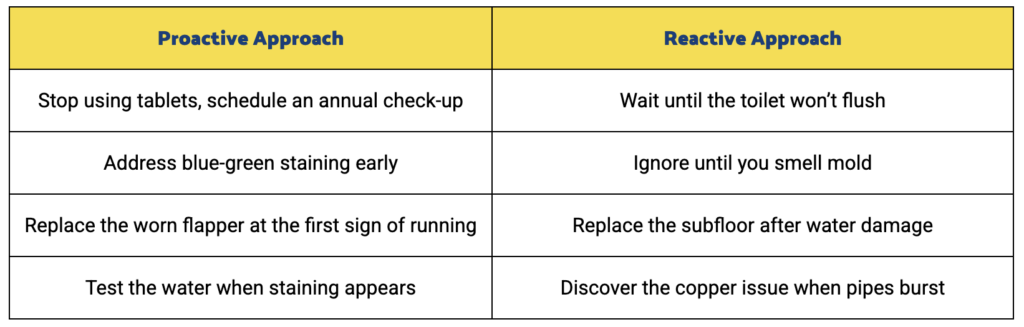
Consider two typical Utah examples: a running toilet in a 1998 Salt Lake City rambler might cost $150–$200 for a valve replacement if caught early — or $2,000+ if water damage reaches the subfloor.
Copper staining in a 1985 Sandy home might need a few hundred dollars in targeted repairs now, versus thousands for emergency repiping later. Beehive Plumbing aims to help neighbors avoid surprise repair bills by catching blue-water-related problems while they’re still small.
A 30-minute plumbing checkup with Beehive Plumbing can catch $150 problems before they become $2,000 ones.
When To Replace, Repair, Or Just Change Your Habits
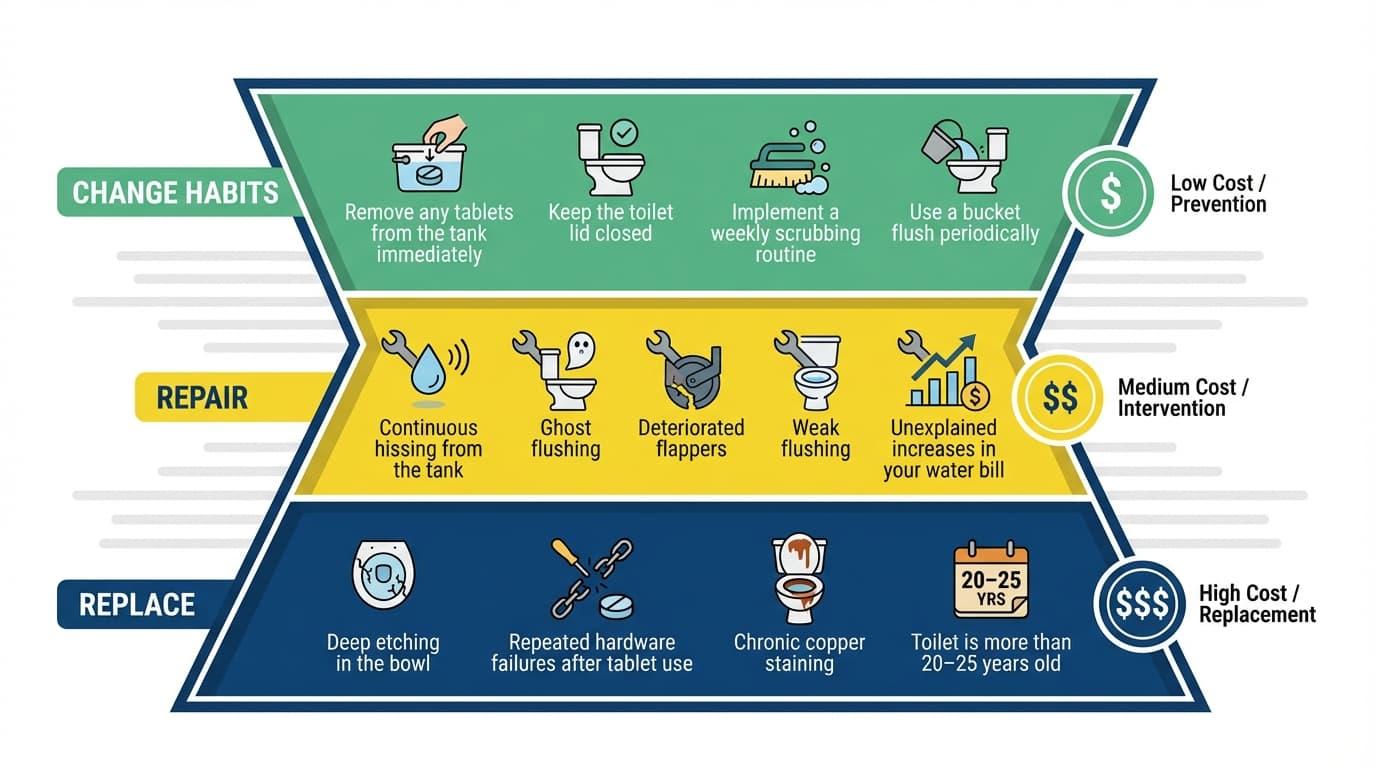
Not every blue toilet water situation requires calling a plumber. Here’s a simple decision framework for Utah homeowners.
Simple Habit Changes That Solve The Problem
For many households, stopping the use of blue cleaning tablets and switching to bowl-only, non-bleach cleaners will gradually end blue water and prevent new blue rings from forming.
Quick Wins:
- Remove any tablets from the tank immediately
- Keep toilet lids closed to prevent pet access to the blue water
- Establish a weekly scrubbing routine with a toilet brush and bowl cleaner
- Pour a bucket of clean water through occasionally to flush out residue
Monitor your toilet’s behavior for a few weeks after stopping tablets. If water clears and the toilet operates normally, no immediate hardware replacement may be necessary.
Signs You Need Toilet Or Valve Repairs
Indicators Of Tablet Or Corrosion Damage:
- Continuous hissing from the tank
- Unexplained increases in your water bill
- Water occasionally refills the tank on its own (“ghost flushing”)
- Visibly deteriorated flappers or seals
- Weak flushing despite a clean tank and clear rim jets
If these symptoms persist after cleaning and tablet removal, the flush valve, fill assembly, or flapper likely needs to be replaced. Beehive Plumbing can replace worn components with parts designed to withstand local hard water conditions.
Don’t ignore slow leaks at the toilet base — they often signal long-term chemical degradation of seals or mounting bolts. Timely repairs extend the life of your existing toilet and protect subflooring from hidden water damage.
When Full Toilet Replacement Or Repiping Makes Sense
Consider Replacement When:
- The bowl has deep blue mineral-dye etching that won’t clean
- You’ve had repeated hardware failures after tablet use
- Chronic copper-related staining continues even after targeted repairs
- The toilet is more than 20–25 years old
Modern toilets use significantly less water per flush than older models, so replacement can also reduce monthly water bills — a meaningful consideration in Utah’s dry climate where every gallon matters.
For widespread signs of copper corrosion — blue-green stains at multiple fixtures, pinhole leaks — partial or full repiping with modern materials may be justified. If your toilet is overdue for replacement or you’re seeing copper corrosion at multiple fixtures, Beehive provides written estimates for both toilet replacement and pipe repair before any work begins.
FAQ About Blue Toilet Water
Blue toilet water raises a lot of questions for Utah homeowners, so here are answers to the most common concerns we hear about causes, safety, and solutions.
Can blue toilet water damage my septic system?
Yes. Many blue tablets contain antimicrobial agents and bleach specifically designed to kill bacteria. Unfortunately, these chemicals don’t discriminate — they also harm the beneficial bacteria your septic system relies on to break down waste. Repeated flushing of tablet chemicals can reduce system efficiency, potentially leading to backups or requiring more frequent pumping.
Septic system homeowners in Utah should avoid in-tank cleaning tablets and use septic-safe bowl cleaners instead. Beehive Plumbing can coordinate with septic specialists if you suspect chemical damage to your system.
Is it safe to use blue tablets in a guest bathroom I rarely use?
Not really. Even in rarely used bathrooms, tank tablets sit in stagnant water against rubber and plastic components, causing ongoing corrosion and wear. Water sitting for extended periods with concentrated chemicals can actually produce stronger fumes and thicker blue sludge than regularly flushed toilets. Skip the tablets in any bathroom regardless of use frequency, and do a quick manual cleaning before guests arrive.
If a guest bathroom toilet has had tablets for months, consider having Beehive inspect the internal parts before relying on it for heavy use.
Why is only one of my toilets showing blue water if I don’t use tablets?
When only one toilet shows blue or blue-green water without tablets present, there may be a localized issue — like a stretch of corroding copper pipe feeding just that bathroom, or a specific fixture problem. Compare water from that toilet’s tank with water from a nearby sink using a clear glass. If the discoloration is limited to the toilet, the issue may be in the supply line or the fixture itself.
Single-problem fixtures are often the easiest to diagnose and repair. Localized staining may reveal early-stage corrosion that hasn’t yet spread to other fixtures, making prompt action especially worthwhile.
Can I keep using my toilet while waiting for a plumber?
If the blue water is clearly from a tablet, the toilet can generally still be used for flushing — but people and pets should avoid direct contact with or ingestion of the blue water. If blue-green water appears without tablets, especially throughout the house, avoid drinking tap water and minimize unnecessary flushing until the cause is determined.
Turn off the toilet’s shutoff valve if you notice active leaking, continuous running, or water seeping around the base. When scheduling with Beehive, describe all symptoms so we can prioritize urgent cases and arrive with the right parts and testing tools.
Will a water softener stop my toilet water from turning blue?
A water softener can reduce hardness minerals, which may help prevent mineral-based rings and lessen blue tablet staining — but it doesn’t directly remove copper or tablet chemicals. If copper corrosion is the root cause, you may also need targeted pipe repairs or a dedicated filtration system designed to remove metals from the water supply.
The best first step is to pinpoint the source of the blue color — tablet dye or copper — before investing in water treatment equipment. Beehive Plumbing can help interpret water test results and suggest whether a softener, filtration, plumbing repair, or some combination offers the most effective solution for your home.