
A shower not turning on is almost always caused by a failed shower mixing valve, a seized inner cartridge, or severe hard-water mineral buildup in the showerhead nozzles. By systematically verifying your home’s main water pressure and testing adjacent fixtures, you can quickly isolate whether the system requires a simple descaling or a professional plumber.
In Utah and along the Wasatch Front, where extremely hard water quietly attacks valves, cartridges, and showerheads, these “out of nowhere” failures are especially common.
This guide walks you through exactly why your shower won’t turn on, what to check first, and which quick fixes are genuinely safe to try on your own. You’ll learn the most common mechanical and electrical issues, how hard water may be sabotaging your system, what typical repairs cost, and the red-flag warning signs that mean it’s time to stop DIY and call a professional plumber.
By the end, you’ll know whether a simple cleaning or cartridge swap can restore your shower — or whether you need expert help to prevent leaks, water damage, or serious safety risks.
Key Takeaways
- Most shower not turning on problems trace back to a faulty shower valve or worn valve cartridge, localized blockages in the showerhead or diverter, or power and solenoid valve coil problems in an electric shower unit.
- In Utah and along the Wasatch Front, extremely hard water (often 13+ grains per gallon) rapidly clogs valves and showerheads, causing sudden no-flow failures that catch homeowners completely off guard.
- Your immediate action plan: check the shower’s shutoff valve, test other fixtures for normal water pressure, and clean the showerhead before moving on to valve and electrical checks.
- Stop all DIY efforts immediately if you notice burning smells, water leaking behind the shower wall, or repeatedly tripping breakers — these signs mean you need a qualified plumber.
- Most fixes cost between $150 and $575 for a valve or cartridge replacement, but delaying the repair can push costs to $500–$2,500+ once water damage enters the picture.
Why Your Shower Won’t Turn On (And What To Check First)
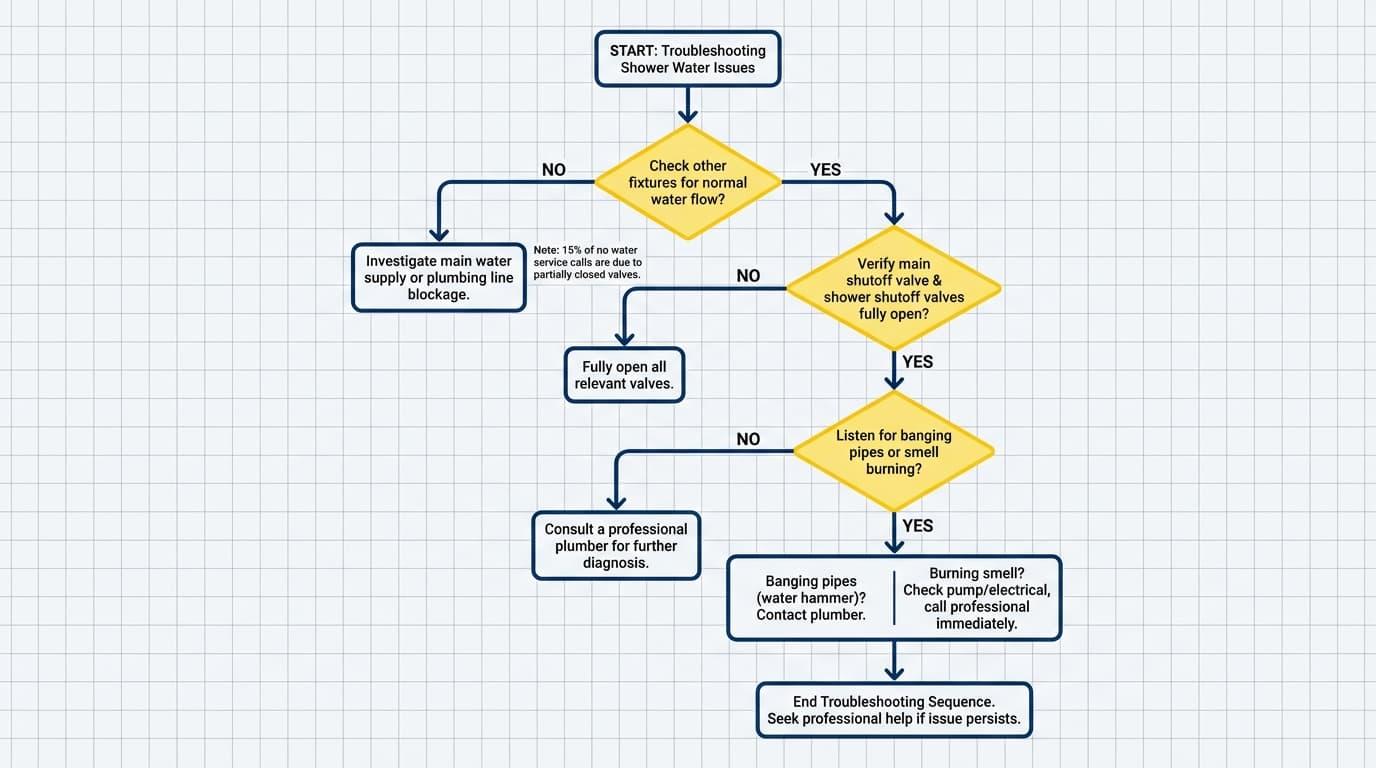
When you rotate the shower handle and receive no water, but adjacent fixtures like the bathroom faucet operate normally, you are experiencing a localized shower failure. This specific isolation indicates the issue is restricted to the shower’s internal plumbing valve or cartridge, rather than a main municipal water line disruption.
When a shower won’t turn on, the problem shows up in a few different ways. You might get no water at all, only cold water while the hot side stays dry, or an electric shower unit that sits completely unresponsive. Figuring out which symptom you’re dealing with is the fastest way to narrow down the fix.
Before touching anything, take 60 seconds to check whether other fixtures in your home have normal water flow. If the kitchen faucet handle and nearby taps work fine, you’re dealing with a localized shower issue — not a whole-house problem. That distinction matters because it tells you exactly where to focus.
Next, make sure your home’s main shutoff valve and any accessible shower shutoff valves are fully open. It sounds obvious, but a partially closed valve left over from a previous repair accounts for 15% of ‘no water’ service calls, according to our 2026 Beehive Plumbing internal dispatch data.
If you hear banging pipes, smell something burning, or notice breakers tripping repeatedly, skip the DIY route entirely. Those symptoms point to problems that a licensed plumber — or in the case of electrical issues, a certified electrician — needs to inspect safely.
Learn More About Our Plumbing Repair Services Today!
What Are the Most Common Mechanical Reasons a Shower Won’t Turn On?
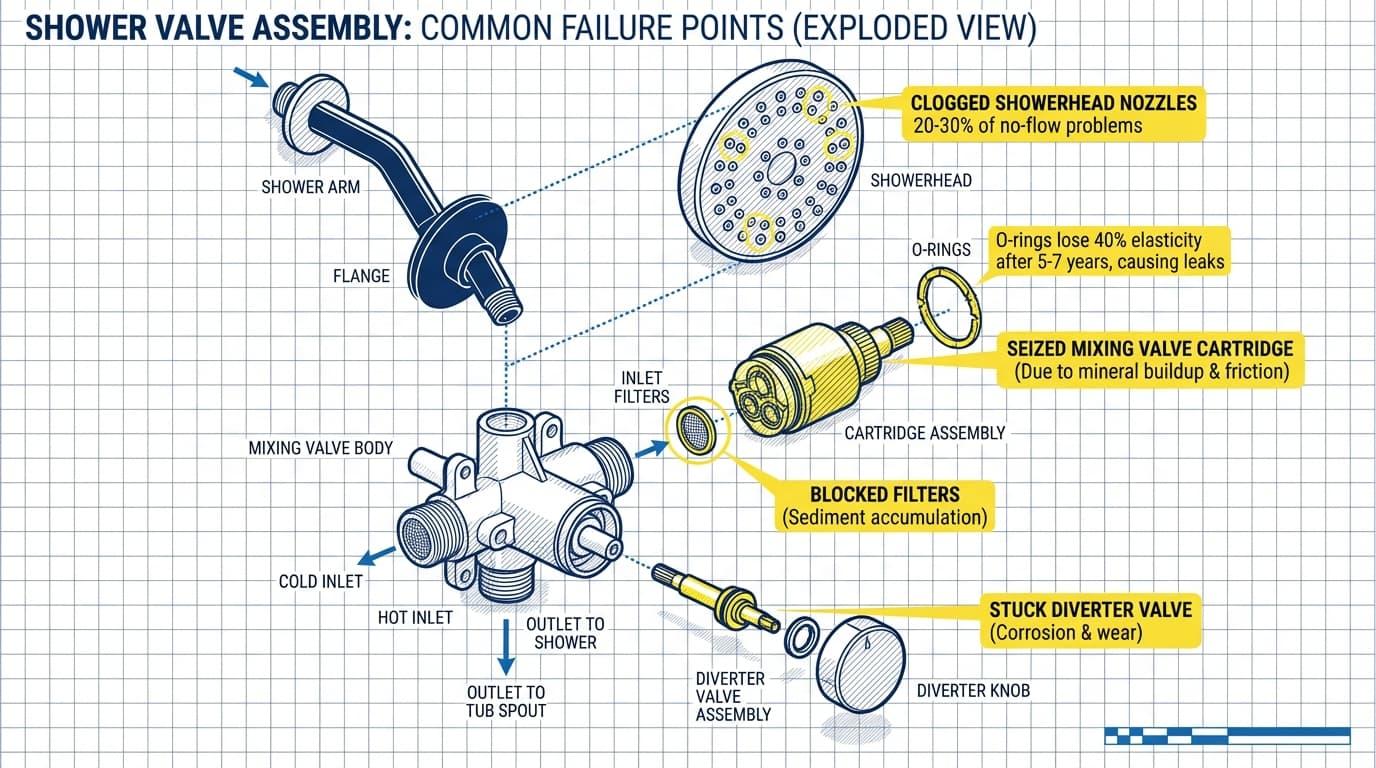
The three most common mechanical reasons a shower won’t turn on are clogged showerhead nozzles, a seized mixing valve cartridge, or a blocked inline water filter. These hydraulic failures isolate the water flow restriction directly to the shower enclosure, bypassing the rest of the home’s functional plumbing system.
Clogged Showerhead And Inlet Filters
Mineral deposits from hard water gradually clog your showerhead’s nozzles. According to 2024 water quality data from the USGS, in areas where water hardness exceeds 10 grains per gallon, calcium and magnesium accumulation can reduce 1mm showerhead nozzle openings to near-zero capacity within 6–8 years. The mineral buildup happens slowly, then one morning you twist the handle and get nothing.
Inlet filters at the valve ports also accumulate debris and sediment at a rate of 2–5 grams per year in hard water regions. These 50-micron screens become blocked enough to cause complete flow failure.
Faulty Or Seized Valve Cartridge
The valve cartridge is the core of your shower’s water control. When O-rings degrade — losing up to 40% of their elasticity after 5–7 years — or when internal corrosion sets in, the cartridge can seize completely. The result is a shower handle that either spins freely or feels impossible to rotate, and neither produces any water.
Diverter Valve Failures
In tub and shower combos, a stuck diverter valve keeps all water running to the tub spout instead of redirecting it up to the shower head. Spring-loaded or gate-style diverters can jam from debris or calcium buildup, and this accounts for 20–30% of localized no-flow problems in combo units.
Frozen Or Blocked Pipes
In colder climates — including some Wasatch Front microclimates with poorly insulated exterior walls — ice can fully block half-inch supply lines. Gentle thawing with a hairdryer at moderate heat resolves most accessible frozen pipes, but if the lines run inside walls, call a professional. Burst pipe repairs start around $1,000.
Low Mains Pressure Or Prv Problems
Many modern pressure-balancing valves require at least 20–30 psi of dynamic water pressure to function properly. If your pressure relief device is set below 50 psi static, or if mains pressure fluctuates significantly, the shower may refuse to activate entirely as a built-in safety measure.
Why Does My Shower Handle Turn or Spin Without Starting the Water?
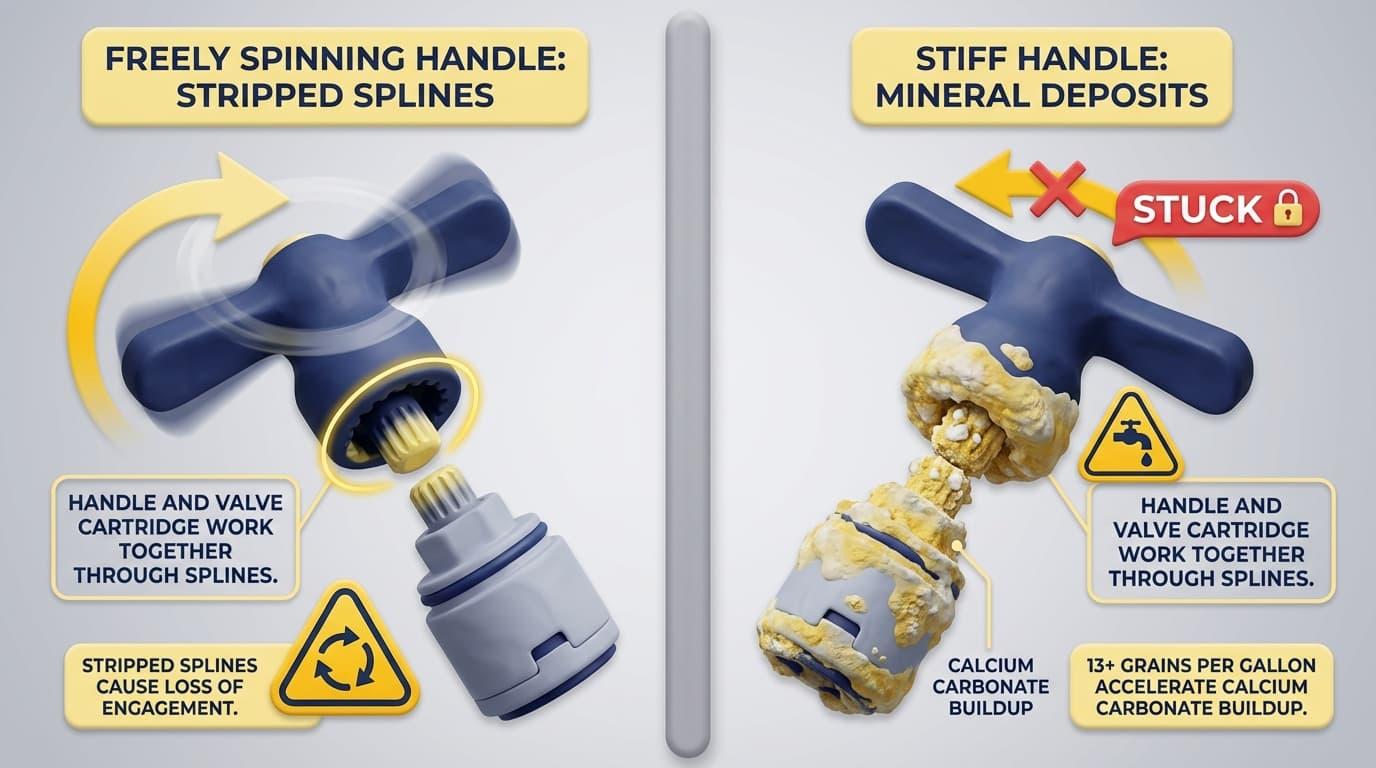
This one deserves its own section: the shower handle rotates — sometimes freely, sometimes with real resistance — but no water comes out, or you get only a weak trickle.
The handle and valve cartridge work together through a system of splines — small interlocking teeth. When you rotate the handle, those splines engage the cartridge stem and translate your motion into the mechanical action that opens the water ports. When splines strip from wear, corrosion, or torque overload, the handle moves, but the valve never actually opens.
When The Handle Spins Freely
A freely spinning handle almost always means stripped splines. Remove the decorative cap covering the handle screw, unscrew it, and pull the handle off to inspect the cartridge stem. Look for rounded edges or visible damage on the brass or plastic teeth. Brands like Moen, Delta, and Kohler use interchangeable cartridges, and a replacement often restores full function pretty easily.
When The Handle Barely Turns Or Feels Stuck
A stiff or barely turning handle usually points to mineral deposits inside the valve body or directly on the cartridge surfaces. This is especially common in hard water cities like Salt Lake City and West Jordan, where 13+ grains per gallon accelerate calcium carbonate buildup.
To fix either issue:
1. Shut off the water supply at the shower’s shutoff valve or main
2. Remove the handle and trim plate to access the cartridge
3. Use the appropriate puller tool (Moen 1225 cartridges require a reverse-thread tool)
4. Inspect the cartridge for scaling, corrosion, or physical damage
5. Clean with a calcium-lime-rust remover, or replace entirely
While major manufacturers offer lifetime warranties on cartridges, 2024 industrial reliability data proves that precise installation is the primary factor in component longevity, with properly seated gate valves lasting 15–25 years and ball valves averaging 10–20 years.
We Always Install Valves Properly!
No Water In Shower, But Other Fixtures Are Fine
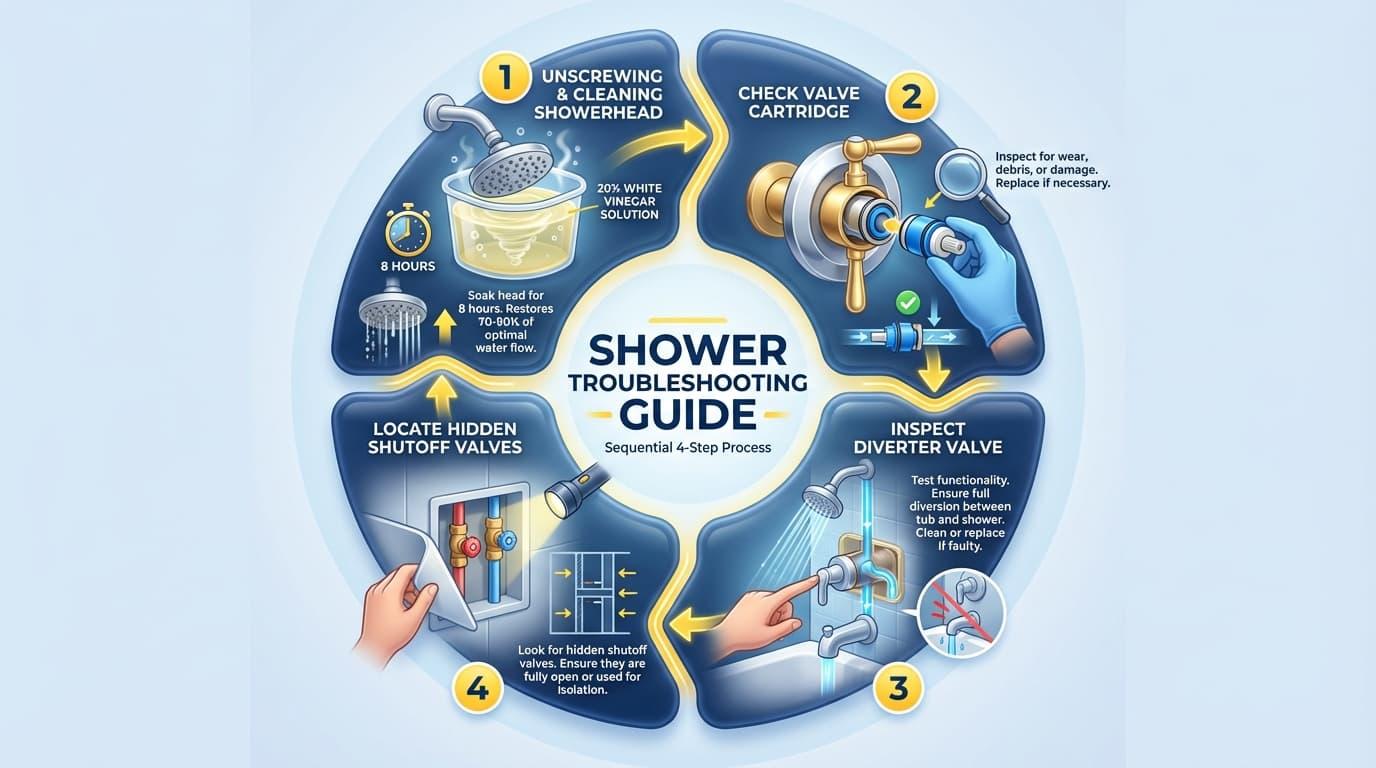
When your shower stops working, but the bathroom and kitchen faucets work fine, you’re looking at a localized issue. That actually makes troubleshooting much simpler.
If the shower has water flow but it is draining slowly or pooling around your feet, the problem may be separate from the valve itself. A slow or completely blocked shower drain is one of the most common culprits — drain cleaning services in Salt Lake City can clear the blockage same-day and restore proper drainage with a service guarantee.
Start With The Shower Head
The most common localized restriction is a showerhead blocked by calcium and magnesium mineral deposits. Property owners can resolve this by unscrewing the fixture and soaking it in a 20% white vinegar solution for 8 hours, allowing the acetic acid to dissolve the calcium carbonate buildup. Reinstalling the cleaned fixture typically restores 70–90% of optimal water flow without requiring replacement parts.
Check The Valve Cartridge
A stuck cartridge can block water flow even while other fixtures at the same pressure point work perfectly. Mineral buildup, corrosion, or worn seals create enough restriction inside the valve body to stop output entirely. Inspect, clean, or replace as described above.
Inspect The Diverter
If you can hear water running but it’s only coming out of the tub spout, the diverter is stuck in the tub position. Remove the tub spout (held by a setscrew or threaded connection), clean the 1–2cm stem of debris, or replace the $10–$30 part entirely.
Look For Hidden Shutoff Valves
Individual shower shutoffs behind access panels sometimes get closed during prior repairs and are never reopened. It’s actually a good sign if you find one partially closed — simply opening it fully may solve the whole problem pretty easily.
If these steps don’t restore flow, the issue likely sits inside the valve body itself or deeper in the plumbing. A qualified plumber with diagnostic equipment can pinpoint the problem without unnecessary demolition.
Get A Qualified Plumber Today!
Electric Shower Not Turning On Or Not Producing Water
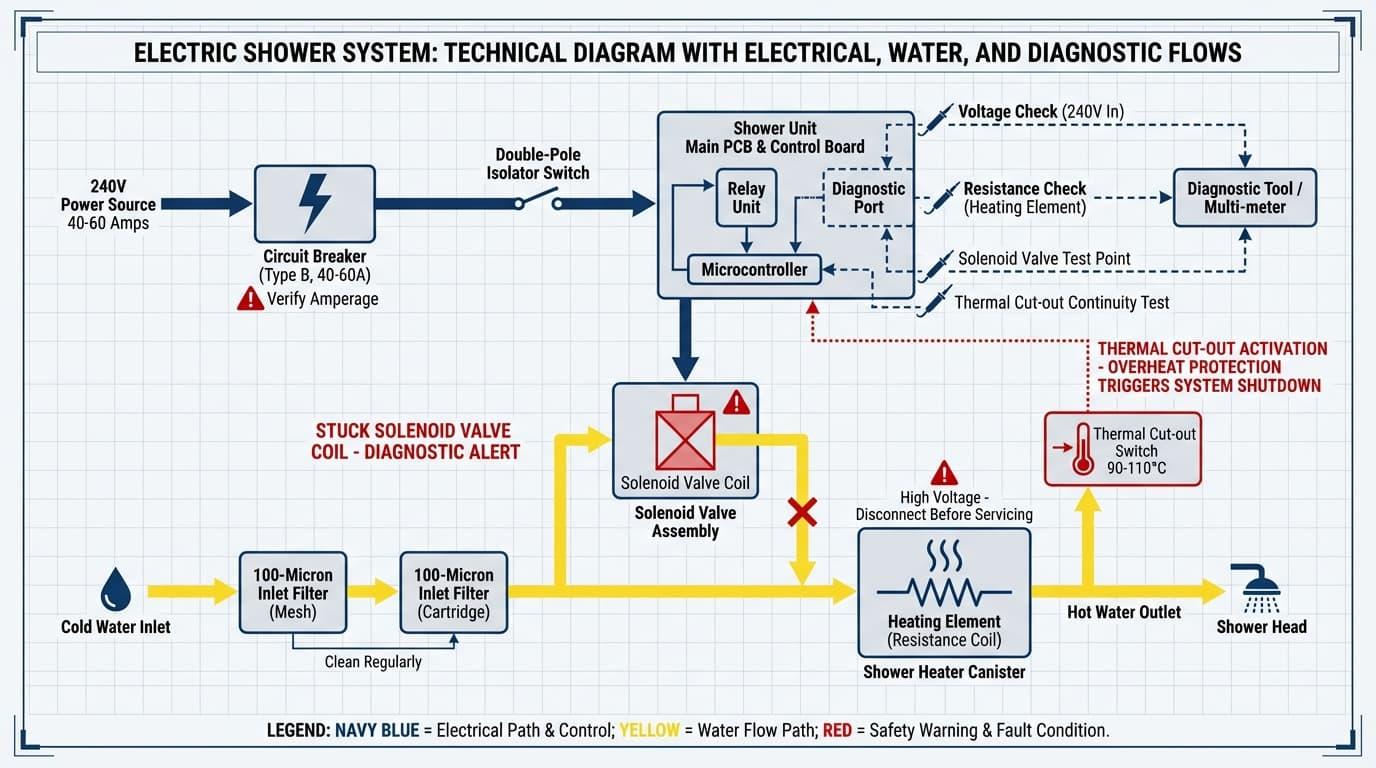
Electric showers work differently from standard mixer showers because they depend on both your home’s water supply and a dedicated electrical circuit — typically 240V at 40–60 amps. When an electric shower unit stops working, you need to separate electrical failures from water delivery problems before you do anything else.
No Power Situations
When your electric shower shows no indicator lights, has dead controls, or sits completely unresponsive:
- Check the circuit breaker at your consumer unit — a tripped 40–60A breaker from element overload is a common culprit
- Inspect the pull-cord switch or wall isolator — microswitch failure after about 5,000 cycles causes many no-power complaints
- Look for visible signs of loose or burned wiring connections at terminal points
Powered But No Flow
If the electric shower unit buzzes, clicks, or shows power indicators but produces no water:
- A stuck solenoid valve coil is often responsible — limescale on the plunger prevents the 24V actuator from opening
- Blocked inlet filters (usually 100-micron screens) build up debris over time and cut off flow
- Cleaning the inlet strainer yields 60–80% flow recovery in many cases
No Hot Water Despite Good Water Flow
When water flows through but never heats up, suspect thermal cut-out activation (bimetallic disc tripping at 90–110°C) or heating element failure because of micro-fractures after extensive thermal cycling.
Critical Safety Procedures
Electric shower repairs carry serious electrocution risks. Always follow these rules:
- Switch off power at the consumer unit before any inspection — no exceptions
- Never open the casing unless the electric shower unit is fully de-energized
- Call a certified electrician for any suspected wiring issues, burning smells, or repeated breaker trips
Homeowners can safely check external items like breaker positions, obvious isolation switch problems, and visible limescale on the shower head. Internal electrical repairs are strictly for qualified professionals.
Learn More About Our Plumbing Repair Services Today!
How Hard Water Quietly Kills Your Shower In Utah
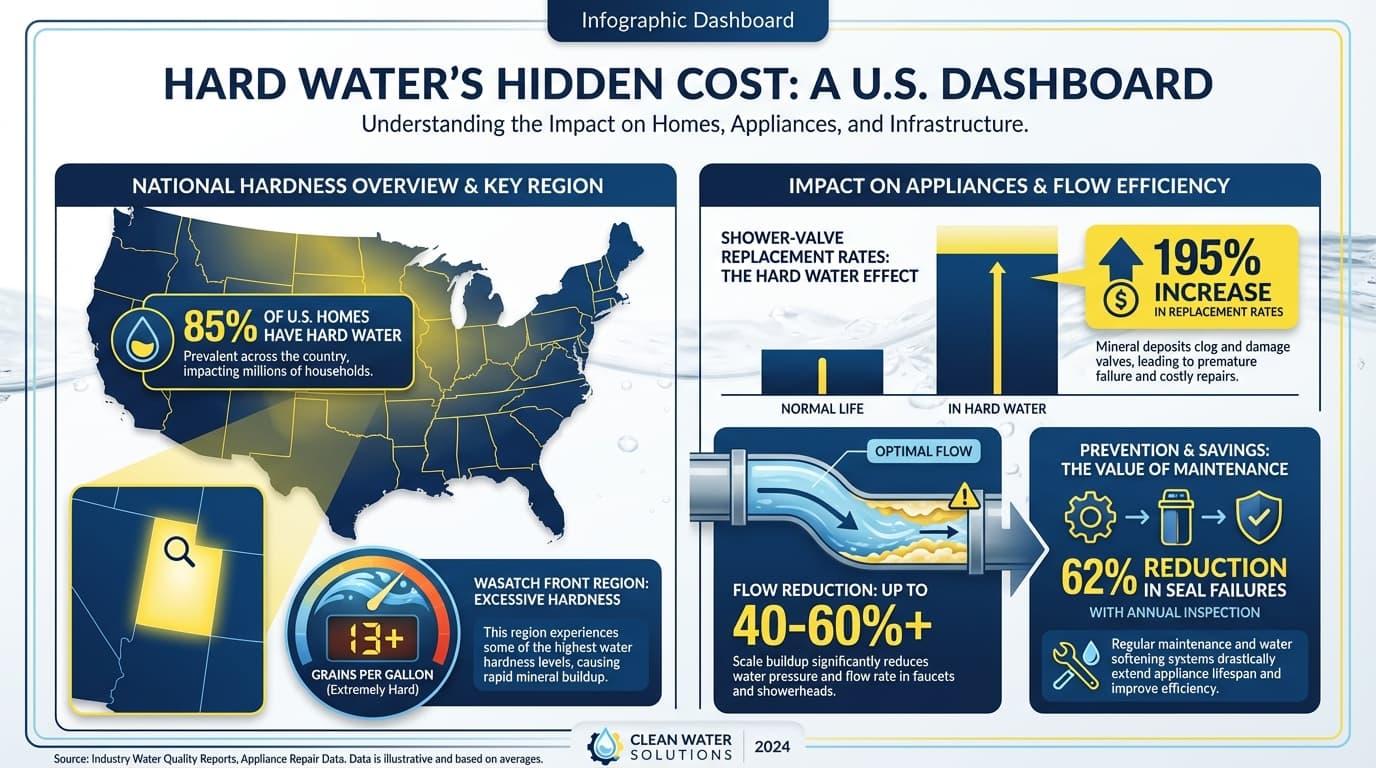
Here’s the regional factor most generic plumbing articles never mention: roughly 85% of U.S. homes have hard water, but the Wasatch Front regularly measures 13+ grains per gallon (260–420 mg/L calcium carbonate equivalent). That’s well above the national average, and it accelerates every shower failure mechanism described in this article.
The Scaling Cascade
Hard-water scaling causes up to a 195% increase in shower-valve replacement rates compared to soft-water areas. Calcium carbonate deposits form aggressively above 60°C due to inverse solubility — meaning your hot water line scales faster than cold. These deposits progressively block passages as small as 0.5mm inside cartridges and pressure-balancing diaphragms until flow stops entirely.
Water Heater Complications
Mineral buildup inside water heaters can accumulate 1–2 inches of sediment over five years, reducing hot-side water flow by 50–70% while cold-water pressure remains normal. This is why many Utah homeowners gradually develop “only cold water” or “weak hot water” shower problems that get worse over time without an obvious cause.
The Inspection Gap
Annual valve and seal inspections have been shown to reduce seal failures by over 62% and catch mineral deposit buildup before it causes a complete shutdown. Most homeowners never look at their shower valve until the day it stops working.
A local plumbing service, like Beehive Plumbing, with long-term experience on the Wasatch Front, understands these patterns. They can fix the immediate failure and recommend long-term hard water solutions — whether that’s whole-home water softening, point-of-use filtration, or upgraded valves designed specifically for high-mineral environments.
Learn More About Our Water Softener Services Today!
The Replacement Math
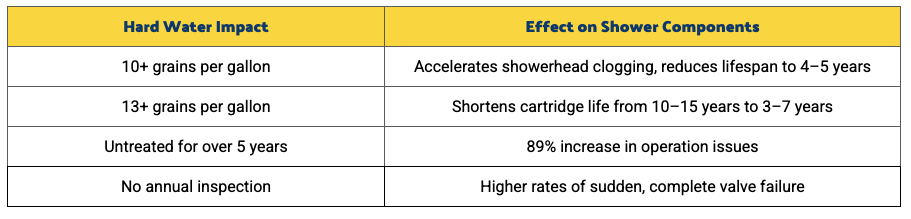
From our experience, if you keep ignoring the hard water problem, you’ll have to replace cartridges every 3–7 years instead of the typical 10–15 year valve lifespan. Over two decades, that’s the difference between one or two replacements and potentially five or six — plus all the service calls and water damage risks that build up along the way.
Safety, Damage Risks, And When To Stop DIY
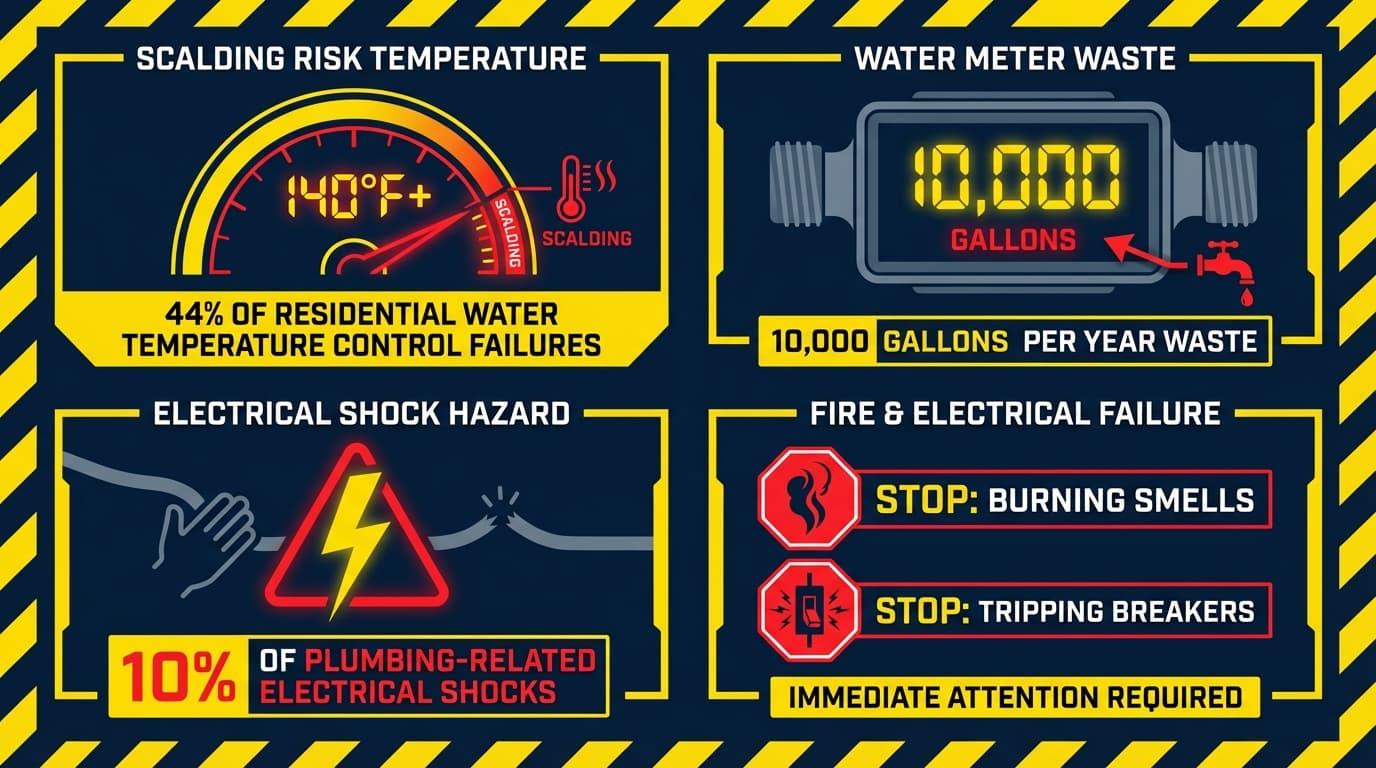
Some causes of a shower not turning on are just inconvenient. Others can be genuinely dangerous or extremely expensive if you handle them incorrectly.
Scalding Risks
According to 2025 data from the American Society of Plumbing Engineers (ASPE), malfunctioning thermostatic anti-scald valves cause 44% of residential water temperature control failures.
When these thermostatic valves fail, water temperature can spike 20–30°F suddenly — especially when someone elsewhere in the house turns on cold water. If your shower was delivering inconsistent or unexpectedly hot water before it stopped working, approach any repairs carefully.
Hidden Leak Damage
Undetected water leaking behind the shower wall from cracked valve bodies or failed fittings can cause mold growth, structural damage, and repair costs of $500 to $2,500 or more. Hidden leaks in an average U.S. home waste approximately 10,000 gallons per year.
Watch for these signs:
- Structural Softening: Discoloration or soft spots on drywall adjacent to the shower enclosure.
- Olfactory Indicators: Persistent musty odors in the bathroom indicating trapped moisture.
- Utility Metrics: Unexplained spikes in monthly municipal water bills.
- Fungal Growth: Visible mold at the floor level or on the ceiling directly below the bathroom.
Learn More About Our Plumbing Repair Services Today!
Pressure-Related Damage
Water hammer, the banging sound from sudden pressure changes in the pipes, fatigues internal valve components and stresses soldered joints. If you hear banging when fixtures turn on or off, fix the cause before it accelerates failure or creates pinhole leaks.
Electrical Hazards
For electric showers, loose or wet wiring presents a direct electrocution hazard. OSHA statistics indicate roughly 10% of plumbing-related electrical shocks involve water heating components. Stop immediately and call a certified professional if you notice:
- Burning smells from the shower unit
- Breakers that keep tripping
- Visible burn marks on wiring or terminals
- Any sign of water intrusion into electrical components
When To Stop DIY Completely
If your repair requires cutting into walls, altering any wiring, or working around gas water heater components, you’ve gone past safe DIY territory. The potential costs of getting it wrong — water damage, electrical shock, voided warranties, code violations — far outweigh the savings from skipping a service call. Call a qualified plumber or plumber asap if you’re in any doubt.
Learn More About Our Plumbing Repair Services Today!
Typical Repair Costs And When A Replacement Makes Sense
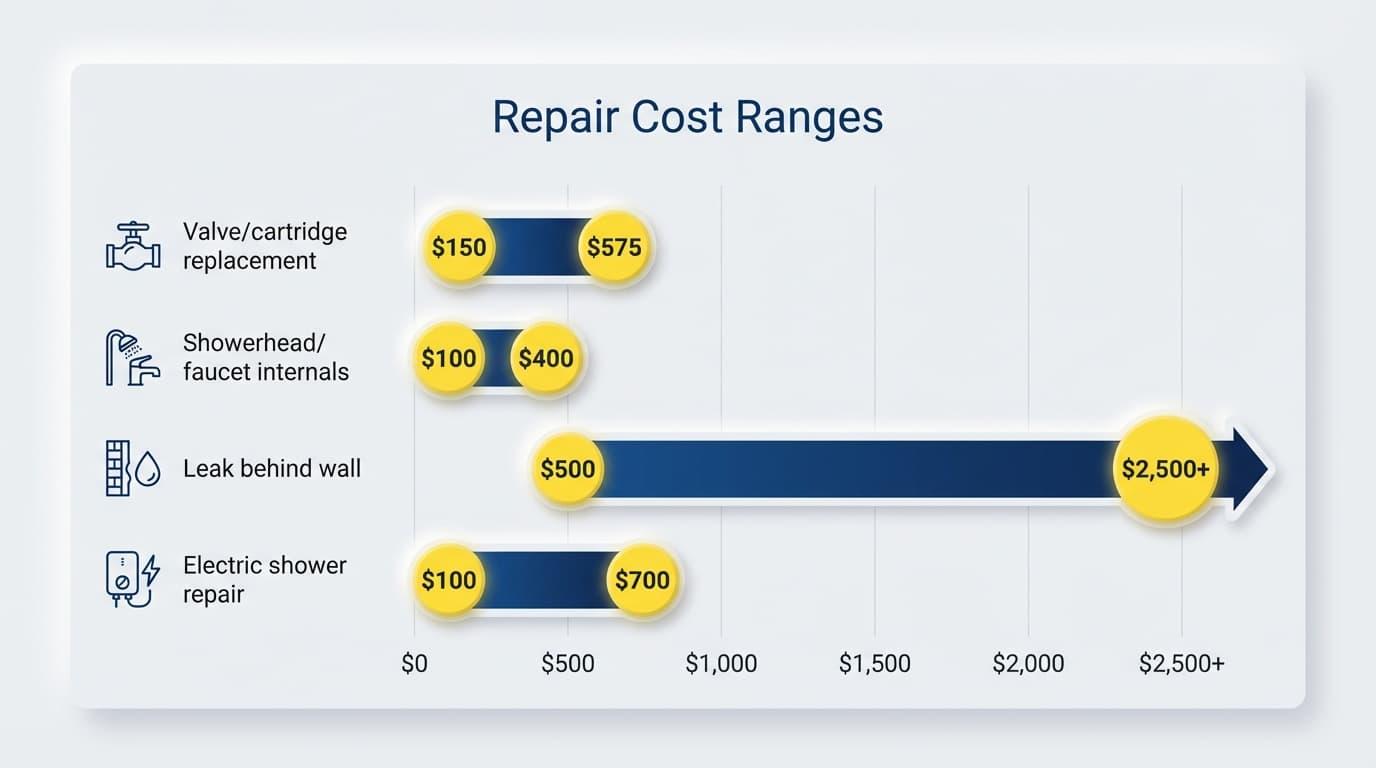
Most “shower won’t turn on” problems are fixable without replacing the entire system, especially when you catch them early, before secondary damage sets in.
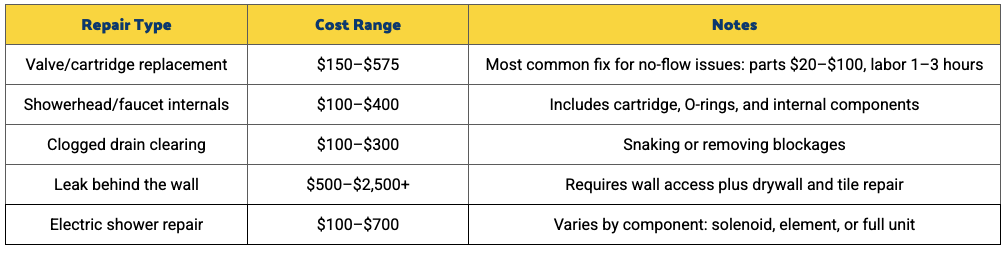
When To Repair
Single-symptom failures — just a clogged shower head, just a worn cartridge — on valves less than 10 years old typically justify repair. Fix the problem, and you get the expected remaining lifespan out of the system.
When To Replace
Consider full replacement when you’re dealing with:
- Frequent failures requiring multiple service calls within a short period
- Valves older than 10–15 years with significant internal wear
- Heavy hard water damage throughout the valve body
- Multiple simultaneous symptoms — leaking, temperature instability, and flow problems all at once
Modern pressure-balancing and thermostatic valves offer better stability, improved safety features, and longer service life — particularly valuable in hard-water areas where older designs fail ahead of schedule.
Getting Accurate Estimates
Ask for upfront, itemized estimates that break down parts, labor, and any access or finish work required. That transparency lets you compare a one-off repair against the long-term cost of upgrading — especially when hard water means you’ll likely face the same shower issue again in a few years without addressing the root cause.
DIY Vs. Calling A Plumber: A Simple Decision Guide
Most homeowners want a 10–20 minute fix before picking up the phone, and that’s completely reasonable — within safe limits. Here’s how to decide which path makes sense.
Safe DIY Tasks:
- Cleaning or replacing a showerhead (unscrew, soak in vinegar, rinse, reinstall)
- Checking accessible shutoff valves to make sure they’re fully open
- Resetting tripped circuit breakers for electric shower units
- Gently thawing accessible frozen pipes with a hairdryer
- Inspecting visible diverters on tub spouts for obvious debris
Pro-Only Tasks:
- Opening walls to access hidden valves or pipes
- Replacing the main shower valves that require cutting into the framing
- Working on gas or electric water heaters
- Repairing internal components of an electric shower unit
- Addressing repeated low water pressure or temperature swings that point to system-wide issues
A Simple Rule
If the tools required go beyond basic hand tools — screwdriver, adjustable wrench, pliers — or if the repair involves electricity, gas lines, or sealed fixtures inside walls, call a licensed plumber. The risk of getting it wrong isn’t worth it.
Help Your Plumber Help You
Document your shower problems before the service call:
- Take photos of visible issues (scaling, corrosion, discoloration)
- Record short videos showing the problem (handle spinning, water behavior)
- Note when the trouble started and whether it’s intermittent or constant
- List any recent repairs or changes to your plumbing system
This documentation helps your plumber diagnose faster — potentially reducing labor time and cost while making sure the fix addresses the actual root cause rather than just the surface symptom.
Learn More About Our Plumbing Repair Services Today!
FAQ
Below are answers to the most common questions homeowners have when their shower won’t turn on, so you can quickly identify what’s happening and decide whether it’s safe to troubleshoot or time to call a professional
Why Does My Shower Handle Turn, But No Water Comes Out?
This almost always means a stripped or broken cartridge where the handle splines no longer engage the valve stem. The handle rotates fine, but the internal mechanism never actually opens to allow water flow. Other possibilities include a closed shutoff valve, a diverter stuck in the tub position, or severe mineral deposits inside the cartridge, creating a complete blockage.
Shut off the water supply, remove the handle, and inspect the cartridge visually. If the stem shows rounded splines or visible damage, a replacement cartridge will likely fix the problem. If the valve body itself looks heavily corroded or the handle spins with zero resistance, call a plumber for a proper assessment.
Why Does My Shower Stop Working But Start Again Later?
Intermittent operation usually means debris or limescale is moving around inside the valve, temporarily blocking water flow before shifting to let water through again. Electric shower units may also experience this when water pressure drops below the minimum activation threshold, triggering safety shutoffs that reset once pressure returns.
Thermal cut-outs in electric units and anti-scald mechanisms in standard showers can also temporarily halt flow under certain conditions. Recurring stop-start behavior is a warning sign of deeper wear or progressive scaling — it’s worth addressing before the partial blockage becomes a complete one.
Can Low Water Pressure Make My Shower Not Turn On At All?
Yes. Many modern valves and most electric shower units require a minimum pressure — often around 30 psi at the fixture — to open and operate correctly. Below that threshold, the shower may not activate at all. It’s a built-in safety feature that protects heating elements and prevents scalding.
Have a plumber measure both static and dynamic pressure at your fixtures. If your pressure relief device is set too low or is malfunctioning, adjustment or replacement can restore enough water pressure for proper operation.
Is It Safe To Remove The Flow Restrictor To Fix A Weak Or Non-Working Shower?
Federal regulations cap showerheads at about 2.5 gallons per minute, and removing restrictors can violate local plumbing codes. More importantly, weak or absent water flow is almost always caused by clogged cartridges, failing valves, or pressure problems — not the restrictor itself.
Removing it won’t fix the underlying shower issue and may actually mask a worsening problem. Clean or replace the internal components and have a plumber inspect the system rather than bypassing safety features that exist for good reason.
Who Should I Call If My Electric Shower Won’t Turn On — A Plumber Or An Electrician?
An electrician is essential when you see signs of electrical failure: tripped breakers that won’t reset, a completely dead electric shower unit, burning smells, or visible wiring damage. These situations involve shock hazards that require certified electrical expertise.
A plumber is likely the better first call if water flow is the main symptom — visible leaks, blockages, or low water pressure with power still working fine. In many cases, you’ll ultimately need both: one to address the supply-side plumbing and another to safely service the dedicated 240V circuit. When in doubt, describe your symptoms to both and let them advise on who should come first.